

A nicotine-free resistance necklace helps most quitters by satisfying the hand-to-mouth ritual and forcing a pause before a craving turns into a cigarette or a vape hit. It will not touch the chemical side of nicotine addiction; that job belongs to nicotine replacement therapy or clinical support. Used as one tool in a larger plan, options like the Breathing Resistance Necklace from Breathefree give your hands and mouth something to do while your brain catches up.
TL;DR:
- Resistance necklaces provide a physical substitute for the hand-to-mouth habit, helping break automatic smoking cues without affecting nicotine levels.
- Using the necklace regularly can extend the pause between cravings and increase self-efficacy, but it does not replace nicotine therapy or counseling.
- Small studies and user reports show the necklace can improve breathing, mood, and urges control, yet large-scale evidence of effectiveness remains absent.
- To maximize benefits, keep the necklace visible, establish a routine, and track urges to build confidence and reinforce the behavioral habit.
- Over-reliance on the necklace alone may indicate a need for additional chemical support if cravings remain intense or unmanageable.
Table of Contents
- How a Resistance Necklace Helps With Breathing Necklace Benefits
- What the Research Actually Shows About Breathing Necklaces for Anxiety and Cravings
- How to Use a Resistance Necklace During a Quit Attempt
- Real-World Proof Points Behind Breathing Necklace Benefits
- Why Behavioral Tools Deserve More Credit Than They Get
- Where the BreatheFree Resistance Necklace Fits Your Quit Plan
- Sources
How a Resistance Necklace Helps With Breathing Necklace Benefits
The habit you’re fighting isn’t just chemical. It’s sensorimotor, meaning your hand knows the motion to your mouth better than your conscious mind does. Smokers repeat that lift-and-inhale gesture thousands of times a year, and the nervous system files it away as automatic, the same way you don’t think about how to grip a doorknob. A resistance necklace works by inserting a substitute object into that exact loop, so the motion still happens, but nothing harmful goes into your lungs.
The breathing component matters more than most people expect. Pulling air through a resistance necklace slows your exhale, and a slower exhale is one of the fastest ways to dial down the sympathetic nervous system’s “fight or flight” signal that a craving triggers. That three-to-five-second pause is often enough for the urge to lose its edge.
Here’s what a well-used necklace tends to deliver in the moment:
- A physical pause between the urge and the action, breaking the automatic reach for a pack or a vape
- Oral and tactile satisfaction without smoke, vapor, or nicotine
- A short-term drop in anxiety tied to the breathing motion itself
- Reported improvements in mood and breathing clarity among regular users
None of this changes your blood nicotine level, and response varies. Some people find the ritual instantly satisfying; others need to pair it with something else before it clicks.
Pro Tip: Keep the necklace visible, not tucked in a drawer. Out of sight means out of the habit loop, and you lose the cue that makes substitution work.
What the Research Actually Shows About Breathing Necklaces for Anxiety and Cravings
Be honest with yourself about what the evidence covers. There are no large randomized controlled trials proving that a resistance necklace, by itself, gets someone to quit. What exists is smaller and more specific: case reports and pilot work on oral-hygiene interventions that satisfy oral fixation, including one report of a 52-year-old man who quit successfully after nicotine replacement therapy alone had failed him.
That gap between “helps some people” and “proven to work for everyone” is worth sitting with. Quit Smoking Community’s review of resistance necklaces lands on a fair framing: nicotine addiction has two layers, chemical and behavioral, and a necklace only ever addresses the second one. That’s not a weakness of the product; it’s just an accurate description of what a physical object can and can’t do to a receptor in your brain.
What small studies and user reports do point to:
- Longer pause duration between craving onset and giving in
- Higher self-reported self-efficacy, meaning people feel more capable of resisting the next urge
- A minority of users reporting mild dizziness from deep or rapid breathing through the resistance mechanism
That dizziness note matters. If you feel light-headed, slow your breathing rate rather than pulling harder, and never treat the necklace as a stand-in for nicotine replacement therapy if you’re experiencing acute withdrawal symptoms like nausea or severe irritability.
How to Use a Resistance Necklace During a Quit Attempt
A necklace sitting in a drawer does nothing. The benefit shows up only when you build a repeatable routine around it.
- Feel the urge, reach for the necklace first. Before you touch a pack, a vape, or your phone to order more, put the necklace to your mouth.
- Take three slow diaphragmatic breaths through it. In for four counts, out for six. The exhale is doing most of the work here.
- Use a flavor refill if you have one. The flavor hit gives your mouth a second sensory signal, layering onto the breathing cue.
- Re-evaluate the craving. Most urges peak and fade within three to five minutes. Ask yourself if it’s still there before you decide anything else.
- Log it. Note the time, the trigger, and whether the urge passed. A habit tracker turns scattered willpower into a pattern you can actually see improve.
Pair this routine with other tools rather than expecting one object to do everything. For additional long-term benefits, consider learning how quitting smoking can improve your bone health, as explained in Does Smoking Really Hurt Your Bone Density? Nicotine replacement therapy or counseling handles the chemical withdrawal; the necklace handles the ritual. Rotate in other oral substitutes like flavored toothpicks or sugar-free lozenges for variety, especially during the first two weeks when cravings hit hardest and most often.
Pro Tip: Set a daily count goal, like “ten urges redirected,” instead of a vague “use it more” intention. Specific counts are easier to track and easier to feel proud of.
Watch for neck discomfort from constant wear, and don’t let the necklace become a crutch that replaces every other support you’re using. If cravings feel unmanageable without it, that’s a signal your chemical dependence needs more than a behavioral tool alone.
Real-World Proof Points Behind Breathing Necklace Benefits
Breathefree built its resistance necklace around this exact behavioral model, and the company reports that more than 75,000 users have used the method as part of quitting. The product pairs the necklace itself with flavor refills for sensory variety and a companion nicotine detox eBook and habit tracker so the ritual side of quitting has structure, not just a single object.
That combination maps directly onto what the mechanism section covers above: the necklace handles the hand-to-mouth motion and breathing pause, the flavor refills add sensory substitution, and the tracker turns urge-logging into visible progress instead of guesswork. Community support is part of the model too, giving users a place to compare notes on what’s working during the hardest weeks.
Why Behavioral Tools Deserve More Credit Than They Get
Most quit-smoking advice treats willpower as the whole battle, and that framing sets people up to feel like failures when a purely mental fight wears them down. The behavioral side, the hand that wants something to do, the mouth that wants something in it, gets treated as an afterthought. It shouldn’t be.
Early wins with a tool like a resistance necklace tend to be small: a craving that used to end in a cigarette now ends in three breaths and a decision to wait. That’s not nothing. It’s the exact pattern that builds self-efficacy over weeks, which is the psychological fuel that makes people stick with harder changes later.
If your dependence is heavily chemical, meaning you’re smoking within minutes of waking or feeling withdrawal symptoms by midmorning, pair a behavioral tool with nicotine replacement therapy or a counselor. Don’t ask an oral fixation aid to do a pharmacological job. Track your small wins, expect some days to be harder than others, and give the ritual side of quitting the same seriousness you’d give the chemical side.
— Tommy
Where the BreatheFree Resistance Necklace Fits Your Quit Plan
If you’ve been piecing together toothpicks, gum, and willpower, a purpose-built tool closes some real gaps. The BreatheFree Resistance Necklace comes with flavor refills for sensory variety and pairs with a habit tracker so you’re not guessing whether the plan is working.
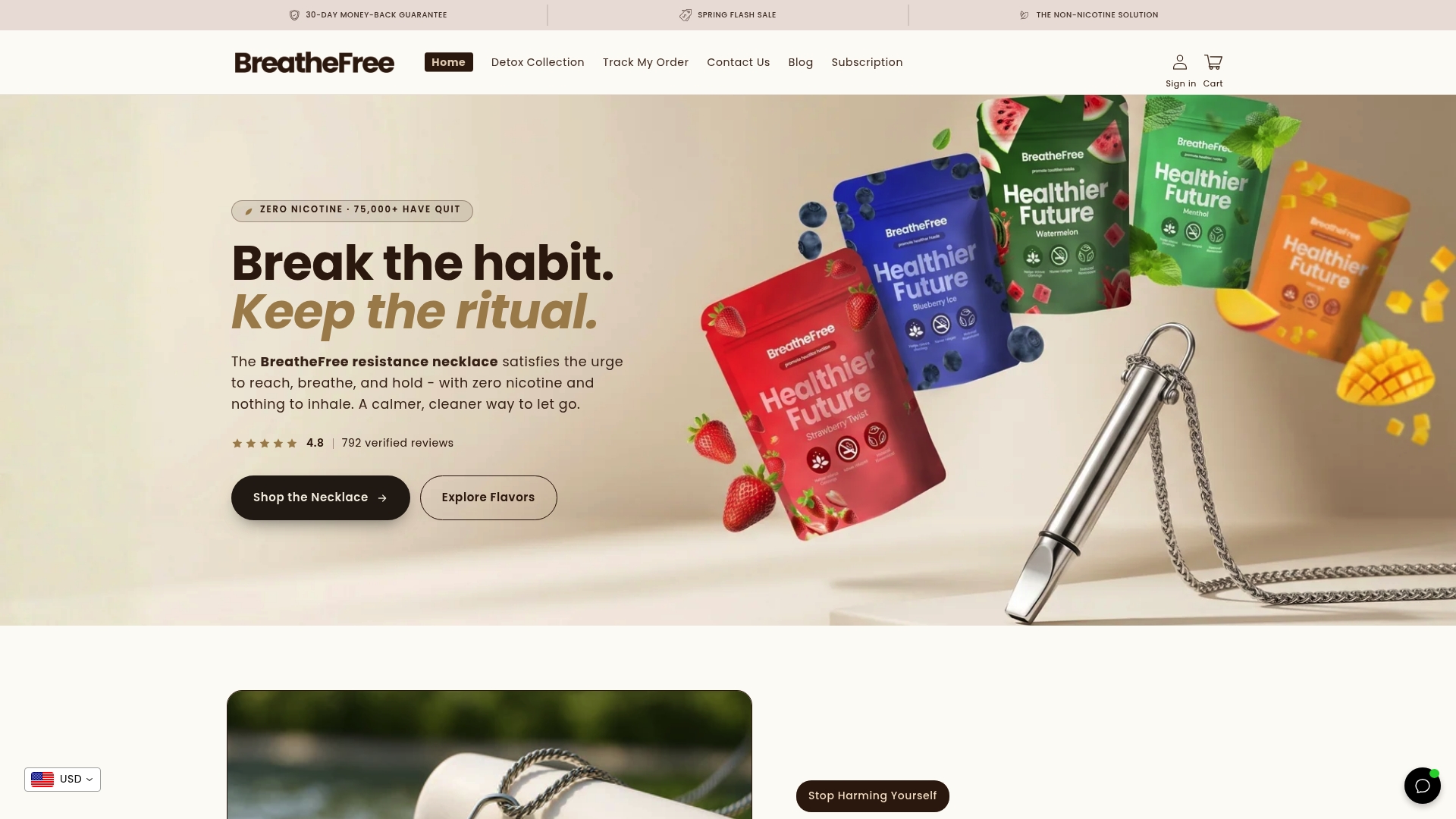
The first two weeks are usually the hardest stretch, when cravings hit most often and hand-to-mouth habits are strongest. That’s when having the necklace within reach, paired with a logged tracker entry every time you redirect an urge, makes the difference between a scattered attempt and a plan you can actually see progress on. If oral habits have outlasted every other quit attempt you’ve tried, read more on why those habits persist after quitting before you pick your next step. When you’re ready, the necklace collection is the place to start.
Sources
- Breath Resistance Necklaces: Do They Really Work to Stop Smoking or Vaping? - Quit Smoking Community
- Oral hygiene therapy assists in behavioural intervention for smoking cessation: a pilot approach for oral health care providers
- 10 smoking cessation tips
This article is general information, not a substitute for advice from a qualified doctor. Consult a qualified healthcare professional about your own circumstances before acting on anything here.