

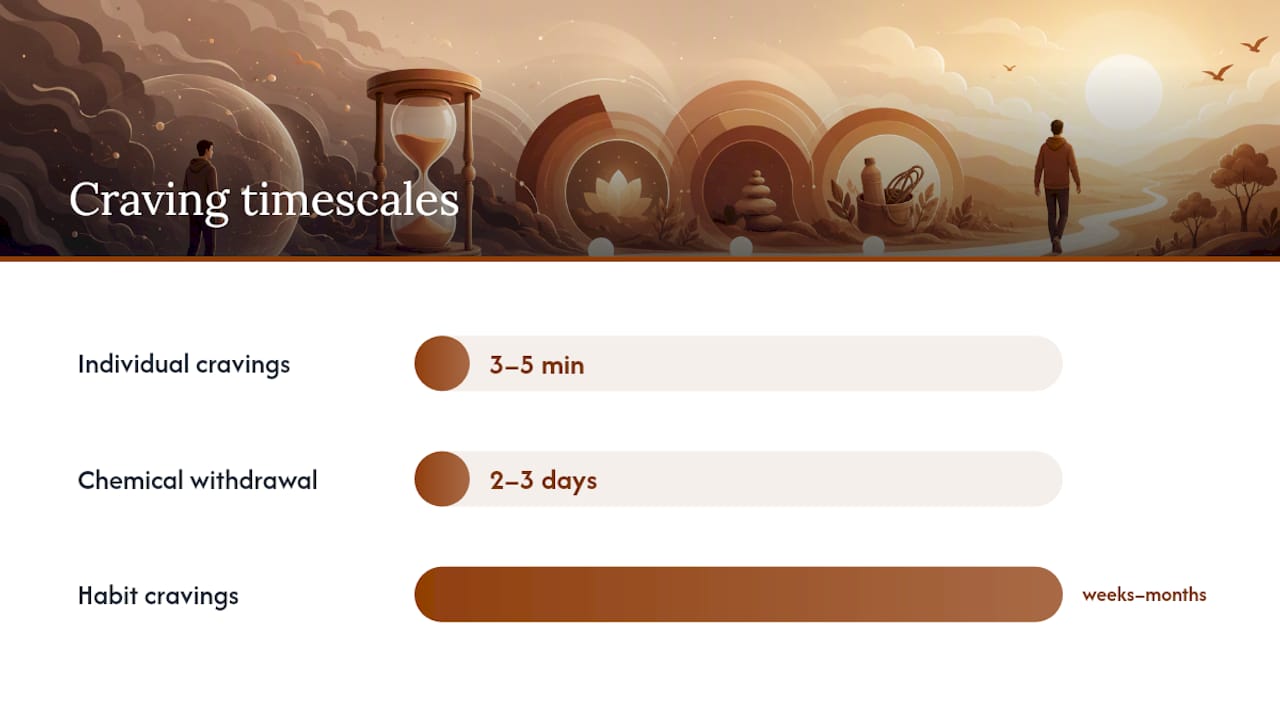
Most individual cravings last only 3 to 5 minutes, but withdrawal as a whole peaks around days 2 and 3 and generally settles within two to four weeks. Habit urges, triggered by old routines and stress, can echo for months or even years afterward, though they show up less often and lose intensity every time you ride one out. That pattern is normal, not a sign you’re doing it wrong.
TL;DR:
- Withdrawal symptoms peak around days 2 and 3, with physical urges lasting typically 3 to 5 minutes and easing over two weeks.
- Habit triggers—including routines, places, and emotions—can persist for months or years and require behavioral strategies to weaken the associations.
- Nicotine replacement therapies shorten chemical withdrawal but do not address habit cravings, which respond better to behavioral substitution and exposure.
- Personal factors like smoking history, age, and mental health influence craving intensity and duration, with heavier or longer habits often resulting in longer or more intense urges.
- Managing triggers and using tools like physical substitutes, deep breathing, and planned exposure helps build resilience against relapse beyond the initial withdrawal phase.
Table of Contents
- Cravings Duration After Quitting: A Full Timeline
- Why Cravings Happen: Chemistry vs. Habit
- What Does a Single Craving Feel Like?
- Practical Coping Strategies for Hours, Days, and Weeks
- Managing Triggers and Habit Cravings Long-Term
- When to Get Medical or Behavioral Help
- Breathefree’s Non-Nicotine Approach to Oral Fixation
- Do Age and Smoking History Change How Long Cravings Last?
- Cigarettes vs. Vaping vs. Smokeless Tobacco: Does Craving Duration Differ?
- Start Managing Cravings Today
- Sources
Cravings Duration After Quitting: A Full Timeline
The word “craving” gets used for two very different experiences: a chemical withdrawal urge and a habit trigger. They follow different clocks, and knowing which one you’re fighting at any given moment changes how you respond to it.
Withdrawal starts fast; understanding the difference between detox and ongoing behavioral recovery can help you navigate this phase more effectively by learning from resources like Detox vs. Withdrawal: Key Differences in Addiction Recovery. Nicotine has a short half-life, so your brain notices its absence within 4 to 24 hours of the last cigarette or vape, often before you’ve even finished the day you quit. That’s the physical mechanism kicking in, not weakness.
Hours 1 to 24: onset
Restlessness, irritability, and a nagging mental itch for nicotine show up first. Sleep may already feel off tonight. This window is deceptively manageable for many people because adrenaline and resolve are still high.
Days 2 to 3: the peak
This is the hardest stretch, and Cleveland Clinic and MedlinePlus both point to the same window: symptom intensity crests on day two or three after the last dose. Headaches, irritability, difficulty concentrating, increased appetite, and frequent, sharp urges to smoke or vape all cluster here. If you’re going to slip, statistically this is when it happens, which is exactly why it deserves the most planning.
Week 1: the hardest week, easing at the edges
The first week overall is the roughest, but the tail end usually feels less brutal than the peak. Physical symptoms, headaches, restlessness, that raw irritability, start softening for many quitters within 1 to 2 weeks. The urges themselves haven’t gone, but their grip loosens slightly day by day.
Weeks 2 to 4: withdrawal resolves, habit remains
By this stretch, most people notice a real shift. Withdrawal urges tied to nicotine chemistry usually run their course in one to two weeks if you don’t reintroduce nicotine at all. What lingers past that point is almost always psychological: the reach for a cigarette after dinner, the urge during a coffee break, the fidget when stressed. Those are learned habits, not chemical demand, and they respond to different tools than withdrawal does.
Months 1 to 3: the relapse-risk window
Relapse risk stays elevated for a while after the acute phase ends. Research on abstinence duration identifies the first three months as the period where situational cravings, a party, a breakup, a work deadline, most often derail a quit attempt, even after daily withdrawal has faded.
Months 3 to 12 and beyond: fading echoes
- Craving frequency drops sharply the longer you go without smoking.
- At the one-year mark, many people who quit report little or no craving at all in real-time diary studies.
- Occasional, situational urges (a specific bar, a particular friend, a familiar smell) can resurface years later, usually brief and easy to dismiss with practice.
- Each time you face a trigger without smoking, the association weakens a little more.
That last point matters more than most quit-smoking advice admits: you don’t outrun triggers, you outlast them.
Why Cravings Happen: Chemistry vs. Habit
Two separate systems drive what feels like one unified craving, and separating them is the single most useful mental shift you can make.
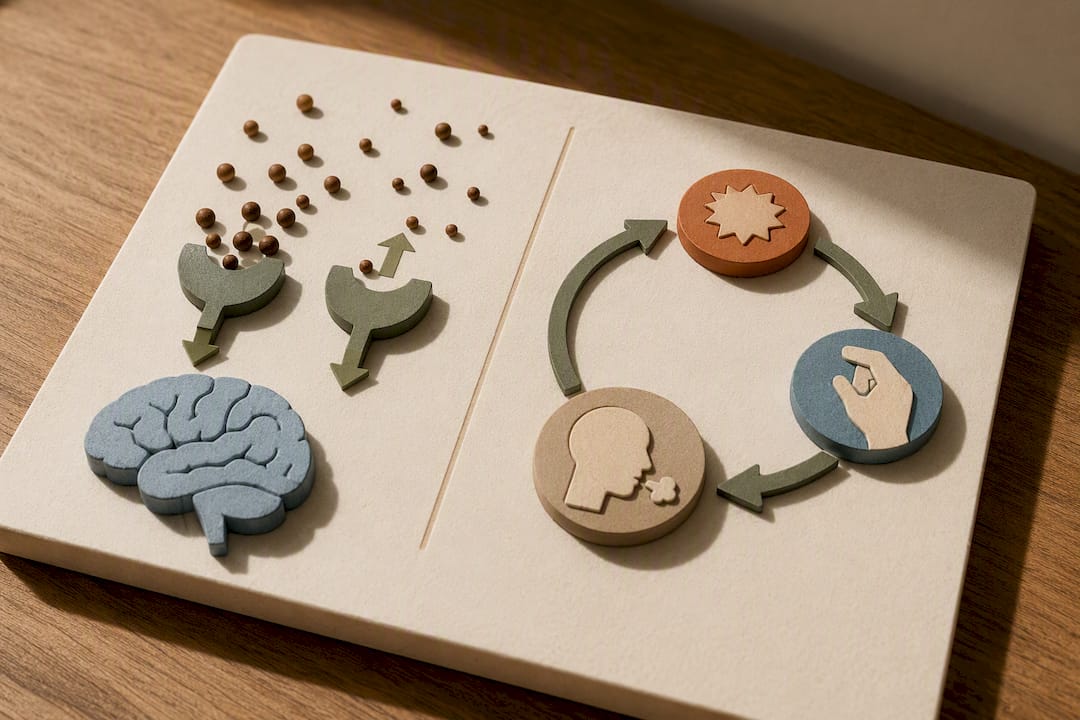
Chemical withdrawal happens because nicotine binds to receptors in your brain and, over time, your brain adjusts its own chemistry to expect a steady supply. Take that supply away and you get a measurable, physiological withdrawal syndrome: irritability, anxiety, trouble focusing, increased appetite, disrupted sleep. This is the part almost every person who smokes regularly experiences when they quit, and the CDC frames it plainly: it happens to nearly everyone, and both behavioral strategies and quit-smoking medicines help these urges pass.
Habit cravings are a different animal entirely. They’re learned associations built over years, sometimes decades, of pairing a cigarette with driving, coffee, phone calls, or stress. Your brain doesn’t need nicotine to trigger the urge in these moments; it just needs the cue. That’s why someone six months smoke-free can still feel a jolt of desire in a specific parking lot or bar booth where they always used to light up.
The practical difference:
- Chemical urges fade on a predictable, biological schedule (days to a couple of weeks).
- Habit urges fade unevenly, tied to how often you re-encounter and resist the specific trigger.
- Chemical urges respond well to nicotine replacement therapy (NRT) and medication.
- Habit urges respond better to behavioral substitution, new routines, and repeated exposure without smoking.
There’s a reset mechanism worth understanding, too. “Just one cigarette” after a stretch of abstinence reintroduces nicotine to receptors that had started to recalibrate. That single puff doesn’t just satisfy a moment; it can restart the chemical withdrawal clock, which is why one slip so often turns into a full relapse rather than staying a one-time event.
What Does a Single Craving Feel Like?
A craving episode has a shape, and once you recognize it, it stops feeling endless. There’s a build (tight chest, restlessness, a mental image of the cigarette or vape), a peak (intense urgency, sometimes irritability or a short temper), and then, if you don’t act on it, a decline. The whole arc typically runs 3 to 5 minutes.
That number is the most useful fact in this entire topic. Cravings feel permanent in the moment, but they’re not. They’re a wave, and waves break.
Here’s what getting through one actually looks like in practice:
Stand up if you’re sitting, or sit down if you’re standing. Change your physical position; it interrupts the mental loop. Take five slow breaths, in through your nose for a count of four, out for a count of six. Sip cold water. Hold something in your hand, a pen, a resistance necklace, a fidget object, anything that gives your hands and mouth a job that isn’t smoking. By the time you finish these four steps, the 3 to 5 minutes are usually up, and the urge has already started to fade on its own.
Practical Coping Strategies for Hours, Days, and Weeks
Different phases call for different tools. What gets you through hour one won’t be what you need in week three, so build a toolkit that scales.
1. The 4 Ds: your first line of defense. This framework, used across public health quit-smoking programs, covers most cravings on its own:
- Delay. Wait it out. Set a timer for 5 minutes and remind yourself the urge has a shelf life.
- Distract. Call someone, walk around the block, tackle a two-minute task. Attention is a finite resource, and cravings lose steam when you’re not feeding them focus.
- Deep breathe. Slow, deliberate breathing lowers the physical agitation that makes urges feel unbearable.
- Drink water. Cold water gives your mouth and hands something to do and briefly resets your nervous system.
2. NRT and medication: managing the chemical side. Nicotine patches, gum, lozenges, and prescription options like varenicline or bupropion work by softening the chemical withdrawal curve directly, taking the edge off the days 2 to 3 peak so behavioral strategies have less to fight against. Patches deliver a steady baseline dose over 16 to 24 hours; gum and lozenges handle acute spikes as they hit. Combination therapy (patch plus a fast-acting form) is common in clinical practice for people with a heavier smoking history. Talk to a doctor or pharmacist before starting, especially if you have a cardiovascular condition or are pregnant.
3. Behavioral substitution: managing the habit side. This is where hand-to-mouth ritual replacement earns its place. A resistance necklace or similar oral-fixation tool gives your hands and mouth the same physical motion you associate with smoking, without any nicotine or inhalation involved. Habit trackers help you notice which specific triggers hit hardest so you can plan around them instead of getting ambushed.
4. Sleep, appetite, and mood. Withdrawal disrupts all three, and neglecting them makes cravings feel worse than they are. Keep caffeine modest in the evenings since withdrawal already messes with sleep architecture. Expect appetite increases, healthy snacks on hand beat a 9 PM vending machine run. Light exercise, even a 10-minute walk, measurably eases irritability and restlessness during the peak days.
5. Combining tools works better than picking one. NRT plus a behavioral substitute addresses both the chemical baseline and the situational hand-to-mouth trigger at the same time, which is exactly the layered approach clinicians recommend for people with a longer smoking history or higher daily nicotine intake.
Pro Tip: Keep your oral-fixation tool somewhere you’d normally keep cigarettes, your car’s cup holder, your jacket pocket, your desk drawer. Cravings hit hardest in the exact locations where the old ritual lived, so your replacement needs to live there too.
For a deeper look at what’s actually happening in your body during this stretch, nicotine withdrawal symptoms are worth understanding in full.
Managing Triggers and Habit Cravings Long-Term
Habit cravings don’t run on a fixed schedule the way chemical withdrawal does, so long-term success comes down to trigger management, not waiting them out.
Most triggers fall into a handful of categories:
- People: the friend you always smoked with, coworkers on a smoke break.
- Places: your car, a specific bar stool, the back porch.
- Routines: morning coffee, the drive home, right after meals.
- Emotions: stress, boredom, anger, even celebration.
The counterintuitive part: avoidance only works short-term. Long-term, exposure without smoking is what actually extinguishes a trigger’s power. Every time you sit through your morning coffee without lighting up, that specific pairing weakens a little. Skip the coffee ritual entirely for a month and the association just waits for you when you bring it back.
A few tactics make exposure survivable rather than miserable:
- Script your response in advance. Decide now what you’ll do the next time a coworker lights up near you, don’t improvise it in the moment.
- Tell the people around you that you’ve quit. Social support changes how high-risk situations play out, and it removes the awkwardness of hiding a slip.
- Build a specific plan for predictable high-risk events (holidays, parties, deadlines) instead of hoping willpower shows up.
- If you slip, treat it as one event, not a verdict. Note what triggered it, reset the next day, and keep going. One cigarette is a data point, not a failure.
Rebuilding daily structure around your old smoking ritual helps too. If you smoked every time you stepped outside, replacing that specific ritual with a new outdoor habit, stretching, a short walk, matters more than generic willpower ever will. For the wider set of coping mechanisms people lean on through the first months, a structured survival framework beats improvising day to day.
When to Get Medical or Behavioral Help
Most withdrawal is uncomfortable but manageable at home. Some signs mean it’s time to bring in a professional instead of pushing through alone.
Reach out to a doctor or mental health provider if you notice severe or worsening anxiety, depression that doesn’t lift after the first couple weeks, or any thoughts of self-harm or suicide, treat that last one as urgent, not something to wait out. Withdrawal symptoms that stretch well past the typical two to four week window, or physical symptoms that seem disproportionate (chest pain, severe headaches, fainting), also warrant a call rather than a guess.
Practical starting points include your primary care provider, a free quitline (many countries and states run these specifically for tobacco cessation), a counselor experienced in addiction, or a specialist cessation clinic if you’ve tried and relapsed multiple times already.
What professionals typically offer goes beyond a pep talk: prescription medication like varenicline or bupropion, structured NRT plans tailored to your smoking history, individual or group counseling, and, for people with heavier dependence, combination therapy that pairs medication with behavioral support. None of this means you failed at quitting on your own. It means the chemical and psychological weight of nicotine dependence sometimes needs more than willpower and a water bottle.
Breathefree’s Non-Nicotine Approach to Oral Fixation
Hand-to-mouth ritual is one of the most underestimated parts of nicotine dependence, and it’s exactly the gap Breathefree was built to fill. The habit of bringing something to your mouth repeatedly throughout the day doesn’t disappear just because the nicotine does, and that gap is where a lot of relapses start.
Breathefree makes a resistance necklace designed as an immediate, tactile substitute you can reach for the moment a craving hits, giving your hands and mouth a job during that critical 3 to 5 minute window instead of leaving them empty and restless. The brand reports over 75,000 people have used this method as part of quitting, alongside a broader product lineup:
- The resistance necklace with flavor refills for the core oral-fixation ritual.
- A habit tracker and eBook for structuring the first weeks of a quit attempt.
- Supporting wellness items, including nasal sticks and fidget accessories, aimed at irritability and withdrawal discomfort.
None of this replaces medical treatment, and it isn’t marketed as one. It’s a behavioral substitution tool, the kind clinicians already recommend pairing with NRT or counseling rather than using instead of them. If you’re on a patch or gum for the chemical side of withdrawal, a physical object addresses the ritual side at the same time, which is exactly the layered approach that tends to outperform any single method alone.
Do Age and Smoking History Change How Long Cravings Last?
Individual history shapes the craving timeline more than most generic quit guides admit. People with a longer smoking history or higher daily cigarette count generally experience a sharper withdrawal peak, since their brain chemistry adapted more heavily to a steady nicotine supply. That doesn’t mean a longer road to feeling normal, just a rougher first week or two.
Age plays a role indirectly. Younger people sometimes report faster physical recovery but face more social and situational triggers (parties, peer smoking) that keep habit cravings alive longer. Older quitters with decades-long habits often have deeper routine associations, smoking with coffee for 30 years builds a stronger cue than five years does, so habit urges may take longer to fade even after withdrawal resolves.
Psychological factors matter just as much as the pharmacology. Anxiety, depression, and high baseline stress all correlate with more intense and more frequent cravings, and with higher relapse risk in that critical first three months. This is exactly why mental health support belongs in a serious quit plan, not as an afterthought but as core infrastructure alongside NRT or behavioral tools.
Cigarettes vs. Vaping vs. Smokeless Tobacco: Does Craving Duration Differ?
The nicotine delivery method changes the craving pattern more than most people expect, even though the underlying chemistry is the same nicotine molecule.
Cigarettes deliver nicotine to the brain in seconds, producing a sharp spike followed by a steep drop, which trains a fast, frequent craving cycle throughout the day. Vaping often delivers comparable or higher nicotine concentrations depending on the device, and because vapes are easier to use discreetly and constantly, some people build an even more frequent habit cue pattern, more “sips” per day than cigarettes per day, which can make habit cravings feel more persistent after quitting, even if the chemical withdrawal timeline looks similar.
Smokeless tobacco (dip, chew, snus) delivers nicotine more slowly and over a longer duration per use, producing a flatter absorption curve. That tends to mean fewer, more sustained cravings rather than frequent sharp spikes, though total daily nicotine exposure can rival or exceed cigarettes for regular users.
Across all three, the core timeline holds: individual urges last minutes, chemical withdrawal peaks around days 2 to 3, and habit cravings fade with sustained, trigger-by-trigger practice regardless of which product you quit.
Start Managing Cravings Today
Withdrawal has an end date, usually two to four weeks for the physical chemistry, but habit cravings are a longer game that never quite runs on a calendar. That’s the part most quit-smoking content glosses over. The generic advice tells you to “just get through the first week,” as if habit cravings politely disappear once withdrawal does. They don’t. They fade with repetition, not time alone, which means the real work starts right when most people think they’re in the clear.
If there’s one priority worth putting above the rest, it’s building a physical, in-the-moment response to the 3 to 5 minute wave before it hits, not after. A breathing exercise helps. So does water. But having something in your hand that fills the actual ritual gap, the reach, the mouth motion, closes the loop that willpower alone struggles to close. Pair that with NRT if your history calls for it, and treat any slip as one data point, not a verdict on the whole attempt.
— Tommy
Ready to give your hands and mouth something to do during those first hard weeks? Explore the Breathefree Resistance Necklace or pair it with the Nicotine Detox eBook & Habit Tracker to build a structured plan around your specific triggers instead of guessing your way through them.
This article is general information, not a substitute for advice from a qualified doctor. Consult a qualified healthcare professional about your own circumstances before acting on anything here.
Sources
The timeline and coping guidance above draws on clinical and public health sources rather than anecdote. Cleveland Clinic documents withdrawal onset and the days 2 to 3 peak. The CDC confirms that cravings affect nearly everyone who quits and outlines behavioral and medication support. MedlinePlus supports the first three days being the hardest and cravings tapering afterward. A peer-reviewed longitudinal study tracks real-time craving reports out to one year post-quit, and a cancer control booklet on smoking urges distinguishes withdrawal urges from longer-lasting habit urges.
- 7 common withdrawal symptoms | CDC
- Life One Year After a Quit Attempt: Real-Time Reports of Quitters and Continuing Smokers - PMC
- Smoking urges booklet (cancer control)
- How to stop smoking: Dealing with cravings - MedlinePlus