

A nicotine-free necklace is a wearable behavioral aid designed to help people quit smoking or vaping by replacing the hand-to-mouth ritual with slow, controlled breathing through a resistance pendant. It delivers no nicotine, no chemicals, and no vapor. Instead, it works on the physical and psychological habits that keep people reaching for a cigarette or vape pen. The industry term for this category is “breath resistance necklace,” and understanding that distinction matters. Breathefree’s resistance necklace has reached over 75,000 people who report successfully quitting using this method, making it one of the more widely adopted behavioral tools in the cessation space.
What is a nicotine-free necklace, and how does it work?
A nicotine-free necklace works by slowing your exhale from the typical 2–3 seconds to 8–10 seconds, which activates the parasympathetic nervous system and reduces the stress response that triggers cravings. That shift from a short, shallow breath to a long, controlled exhale is the same mechanism used in clinical breathing therapies. The necklace makes it automatic by building resistance directly into the pendant.

The hand-to-mouth ritual is one of the most underestimated parts of nicotine addiction. Most people focus on the chemical dependence, but the physical act of raising something to your lips, inhaling, and exhaling is deeply conditioned behavior. A breath resistance necklace interrupts that loop by giving your hands and mouth something to do that does not involve nicotine.
Many models also include flavor-infused cores that engage the sense of taste and smell during use. This sensory layer adds another point of distraction from the craving without introducing any addictive substance. The result is a multi-sensory behavioral substitute rather than a chemical one.
Key mechanisms at work during use:
- Breath resistance: Forces a longer exhale, triggering a calming parasympathetic response
- Hand-to-mouth substitution: Replaces the physical ritual of smoking or vaping
- Sensory engagement: Flavor cores provide taste and smell stimulation
- Mindfulness cue: The act of reaching for the necklace creates a conscious pause before acting on a craving
Pro Tip: Use the necklace every time you feel a craving, not just occasionally. Consistent use builds a new habit loop that gradually replaces the smoking or vaping reflex.
What are the benefits and limitations of nicotine-free necklaces?
The benefits of nicotine-free necklaces are real, but they are behavioral, not pharmacological. Stress reduction and habit substitution are the two strongest documented effects. The slow breathing technique lowers cortisol, reduces heart rate, and gives the nervous system a moment to reset during a craving spike.
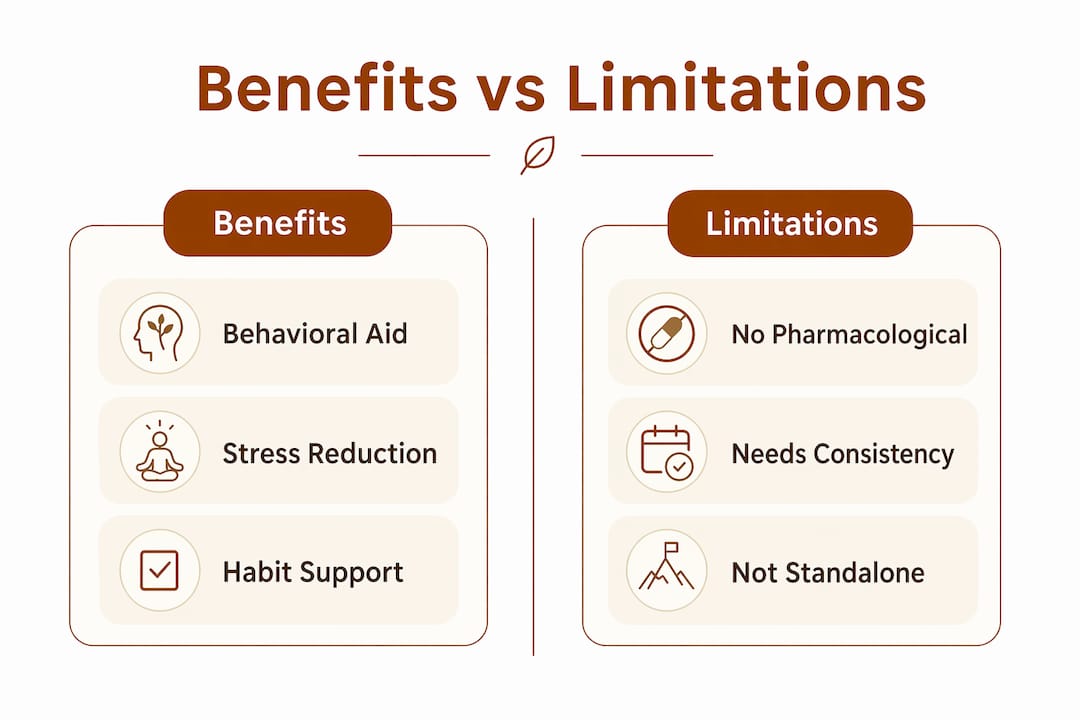
Behavioral change professionals note that breaking automatic habit loops with a conscious choice is one of the most effective non-pharmacological strategies available. The necklace functions as a physical cue that forces that conscious pause. That alone can interrupt the automatic reach for a cigarette dozens of times per day.
The top benefits people report include:
- Stress relief through extended, resisted exhalation that calms the nervous system
- Habit substitution that addresses the physical ritual without any chemical input
- Mindful breathing practice that builds awareness of craving triggers over time
- Convenience as a wearable tool that requires no prescription, no pharmacy visit, and no schedule
- Low cost compared to ongoing nicotine replacement therapy purchases
The limitations are equally worth knowing. No randomized controlled trials confirm that breath resistance necklaces increase long-term quit rates. That is a significant gap. The necklace does not treat chemical nicotine dependence, and it cannot replace the dopamine stimulation that nicotine delivers to the brain. People with strong physical addiction will likely find the necklace insufficient on its own.
“Nicotine-free necklaces are habit-replacement jewelry, not cessation medical devices. They address the behavioral layer of addiction, which is real and significant, but they do not touch the neurochemical layer. Pairing them with evidence-based methods gives you the best chance of long-term success.”
Pro Tip: Treat the necklace as one tool in a larger plan. Pair it with counseling, a quit-smoking app, or nicotine replacement therapy if your physical cravings are strong. The necklace handles the ritual; other methods handle the chemistry.
How does a nicotine-free necklace compare with other cessation tools?
The clearest way to understand where a breath resistance necklace fits is to compare it with other options by mechanism, not brand. Nicotine patches, gum, and oral pouches all work chemically. They deliver controlled doses of nicotine to reduce withdrawal symptoms. A nicotine-free necklace works behaviorally. It delivers no substance at all.
That distinction matters because these devices complement evidence-based methods rather than replace them. Someone using a nicotine patch to manage withdrawal can also use a breath resistance necklace to manage the hand-to-mouth craving that the patch does not address.
| Feature | Nicotine replacement (patches, gum) | Behavioral tools (counseling, apps) | Breath resistance necklace |
|---|---|---|---|
| Chemical delivery | Yes | No | No |
| Addresses physical ritual | No | Partially | Yes |
| Clinical trial evidence | Strong | Moderate | Limited |
| Ongoing cost | Moderate to high | Low to moderate | Low ($15–$115) |
| Prescription required | Sometimes | No | No |
| Wearable and discreet | No | No | Yes |
The cost range for nicotine-free necklaces runs from $15 to over $100, with budget models starting around $15–$25 and premium pendants reaching $85–$115. The physiological benefit of breath resistance is the same regardless of price point. Higher prices reflect aesthetics and branding, not additional clinical effectiveness. That is a useful fact when choosing between options.
The necklace also fits situations where other tools do not. You cannot chew nicotine gum discreetly in a meeting. You cannot step outside for a counseling session during a work call. A pendant worn around your neck is always available, always discreet, and requires no preparation.
How to use and maintain a nicotine-free necklace effectively
Getting results from a breath resistance necklace depends almost entirely on consistent use and commitment to slow breathing, not on the specific model you choose. The technique is straightforward, but it requires deliberate practice until it becomes automatic.
Using the necklace during a craving:
- Pick up the pendant and hold it between your fingers, mimicking the hand-to-mouth motion
- Inhale normally through your nose
- Place the pendant to your lips and exhale slowly through the resistance channel, aiming for a full 8–10 second exhale
- Repeat 3–5 times until the craving passes or weakens
- Set the necklace back in place and note how the craving shifted
Maintenance and upkeep:
- Replace flavor-infused cores approximately every 30 days, or sooner if the scent fades
- Rinse the pendant with warm water weekly to maintain hygiene
- Store in a dry place to prevent moisture buildup inside the resistance channel
- Check the resistance channel monthly to confirm airflow remains consistent
Pairing with other methods:
- Log each craving and necklace use in a habit tracker to identify your trigger patterns
- Combine with a quit-smoking action plan that addresses both behavioral and chemical dependence
- Consider adding counseling or a support group if cravings remain intense after two weeks of consistent use
Pro Tip: Set a phone reminder for three times a day to practice the breathing technique even when you are not craving. Building the muscle memory outside of craving moments makes the response faster and more automatic when you actually need it.
Key Takeaways
A nicotine-free necklace is a behavioral tool that addresses the physical ritual of smoking or vaping, not the chemical dependence, making it most effective when paired with evidence-based cessation methods.
| Point | Details |
|---|---|
| Definition and mechanism | A breath resistance necklace extends exhale time to 8–10 seconds, activating a calming parasympathetic response. |
| Behavioral, not chemical | These pendants address the hand-to-mouth ritual and oral fixation without delivering any nicotine or substance. |
| Real benefits, real limits | Stress relief and habit substitution are documented; long-term quit rate improvement lacks clinical trial evidence. |
| Cost and value | Models range from $15 to over $100; the physiological benefit is the same across price points. |
| Best used in combination | Pair with nicotine replacement therapy, counseling, or a habit tracker for the strongest quit outcomes. |
What I’ve learned from watching people use these necklaces
The most common mistake I see is treating a breath resistance necklace as a standalone solution. People buy one, use it for a week, feel disappointed when cravings persist, and conclude the product does not work. That misses the point entirely.
The necklace is not a cure. It is a behavioral interrupt. The value is in the pause it creates between the craving and the automatic response. That pause is where real habit change happens. Behavioral science has documented this for decades. The necklace just makes the pause physical and repeatable.
What I find genuinely interesting about this category is how it separates the ritual from the substance. Most cessation tools focus entirely on the chemical side. Nicotine patches, gum, and prescription medications all target the dopamine pathway. None of them address why someone reaches for a cigarette after a stressful meeting or with their morning coffee. The necklace addresses exactly that layer.
The pricing transparency issue also deserves attention. The breath resistance mechanism is simple. A premium price tag does not buy you a better physiological response. What it buys is a pendant you are more likely to wear consistently because it looks good. If aesthetics help you use it more, the premium may be worth it. If not, a budget model delivers the same breathing benefit.
My honest recommendation: use the necklace as your behavioral anchor, build a quit plan around physical objects and mindfulness, and add a chemical cessation method if your withdrawal symptoms are significant. That combination covers both layers of addiction.
— Tommy
Breathefree’s tools for your nicotine-free path
Breathefree builds products specifically for people who want to address the behavioral side of quitting, not just the chemical side.
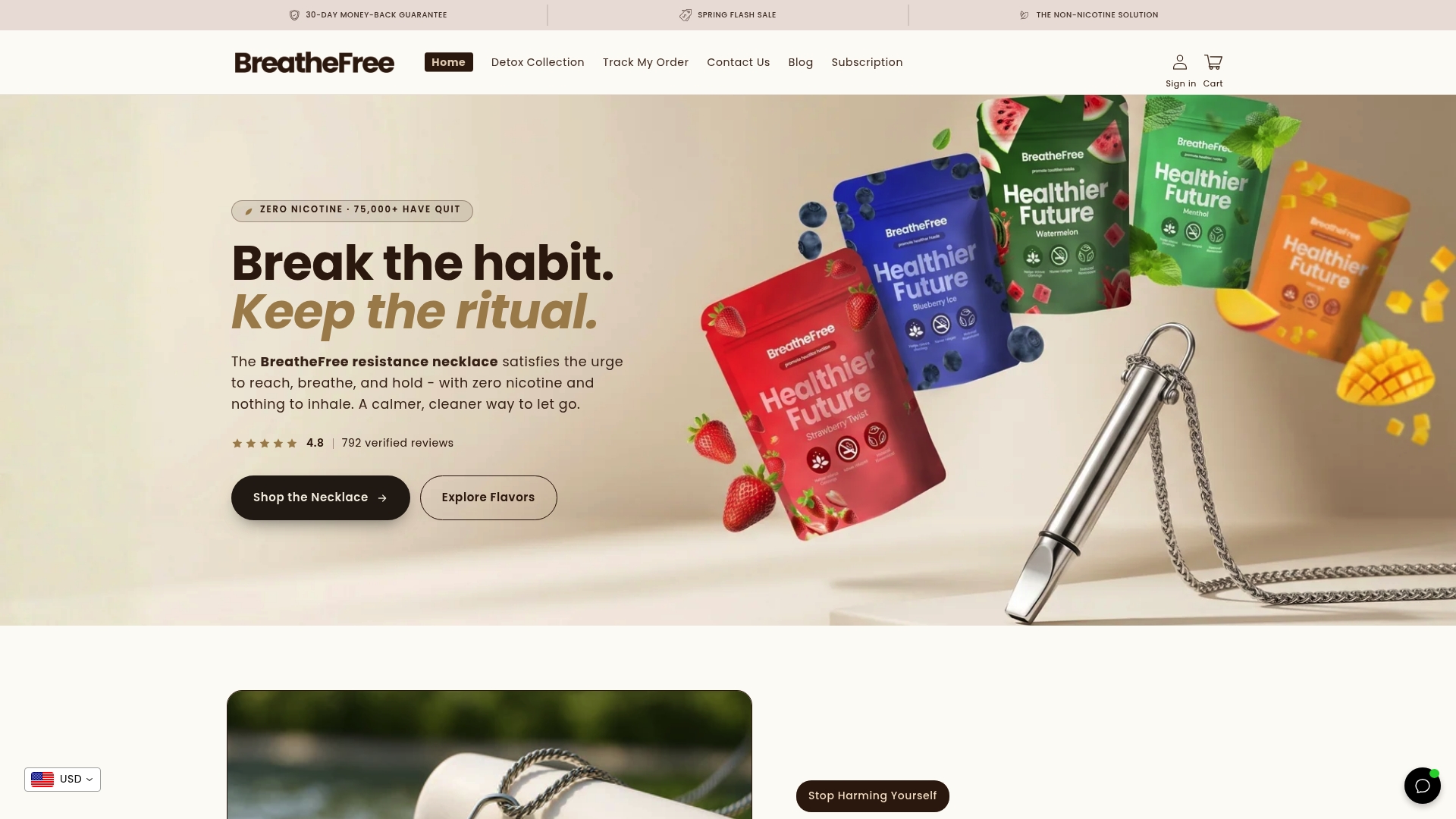
The Breathefree resistance necklace is designed to replace the hand-to-mouth ritual with slow, resisted breathing, and it comes with community support from over 75,000 people who have used the same method. For those who want a more structured approach, the Nicotine Detox eBook and Habit Tracker pairs behavioral guidance with a daily tracking system that helps you identify triggers, measure progress, and stay consistent. Both tools are built to work together, giving you a behavioral and informational foundation that most cessation plans skip entirely.
FAQ
What is a nicotine-free necklace used for?
A nicotine-free necklace, also called a breath resistance necklace, is used to manage the physical and behavioral habits tied to smoking or vaping. It replaces the hand-to-mouth ritual with slow, controlled breathing and provides no nicotine or chemical substance.
Are nicotine-free necklaces safe?
Nicotine-free necklaces are considered safe behavioral aids because they deliver no chemicals, drugs, or vapor. No serious safety concerns have been reported, though no randomized controlled trials have confirmed their effectiveness for long-term cessation.
How long do the flavor inserts last in a nicotine-free necklace?
Flavor-infused cores typically last about 30 days before the scent fades and replacement is needed. Replacement cores are generally low cost and widely available from the original manufacturer.
Can a nicotine-free necklace replace nicotine patches or gum?
A breath resistance necklace addresses behavioral habits, not chemical nicotine dependence, so it does not replace pharmacological tools like patches or gum. The two approaches work best in combination, with the necklace handling the ritual and the patch or gum managing withdrawal symptoms.
How much does a nicotine-free necklace cost?
Prices range from $15 for budget models to over $100 for premium pendants. The physiological benefit of breath resistance is consistent across price points, with higher costs reflecting design and branding rather than added clinical effectiveness.