

Breathing changes after quitting smoking because your lungs begin healing within hours of your last cigarette, triggering a cascade of physiological shifts that alter airway function, mucus production, and oxygen delivery. These changes are not random. They follow a predictable biological timeline rooted in how smoking damages the respiratory system and how the body repairs itself once the source of damage stops. Understanding why breathing changes after quitting helps you interpret what your body is doing, so you can support the process rather than fear it. Breathefree has helped over 75,000 people quit, and respiratory recovery is one of the most consistent and encouraging changes they report.
Why does breathing change in the first days after quitting?
The most immediate driver of breathing changes is carbon monoxide clearance. Cigarette smoke floods the bloodstream with carbon monoxide, a gas that binds to hemoglobin and blocks oxygen delivery to tissues. The carbon monoxide half-life is 4–6 hours, meaning your blood oxygen capacity is fully restored within 24 hours of quitting. That single shift is why many people feel a noticeable difference in their breathing within the first day.
The second major change involves cilia. These are tiny, hair-like structures lining your airways that sweep mucus, debris, and pathogens out of the lungs. Smoking paralyzes and destroys cilia over time. Cilia recovery begins within 24–72 hours of quitting. As they reactivate, they start moving accumulated mucus that had been sitting in the airways for months or years.
Airway inflammation also begins to ease in the first 72 hours. Smoke triggers a constant low-grade inflammatory response in the bronchial lining. Without that trigger, the swelling starts to subside, and the diameter of the airways gradually widens. More airway space means less resistance with each breath.
- Carbon monoxide clears: Blood oxygen capacity returns to normal within 24 hours.
- Cilia reactivate: Airway sweeping resumes within 24–72 hours, moving trapped mucus.
- Inflammation subsides: Bronchial swelling begins to reduce, widening airways.
- Breathing feels different: Some people notice easier airflow; others notice more coughing as mucus moves.
Pro Tip: Drink at least 8 glasses of water daily in the first week after quitting. Hydration thins mucus, making it easier for reactivating cilia to clear it from your airways.
How do coughing and mucus clearance relate to breathing recovery?
Coughing more after quitting is not a sign that something is wrong. It is a sign that your lungs are working again. The medical term for this is “quitter’s cough,” and it is one of the most misunderstood parts of respiratory recovery.

Here is what happens. Cilia regain function rapidly, but the mucus they are now clearing has built up over a long period. The body produces more mucus as part of the inflammatory response winding down. The result is a productive cough that can feel alarming but is actually the lungs expelling waste. Quitter’s cough peaks in weeks 1–2 and typically resolves by weeks 4–8. That timeline matters because some people return to smoking during this phase, mistakenly believing their lungs are getting worse.
| Symptom | During active smoking | After quitting (weeks 1–8) |
|---|---|---|
| Cough frequency | Chronic, often dry | Increases initially, then decreases |
| Mucus color | Often yellow or brown | May darken briefly, then clears |
| Cilia activity | Suppressed or absent | Rapidly reactivating |
| Airway clearance | Poor | Progressively improving |
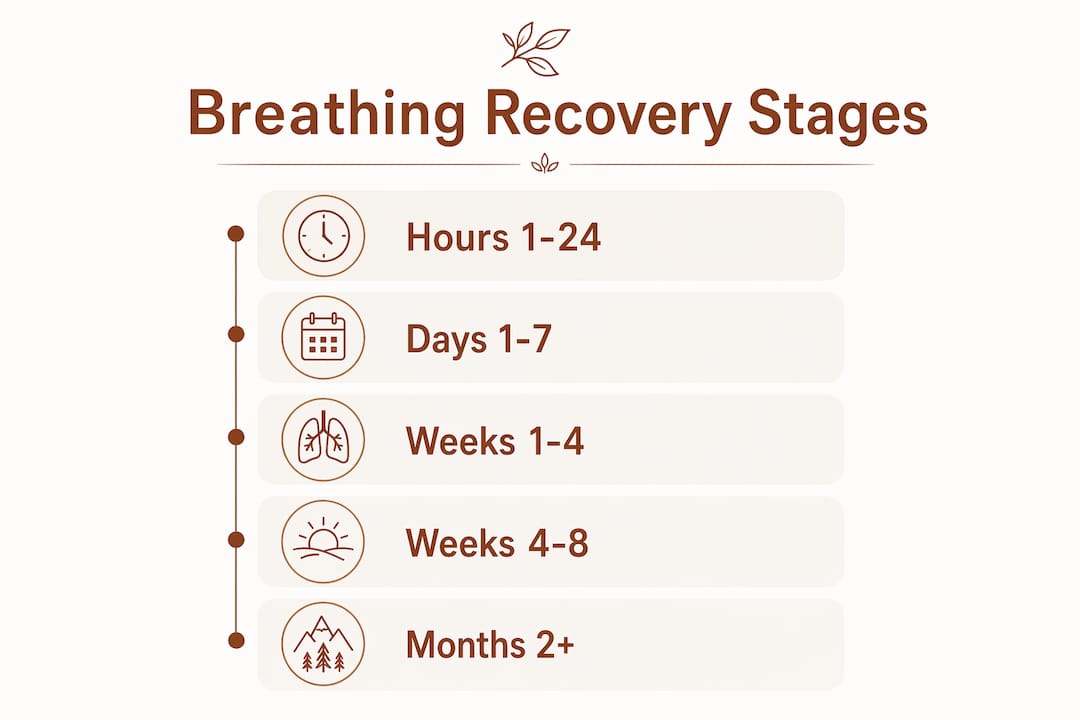
Cilia reach full function within about one month of quitting. Once that happens, mucus clearance normalizes and the cough fades. The airways become genuinely cleaner than they have been in years.
Pro Tip: Steam inhalation, such as a hot shower or a bowl of warm water, can loosen thick mucus and make the coughing phase more comfortable. It does not speed up cilia recovery, but it reduces the effort each cough requires.
What breathing improvements develop over weeks and months?
The short-term changes are real, but the medium-term improvements are where the effects of quitting smoking on breathing become truly significant. Most people notice meaningful breathing improvements during everyday activities by weeks 3–6 after quitting. Climbing stairs, walking briskly, and carrying groceries all feel easier. This is not placebo. It reflects measurable gains in airflow and reduced airway resistance.
By month 3, exercise capacity improves substantially. The lungs are clearing more efficiently, inflammation has dropped, and the airways have widened enough to support greater physical output. FEV1, which is the volume of air a person can forcibly exhale in one second, is a standard clinical measure of lung function. It begins to recover meaningfully in this window, though the rate depends on how long and how heavily a person smoked.
Inflammation reduction is the key mechanism behind these gains. Chronic smoke exposure keeps the bronchial lining in a constant state of irritation, which narrows the airways and reduces their elasticity. As inflammation resolves, the airways regain flexibility and diameter. Oxygen and carbon dioxide exchange improves as a result, which is why breathlessness during exertion decreases noticeably.
- Weeks 3–6: Breathing during daily tasks improves. Stairs and walking feel less taxing.
- Month 3: Exercise capacity increases. FEV1 gains become measurable.
- Months 3–6: Breathlessness during moderate exertion continues to decrease.
- Beyond 6 months: Lung function continues improving, though the rate slows for long-term heavy smokers.
Nicotine withdrawal also plays a role in how breathing feels during this period. Withdrawal temporarily heightens stress, which increases breathing awareness and can make normal breathing feel labored. This effect stabilizes as chemical levels normalize, typically within 3 months.
What breathing techniques support respiratory recovery after quitting?
Breathing exercises are not just relaxation tools. They are clinically supported methods for improving lung function and reducing cravings during cessation. A 2026 study found that structured breathwork reduces nicotine cravings while improving respiratory muscle strength and pulmonary function. That makes breathing exercises one of the few habits that address both the psychological and physical sides of quitting simultaneously.
Two techniques stand out for post-cessation recovery.
Pursed-lip breathing involves inhaling through the nose for two counts and exhaling slowly through pursed lips for four counts. This technique keeps small airways open longer, preventing the premature airway collapse that weakened lungs are prone to. It also slows the breathing rate, which improves gas exchange and reduces the sensation of breathlessness.
Diaphragmatic breathing trains the diaphragm to do more of the work of breathing, reducing the load on the neck and chest muscles that smokers often overuse. Lie flat, place one hand on your chest and one on your abdomen, and breathe so that only the lower hand rises. Practice for 5–10 minutes daily.
Beyond formal exercises, moderate aerobic exercise promotes lung clearance and expansion, supporting better lung function and reducing inflammation. Walking and swimming are particularly effective because they demand sustained, rhythmic breathing without the high-impact stress of running. Hydration supports mucus thinning. Stress management, through exercise, sleep, or structured support, reduces the breathing disruption that withdrawal stress causes.
Pro Tip: Practice pursed-lip breathing during a craving. The slow exhale activates the parasympathetic nervous system, reducing the urgency of the craving while simultaneously training your airways. It is one of the top breathing improvement tools for people who have recently quit.
Lung detox supplements lack clinical evidence and may cause harm. The body’s natural repair process is best supported by hydration, breathing exercises, and physical activity. No pill accelerates what the lungs do on their own timeline.
When should you seek medical advice for breathing changes?
Most breathing changes after quitting are normal and resolve within 1–3 months. Knowing the difference between expected recovery and a warning sign protects your health and your confidence in the process.
Cough and breathlessness improve significantly within the first 1–3 months for most people. If symptoms fall outside that pattern, a medical evaluation is warranted.
Seek medical advice if you experience any of the following:
- Cough lasting beyond 6–8 weeks without improvement, or a cough that worsens after the initial peak.
- Coughing up blood at any point during recovery.
- Chest pain that is persistent, sharp, or accompanied by shortness of breath at rest.
- Severe breathlessness that does not improve with weeks 3–6 of cessation.
- Wheezing that is new or significantly worsening.
A pulmonary function test, which measures FEV1 and other airflow metrics, gives your doctor a clear picture of where your lung function stands and how it is progressing. This is especially useful for people who smoked heavily for many years. Consulting a healthcare provider for atypical symptoms is not an overreaction. It is the responsible step that keeps recovery on track.
Key takeaways
Breathing changes after quitting smoking follow a predictable biological timeline, and understanding each phase makes recovery far easier to navigate.
| Point | Details |
|---|---|
| Oxygen restores within 24 hours | Carbon monoxide clears rapidly, returning full blood oxygen capacity within one day of quitting. |
| Quitter’s cough is a healing sign | Cilia reactivate within 24–72 hours and peak mucus clearance causes coughing that resolves by weeks 4–8. |
| Meaningful improvement by weeks 3–6 | Daily activities like climbing stairs become noticeably easier as airway inflammation subsides. |
| Breathing exercises reduce cravings | Pursed-lip and diaphragmatic breathing improve lung function and lower nicotine craving intensity simultaneously. |
| Persistent symptoms need evaluation | Cough or breathlessness lasting beyond 6–8 weeks warrants a pulmonary function test and medical review. |
What I’ve learned watching people breathe again
The part that surprises most people is not the improvement. It is the discomfort that comes first. When someone quits and then starts coughing more, their instinct is to panic. They think they have made things worse. I have seen this misunderstanding send people back to cigarettes more times than I can count, and it is one of the most preventable setbacks in the entire cessation process.
The cough is the lungs doing exactly what they are supposed to do. The discomfort is the sound of repair. Once you understand that, the experience shifts from alarming to encouraging.
What I find equally underappreciated is the psychological dimension of breathing changes. Nicotine withdrawal heightens your awareness of every sensation, including your own breath. Breathing that felt automatic suddenly feels effortful. That is not lung damage. That is your nervous system recalibrating. It passes. Knowing that in advance makes the weeks of adjustment far more manageable.
My honest advice: commit to the breathing exercises, drink more water than you think you need, and give your lungs the 3-month window they need to show you what they can do. The behavioral support you build around quitting matters just as much as the physical recovery. The two reinforce each other.
— Tommy
Breathefree resources to support your recovery
Quitting is a process with distinct phases, and having structured guidance for each phase makes a measurable difference in outcomes. Breathefree offers a Nicotine Detox eBook and Habit Tracker designed specifically for people navigating the weeks after quitting, covering the physiological changes, breathing exercises, and daily habits that support lung recovery.

The eBook pairs education with a practical tracking system so you can see your progress in real time. Over 75,000 people have used Breathefree’s approach to quit smoking, and the respiratory improvements they report align directly with the clinical timeline covered in this article. If you want structured support for the recovery process, the free eBook is a solid starting point.
FAQ
Why does breathing feel worse right after quitting?
Cilia reactivate within 24–72 hours of quitting and begin clearing accumulated mucus, which causes increased coughing and congestion. This is a normal healing response, not a sign of worsening lung health.
How long does quitter’s cough last?
Quitter’s cough typically peaks in weeks 1–2 and resolves by weeks 4–8 as cilia regain full function and mucus clears from the airways.
Does breathing actually improve after quitting smoking?
Yes. Most people notice meaningful breathing improvements during daily activities by weeks 3–6, with significant exercise capacity gains by month 3 after quitting.
What breathing exercises help after quitting?
Pursed-lip breathing and diaphragmatic breathing are the most clinically supported techniques. A 2026 study confirmed that structured breathwork reduces nicotine cravings while improving respiratory muscle strength.
When should breathing changes prompt a doctor visit?
Seek medical advice if cough or breathlessness persists beyond 6–8 weeks without improvement, or if you experience chest pain, blood in your cough, or severe shortness of breath at rest.