

Nicotine-free oral-fixation products can genuinely help you quit, not by treating chemical withdrawal but by replacing the hand-to-mouth ritual that keeps pulling you back to a cigarette or vape. They’re behavioral tools, not FDA-approved medications, so they work best alongside other supports rather than as a standalone cure. Breathefree’s resistance necklace is one nicotine-free option built specifically for that job.
TL;DR:
- Matching the product to your specific smoking trigger increases the likelihood of success, whether it is oral, hand-related, or sensory-based.
- Behavioral studies show that substitutes reduce tobacco puffing by an average of 44 percent when used alongside traditional cessation methods.
- Choosing a substitute that closely resembles smoking in weight, resistance, or flavor enhances its effectiveness at replacing the ritual.
- Most nicotine-free options cost similar to everyday accessories and should be paired with support strategies for better quitting outcomes.
- These products are not FDA-approved medications and require careful checking for safety, ingredients, and appropriate usage in a comprehensive quit plan.
Table of Contents
- What Are Nicotine-Free Oral-Fixation Quit Aids?
- Does Behavioral Substitution Actually Reduce Smoking?
- How Do You Choose and Use One of These Products?
- Are These Products Safe and Easy to Find in the U.S.?
- Why Some Quitters Choose a Nicotine-Free Behavioral Substitute
- Ready to Try a Nicotine-Free Approach?
- Sources
What Are Nicotine-Free Oral-Fixation Quit Aids?
The goal of these products is simple: give your hands and mouth something to do so the urge to smoke has nowhere to land. Smoking isn’t just chemical. It’s a choreography of movements: reaching for a pack, bringing something to your lips, inhaling, exhaling. Take away the cigarette and that choreography still wants to happen. Nicotine-free substitutes fill that gap without feeding nicotine dependence.
Common formats available to U.S. consumers include:
- Resistance necklaces with flavor refills — you draw against light resistance, mimicking an inhale, while a flavored insert gives your mouth something to focus on.
- Flavored toothpicks — a small, portable object for oral stimulation, often mint or cinnamon flavored.
- Fidget rings — spinning or clicking pieces that occupy restless hands during the irritable phase of quitting.
- Essential-oil nasal sticks — inhalable sticks meant to ease the sensory craving for that “hit” without smoke.
- Lung-detox gummies — chewable products marketed to support the feeling of recovery during the early weeks off cigarettes.
- Habit trackers — apps or journals that log cravings and streaks, reinforcing progress instead of the smoking ritual itself.
Each format targets a slightly different cue. Toothpicks and gummies satisfy oral craving. Rings and necklaces occupy the hands. Nasal sticks address the sensory “hit” some smokers miss most. Matching the product to your specific trigger matters more than picking whatever is popular.
Does Behavioral Substitution Actually Reduce Smoking?
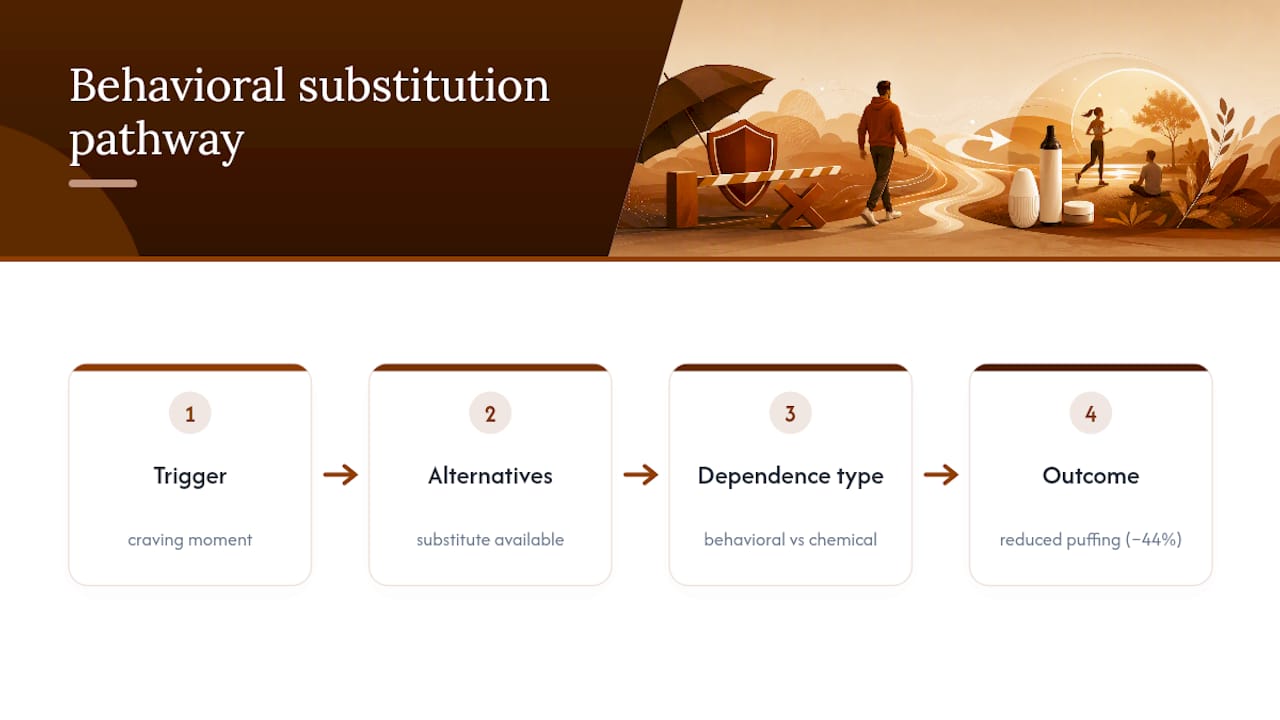
Yes, and there’s real data behind it. One controlled study found that when a substitute was available alongside tobacco, participants reduced their tobacco puffing by 44% compared to when tobacco was the only option on the table. That’s not a small effect for something as low-tech as giving someone an alternative to hold or use.
“Availability of substitutes decreased tobacco puffing,” researchers noted, framing the finding in terms of behavioral economics: quitting isn’t purely about willpower, it’s about what alternatives are sitting within reach at the moment a craving hits.
That framing comes from behavioral economic theory, which treats smoking as one choice among many competing for your attention and reward system. When a substitute reinforcer, something that delivers a smaller but immediate reward, is available and appealing, it can pull behavior away from the cigarette. Behavioral economic analyses of tobacco substitutes back this up, though the size of the effect depends heavily on the product and the person.
Case reports add a human layer to the statistics. One documented case involved a 52-year-old man who quit after oral hygiene therapy replaced his oral fixation, suggesting his dependence was more behavioral than chemical. That’s a pattern worth paying attention to: some smokers are driven mainly by the ritual, and for them, nicotine replacement alone may fall short unless it’s paired with something that addresses the habit itself. Behavioral Activation research, which looks at replacing smoking with positively reinforced alternative activities, supports the same idea: give the brain a new source of reward, not just less nicotine.
None of this means these tools work for everyone. Results vary by smoker, by trigger, and by how consistently the substitute gets used. But the evidence base is coherent enough to treat oral-fixation substitutes as a legitimate piece of a quit plan, not a gimmick.
How Do You Choose and Use One of These Products?
Picking the right tool starts with knowing your own triggers, not chasing whatever has the flashiest marketing.
- Identify your strongest cue. Is it the hand motion, the mouth sensation, or the inhale itself? Choose a format that mirrors that specific cue as closely as possible.
- Check the sensory profile. A product that only vaguely resembles smoking won’t compete with a real craving. Look for something with weight, taste, or draw resistance similar to what you’re used to.
- Verify material safety. Confirm food-grade materials for anything that touches your mouth, and check for allergens in flavored inserts or gummies.
- Think about portability and hygiene. A necklace you can wear everywhere beats a product you have to remember to pack.
- Set a price expectation. Most consumer-quit-aid products run in the range of everyday household purchases, not medical-device pricing, so compare cost against how often you’ll actually reach for it.
For daily use, build a two-week starter routine: carry your chosen substitute everywhere for the first 14 days, use it the instant a craving hits rather than waiting it out, and log each use in a habit tracker so you can see your smoking triggers on paper. High-risk moments, morning coffee, driving, stress at work, deserve extra preparation: keep the product somewhere you’ll actually reach for it, like a pocket or console, not a drawer at home.
Pro Tip: Pair your substitute with one small ritual change, like drinking your coffee in a different chair, so you’re breaking the environmental cue at the same time you’re breaking the physical one.
Before buying anything, ask two questions: does the seller make medical claims it can’t back up, and is the material safe for repeated mouth or hand contact? Red flags include vague ingredient lists and language implying the product treats addiction medically. A legitimate behavioral aid describes itself as support, not treatment. If you want more structured habit-replacement ideas, this guide on replacing smoking rituals walks through several approaches.
Are These Products Safe and Easy to Find in the U.S.?
These are consumer wellness products, not FDA-approved cessation medications, and no reputable seller should claim otherwise. That distinction affects how you should shop for them.
- Check ingredient lists on gummies and flavored inserts for common allergens (nuts, soy, artificial dyes) before buying.
- Confirm materials on hand-held products, like rings or toothpicks, are food-grade and won’t splinter or degrade with repeated use.
- Buy from established online retailers or specialty cessation-support sellers rather than unverified marketplace listings with no return policy.
- Expect prices in the range of everyday accessories, with most orders shipping within the continental U.S. in about a week.
- Combine the product with counseling or a support community when cravings feel bigger than the tool can handle, and talk to a clinician if you’re also using nicotine replacement therapy or managing another health condition — learn more about why it’s important to offer healthcare benefits that support quitting.
Availability has improved steadily as more Americans look for non-nicotine options between full pharmacotherapy and quitting cold. Support resources that combine structured plans with community accountability tend to outperform any single product used in isolation.
Why Some Quitters Choose a Nicotine-Free Behavioral Substitute
Some people trying to quit smoking or vaping aren’t fighting nicotine as much as they’re fighting a habit loop built over years, sometimes decades. For that group, a purely pharmaceutical approach can miss the point entirely. A resistance necklace built around that gap uses a draw-and-resistance action that mimics inhaling, paired with flavor refills, so the hand-to-mouth ritual has somewhere to go without any nicotine involved.
A substantial number of users have used the necklace as part of quitting, alongside structured quit plans and a support community rather than a single product sitting alone on a shelf. That combination matters because behavioral dependence, as the case-report evidence above suggests, often needs more than willpower and more than a patch. It needs a replacement ritual and a reason to stick with it on day nine when motivation dips.
If your cravings feel more like “I miss having something to do with my hands” than “I miss nicotine specifically,” a tool built around that exact sensation deserves a place in your plan. It won’t replace medical guidance if you need it, but it fills a real, specific gap that pills and patches were never designed to address.
— Tommy
Ready to Try a Nicotine-Free Approach?
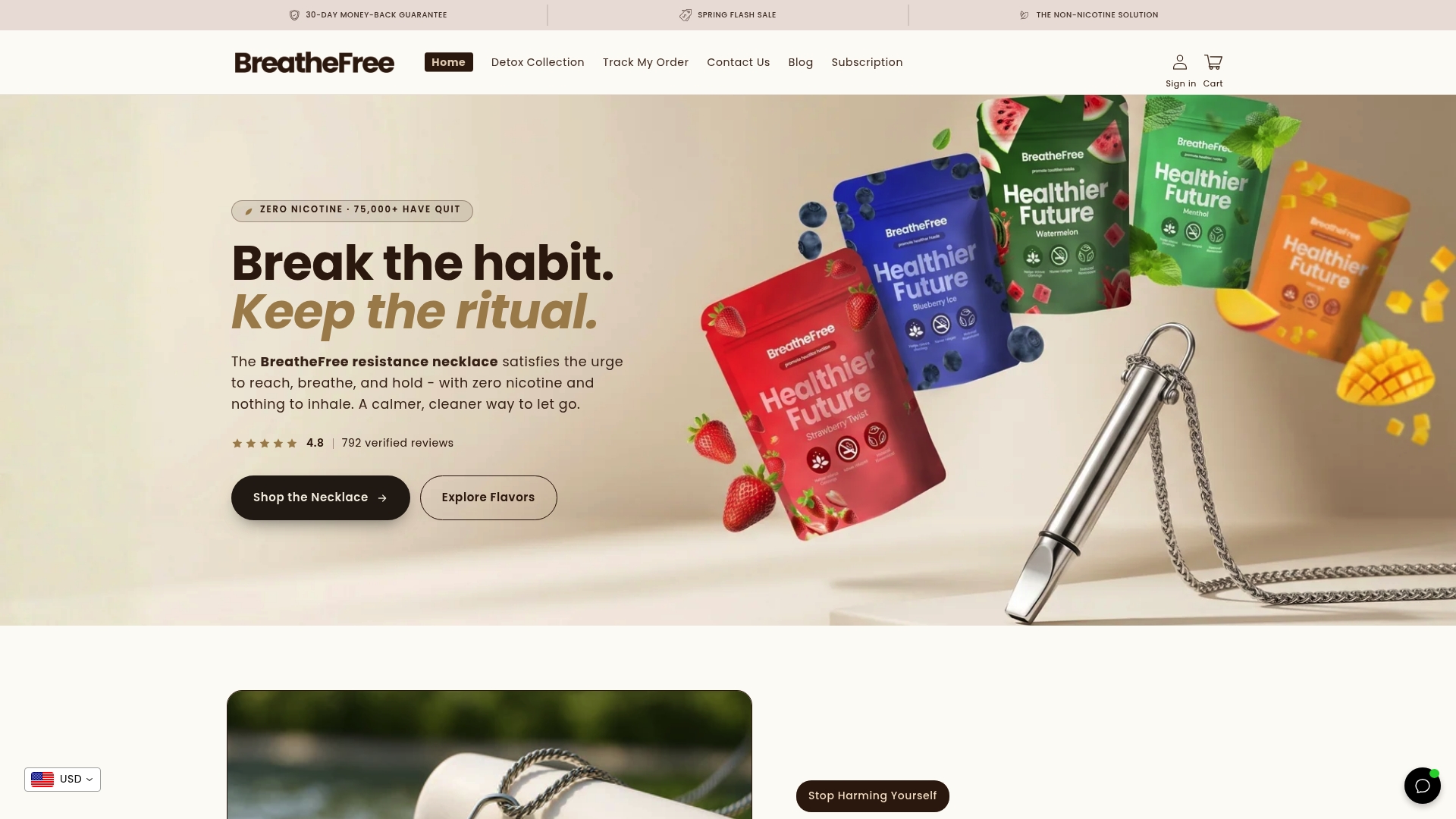
Starting with Breathefree means starting with a plan, not just a product sitting in a drawer. A typical starter order includes the resistance necklace itself, flavor refills to keep the sensory experience fresh, and a starter guide that walks you through your first two weeks.
Use it the way the evidence above suggests works best: reach for it the instant a craving hits, rather than after you’ve already caved, and keep it somewhere you’ll actually grab it, not buried in a bag. Pair it with counseling or a quit-support community if your triggers run deep, and give the ritual replacement at least two weeks before judging whether it’s working. Browse the full necklace collection to pick flavors and refill packs that match your habits, or read how one parent’s four-year-old became the reason quitting finally stuck. Either way, the next step is the same: order your starter kit and give your hands something better to do than reach for a cigarette.
Sources
- Nicotine & Tobacco Research (study reporting substitute decreased puffing)
- PLOS ONE (behavioral activation / substitute reinforcers)
- Journal of Smoking Cessation (oral hygiene therapy pilot/case report)
- Behavioral economic analyses of substitutes for tobacco smoking (PMC review/article)