

Peer support for quitting smoking is defined as behavioral and emotional assistance provided by ex-smokers or fellow quitters to help others achieve abstinence. Clinical research confirms that this kind of community support quitting smoking increases both quit rates and engagement with formal cessation services. A 2026 trial of 1,105 adults found that mobile peer support raised abstinence to 8.9% versus 6.7% in the control group. The peer support quitting smoking benefits extend well beyond numbers. They include reduced anxiety, stronger motivation, and a social network that keeps you accountable when cravings hit hardest.
1. What are the main peer support quitting smoking benefits?
Peer support delivers advantages that clinical treatment alone rarely provides. Here are the most significant ones:
- Higher abstinence rates. Biochemically validated abstinence improved in mobile peer support groups compared to standard care. The gap is modest, but it compounds when combined with nicotine replacement therapy (NRT) or medication.
- Greater use of cessation services. Participants in peer programs showed higher cessation service use at 6 months (14.5% vs 10%). Using more services means more tools working in your favor at once.
- Reduced anxiety and nicotine dependence. A structured group intervention study found that the share of participants with “very high” nicotine dependence dropped from 46.7% to 6.7% over six months. Trait anxiety also decreased significantly (p=0.028).
- Real-time craving management. Peers who have already quit know exactly what a 10 p.m. craving feels like. They provide practical coping advice in the moment, not during a scheduled appointment three days later.
- Motivation through shared milestones. Hearing that someone else made it through week two without smoking makes your own week two feel possible. Shared experience is a powerful motivator that clinical settings rarely replicate.
- Normalization of withdrawal. Group peer support reduces anxiety by normalizing withdrawal symptoms. Knowing that irritability, insomnia, and cravings are temporary and universal makes them easier to tolerate.
Pro Tip: When you join a quit smoking peer network, ask your peer mentor to walk you through the physical timeline of recovery. The American Lung Association notes that heart rate normalizes within 20 minutes of quitting. Knowing these milestones in advance reduces panic during the early days.
2. How structured peer support programs operate

The most effective programs follow a clear structure. They do not simply connect random quitters. They pair trained ex-smokers with people currently trying to quit, and they coordinate with licensed cessation advisors.
Peer eligibility matters. Programs require peers to have been smoke-free for at least one year and to work alongside certified cessation professionals. That combination builds credibility and keeps the advice medically sound.
A typical program runs like this:
- Initial pairing. You are matched with a trained peer based on smoking history, quit method preference, or health background.
- Weekly structured sessions. Sessions cover coping strategies, withdrawal management, and progress review. Alberta Quits’ QuitCore program runs six structured group sessions with in-person, telephone, and virtual options.
- Between-session contact. Peers provide critical between-visit support via mobile chat or phone. This fills the gap between clinical appointments when cravings are most dangerous.
- Milestone celebration. Groups acknowledge progress at 1 week, 1 month, and 3 months. Recognition reinforces commitment.
- Referral to clinical resources. Peers actively encourage use of NRT, prescription medications, and counseling. This is why peer programs increase formal service use.
Pro Tip: Choose a program that pairs peer mentors with a cessation advisor, not one that operates independently. Peer-only groups without clinical oversight can spread inaccurate advice about medications or withdrawal timelines.
The table below compares delivery formats:
| Format | Accessibility | Best for |
|---|---|---|
| In-person group sessions | Requires local availability | People who benefit from face-to-face accountability |
| Virtual group (video call) | Available anywhere with internet | People with mobility or schedule constraints |
| Mobile group chat | 24/7 access | Real-time craving support between sessions |
| Peer navigator (one-on-one) | Referral-based | Special populations, such as people living with HIV |
3. Examples of peer support formats and smoking cessation resources in 2026
Several programs are available right now, both free and low-cost. Here is where to find them:
- Alberta Quits QuitCore. A free 6-session group program for adults in Alberta, Canada. Available in person, by phone, and virtually. Access it by calling the Alberta Quits helpline directly.
- American Lung Association Freedom From Smoking. The Freedom From Smoking community offers online peer discussion, encouragement, and practical tips in a forum format. No referral needed.
- CPSL Mind Stop Smoking Peer Support Group. CPSL Mind runs a weekly online group via Microsoft Teams for people with mental health challenges. You can join through a professional referral or self-referral.
- Peer navigator programs for people with HIV. A peer navigator study found that most participants completed all 12 weekly sessions and doubled their self-reported 7-day abstinence at 12 weeks. These programs are available through HIV care clinics and community health centers.
- Mobile group chat programs. Some clinical trials and health systems now offer mobile-based peer groups with trained ex-smokers. Ask your doctor or local health department if a program is available in your area.
For over-the-counter cessation products to use alongside peer support, an online pharmacy can provide NRT options like patches, gum, and lozenges without a prescription.
4. Peer support vs. quitting solo vs. professional help only
Understanding what peer support adds, and what it does not replace, helps you build the right quit plan.
Quitting solo is the most common approach, but it carries the highest relapse risk. Without external accountability or real-time support, cravings and withdrawal symptoms are managed entirely alone. Most people who quit cold turkey without any support relapse within the first two weeks.
Professional help only, such as counseling or medication management, provides clinical expertise but limited emotional continuity. Appointments are scheduled. Cravings are not. The gap between clinical contacts is where most relapses happen. Peer support fills exactly that gap by providing continuous behavioral support between visits.
Peer support as an add-on to professional care produces the strongest intermediate outcomes. It does not always show statistically significant quit rate differences on its own. What it consistently improves is engagement, motivation, and use of formal cessation resources. Those improvements translate into better long-term quit rates over time.
| Approach | Quit rate impact | Anxiety reduction | Cessation service use | Real-time craving support |
|---|---|---|---|---|
| Solo quitting | Low | None | Low | None |
| Professional help only | Moderate | Moderate | Moderate | Limited |
| Peer support only | Modest | High | High | High |
| Peer support + professional care | Highest | High | Highest | High |
The data is clear. Peer support works best as an adjunct, not a standalone. Pair it with NRT or counseling for the best results.
5. How to choose and engage with the right peer support
Not all peer groups are equal. The quality of your experience depends heavily on the program structure and your level of participation.
Look for these criteria before joining:
- Trained peers. Confirm that peer mentors have been smoke-free for at least one year and have received formal training.
- Clinical pairing. The program should connect peers with a cessation advisor or healthcare provider, not operate in isolation.
- Structured sessions. Open-ended chat groups without a session structure tend to drift. Look for programs with a defined curriculum.
- Accessibility. If you work irregular hours, a virtual or mobile format will serve you better than in-person weekly meetings.
Once you join, active participation matters more than attendance. Share your triggers. Ask specific questions about what worked for your peer mentor. Use the group during high-risk moments, not just during scheduled sessions.
If you are quitting gradually rather than cold turkey, tell your peer group. A good peer mentor adjusts their advice to your method. The same applies if you have anxiety, depression, or other mental health needs. Programs like CPSL Mind specialize in exactly this overlap. You can also read about quitting approaches to decide which method fits your situation before you start.
Pro Tip: Avoid online communities with no moderation or peer training requirements. Well-meaning but uninformed advice about stopping medications or ignoring withdrawal symptoms can do real harm. Stick to programs affiliated with a health organization or clinical team.
Key takeaways
Peer support for quitting smoking works best as an adjunct to professional care, improving motivation, anxiety, and cessation service use in ways that solo or clinical-only approaches cannot match.
| Point | Details |
|---|---|
| Abstinence rates improve | Mobile peer support raised biochemically validated abstinence to 8.9% vs 6.7% in standard care. |
| Cessation service use increases | Peer program participants used formal cessation services at 14.5% vs 10% at 6 months. |
| Anxiety and dependence drop | Structured group support reduced “very high” nicotine dependence from 46.7% to 6.7% over six months. |
| Between-visit support is critical | Peers fill the gap between clinical appointments, where most relapses occur. |
| Program quality varies | Choose programs with trained peers, clinical oversight, and structured sessions for best results. |
Why peer support changed how I think about quitting
The most underrated part of peer support is not the quit rate data. It is the normalization effect. When you are three days into quitting and convinced you are the only person who has ever felt this miserable, hearing from someone who felt exactly the same thing and came out the other side is genuinely powerful. Clinical counselors are skilled, but they have not personally white-knuckled through a craving at 2 a.m. A trained peer mentor has.
What the research confirms, and what I have seen reflected in program outcomes, is that the biggest barrier to quitting is not nicotine itself. It is the isolation of the attempt. Most people try to quit quietly, without telling anyone, because they are afraid of failing publicly. Peer support dismantles that isolation directly.
The data from the 2026 mobile peer support trial is instructive. The abstinence difference was modest. But the increase in formal cessation service use was substantial. That is the real mechanism. Peer support does not replace NRT or counseling. It makes people more likely to actually use those tools consistently. That is a different kind of benefit, and it is one that gets overlooked when people focus only on quit rate numbers.
My honest recommendation: do not wait until you have tried everything else before adding peer support. Build it in from day one. The 5 reasons people choose Breathefree to quit include community accountability, and that is not an accident. The people who succeed long-term almost always have someone in their corner.
— Tommy
Breathefree tools to pair with your peer support plan
Peer support gives you people. Breathefree gives you structure. The two work well together.
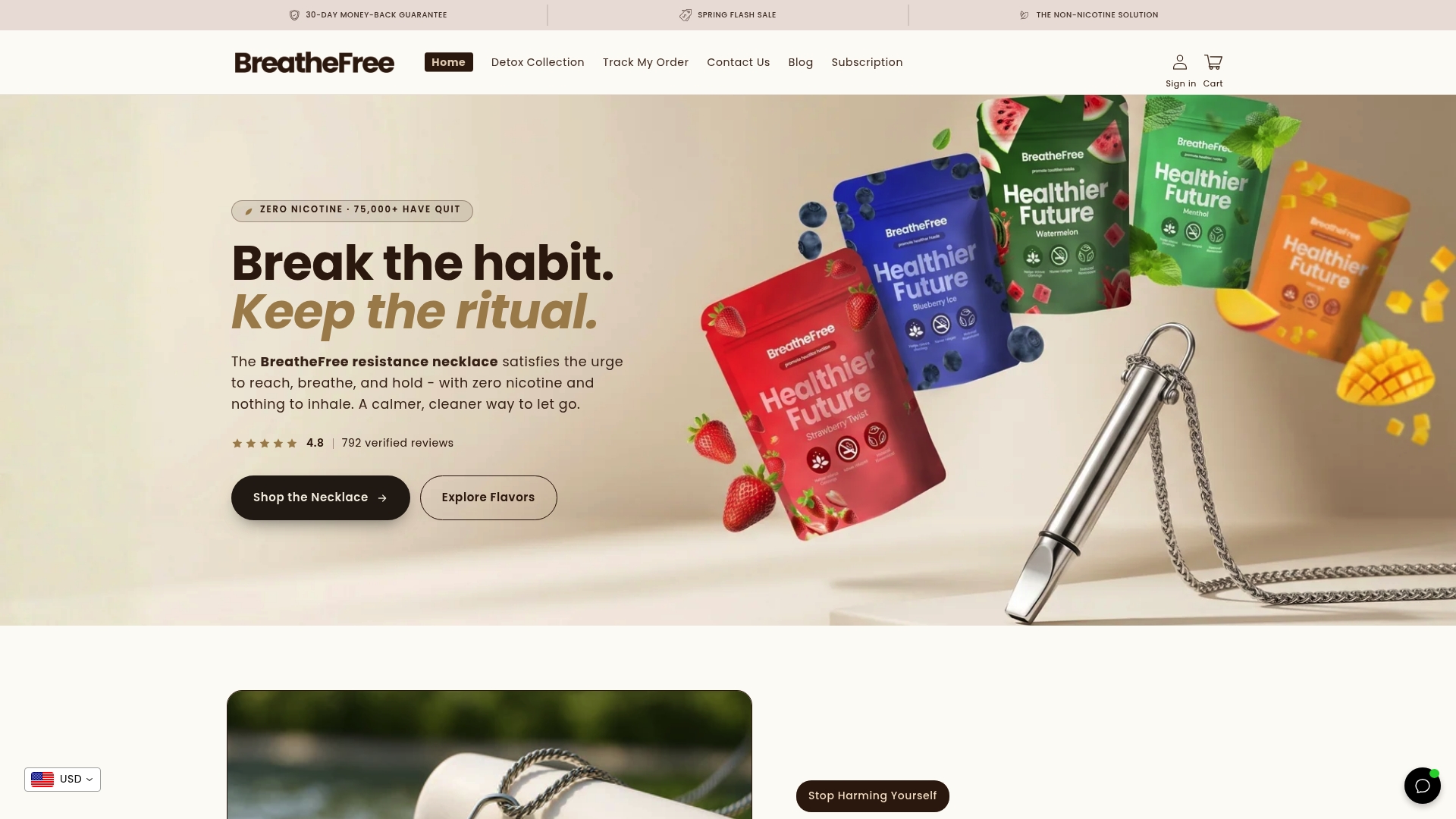
The Nicotine Detox eBook & Habit Tracker from Breathefree is built for exactly this combination. It gives you a day-by-day framework for managing withdrawal, tracking your progress, and staying accountable between peer sessions. When your peer mentor asks how your week went, you will have real data to share, not just a vague sense of how you felt. Breathefree has supported over 75,000 people through nicotine cessation. Pair the tracker with your quit smoking peer network and you cover both the emotional and behavioral sides of quitting at the same time.
FAQ
What is peer support in quitting smoking?
Peer support in quitting smoking is assistance provided by trained ex-smokers or fellow quitters who offer behavioral guidance, coping strategies, and emotional encouragement to people currently trying to quit.
Does peer support actually improve quit rates?
A 2026 trial found that mobile peer support raised biochemically validated abstinence to 8.9% versus 6.7% in standard care. The strongest effect is on engagement with formal cessation services, which indirectly improves long-term quit rates.
How do I find a peer support group for smoking cessation?
Free options include Alberta Quits’ QuitCore program, the American Lung Association’s Freedom From Smoking community, and CPSL Mind’s weekly online group. Access them via helplines, self-referral, or your healthcare provider.
Can peer support help with anxiety during quitting?
Yes. Structured group support has been shown to significantly reduce trait anxiety and nicotine dependence over six months. Normalization of withdrawal symptoms by peers is a key mechanism behind this effect.
Should I use peer support instead of NRT or medication?
Peer support works best alongside NRT or medication, not as a replacement. Research consistently shows that combining peer support with formal cessation tools produces better outcomes than either approach alone.