

An accountability partner helps you quit smoking when you treat it as one layer in a bigger plan, not a standalone fix. The fastest way to start: pick someone reliable today, set a quit date together, and agree on how you will check in. Pair that with Smokefree resources or a quitline call for the clinical side.
TL;DR:
- Ask two people to share support, and agree beforehand on privacy, check in frequency, an urgent signal, response expectations, and what happens after a slip.
- A partner can offer distraction during cravings and nonjudgmental check ins, but should not diagnose withdrawal or manage medication; severe symptoms call for professional support.
- Adding behavioral support to medication raised quit rates modestly across trials, with a pooled relative risk of about 1.15; quitlines can also provide personalized plans.
- After a slip, identify the trigger and recommit to the next 24 hours; repeated slips call for more frequent contact or clinical advice.
Table of Contents
- What an accountability partner can and cannot do for you
- How to find and ask someone to be your partner
- Systems that make accountability reliable, not fragile
- Where professional resources and medication fit in
- When a slip happens, reset instead of spiraling into shame
- Ready-to-use scripts, a schedule, and a partner agreement
- What actually works on the ground
- A simple tool that fits into your check-in routine
- FAQ
- Sources
What an accountability partner can and cannot do for you
A partner is different from a quit coach or a quitline counselor. A partner is someone who checks in, distracts you during a craving, and celebrates small wins with you. A trained quit coach, reachable through a quitline, builds a personalized quit plan and can advise on medication. Keep your partner’s job realistic:
- Daily or scheduled check-ins by text, call, or app message
- Distraction during a craving, like a walk or a phone call
- Recognition of milestones, from day one to day thirty
- Honest, nonjudgmental conversation when you slip
What a partner should not be asked to do is diagnose withdrawal symptoms, manage medication, or serve as your only support if you have severe cravings or mental health symptoms. Rotate who checks in on tough days, or set a lighter schedule during busy weeks, so your partner doesn’t burn out before you reach your quit date.
How to find and ask someone to be your partner
Good candidates include a close friend or family member who won’t judge a slip, a former smoker who understands cravings firsthand, or a peer from an online cessation group. Each has tradeoffs: a close friend knows you well but may hesitate to push back, while a stranger from a peer group is more likely to hold you to the agreement without personal history getting in the way.
When you ask, be specific:
- State the request plainly: “I’m quitting smoking on [date]. Would you be willing to check in with me by text each day for the first month?”
- Set a boundary up front: “If I text you during a craving, I just need five minutes of distraction, not advice.”
- Agree on an escalation plan: “If I have a bad week, I’ll tell you, and we’ll figure out together whether I need to call a quitline.”
Before you start, agree on four things: your quit date, how private this stays between you, your check-in schedule, and what happens after a slip. Our guide to building a quit plan walks through a fuller version of this agreement.
Pro Tip: Ask two people, not one. If your primary partner is unavailable during a craving, you still have a backup instead of smoking while you wait for a reply.
Systems that make accountability reliable, not fragile
A single daily text beats a vague promise to “check in sometimes.” Build a rhythm your partner can actually sustain:
- A short morning or evening text rating cravings on a 1 to 10 scale
- An agreed urgent signal, like a specific emoji or phrase, that means “call me now”
- A weekly five-minute call to review the week and adjust the plan
- A shared note or spreadsheet tracking smoke-free days and triggers
Texting programs like SmokefreeTXT add a layer your partner can’t replace: scheduled, automated encouragement timed to common relapse points. Smokefree.gov also lists quitSTART and community groups as complements to one-on-one support, not substitutes for it. A shared habit tracker or calendar reminder app keeps both of you honest about the schedule instead of relying on memory.
Pairing a physical ritual with your check-ins can reinforce the habit break. Many people use a small object, like a fidget tool or a non-nicotine oral-fixation item, as a cue they reach for instead of a cigarette during the exact moment they’d normally text their partner about a craving. Our peer support guide covers how these object-based rituals pair with social accountability.
Where professional resources and medication fit in
Partner support works best layered with clinical help, not instead of it. A meta-analysis of smoking cessation trials found that adding behavioral support to medication raises quit rates modestly, with a pooled relative risk around 1.15 across trials, meaning a small but real improvement over medication alone.

Behavioral support plus medication consistently outperforms medication alone, according to pooled trial data, though the gain is modest rather than dramatic.
Practical next steps: call 1-800-QUIT-NOW to reach a free quit coach, sign up for SmokefreeTXT, and talk to a clinician about nicotine replacement therapy or prescription options. A clinical overview of cessation medications can help you understand what to ask your doctor. Clinical referral matters most if you smoke heavily, are pregnant, or have significant mental health symptoms alongside withdrawal.
When a slip happens, reset instead of spiraling into shame
One cigarette is a slip, not a verdict on your quit attempt. Treat it as information.
- Pause before reacting: don’t decide the quit attempt is over because of one moment.
- Identify the trigger: stress, alcohol, a specific person, or a routine you forgot to plan around.
- Re-commit to a small, near-term goal, like staying smoke-free for the next 24 hours rather than the whole month.
Your partner’s job here is compassion, not lectures. A useful script: “That happened. What was going on right before it? Let’s figure out what to change for next time.” If slips repeat, that’s a signal to add more structure, not give up. Increase check-in frequency, revisit medication options with a clinician, or add a counseling session.
Pro Tip: Write down your trigger within an hour of a slip while the details are fresh. Patterns are easier to spot after three or four logged slips than after one.
Ready-to-use scripts, a schedule, and a partner agreement
Keep your ask script short: “I’m quitting on [date]. Can you text me each morning for the first two weeks?” Keep your craving script shorter: “Craving, 7 out of 10, need a five-minute distraction.”
A simple four-week schedule keeps the arrangement from drifting:
| Week | Check-in focus |
|---|---|
| Week 1 | Daily craving ratings and quit-date reinforcement |
| Week 2 | Daily texts plus one call to troubleshoot early triggers |
| Week 3 | Check-ins every other day, weekly review call |
| Week 4 | Weekly check-in, plan for ongoing maintenance |
Your one-page partner agreement should cover:
- Quit date and how long the formal check-in period lasts
- Privacy: who else, if anyone, knows about the arrangement
- The urgent signal and expected response time
- What happens after a slip, and when to involve a quitline or clinician
- A small reward for milestones, like day seven, day thirty, and day ninety
What actually works on the ground
Regular check-ins paired with at least one clinical resource outperform either alone. A partner makes the daily grind easier to manage, but the arrangement holds up best when it’s written down, not just promised in a moment of motivation. Loose “text me if you need anything” deals tend to collapse under the first real craving.
— Tommy
A simple tool that fits into your check-in routine
A nicotine-free oral-fixation object gives you and your partner something concrete to reference during check-ins beyond just willpower. Our BreatheFree Resistance Necklace is solid, plant-fiber based, and free of nicotine and chemicals, so you can hold or chew it during the exact moment a craving hits, then text your partner that you used it instead of smoking.
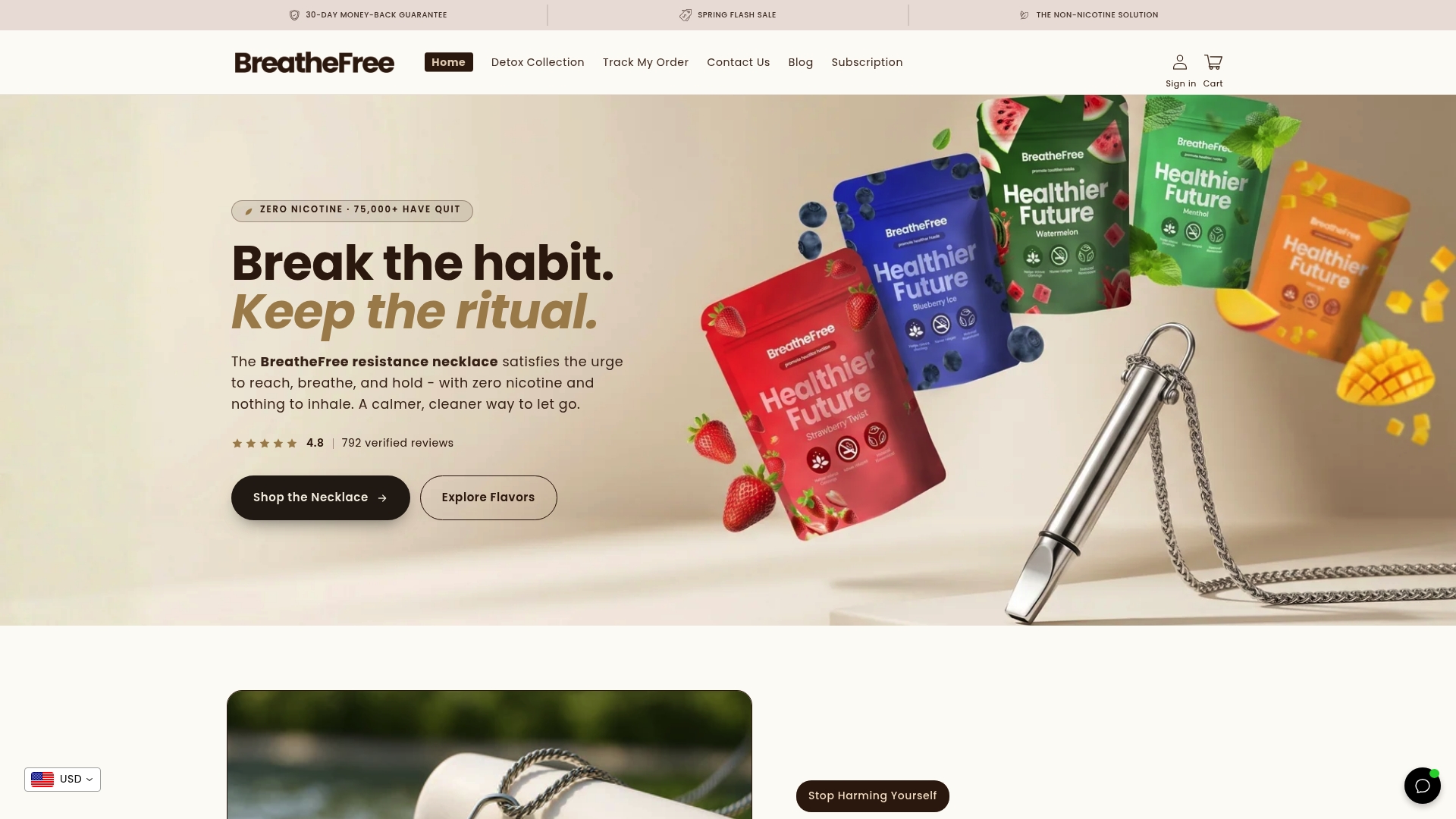
- A physical ritual your partner can ask about directly: “Did you reach for the necklace or the pack?”
- Flavor refills to keep the ritual varied over weeks of use
- A habit tracker to log cravings alongside your partner check-ins
For a longer quit attempt, our subscription option keeps refills coming without you having to remember to reorder. Browse the full resistance necklace collection to find a version that fits your daily routine.
This article is general information, not a substitute for advice from a qualified doctor. Consult a qualified healthcare professional about your own circumstances before acting on anything here.
FAQ
How can I quit smoking?
The most reliable approach combines a set quit date, an accountability partner for daily support, and a professional resource like a quitline or SmokefreeTXT. CDC guidance recommends calling 1-800-QUIT-NOW to get a free, personalized quit plan from a trained coach.
Are there any benefits of using a nicotine patch for non-smokers?
Nicotine patches are intended for people actively quitting smoking, not for non-smokers, and using one without a nicotine dependence introduces nicotine to a body that doesn’t need it. Anyone considering a patch who doesn’t currently smoke should talk to a clinician first rather than use one preventively.
What are the symptoms of vape withdrawal?
Withdrawal from vaping shares the same nicotine-related symptoms as cigarette withdrawal, including irritability, strong cravings, and difficulty concentrating, which typically peak early and ease over several weeks. Our guide to withdrawal symptoms covers the timeline in more detail.
What happens if you stop smoking for 4 days?
By day four, the most intense physical withdrawal symptoms, like irritability and strong cravings, are often near their peak before beginning to ease over the following weeks. Smokefree.gov notes that symptoms are strongest early and recommends text support and combined counseling and medication to get through this stretch.
Sources
- Additional behavioural support as an adjunct to pharmacotherapy for smoking cessation — PMC
- Smokefree
- CDC — Five reasons calling a quitline can be key