

Smoke-free tools for beginners are behavioral and physical aids designed to manage cravings, replace smoking rituals, and build lasting quit habits. The American Lung Association and CDC both endorse a multi-pronged approach that combines quitlines, mobile apps, and physical craving management for the best long-term results. Relying on willpower alone is the single biggest mistake new quitters make. The most effective cessation strategy pairs a digital tool with a physical substitute, addressing both the psychological pull of nicotine and the deeply ingrained hand-to-mouth habit that keeps people reaching for cigarettes.
1. What are the best smoke-free tools for beginners?
The strongest starting point is understanding that no single tool wins on its own. Research confirms that combining behavioral support with physical tools improves long-term cessation success far more than any one method alone. That means the best setup for a beginner is a layered one: at least one digital tool for tracking and motivation, and at least one physical tool for the moments when a craving hits hard and fast.
The categories covered in this guide include quit-smoking apps, CBT-based digital programs, quitline counseling, physical resistance devices, oral substitutes, habit trackers, mindfulness tools, and nicotine-free physical aids like the Breathefree resistance necklace. Each serves a different function. Together, they cover the full spectrum of what makes quitting hard.

2. Quit-smoking apps with craving timers and milestone tracking
Quit-smoking apps are the most accessible entry point for beginners. Top-rated apps in 2026 include craving timers, health milestone tracking, and money-saved counters in their free versions. These features give new quitters real-time feedback, which keeps motivation high during the first critical weeks.
The best apps do more than count days. They show you what your body is recovering: within 20 minutes of quitting, heart rate drops; within 12 hours, carbon monoxide levels normalize. Seeing those milestones tick by makes the sacrifice feel concrete and worth it.
Key features to look for in a quit-smoking app:
- Craving timer: Tracks how long each urge lasts (most cravings peak at 3–5 minutes)
- Health milestone tracker: Shows physiological recovery in real time
- Money counter: Calculates savings from cigarettes not bought
- Streak tracking: Builds momentum through visible progress
- Community or coach access: Provides accountability beyond the app itself
Pro Tip: Pick an app you will actually open daily. If the interface feels clunky after three days, switch. Consistency matters more than features.
3. CBT-based digital programs for mindset change
Cognitive behavioral therapy (CBT) apps go deeper than timers and trackers. Evidence-based apps using CBT techniques help dismantle the mental addiction by reframing the thoughts and triggers that drive smoking. Experts recommend mission-based programs over simple countdown apps because they create a lasting mindset shift, not just a streak.
The practical difference is significant. A basic timer tells you how long you have been smoke-free. A CBT program teaches you why you reach for a cigarette after a stressful meeting and gives you a replacement response. That second layer is what prevents relapse when life gets hard.
Structured quit programs that allow gradual psychological preparation before a quit date outperform abrupt cessation apps. Psychological readiness lowers withdrawal intensity and improves completion rates. If you are still in the “thinking about quitting” stage, a CBT program is the right first tool.
4. Quitline counseling for personalized support
Quitlines are free, phone-based counseling services funded by state and federal health agencies. The CDC confirms that quitlines provide motivational interviewing and personalized quit plans that apps cannot fully replicate. A trained counselor can identify your specific triggers, adjust your plan in real time, and provide the human accountability that keeps many people on track.
The 1-800-QUIT-NOW number connects callers to their state quitline at no cost. Most programs offer multiple callback sessions, not just a single call. For beginners who feel lost about where to start, a quitline call is the fastest way to get a structured plan built around your actual life.
5. Physical resistance devices for hand-to-mouth cravings
The hand-to-mouth habit is one of the most underestimated parts of smoking addiction. Physical tools address this directly by giving your hands and mouth something to do when a craving hits. Handheld resistance devices and oral substitutes are preferred by beginners because they require no setup and attract no social attention.
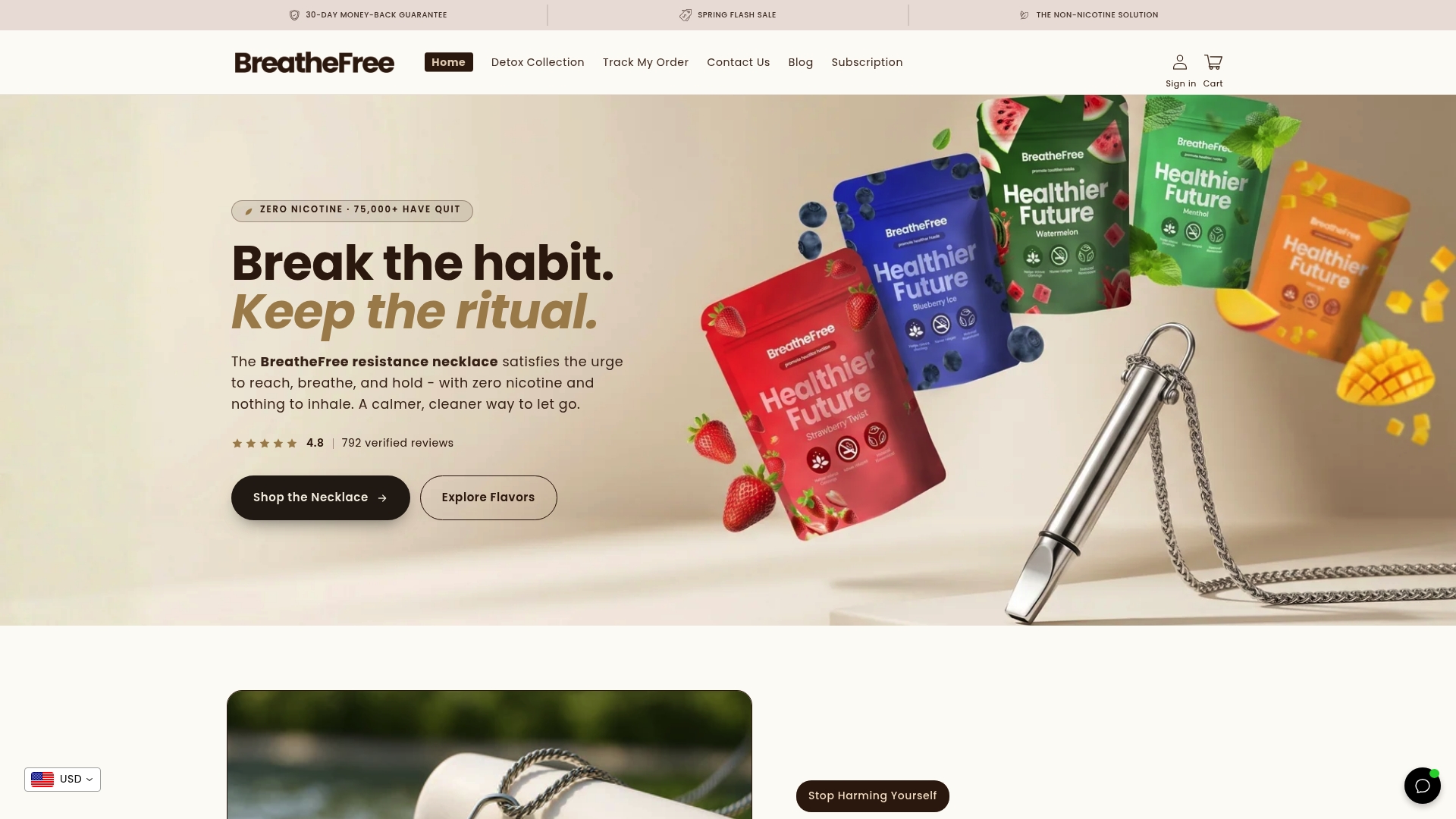
The Breathefree resistance necklace is a nicotine-free physical aid that satisfies oral fixation through controlled breathing resistance. Breathefree reports over 75,000 people have successfully quit using this method. The necklace works by combining the calming ritual of holding and using an object with the physiological effect of regulated breathing, which reduces anxiety during cravings.
Common physical tools for managing cravings:
- Breathing resistance necklaces: Provide a calming, nicotine-free oral substitute
- Toothpicks or cinnamon sticks: Simple, low-cost oral substitutes
- Stress balls or fidget tools: Address hand restlessness without any inhalation
- Chewing gum (sugar-free): Satisfies oral fixation and is widely available
Pro Tip: Keep your physical tool in the same place you used to keep your cigarettes. The location trigger is real, and having a substitute ready in that exact spot removes the decision entirely.
6. Habit trackers for building smoke-free routines
A habit tracker is a simple log that records whether you completed a target behavior each day. For quitters, that behavior is staying smoke-free. The act of marking a day as successful creates a visual chain that becomes its own motivation. Breaking the chain feels worse than the craving itself, which is a surprisingly effective psychological lever.
Breathefree’s Nicotine Detox eBook & Habit Tracker combines structured quitting guidance with a daily tracking system built for beginners. Paper trackers work just as well as digital ones for this purpose. The format matters less than the consistency of use.
7. Mindfulness and breathing exercises
Mindfulness is not a vague wellness concept in the context of quitting. It is a specific skill: noticing a craving without immediately acting on it. Mindfulness practice creates a gap between the urge and the response, and that gap is where quitting actually happens.
Breathing exercises serve a dual purpose. They reduce the acute anxiety that accompanies cravings, and they replace the deep inhalation ritual that smokers associate with relief. Box breathing (inhale 4 counts, hold 4, exhale 4, hold 4) takes under two minutes and works during any craving. Pairing a breathing exercise with a physical tool like the Breathefree necklace reinforces both habits simultaneously.
8. Pharmacotherapy as a complement to behavioral tools
Medication handles the neurochemical side of nicotine addiction. Quitting tools combined with pharmacotherapy yield the highest quit rates by addressing multiple addiction components at once. Medication reduces withdrawal severity while behavioral and physical tools address the psychological and habitual patterns.
Varenicline (Chantix) and bupropion are prescription options that reduce cravings and withdrawal symptoms. Nicotine replacement therapies (NRT) such as patches, gum, and lozenges are available over the counter. A doctor or pharmacist can recommend the right option based on how heavily you smoke and your medical history.
9. How to personalize your tool selection
Choosing the right tools comes down to four factors: your quit stage, your lifestyle, your budget, and your biggest craving trigger. Experts advise selecting one digital and one physical tool that are discreet and easy to integrate, rather than loading up on every option available. Tool fatigue is real, and too many tools creates friction instead of removing it.
A practical selection process:
- Identify your quit stage. Pre-contemplation calls for a CBT program. Active quitting calls for a craving timer and a physical substitute.
- Match tools to your daily routine. A tool you will not use consistently is worthless regardless of how well it works in theory.
- Start free. Most effective apps offer free tiers. Test before paying.
- Add one tool at a time. Introduce a second tool only after the first becomes automatic.
- Reassess at 30 days. What worked in week one may not serve you in month two. Adjust without guilt.
10. Building a smoke-free support network
No tool replaces human connection. Behavioral support from a network of friends, family, or a quit group significantly improves adherence to any cessation plan. Telling someone you trust about your quit date creates social accountability that apps cannot replicate.
Online quit communities, in-person support groups, and even text-based check-ins with a friend all count. The Breathefree community model builds this social layer directly into the product experience. Knowing others are using the same tools and succeeding removes the isolation that makes quitting feel impossible.
Key Takeaways
The most effective approach to quitting smoking combines at least one digital tool with one physical substitute, addressing both the psychological and behavioral sides of addiction simultaneously.
| Point | Details |
|---|---|
| Combine tool types | Pair a digital app with a physical substitute to cover both psychological and habitual cravings. |
| CBT apps outperform timers | Apps using cognitive behavioral therapy create lasting mindset shifts, not just streak counts. |
| Physical tools need zero friction | Discreet, no-setup tools like resistance necklaces have higher adherence among new quitters. |
| Personalize your selection | Choose tools based on quit stage, lifestyle, and your single biggest craving trigger. |
| Add pharmacotherapy when needed | Medication combined with behavioral tools produces the highest quit rates across all methods. |
What I have learned from watching people quit
Most beginners I have seen struggle with the same mistake: they treat quitting as a willpower contest and pick exactly one tool to prove they can do it. That approach fails not because they lack discipline, but because it ignores how addiction actually works. Nicotine hooks you on two levels at once, the chemical and the ritual, and a single app or a single piece of gum addresses only one of them.
The people who succeed long-term tend to be the ones who build a small, consistent system rather than searching for the perfect tool. They use something discreet they can reach for in the moment, something that tracks their progress so the effort feels real, and someone or something that holds them accountable when motivation drops. That combination is not complicated. It is just rarely what gets marketed.
One thing I would push back on is the idea that physical tools are somehow less serious than apps or medication. The hand-to-mouth ritual is deeply wired. Replacing it with a nicotine-free physical substitute is not a crutch. It is a direct intervention on one of the most persistent behavioral patterns in addiction. The Breathefree resistance necklace works on exactly this principle, and the over 75,000 people who have used it are evidence that the approach is sound.
My honest recommendation: start with one CBT-based app and one physical tool. Use both for 30 days before adding anything else. Simplicity is not a compromise. It is the strategy.
— Tommy
A practical next step for new quitters
Quitting smoking gets easier when you have the right structure from day one. Breathefree’s Nicotine Detox eBook & Habit Tracker gives you a clear, day-by-day framework for managing cravings and building smoke-free habits without guesswork or confusion.
The eBook walks you through the science of nicotine withdrawal in plain language, and the habit tracker keeps your progress visible so motivation stays high. Both are designed for people who are just starting out and want a structured, beginner-friendly system. If you are ready to build a quit plan that actually holds, the habit tracker is the place to start.
FAQ
What are the best smoke-free tools for beginners?
The best starting setup combines a CBT-based quit-smoking app with a discreet physical substitute like a resistance necklace or oral tool. The American Lung Association recommends pairing behavioral support with physical craving management for the highest success rates.
Do quit-smoking apps actually work?
Yes, particularly apps that use cognitive behavioral therapy techniques. Evidence-based CBT apps dismantle the mental patterns behind smoking and produce better long-term outcomes than simple countdown timers.
What physical tools help with hand-to-mouth cravings?
Resistance necklaces, toothpicks, stress balls, and sugar-free gum all address the hand-to-mouth habit directly. Discreet, no-setup tools have the highest adherence among beginners because they require no preparation and attract no social attention.
How many tools should a beginner use at once?
Start with one digital tool and one physical tool. Adding too many options at once creates tool fatigue and reduces consistency, which is the single most important factor in quitting success.
Is pharmacotherapy necessary to quit smoking?
Not for everyone, but combining medication with behavioral tools produces the highest quit rates by addressing both the neurochemical and behavioral sides of addiction. A doctor can advise whether prescription options or over-the-counter NRT are appropriate for your situation.