

Mindfulness is defined as the practice of paying deliberate, nonjudgmental attention to your thoughts, feelings, and physical sensations in the present moment. For ex-smokers, this practice directly reduces craving intensity, lowers anxiety, and builds the emotional resilience needed to stay smoke-free. Research from the Uniformed Services University confirms that mindfulness-based addiction treatment reduces anxiety, craving intensity, and dependence compared to standard care. That finding matters because it shows mindfulness is not just a relaxation technique. It is a clinically supported tool for managing the psychological grip of nicotine addiction.
Why mindfulness helps ex-smokers manage cravings and withdrawal
Mindfulness works on cravings by changing how your brain processes them. Instead of treating a craving as a command, mindfulness trains you to observe it as a passing mental event. That shift from automatic reaction to conscious observation is the core mechanism behind why so many ex-smokers find it effective.
Withdrawal symptoms like anxiety, concentration difficulties, and irritability are among the hardest parts of quitting. Mindfulness-based addiction treatment directly reduces all three in clinical populations. This happens because mindfulness calms the nervous system’s stress response, which is the same response that smoking used to regulate.

The neurobiological picture is equally clear. Smoking hijacks the brain’s reward pathways by flooding them with dopamine. Mindfulness gradually updates those pathways by exposing you to the gap between craving and satisfaction. Over time, the brain stops predicting that a cigarette will deliver relief.
Two techniques stand out for breaking the craving cycle:
- Urge surfing: You treat a craving like a wave. You observe it rising, peaking, and falling without acting on it. Cravings peak within minutes and then subside. Riding them out proves to your brain that you do not need to smoke to survive the discomfort.
- Mindful smoking: Before quitting, some programs ask people to pay full attention to every cigarette. Focusing on the actual taste, smell, and sensation reduces the perceived reward and weakens the craving-to-smoke link. The cigarette stops living up to its imagined promise.
One more mechanism deserves attention. Many ex-smokers try to suppress thoughts about smoking, which often backfires. Suppressing smoking thoughts causes rebound effects, making those thoughts more intrusive. Mindfulness takes the opposite approach. It lets thoughts exist without giving them authority.
Pro Tip: When a craving hits, name it out loud or in your head: “This is a craving. It will pass.” That single act of labeling shifts you from automatic reaction to conscious observation.
What are the best mindfulness tools for post-smoking recovery?
Short, frequent mindfulness sessions are the most practical format for ex-smokers. On-demand sessions of 5–15 minutes, practiced multiple times per day, show high acceptability and successfully interrupt smoking automaticity. That means you do not need an hour of meditation. You need consistent, brief check-ins throughout the day.
The following practices are the most effective for building a smoke-free daily routine:
- Breath awareness: Sit quietly and focus only on your inhale and exhale for five minutes. When your mind wanders to a craving, gently return to the breath. This practice directly replaces the breathing ritual that smoking provided.
- Body scan: Lie down or sit comfortably and mentally move your attention from your feet to your head, noticing tension without trying to fix it. This grounds you in physical sensation rather than mental craving.
- Urge surfing: When a craving appears, observe it without judgment. Notice where you feel it in your body. Watch it intensify and then fade. Most cravings dissolve within 3–5 minutes when you stop fighting them.
- Mindful walking: Replace a cigarette break with a five-minute walk where you focus on each step, the air on your skin, and the sounds around you. This gives your body the pause it craved without the cigarette.
- Grounding exercises: Use the 5-4-3-2-1 technique. Name five things you can see, four you can touch, three you can hear, two you can smell, and one you can taste. This pulls attention away from the craving and into the present.
Consistency matters more than duration. Daily mindfulness practice is linked to improved mood, faster emotional recovery after triggers, and greater overall calm. Think of it as building a muscle. The more you practice, the less power cravings hold.
Pro Tip: Set three phone alarms per day labeled “Breathe.” When they go off, take two minutes to focus only on your breath. This builds the habit of pausing before reacting, which is exactly what quitting requires.
How does mindfulness work alongside CBT and other quitting strategies?
Mindfulness combined with cognitive behavioral therapy (CBT) addresses both the thoughts and the emotions that drive smoking. CBT helps you identify and reframe the beliefs that trigger smoking, such as “I need a cigarette to handle stress.” Mindfulness helps you sit with the stress itself without acting on it. Together, they cover both the cognitive and emotional sides of addiction.
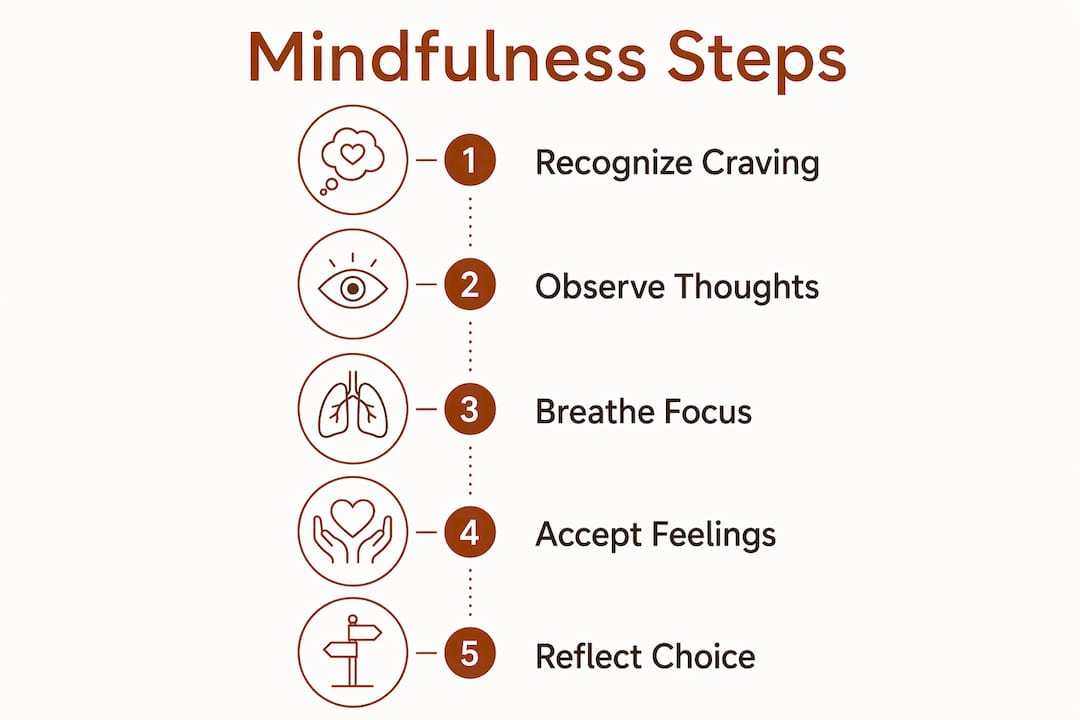
Clinical trials verify biochemical abstinence at six months with combined mindfulness and CBT methods. That is a meaningful benchmark because six months is when relapse risk remains high and willpower alone tends to fail.
The combination works through several reinforcing mechanisms:
- Self-awareness: Mindfulness teaches you to notice triggers before they escalate. CBT gives you a plan for what to do when they appear.
- Emotional regulation: Mindfulness reduces the emotional charge of a craving. CBT restructures the thought pattern that follows.
- Relapse prevention: Mindfulness builds the pause between impulse and action. That pause is where recovery happens.
- Identity shift: CBT challenges the belief “I am a smoker.” Mindfulness helps you observe that belief as just a thought, not a fact.
Understanding the mental health benefits of stopping smoking makes it easier to commit to both approaches. Anxiety and depression often spike in the first weeks after quitting. Mindfulness directly addresses both, making it a natural complement to any structured cessation program.
What does mindfulness look like in practice for ex-smokers?
Real-world mindfulness for ex-smokers is less about sitting in silence and more about replacing the rituals that smoking filled. Cigarettes provided structured breaks, a reason to step outside, something to do with your hands, and a signal to the brain that stress was about to end. Mindfulness replaces each of those functions.
The table below shows common smoking triggers and the mindfulness-based alternatives that address them directly.
| Smoking trigger | Mindfulness alternative | Why it works |
|---|---|---|
| Stress at work | 5-minute breath awareness | Activates the parasympathetic nervous system |
| After a meal | Mindful walking outside | Replaces the post-meal ritual with movement |
| Morning coffee | Body scan while drinking | Turns a habit anchor into a grounding practice |
| Social situations | Grounding (5-4-3-2-1) | Redirects attention from social anxiety to senses |
| Boredom | Mindful observation of surroundings | Fills the mental gap without a cigarette |
Mindfulness as a grounding tool replaces smoking rituals with healthy pauses rather than eliminating the pause entirely. That distinction is critical. Ex-smokers do not need to stop taking breaks. They need breaks that do not involve nicotine.
Emotional stability is another practical outcome. Consistent mindfulness practice improves mood and speeds up emotional recovery after difficult moments. That means a stressful meeting or an argument no longer automatically triggers a craving. The nervous system learns a new default response.
Breathefree’s approach recognizes this need for physical ritual. The Breathefree resistance necklace gives ex-smokers something to hold and focus on during cravings, satisfying the oral fixation that mindfulness alone does not always address. Over 75,000 people have used this method to build smoke-free habits alongside behavioral and mindfulness strategies.
Key Takeaways
Mindfulness helps ex-smokers stay smoke-free by converting automatic craving responses into conscious choices, supported by clinical evidence and practical daily techniques.
| Point | Details |
|---|---|
| Cravings become manageable | Urge surfing and breath awareness let you observe cravings until they pass naturally. |
| Short sessions work best | 5–15 minute mindfulness practices, repeated throughout the day, effectively interrupt smoking automaticity. |
| Mindfulness plus CBT outperforms either alone | Combined approaches show verified abstinence at six months by addressing both thoughts and emotions. |
| Ritual replacement is key | Swapping cigarette breaks for mindful walks or grounding exercises preserves the pause without the nicotine. |
| Consistency builds resilience | Daily practice improves mood and emotional recovery speed, reducing relapse risk over time. |
What I’ve learned about mindfulness and staying smoke-free
Most people approach mindfulness as a last resort after willpower fails. That is the wrong order. Willpower is a finite resource. Mindfulness is a skill that grows stronger with use. The ex-smokers I have seen succeed long-term are not the ones with the most discipline. They are the ones who built a daily practice before the hard moments arrived.
The insight that changed how I think about this: mindfulness does not eliminate cravings. It changes your relationship with them. A craving stops being an emergency and becomes information. Your body is telling you it is stressed, bored, or triggered. That information is useful. Acting on it with a cigarette is not.
The practical implication is that mindfulness works best when it is woven into ordinary moments, not reserved for crisis points. A two-minute breath focus after lunch is more valuable than a 30-minute session once a week. Frequency beats duration every time.
If you are newly smoke-free, treat mindfulness the same way you would treat physical therapy after an injury. You would not skip sessions because you feel fine today. You practice because the strength you build now protects you when things get hard.
— Tommy
Breathefree’s tools for mindfulness-based quitting

Breathefree’s Nicotine Detox eBook & Habit Tracker is built specifically for ex-smokers who want structure behind their mindfulness practice. It combines CBT exercises with daily mindfulness prompts and a habit tracker that shows your progress in real time. You can see exactly which triggers you have handled and where your practice needs more attention. The tracker turns abstract mindfulness into measurable daily wins. For anyone who has recently quit and wants a medication-free, practical system to stay on track, this resource gives you the framework to make mindfulness a consistent part of your smoke-free life.
FAQ
How does mindfulness reduce cigarette cravings?
Mindfulness reduces cravings by shifting your response from automatic to conscious. Techniques like urge surfing teach you to observe a craving until it passes, typically within minutes, without acting on it.
How long does mindfulness take to work for ex-smokers?
Short sessions of 5–15 minutes practiced multiple times daily show measurable craving interference quickly. Consistent daily practice builds emotional resilience over weeks, with clinical studies tracking sustained benefit at six months.
Can mindfulness replace nicotine replacement therapy?
Mindfulness is most effective as part of a broader quitting strategy. Combined with CBT, it shows verified abstinence at six months. It addresses the psychological side of addiction that physical cessation aids do not cover.
What is urge surfing and does it actually work?
Urge surfing is a mindfulness technique where you observe a craving like a wave, watching it rise and fall without reacting. Cravings typically peak and subside within minutes, and this technique proves that to your brain through direct experience.
Is mindfulness useful even months after quitting?
Yes. Daily mindfulness practice is linked to improved mood and faster emotional recovery after triggers, both of which protect against relapse long after the initial quit date.