

A resistance necklace helps you quit smoking mainly by replacing the ritual of smoking, not the nicotine. It gives your hands and mouth something to do during cue-triggered cravings, and that oral substitution is where the actual benefit comes from.
- Behavioral mechanism: A pilot clinical study found nicotine-free oral substitutes reduced cue-induced craving within two weeks.
- Clinical backing: Clinicians at Boulder Community Health note that routine and ritual matter as much as chemical withdrawal.
- Real-world use: Over 75,000 people have used the BreatheFree resistance necklace as part of a quit attempt.
If your cravings are driven more by habit than heavy nicotine dependence, a flavored, nicotine-free necklace is a reasonable, low-risk tool to try, especially alongside nicotine replacement therapy (NRT) when chemical dependence is part of the picture.
Key Takeaways
A resistance necklace works by substituting the ritual and oral fixation of smoking, not the nicotine, and functions best alongside NRT for heavier dependence.
| Point | Details |
|---|---|
| Core mechanism | Replaces hand-to-mouth ritual and cue-driven craving rather than chemical withdrawal. |
| Evidence is directional | A small pilot study on nicotine-free oral substitutes showed reduced craving after two weeks, not a large trial specific to necklaces. |
| Best-fit users | Smokers whose habit is mostly behavioral, not those with heavy chemical dependence. |
| Use it strategically | Deploy during known trigger windows and pair with NRT if withdrawal symptoms are strong. |
| Try BreatheFree | The BreatheFree resistance necklace offers flavor refills and has been used by more than 75,000 quitters as a behavioral substitution tool. |
Table of Contents
- How a Resistance Necklace Reduces Cravings
- What the Research Actually Shows
- What Users Actually Get From Wearing One
- How to Use a Resistance Necklace the Right Way
- Who Benefits Most From This Approach
- Other Tools That Work With or Instead of a Necklace
- What Actually Helped When the Craving Hit Hardest
- Try the BreatheFree Resistance Necklace as Your Next Step
- Frequently Asked Questions
- Sources
How a Resistance Necklace Reduces Cravings
Two things happen when you use a resistance necklace: your brain gets a substitute cue to replace the smoking trigger, and your hands and mouth get something real to do instead of nothing. Both matter, and neither works well alone.
The first is called cue extinction. Every time you light up in response to a trigger, coffee, stress, a phone call, your brain strengthens the link between that trigger and the reward of smoking. Swap in a nicotine-free sensory substitute enough times, and that link weakens. You’re not fighting the craving with willpower alone; you’re rewiring what your brain expects to happen next.
The second is oral fixation itself, a well-documented behavioral pattern where hand-to-mouth motion and mouth stimulation carry as much weight as the nicotine hit. A resistance necklace addresses this directly through:
- Flavor refills that mimic the sensory hit of a drag without smoke or vapor.
- A tactile object to hold, fidget with, or bring to your lips.
- Repeated hand-to-mouth motion that satisfies muscle memory built over years of smoking.
Pro Tip: Use the necklace during your highest-risk moments, the first coffee, the drive home, the after-dinner window, rather than constantly. If chemical withdrawal is severe, pair it with transdermal NRT so you’re managing both sides of the addiction at once.
What the Research Actually Shows
The strongest available evidence comes from a small pilot study testing nicotine-free e-cigarettes combined with transdermal NRT. That’s a meaningful signal, but the sample was small and follow-up was short. The authors themselves called for larger, longer trials before drawing firm conclusions.
No published trial has tested a resistance necklace specifically. What exists is evidence for the underlying principle: oral, nicotine-free substitutes can lower cue reactivity when chemical withdrawal is managed alongside them.
Clinicians see this pattern play out in practice, too.
Quitting is rarely just chemical. Routine and ritual carry real weight, and nicotine-free alternatives that mimic the sensory experience of smoking can make the process feel more manageable, even though long-term safety and efficacy data for many of these products remain limited.
That’s the honest position: the mechanism is sound and the oral hygiene therapy case literature backs it up in a different form, but necklace-specific research doesn’t exist yet.
What Users Actually Get From Wearing One
The practical payoff shows up in daily friction points, not lab results. Expect a reduction in craving intensity during known triggers, a real substitute for the hand-to-mouth habit, and something discreet enough to use in front of coworkers or at a dinner table.
- Craving reduction: Less urge intensity during the coffee break or the after-work drive that used to mean a cigarette.
- Oral fixation replacement: Your mouth and hands stay occupied instead of restless.
- Ritual substitution: You keep a version of the pause-and-reach habit without lighting anything.
- Discreet, flavored use: No smoke, no vapor cloud, easier in social or work settings.
BreatheFree’s own numbers back the pattern: more than 75,000 users have used the resistance necklace as part of a quit plan. Beyond craving control, many report an uplifted mood and easier breathing once cigarettes are out of the daily routine, benefits that stack well with other cessation aids rather than replacing them.
How to Use a Resistance Necklace the Right Way
The routine is simple: wear it during your highest-risk windows, reach for it the moment a craving hits, and let flavor and touch do the work instead of a cigarette.
- Keep it accessible during known trigger times: mornings, breaks, after meals, driving.
- Bring it to your mouth or hands the instant a craving starts, before you reach for anything else.
- Rotate flavor refills so the sensory experience stays engaging instead of stale.
- Use it discreetly in meetings or social settings; it draws far less attention than smoking or vaping.
- Clean it regularly per the manufacturer’s instructions to keep it sanitary for daily mouth contact.
- Remove it and switch to a plain object once cravings fade, so you’re not just transferring dependence.
A resistance necklace is not a nicotine replacement product. It won’t relieve withdrawal symptoms tied to chemical dependence. Stop use and check with a dentist or doctor if you notice oral irritation, and get clinician approval first if you have an existing oral health condition.
Pro Tip: If you’re also using NRT, run them on separate jobs: let the patch or gum handle withdrawal chemistry while the necklace handles the ritual and cue-response side. Trying to make one tool do both jobs is where most people give up early.
Who Benefits Most From This Approach
You’re a strong candidate if your cravings are triggered more by habit and hand-to-mouth motion than by intense physical withdrawal, or if past quit attempts collapsed because you missed the ritual more than the nicotine itself.
- Smokers with a strong hand-to-mouth or oral fixation component to their habit.
- Anyone whose previous quit attempt failed from missing the routine, not the chemical hit.
- Light to moderate smokers with lower baseline nicotine dependence.
If you smoke heavily, are pregnant, or have an oral health condition, talk to a clinician before relying on any substitute tool alone. Heavier chemical dependence usually needs pharmacologic support first.
Other Tools That Work With or Instead of a Necklace
A resistance necklace is one option in a broader toolkit. Zero-nicotine pouches, herbal inhalers, sugar-free gum, and oral hygiene routines all address the same behavioral itch in different ways, while NRT and counseling remain the most evidence-backed cessation methods available.
- Choose an oral substitute (necklace, gum, mints) if your dependence is mostly behavioral.
- Choose NRT or counseling if withdrawal symptoms are severe or chemical dependence runs high.
- Combine both if you’re not sure, which is what most cessation programs recommend anyway.
Some trending alternatives, particularly herbal or botanical inhalers, lack long-term safety data. NRT and behavioral counseling still carry the strongest evidence base for successful cessation.
What Actually Helped When the Craving Hit Hardest
The moments that used to break my quit attempts weren’t the big cravings, they were the small automatic ones: the first coffee, the drive home, the pause after dinner. Reaching for a nicotine-free necklace during exactly those windows replaced the motion I missed most, the hand going to my mouth, without reintroducing anything chemical.

Persistence mattered more than any single tool. Pairing the necklace with a habit tracker to spot my worst trigger times made the difference between white-knuckling it and actually building a new pattern.
None of this guarantees results for everyone. But treating the ritual as seriously as the chemistry is what the evidence on oral substitutes consistently points toward.
Try the BreatheFree Resistance Necklace as Your Next Step
The BreatheFree resistance necklace is a flavored, nicotine-free oral substitute built specifically for this behavioral gap, discreet to wear, easy to refill, and designed for the exact high-risk moments covered above.
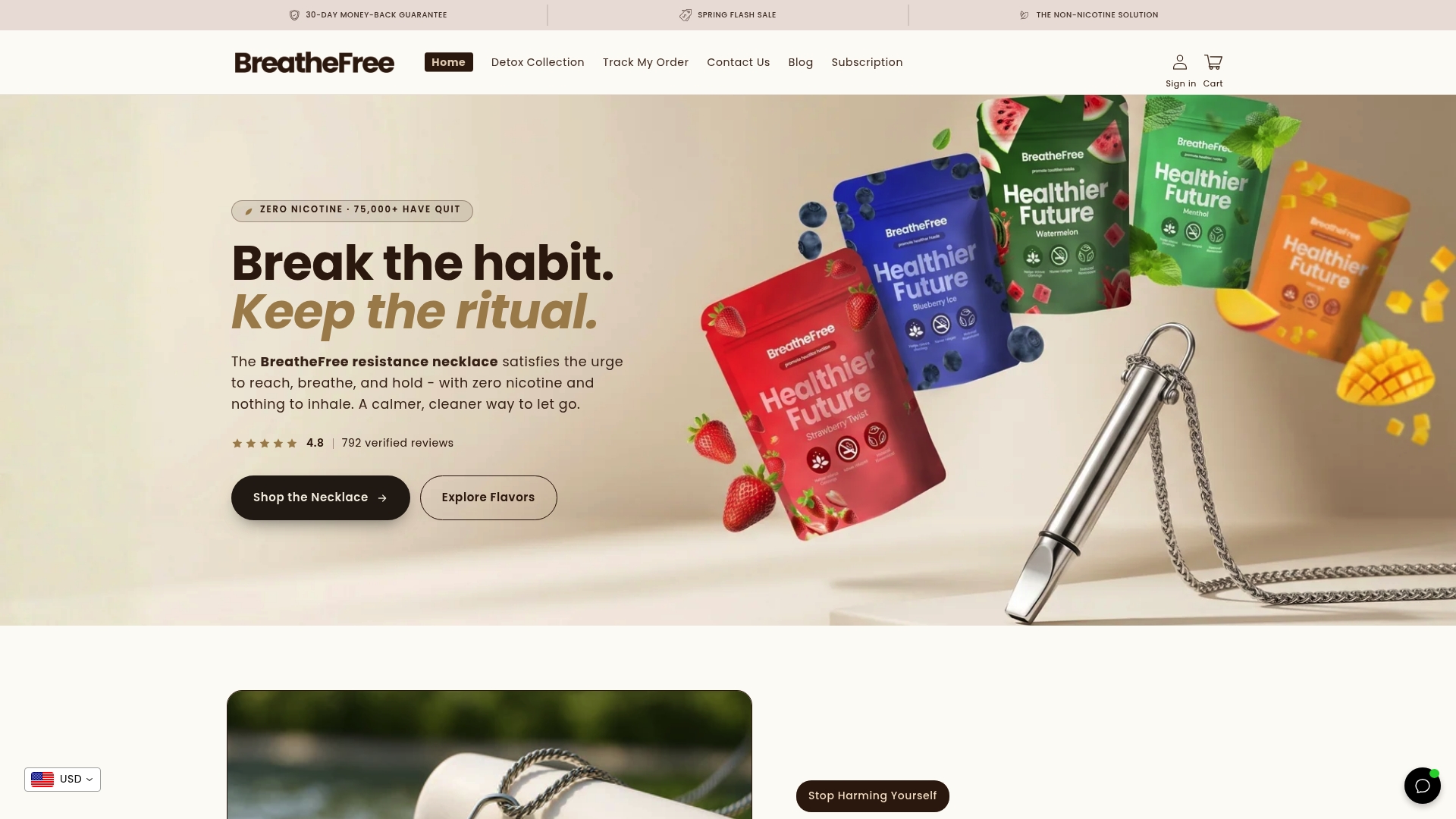
Getting started is simple: pick a flavor from the refill collection, wear it during your known trigger windows for the first two weeks, and pair it with the Nicotine Detox eBook & Habit Tracker if you want a structured plan instead of guessing at your own patterns. It’s worth saying plainly: this is not an FDA-approved cessation therapy, and if your dependence runs heavy or you’re managing other health conditions, talk to a clinician about pairing it with NRT or a formal program. For most people dealing with the habit and ritual side of smoking, it’s a low-risk place to start. Order your resistance necklace today and see how the first trigger-heavy week feels.
Frequently Asked Questions
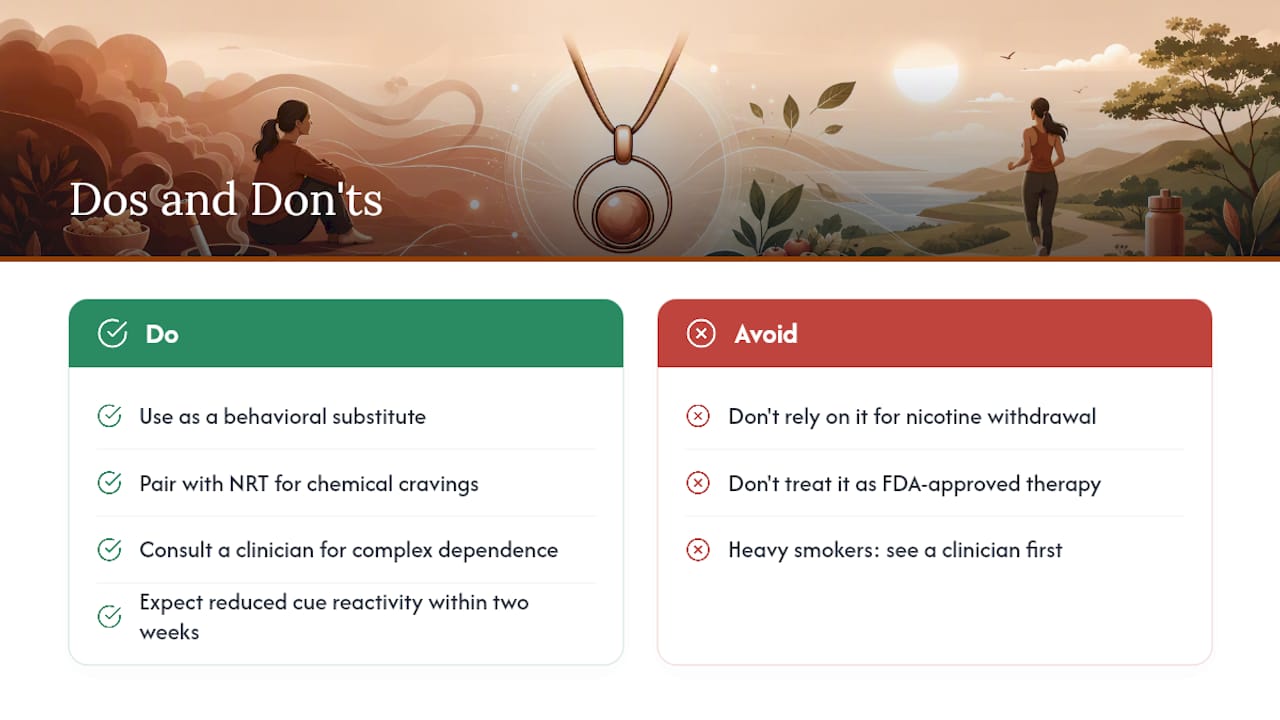
Does a resistance necklace actually reduce nicotine cravings? It reduces cue-induced craving tied to habit and ritual, not the chemical craving from nicotine withdrawal. For chemical dependence, pair it with NRT.
Is the BreatheFree resistance necklace approved by the FDA as a cessation device? No. It’s a nicotine-free behavioral tool, not an FDA-approved cessation therapy. Consult a clinician for complex or heavy dependence.
Can I use a resistance necklace alongside nicotine patches or gum? Yes. Clinicians and pilot research support combining behavioral substitutes with NRT for a more complete approach to both ritual and chemical dependence.
How long before I notice fewer cravings? Early studies on similar oral substitutes showed reduced cue reactivity within two weeks, though individual results vary and larger trials are still needed.
Who should skip the necklace and see a doctor first? Heavy smokers, pregnant individuals, and anyone with an existing oral health condition should get clinician guidance before relying on any oral substitute alone.
This article is general information, not a substitute for advice from a qualified doctor. Consult a qualified healthcare professional about your own circumstances before acting on anything here.
Sources
- Pilot clinical study on nicotine‑free e‑cigarettes plus transdermal NRT (PMC)
- Trending alternatives to help quit nicotine. Do they work? Are they safe? — BCH
- Oral hygiene therapy assists in behavioural intervention for smoking cessation — Journal of Smoking Cessation (DOI)
- Oral fixation: Theory, symptoms, and evidence — Medical News Today