

Breathe therapy, in the context of quitting smoking or vaping, refers to using a non-nicotine resistance necklace and related breathing tools to interrupt the hand-to-mouth ritual that keeps cravings alive. It works because most people trying to quit are fighting two separate battles: a chemical dependence on nicotine and a physical habit of putting something to their mouth dozens of times a day. A resistance necklace like the BreatheFree Resistance Necklace addresses the second battle directly, giving your hands and mouth something to do while your lungs get a slow, controlled pull of air instead of smoke or vapor.
It helps most if you fall into one of these groups:
- You reach for a cigarette or vape more out of habit than chemical need.
- You’ve already reduced nicotine intake but still crave the physical motion.
- You want a tool you can pair with patches, gum, or counseling rather than use alone.
Key Takeaways
Breathe therapy works by replacing the hand-to-mouth ritual and slowing your breathing enough to calm the nervous system during a craving, which makes it most effective for habit-driven smokers and vapers rather than a standalone fix for heavy chemical dependence.
| Point | Details |
|---|---|
| Use it proactively | Reach for the necklace before a craving peaks, not after you’ve already given in. |
| Best for behavioral smokers | Light-to-moderate, habit-driven users see the most benefit from standalone use. |
| Pair with NRT when needed | Combine with patches or gum if withdrawal symptoms feel physical, not just habitual. |
| Not a cure or detox tool | No breathing necklace is FDA approved for cessation or lung detoxification. |
| BreatheFree offers the in-category tool | The BreatheFree Resistance Necklace targets oral fixation with flavor refills and community support, used by over 75,000 people. |
Table of Contents
- How Does Breathe Therapy Actually Interrupt a Craving?
- Who Gets the Most Out of a Resistance Necklace?
- How Do You Use a Breathing Necklace Day to Day?
- When Should You Pair It With NRT or a Clinician?
- What Breathe Therapy Doesn’t Do
- What Trips People Up When Using a Resistance Necklace
- How Does It Compare to Gum, Toothpicks, and Other Oral Substitutes?
- Try the BreatheFree Resistance Necklace for Your Next Craving
- Sources
How Does Breathe Therapy Actually Interrupt a Craving?
A craving is rarely just chemical. It’s a loop: trigger, hand movement, mouth contact, inhale, relief. Break any link in that chain and the loop stalls out. That’s the entire logic behind a resistance necklace. You get the hand-to-mouth motion and the inhale, minus the nicotine and combustion, which interferes with hand-to-mouth conditioning that cigarettes and vapes have spent months or years reinforcing.
The breathing side matters just as much as the tactile side. Pulling air through a resistance device forces you to slow down and take longer, deeper breaths than normal. Slow, paced breathing shifts your nervous system out of fight-or-flight mode and into a calmer parasympathetic state, which is linked to reduced craving intensity and lower heart rate in the middle of a stressful trigger moment.
A small pilot approach using oral-focused behavioral tools found that replacing the oral ritual helped smokers whose dependence leaned more behavioral than chemical. That’s a narrow, early-stage finding, not proof the device cures addiction on its own. But it lines up with what most quit-smoking clinicians already believe:
- Oral fixation is a distinct behavioral driver, separate from nicotine’s chemical grip.
- Resisted breathing lowers physiological arousal in the moment a craving hits.
- Tools that replace the ritual tend to work best for lighter, habit-driven use.
Who Gets the Most Out of a Resistance Necklace?
Breathe therapy shines brightest for people whose smoking or vaping is driven more by ritual than raw chemical need. If you smoke after meals out of habit, vape while driving because your hands want something to do, or reach for a cigarette when you’re anxious rather than because you’re in physical withdrawal, a resistance necklace gives you an immediate substitute.
Good candidates typically include:
- Light-to-moderate users smoking fewer than half a pack a day.
- Situational smokers triggered by specific times, places, or emotions.
- Anyone tapering down who still craves the physical motion after nicotine intake drops.
Heavier, long-term users with strong physical withdrawal symptoms (sweating, severe irritability, intense physical cravings) usually need more than a behavioral tool. That’s where nicotine replacement therapy or a clinician-guided plan fills the gap the necklace can’t.
Pro Tip: If you’re not sure which camp you fall into, track your first 10 cravings this week. If most hit at predictable moments (after coffee, during a commute), you’re likely a strong candidate for standalone use.
How Do You Use a Breathing Necklace Day to Day?
Start using the device before a craving fully takes over, not after you’ve already caved. Practitioners who work with resistance breathing tools describe this as building “behavioral architecture”: a deliberate pause that shifts you from reacting to a craving to actively choosing how to respond.
Here’s a simple routine to start today:
- The moment you notice a trigger (finishing a meal, feeling stressed, seeing someone else smoke), pick up the necklace before your hand reaches for anything else.
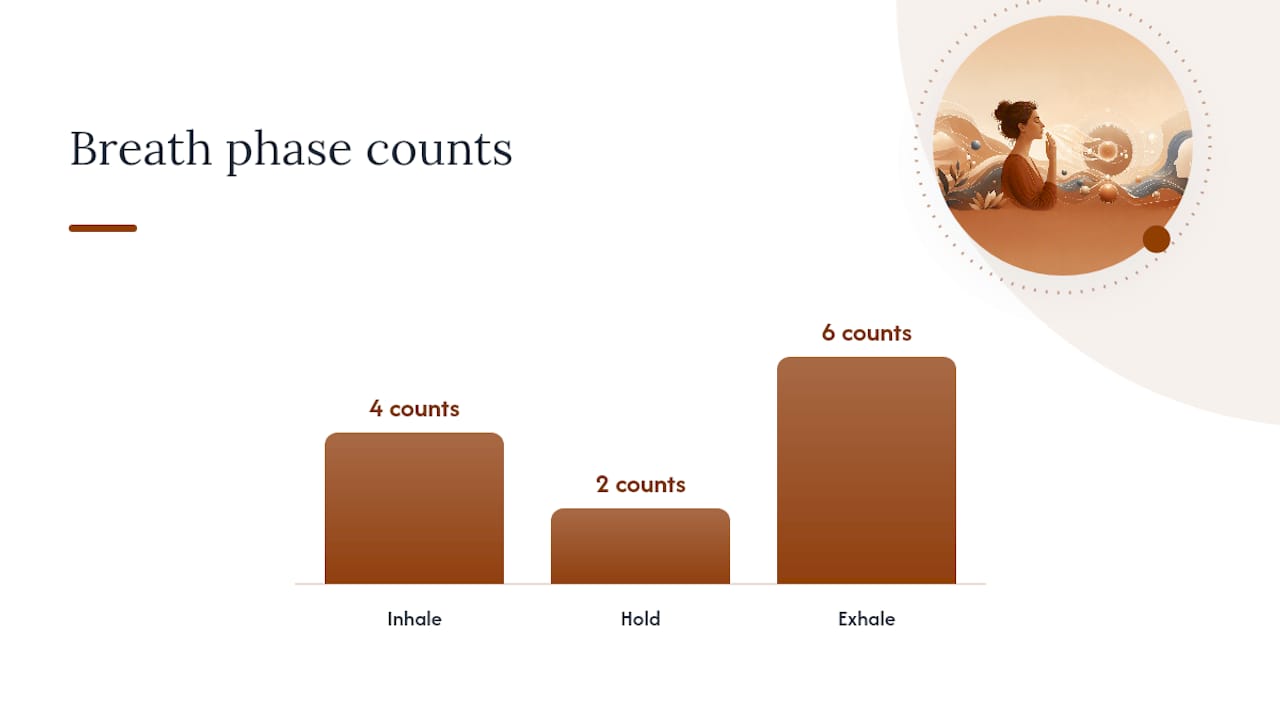
- Take 3 to 5 slow, resisted breaths: inhale for a count of 4, hold for 2, exhale for a count of 6.
- Notice whether the urge has dropped. If it has, put the necklace down and move on. If not, repeat once more.
- Log the craving and the outcome in a habit tracker or notebook, even if it’s just a checkmark.
For the first four weeks, treat consistency as the goal, not perfection. One user account described daily cravings dropping steadily over about a month when the device was used at every craving rather than only the hard ones. That’s one report, not a guaranteed outcome, but the pattern matches how habit replacement usually works: repetition first, reduction second.
Pro Tip: Keep more than one necklace within reach. Practical guidance for this method involves keeping devices near common trigger spots so you’re never caught without one at your desk, in your car, and by your bed.
When Should You Pair It With NRT or a Clinician?
A resistance necklace handles the ritual. It does not add nicotine to your bloodstream, so it won’t touch a strong physical withdrawal. If you’re waking up with cravings, feeling shaky or irritable within an hour of your last cigarette, or your quit attempts keep failing despite behavioral tools, that’s a sign your dependence has a heavier chemical component.
Pairing works well in practice:
- Wear the necklace during high-risk windows (after meals, during commutes, social events) while using a nicotine patch for baseline chemical cravings.
- Use nicotine gum for sudden spikes and the necklace for the reflexive hand-to-mouth motion in between.
- Call a quitline or talk to a doctor if you notice mood changes, intense withdrawal, or repeated relapse. Mention how many cigarettes or vape sessions you’re having daily and how long withdrawal symptoms last.
Oral fixation sometimes ties back to deeper anxiety or stress patterns. When that’s the case, talking to a therapist about the underlying trigger tends to outperform any physical tool used alone.
What Breathe Therapy Doesn’t Do
A resistance necklace is a behavioral aid, not medicine. No breathing necklace on the market, including BreatheFree’s, carries FDA approval as a smoking cessation drug, and no large clinical trials have proven that any device alone causes people to quit. Reviews of this category are consistent on that point: these tools are best framed as behavioral adjuncts, not clinical replacements.
It also does not detoxify your lungs. Nothing you inhale through a resistance device pulls tar or chemical residue out of lung tissue. Whatever lung recovery happens after quitting smoking or vaping comes from your body’s own repair processes over weeks and months, not from any product you breathe through.
It won’t manage severe nicotine withdrawal by itself either. If your body is chemically dependent, resisted breathing can calm you in the moment but won’t replace the nicotine your receptors are asking for. That’s a job for patches, gum, or a prescribed medication, guided by a doctor.
Finally, it isn’t a substitute for addressing whatever emotional pattern sits underneath heavy oral fixation. If stress, anxiety, or a deeper compulsive habit is doing most of the driving, a device gives you a pause button, not a resolution. Use that pause to decide your next move: call someone, go for a walk, or reach for whatever your quit plan says comes next.
What Trips People Up When Using a Resistance Necklace
The most common mistake is treating the necklace as an emergency-only tool. Reaching for it only during your worst cravings means you’re using it after the loop has already fired, which is far harder to interrupt than catching the urge early. Fixing this is mostly about timing: use it proactively at known trigger points, not just when you’re desperate.
The second issue is availability. If your only necklace is in a drawer at home and the craving hits at work or in the car, you’ll default to old habits. Keeping a device wherever you spend the most time solves this, and it’s worth building a simple quit action plan around where and when you’ll actually have it on hand.
A third challenge is boredom or novelty fade. Some users report the device feels effective for the first week, then loses its punch once it stops feeling new. Varying the breathing pattern (switching between 4-2-6 and slower 5-3-7 counts) or adding a flavor refill can restore the sense of ritual.
Finally, people sometimes expect instant, total craving elimination. Reports on this category describe a gradual decline over weeks, not an overnight switch. Tracking each craving and its outcome, even briefly, tends to keep motivation intact through the slower early stretch.
How Does It Compare to Gum, Toothpicks, and Other Oral Substitutes?
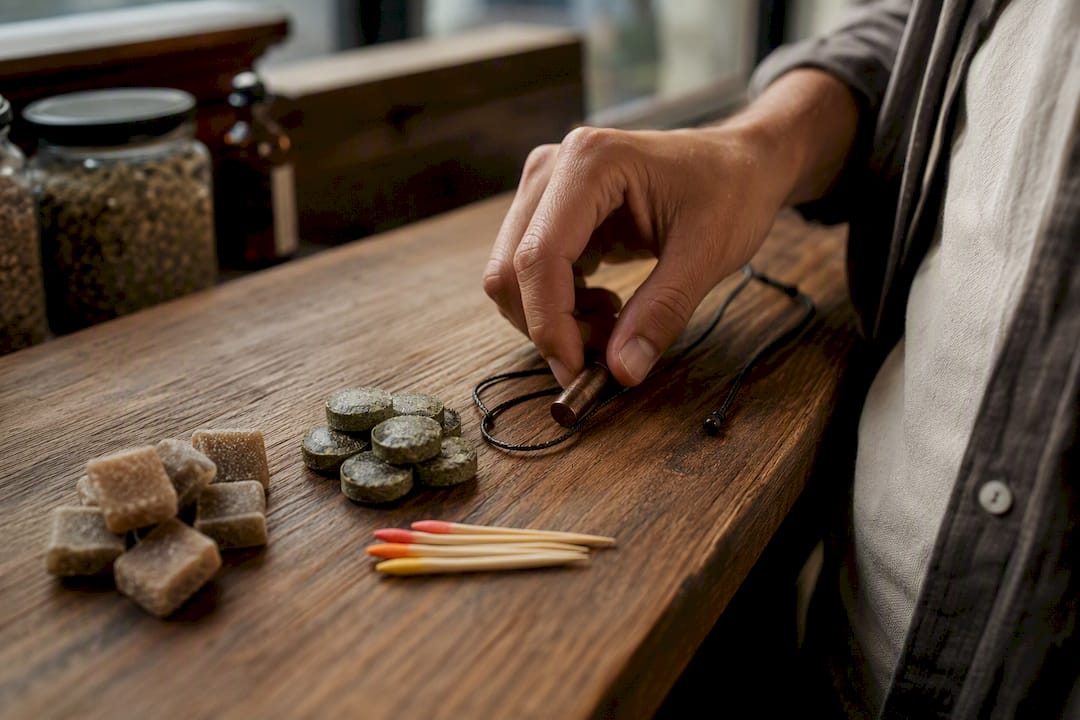
Chewing gum satisfies the mouth but does almost nothing for the hand-to-mouth motion that smoking and vaping rely on. It also runs out fast, needs replacing constantly, and some brands carry sugar or additives that irritate the stomach with heavy daily use. Toothpicks handle the oral piece cheaply but offer no breathing component and carry a real risk of accidental ingestion or gum injury if used too aggressively.
A resistance necklace covers more ground than either. It replicates the hand motion, the mouth contact, and the inhale in one action, while adding the calming effect of resisted breathing that gum and toothpicks can’t touch. It’s reusable, doesn’t need constant repurchasing like gum, and comes with flavor refill options if you want variety without buying a new device.
None of these tools address chemical nicotine dependence. Gum containing nicotine is the exception, but that puts it in NRT territory rather than the pure oral-fixation category. For readers comparing broader options, a wider rundown of smoke-free tools is worth a look, though most nicotine-free oral substitutes share the same basic limitation: they manage the habit, not the chemistry.
Tommy’s Take on What Actually Moves the Needle
People overestimate how much willpower matters and underestimate how much timing does. The users who get the most out of this method aren’t the ones who grit their teeth through a craving. They’re the ones who reach for the necklace before the craving peaks, treating it as a checkpoint instead of a last resort.
Breathefree’s own numbers back this up in a practical sense: more than 75,000 people have used the resistance necklace as part of quitting, and the pattern that keeps showing up is habit, not heroics. Tracking cravings, keeping a device within reach, and leaning on community support rather than isolation seem to matter as much as the device itself.
Try the BreatheFree Resistance Necklace for Your Next Craving
Gum wears out, toothpicks splinter, and willpower alone rarely outlasts a bad day. The BreatheFree Resistance Necklace gives you a reusable, nicotine-free tool built specifically to handle the hand-to-mouth ritual and the breathing side of a craving at the same time, without needles, patches, or anything to inhale that isn’t plain air.
It comes with flavor refill options if you want variety in the mouthfeel, and Breathefree backs it with a community of people working through the same habit loop, plus simple habit-tracking resources to help you see progress week to week. If your dependence runs heavier than habit, pair it with a patch or a conversation with your doctor. Otherwise, it’s ready to use the next time a craving hits. Head to the resistance necklace collection to pick your version and get started this week.
Sources
- Oral Hygiene Therapy Assists in Behavioural Intervention for Smoking Cessation: A Pilot Approach for Oral Health Care Providers
- Breath Resistance Necklaces: Do They Really Work to Stop Smoking or Vaping? - Quit Smoking Community
- Oral fixation
For a broader look at habit-replacement tools, visit Smoke-Free Tools for Beginners or learn to build a quit action plan on the Breathefree blog.