

Comparing smoke-free nicotine alternatives means evaluating each option by its nicotine content, delivery method, health risk profile, and ability to address both physical and behavioral addiction. The formal industry term for this category is “non-combustible nicotine products,” which covers everything from nicotine pouches and heated tobacco to zero-nicotine functional tools. Combusted cigarettes release 70+ carcinogens, making any non-combustion alternative a meaningful step down in chemical exposure. The challenge is that reducing harm and ending addiction are two different goals. Understanding that distinction is what separates a temporary switch from a lasting quit.
What are the main types of smoke-free nicotine alternatives?
Non-combustible nicotine products fall into five distinct categories. Each works differently, carries a different risk profile, and suits a different type of quitter.
Nicotine pouches sit between the gum and lip, releasing nicotine through the oral mucosa without any smoke or vapor. They are tobacco-free and require no inhalation, which makes them one of the cleaner delivery methods available. The tradeoff is that they still deliver addictive nicotine, so they reduce harm without ending dependence.
Vaping and e-cigarettes heat a liquid containing nicotine into an aerosol. They mimic the hand-to-mouth ritual of smoking closely, which helps some people switch. The long-term safety data on inhaled aerosols remains incomplete, and the inhalation component keeps them in a higher-risk tier than oral alternatives.

Heated tobacco products like IQOS heat real tobacco without burning it. The FDA authorized IQOS as a Modified Risk Tobacco Product based on reduced chemical exposure, but studies confirm the presence of formaldehyde and acrolein, and potential liver effects remain under review. These products still deliver nicotine and still involve inhalation.
Nicotine replacement therapies (NRT) include patches, gums, and lozenges. They are designed to taper nicotine intake over time, not to serve as a long-term lifestyle product. NRT increases quit chances by 50–60%, and combining a patch with a short-acting form like gum yields the highest success rates.
Zero-nicotine functional tools are the fastest-growing category. These include herbal inhalants, oral pouches without nicotine, and physical objects like resistance necklaces. They address the behavioral and sensory side of smoking without delivering any addictive substance. The Breathefree resistance necklace falls into this category, targeting oral fixation and the calming ritual of holding an object.
| Category | Nicotine | Inhalation | Primary use case |
|---|---|---|---|
| Nicotine pouches | Yes | No | Harm reduction, switching |
| Vaping/e-cigarettes | Yes | Yes | Ritual replacement |
| Heated tobacco (IQOS) | Yes | Yes | Harm reduction |
| NRT (patches, gum) | Yes | No | Tapering and quitting |
| Zero-nicotine tools | No | No | Behavioral dependency |
How do smoke-free alternatives compare on health risks?
The risk hierarchy for non-combustible products is clearer than most people realize. Combusted cigarettes sit at the top of the risk scale. Every alternative below them reduces exposure to combustion byproducts, but the degree of reduction varies significantly.
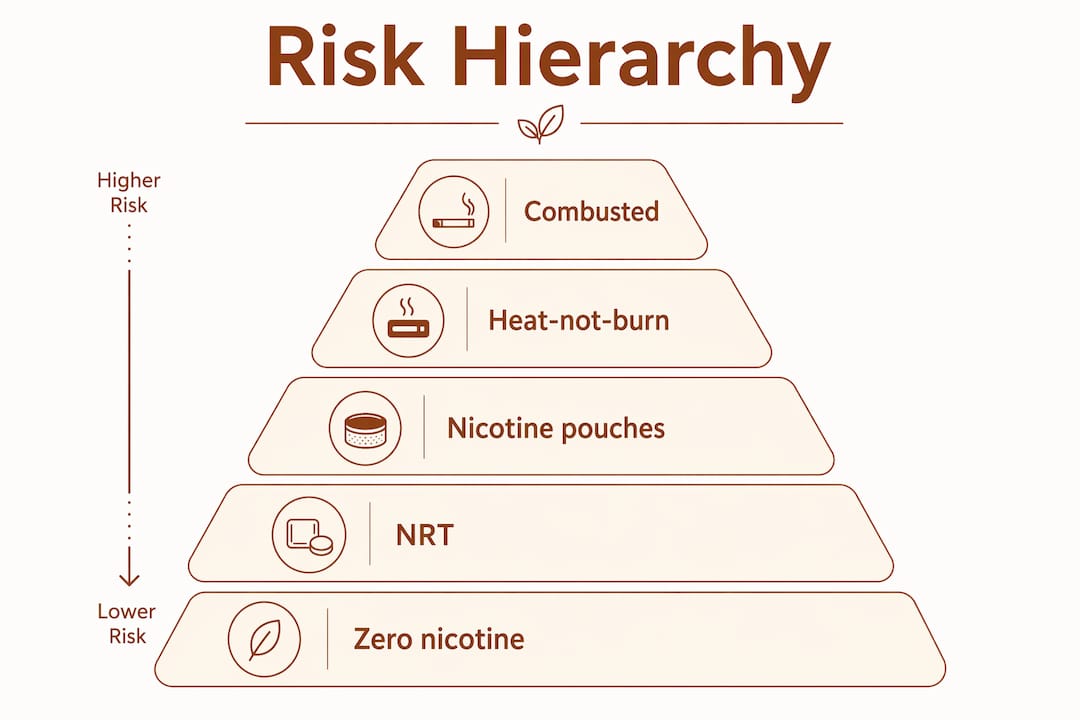
Nicotine pouches eliminate combustion entirely and deliver no inhaled chemicals. Heat-not-burn products reduce harmful chemical exposure by 90–95% compared to cigarettes, but they still involve inhalation and still contain tobacco-derived compounds. Vaping sits in a contested middle zone: lower than cigarettes on most toxicant measures, but higher than oral alternatives because aerosol inhalation carries its own risks.
Nicotine itself, regardless of delivery method, carries cardiovascular risk. It raises heart rate and blood pressure and is strongly addictive. This means that switching from cigarettes to pouches or NRT reduces lung and cancer risk but does not eliminate addiction or cardiovascular strain. Complete cessation remains the only zero-risk outcome.
Zero-nicotine tools carry the lowest risk profile of any category. They introduce no addictive substance and no inhaled compounds. Their limitation is that they do not address physical nicotine withdrawal on their own, which is why they work best alongside a structured quitting plan.
| Product type | Combustion | Nicotine | Relative risk vs. cigarettes |
|---|---|---|---|
| Combusted cigarettes | Yes | Yes | Baseline (highest) |
| Heated tobacco | No | Yes | Significantly lower |
| Vaping | No | Yes | Moderately lower |
| Nicotine pouches | No | Yes | Lower (no inhalation) |
| NRT (patch/gum) | No | Yes | Lower (controlled dose) |
| Zero-nicotine tools | No | No | Lowest |
What behavioral support tools actually improve quit success?
Physical alternatives address the chemical side of addiction. Behavioral tools address the habit side. Both are required for lasting cessation, and the evidence on behavioral support is stronger than most people expect.
Smartphone apps based on psychological theory nearly triple long-term cessation success compared to minimal support. That finding comes from pooled data across 31 studies involving 12,802 participants. The most effective apps do more than count smoke-free days. They use trigger mapping to help people identify the hidden patterns behind their cravings, turning each slip into a data point rather than a reason to give up.
Mobile chat-based support adds another layer. A randomized clinical trial of 590 adults found that mobile chat messaging increased validated 6-month abstinence by about 30% compared to generic text messages. The personalized, conversational format keeps people accountable without the cost of one-on-one counseling. For a deeper look at how digital tools fit into a broader plan, the quit smoking support resources guide covers the full range of options available in 2026.
Behavioral tools that address oral fixation and ritual are among the best long-term smoking relapse prevention tools available. Smoking is not just a nicotine habit. It is a sensory routine tied to specific times, places, and emotions. Zero-nicotine functional tools like the Breathefree resistance necklace give the hands and mouth something to do during those trigger moments, replacing the smoking ritual without reintroducing nicotine.
Key behavioral strategies that work alongside any smoke-free alternative:
- Trigger mapping: Log every craving with its context (time, location, emotion) to identify non-obvious patterns.
- Routine disruption: Change the specific habits cognitively linked to smoking, such as the post-meal cigarette or the work-break smoke.
- Community accountability: Chat-based support and quit groups reduce isolation and shame after slips.
- Physical substitutes: Oral and tactile tools satisfy the sensory components of the smoking ritual.
- Relapse reframing: View slips as data, not failure. Each slip reveals a trigger that can be addressed.
Pro Tip: Use the 10-minute rule when a craving hits. Cravings peak and subside within minutes. Acknowledge the urge, set a timer, and wait. Surfing the urge rather than fighting it reduces stress and lowers the chance of relapse significantly.
How to choose the right smoke-free alternative for your situation
The right choice depends on three factors: your current nicotine dependence level, your primary quitting goal, and how much behavioral support you are willing to build alongside the product.
- Assess your dependence level. Heavy smokers (more than a pack a day) typically need a higher-dose NRT or nicotine pouch to manage withdrawal. Light or social smokers may find zero-nicotine tools sufficient from the start.
- Define your goal clearly. Are you reducing harm temporarily while you taper, or are you aiming for complete nicotine freedom? NRT and pouches suit tapering. Zero-nicotine tools suit the final break from nicotine. Knowing your goal prevents you from staying on a nicotine-containing product indefinitely.
- Avoid dual use. Continuing to smoke while using an alternative eliminates most of the health benefit. Complete switching is the only way to realize the risk reduction these products offer.
- Check for transparent dosing. Credible NRT products list exact nicotine content per dose. Pouches from reputable sources do the same. Avoid products with vague ingredient lists or unverified claims.
- Build behavioral support from day one. Choosing an alternative without addressing triggers and routines is the most common mistake. Pair any physical product with an app, a counselor, or a structured quitting action plan from the start.
Pro Tip: If you are trying to transition from vaping completely, the cold turkey vs. gradual transition comparison is worth reading before you commit to a method. The right approach depends on your dependence pattern, not a one-size-fits-all rule.
Key Takeaways
Smoke-free nicotine alternatives reduce combustion-related harm, but lasting cessation requires pairing the right product with structured behavioral support that addresses both physical withdrawal and habitual triggers.
| Point | Details |
|---|---|
| Risk hierarchy is clear | Zero-nicotine tools carry the lowest risk; combusted cigarettes carry the highest. |
| NRT boosts quit rates | Nicotine replacement therapy increases quit success by 50–60% when used correctly. |
| Apps nearly triple success | Psychological theory-based apps improve 6-month abstinence rates by 36–77%. |
| Behavioral support is non-negotiable | Addressing oral fixation and trigger patterns prevents relapse that products alone cannot stop. |
| Complete switching matters | Dual use with cigarettes eliminates most health benefits of any smoke-free alternative. |
What I’ve learned after years of watching people quit
Most people who fail to quit are not lacking willpower. They are using the right product with the wrong plan. A nicotine pouch handles the chemical craving for about 20 minutes. It does nothing for the 3:00 PM habit, the stress smoke, or the social ritual at the bar. That gap is where most quits fall apart.
The research on behavioral support intensity confirms what cessation practitioners have known for years: personalized, ongoing support outperforms willpower by a wide margin. The people who quit for good are not tougher. They have better systems.
Zero-nicotine tools get underestimated because they do not deliver a chemical hit. That is exactly their strength. Breaking the ritual dependency is the hardest part of quitting for most long-term smokers, and a physical object that satisfies the oral and tactile cues does something no patch or pouch can do. I have seen people who failed with NRT multiple times succeed once they addressed the behavioral layer seriously. The addiction treatment options available in 2026 are genuinely better than they were five years ago, and combining them thoughtfully is the real skill.
Slips are not the problem. Shame after slips is the problem. Every slip is a trigger you have not mapped yet. Treat it that way and your next attempt will be smarter than your last.
— Tommy
Breathefree tools for your smoke-free quit plan
Quitting smoking is easier when your tools match your actual obstacles. Breathefree builds products specifically for the behavioral side of addiction, the part that nicotine products cannot reach on their own.
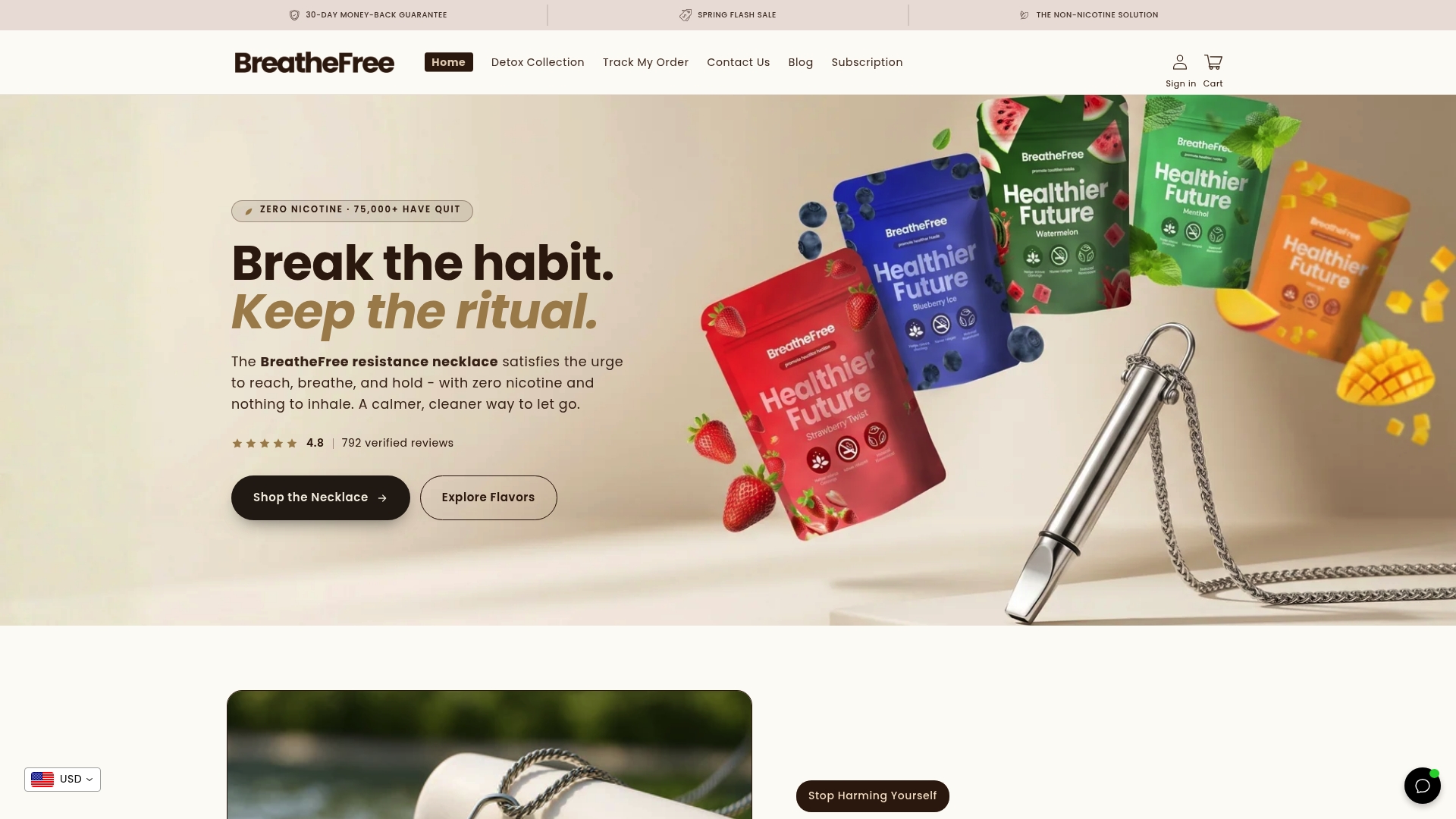
The Breathefree resistance necklace is a zero-nicotine physical tool designed to satisfy oral fixation and the calming ritual of holding an object during cravings. Over 75,000 people have used it as part of their quit plan. For a structured approach, the Nicotine Detox eBook and Habit Tracker gives you a step-by-step quitting guide paired with daily tracking to map your triggers and measure your progress. Both tools work alongside any smoke-free alternative you choose.
FAQ
What is the safest smoke-free nicotine alternative?
Nicotine pouches and NRT products carry the lowest risk among nicotine-containing alternatives because they eliminate combustion and inhalation entirely. Zero-nicotine tools like the Breathefree resistance necklace carry no addiction risk at all.
Do nicotine-free quit methods actually work?
Zero-nicotine methods work best for managing the behavioral and ritual side of smoking addiction. Research shows that behavioral support tools combined with physical substitutes significantly improve long-term abstinence rates compared to willpower alone.
Can I use multiple smoke-free alternatives at the same time?
Combining a nicotine-containing product for withdrawal with a zero-nicotine behavioral tool for ritual replacement is a recognized strategy. Avoid combining any alternative with continued smoking, as dual use eliminates most of the health benefit.
How long should I use nicotine replacement therapy?
NRT is designed for tapering, not long-term use. Standard programs run 8–12 weeks, stepping down the dose over time. Using NRT beyond its intended period without a reduction plan delays the goal of complete nicotine freedom.
What is the biggest mistake people make when switching to smoke-free alternatives?
The most common mistake is addressing physical withdrawal without changing the behavioral routines tied to smoking. Switching products without disrupting trigger patterns leaves the habit loop intact, which drives relapse even after nicotine withdrawal fades.