

A protein-forward, meal-timed eating plan combined with hydration, non-food oral substitutes, and daily movement is the most practical way to limit weight gain and support recovery after you quit smoking.
Here is what the plan looks like in practice:
- 20–30 g protein at breakfast to blunt morning appetite and reduce snacking later in the day
- Balanced meals every 3–4 hours to keep blood sugar steady and prevent impulsive eating during withdrawal
- High-fiber snacks (raw vegetables, fruit, nuts) to satisfy oral fixation with volume and crunch
- Water first, alcohol last — drink a glass of water before any snack, and limit alcohol, which lowers food inhibitions
- Non-food oral tools and brief movement when a craving hits (more on this in the craving section below)
One-day sample plan:
| Meal | What to eat | Protein target |
|---|---|---|
| Breakfast | 3-egg omelet with spinach + Greek yogurt (½ cup) | ~28 g |
| Morning snack | Apple + 2 tbsp almond butter | ~5 g |
| Lunch | Grilled chicken breast (4 oz) + quinoa (½ cup) + mixed greens | ~35 g |
| Afternoon snack | Carrot sticks + hummus (3 tbsp) | ~5 g |
| Dinner | Baked salmon (4 oz) + roasted broccoli + brown rice (½ cup) | ~30 g |
Daily protein goal: 100–120 g total, with at least 20–30 g at breakfast to set the appetite tone for the rest of the day.
Table of Contents
- Why does your diet need to change after quitting smoking?
- How much weight do most people gain after quitting?
- What are the core nutrition principles for ex-smokers?
- What do sample meals actually look like for a week?
- How do you handle cravings and oral fixation without overeating?
- What exercise routine actually helps after quitting?
- Which foods may support lung recovery after smoking?
- When should you see a registered dietitian or doctor?
- What does the research say, and which numbers should you use?
- Key Takeaways
- The part most nutrition guides miss
- Breathefree’s tools for oral fixation and habit tracking
- Useful sources and further reading
Why does your diet need to change after quitting smoking?
Nicotine is a metabolic stimulant. It suppresses appetite, speeds up calorie burn, and blunts the brain’s food-reward signals. When you quit, all three effects reverse at once. Your metabolism slows toward its natural baseline, hunger climbs, and food starts tasting and smelling noticeably better — sometimes dramatically so, within the first week.
That last point catches a lot of people off guard. The return of taste and smell is a genuine pleasure, but it also makes food more rewarding, which drives up intake. Layer on top of that the hand-to-mouth habit that smoking built over years, and you have a behavioral pull toward snacking that has nothing to do with actual hunger.
The good news is that post-smoking recovery tends to improve diet quality over time. A large NHANES analysis found that former smokers scored 54.0 on the HEI-2020 (Healthy Eating Index), compared to 49.2 for current smokers and 53.3 for never-smokers. Former smokers, on average, eat better than people who still smoke — and they close the gap with lifelong non-smokers within years.
Understanding the physiology matters because it changes the strategy. This is not about willpower. It is about replacing specific mechanisms that nicotine was handling — appetite suppression, oral habit, metabolic rate — with deliberate food and behavior choices.
How much weight do most people gain after quitting?
Most people gain between 4 and 10 pounds in the months after quitting, driven by three overlapping factors: the metabolic slowdown from losing nicotine’s calorie-burning effect, increased food intake as appetite returns, and the oral fixation that leads to snacking as a cigarette substitute.
The timing matters for planning:
- Weeks 2–12: The sharpest appetite surge and strongest withdrawal cravings. This is when impulsive snacking is most likely. Protein and meal timing do the most work here.
- Months 3–6: Taste and smell fully recover, making food more rewarding. Portion awareness becomes more important.
- Months 6–12: Weight stabilizes for many people as the body adjusts to its new metabolic baseline and habits solidify.
The practical implication is front-loading your nutrition strategy. The first 12 weeks are when a structured eating plan pays off most. Nicotine raises metabolic rate; losing that boost means your calorie needs drop slightly even before appetite increases — a double effect that explains why weight gain happens fast in early quitting.
One reassuring data point: in the long term, the average body weight of people who have quit smoking is similar to that of people who have never smoked. The early gain is real, but it is not permanent if you build the right habits now.
What are the core nutrition principles for ex-smokers?
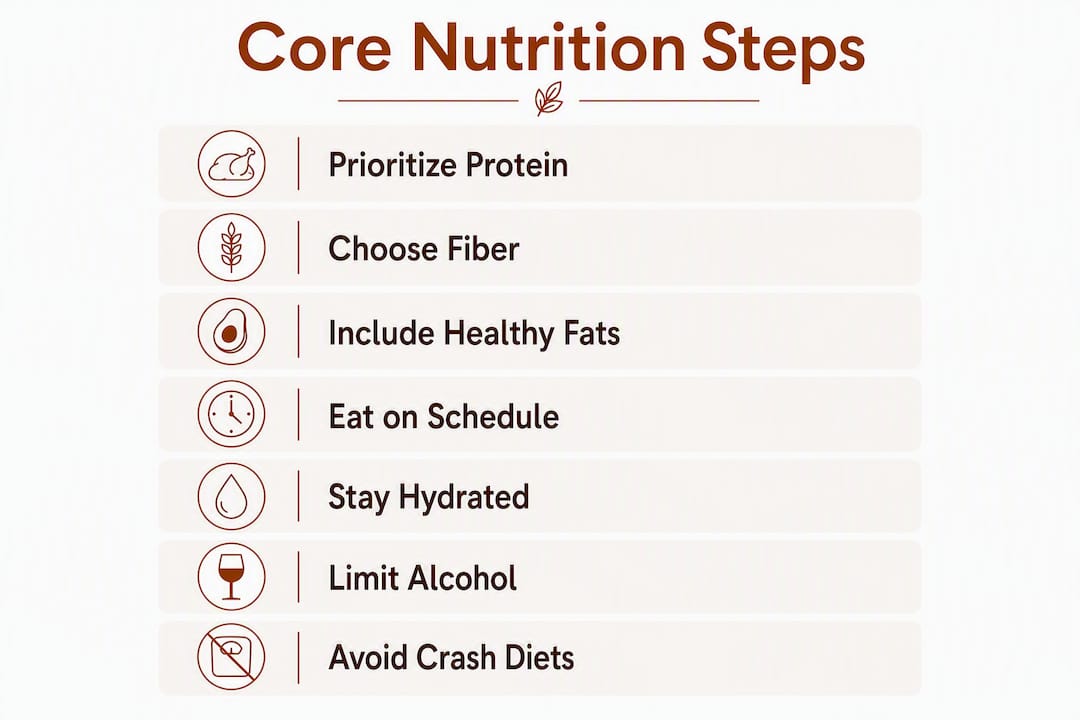
The foundation of any solid diet plan for quitters comes down to seven principles. These are not rules to follow perfectly — they are defaults to return to when things get hard.
Prioritize protein at every meal
Protein is the most satiating macronutrient. It slows gastric emptying, stabilizes blood sugar, and reduces the urge to snack between meals. A moderate amount of protein at breakfast is recommended, since morning is when appetite spikes are sharpest during early withdrawal. Good sources: eggs, Greek yogurt, cottage cheese, chicken, fish, legumes, and tofu.

Choose fiber-rich carbohydrates
Whole grains, vegetables, fruits, and legumes provide fiber that slows digestion and keeps you full longer. They also give your mouth something to do — crunchy raw vegetables satisfy the oral fixation without adding significant calories.
Include healthy fats
Avocado, nuts, seeds, olive oil, and fatty fish support mood stability and reduce inflammation. Omega-3 fatty acids in particular have a modest evidence base for supporting cardiovascular and respiratory health after smoking.
Eat on a schedule
Eating every 3–4 hours prevents the blood sugar dips that trigger impulsive snacking. Three balanced meals and two planned snacks is a practical structure most people can sustain.
Drink water consistently
Drink a glass of water before any snack to distinguish thirst from hunger. Staying hydrated also keeps your mouth busy and can reduce the intensity of cravings. Aim for at least 8 cups daily.
Limit alcohol
Alcohol lowers inhibitions around food choices and can trigger smoking cravings directly. During the first 90 days especially, keeping alcohol to a minimum protects both your quit and your weight.
Avoid crash dieting
Severe calorie restriction during withdrawal raises physiological stress and can intensify cravings and increase relapse risk. The goal is not rapid weight loss — it is building habits that hold. A modest calorie deficit through food quality, not starvation, is the sustainable path.
Pro Tip: Use if-then planning for cravings: “If I feel a craving after dinner, then I will drink a glass of water and take a 5-minute walk.” Writing this out in advance removes the decision-making burden in the moment.
What do sample meals actually look like for a week?
Full sample day (with protein breakdown)
Breakfast: 3-egg omelet with spinach and feta + ½ cup Greek yogurt with berries (~28 g protein)
Morning snack: 1 medium apple + 2 tbsp almond butter (~5 g protein)
Lunch: 4 oz grilled chicken breast + ½ cup cooked quinoa + large mixed green salad with olive oil dressing (~35 g protein)
Afternoon snack: Baby carrots + 3 tbsp hummus (~5 g protein)
Dinner: 4 oz baked salmon + roasted broccoli and cauliflower + ½ cup brown rice (~30 g protein)
5-day rotating menu
| Day | Breakfast | Lunch | Dinner |
|---|---|---|---|
| Monday | Eggs + whole grain toast + fruit | Tuna salad wrap + side salad | Chicken stir-fry + brown rice |
| Tuesday | Greek yogurt parfait + granola | Lentil soup + whole grain roll | Baked cod + sweet potato + greens |
| Wednesday | Oatmeal + protein powder + berries | Grilled chicken salad | Turkey meatballs + zucchini noodles |
| Thursday | Cottage cheese + sliced peaches | Black bean burrito bowl | Shrimp + quinoa + roasted vegetables |
| Friday | Smoothie (protein powder, spinach, banana) | Egg salad on whole grain bread | Salmon + asparagus + wild rice |
Grocery list by category
Protein: Eggs, Greek yogurt, cottage cheese, chicken breast, canned tuna, salmon, black beans, lentils, tofu
Produce: Spinach, broccoli, carrots, bell peppers, apples, berries, bananas, sweet potatoes
Whole grains: Oats, brown rice, quinoa, whole grain bread, whole grain wraps
Pantry: Almond butter, hummus, olive oil, canned beans, protein powder, nuts, seeds
Quick swaps for common high-calorie choices
- Chips → air-popped popcorn or rice cakes with nut butter
- Candy → frozen grapes or a small square of dark chocolate
- Soda → sparkling water with a squeeze of lemon or lime
- Crackers + cheese → cucumber slices + cottage cheese
- Ice cream → frozen banana blended with a spoonful of peanut butter
Protein targets per meal
| Meal | Target (g) | Easy examples |
|---|---|---|
| Breakfast | 20–30 g | 3 eggs + Greek yogurt; cottage cheese + fruit |
| Lunch | 25–35 g | Chicken breast + legumes; tuna wrap |
| Dinner | 25–35 g | Salmon fillet; turkey + quinoa |
| Each snack | 5–10 g | Hummus + veggies; string cheese; nuts |
How do you handle cravings and oral fixation without overeating?
The hand-to-mouth habit is one of the most underestimated obstacles in early quitting. It is not just psychological — it is a deeply grooved motor pattern. Reaching for something to put in or near your mouth is automatic. The goal is not to eliminate that impulse but to redirect it.
The most reliable approach combines pre-planned behavioral responses with non-food oral substitutes. Implementation intentions — specific “if-then” scripts you write before a craving hits — reduce impulsive responses because the decision is already made. “If I feel the urge to snack after 8 PM, then I will drink herbal tea and use my resistance necklace for five minutes” is more effective than trying to reason through it in the moment.
Non-food oral substitutes worth keeping on hand:
- Sugar-free gum or mints
- Herbal tea (the ritual of holding a warm cup helps)
- A straw to sip water through
- Toothpicks or cinnamon sticks
- A Breathefree resistance necklace — a nicotine-free tool designed specifically for oral fixation that gives your hands and mouth something to do without adding calories
The 5-minute delay rule works well alongside these tools. When a craving hits, commit to waiting five minutes before eating anything. Most cravings peak and fade within that window. Pair the delay with a brief physical action — a short walk, a few deep breaths, or a fidget tool — and the urge usually passes without food.
Pro Tip: Habit stack your craving response. If you always feel the urge after a meal, immediately follow dinner with a 10-minute walk. The walk becomes the new post-meal ritual, replacing the cigarette without requiring willpower.
Keep prepped low-calorie snacks visible and accessible — washed vegetables in the front of the fridge, a bowl of fruit on the counter. When you do need to eat something, reaching for a carrot stick instead of chips is a matter of what is closest, not character.
What exercise routine actually helps after quitting?
Aim for daily moderate activity and two strength sessions per week. That combination preserves lean muscle mass (which keeps metabolism higher), blunts appetite spikes, and improves mood through endorphin release — all three of which are directly relevant to managing post-quit weight.
Walking is the most accessible starting point. Twenty to 30 minutes of brisk walking daily is enough to make a measurable difference in both craving frequency and calorie balance. You do not need a gym.
Simple weekly structure:
- Monday, Wednesday, Friday: 25-minute brisk walk
- Tuesday, Thursday: 20-minute bodyweight strength circuit (squats, push-ups, lunges, planks)
- Saturday: Longer walk or light yoga
- Sunday: Rest or gentle stretching
For busy schedules, three 10-minute walks spread through the day produce similar metabolic benefits to one 30-minute session. The key is consistency over intensity, especially in the first 90 days when energy levels fluctuate with withdrawal.
Exercise also improves lung capacity gradually. Former smokers who add regular aerobic activity typically notice better breathing endurance within 4–8 weeks of quitting, as airways clear and circulation improves.
Pro Tip: Use a short walk as your primary craving-delay tactic. The moment a craving hits, put on shoes and walk around the block. By the time you are back, the peak has usually passed — and you have added movement to your day without scheduling it.
Strength training matters more than most people expect. Muscle tissue burns more calories at rest than fat tissue, so preserving lean mass during the post-quit period directly counteracts the metabolic slowdown from losing nicotine’s stimulant effect.
Which foods may support lung recovery after smoking?
No single food heals lung tissue. That is worth stating plainly, because a lot of wellness content oversells specific “superfoods” for respiratory health. What the evidence actually supports is this: diets rich in antioxidants, fiber, and omega-3 fatty acids are associated with lower chronic disease risk and better overall recovery outcomes. The mechanism is systemic — reducing inflammation and oxidative stress throughout the body, not targeting the lungs specifically.
Nutrients with the strongest evidence base for former smokers:
Vitamin C is depleted by smoking and supports immune function and collagen repair. Good sources: bell peppers, citrus fruits, strawberries, kiwi, and broccoli. Most people can meet their needs through food rather than supplements.
Vitamin D is linked to lung function and immune regulation. Many Americans are deficient regardless of smoking history. Fatty fish, fortified dairy, and eggs provide some; a clinician can test your level and recommend supplementation if needed.
Omega-3 fatty acids from fatty fish (salmon, mackerel, sardines), walnuts, and flaxseed have anti-inflammatory properties relevant to cardiovascular and respiratory recovery. Aim for two servings of fatty fish per week.
Fiber and antioxidants from a plant-forward diet — berries, leafy greens, cruciferous vegetables, whole grains, and legumes — support gut health, reduce systemic inflammation, and correlate with lower long-term cancer and heart disease risk in former smokers.
A note on supplements: most nutrient needs are met through a varied whole-food diet. High-dose antioxidant supplements, particularly beta-carotene, have shown adverse effects in some smoking-related research. Talk to a clinician before adding any high-dose supplement to your routine.
When should you see a registered dietitian or doctor?
Most former smokers can follow a practical eating plan without professional supervision. But certain situations call for a clinician’s input, and recognizing them early prevents small problems from becoming bigger ones.
See your primary care provider if you experience:
- Weight gain exceeding 15–20 pounds within the first six months
- Persistent gastrointestinal issues (bloating, constipation, acid reflux) that do not resolve with dietary adjustments
- Uncontrolled blood sugar, blood pressure, or cholesterol that worsens after quitting
- Significant mood changes, emotional eating patterns, or signs of depression that are affecting your eating
Consult a registered dietitian (RD) if you:
- Struggle to meet protein targets consistently
- Have complex dietary restrictions (celiac disease, food allergies, kidney disease, diabetes)
- Experience repeated weight gain despite following a structured plan
- Want a personalized meal plan built around your specific health history
Medication interactions to flag with your prescriber: Nicotine replacement therapies (patches, gum, lozenges) are generally food-neutral, but bupropion (Wellbutrin/Zyban) can suppress appetite and affect blood sugar, and varenicline (Chantix) is commonly taken with food to reduce nausea. If you are using any cessation medication, ask your prescriber whether your eating schedule needs adjustment.
What to bring to your first appointment: a 3-day food log, your current weight and a rough timeline of changes since quitting, your medication list, and any specific symptoms or concerns. That information lets a clinician give you targeted guidance rather than generic advice.
For quit smoking support resources beyond nutrition, including behavioral health referrals, Smokefree.gov and the NCI’s Cancer Information Service (1-800-4-CANCER) are reliable starting points.
What does the research say, and which numbers should you use?
The practical metrics in this article come from peer-reviewed research and public health guidance. Here is a summary of the key figures and what they mean for your daily habits:
| Metric | Value | Why it matters |
|---|---|---|
| Average post-quit weight gain | 4–10 lb | Sets realistic expectations; not a reason to delay quitting |
| Protein at breakfast | 20–30 g | Reduces morning appetite spike and afternoon snacking |
| Meal frequency | Every 3–4 hours | Stabilizes blood sugar; prevents impulsive eating |
| HEI-2020 score, former smokers | 54.0 vs. 49.2 (current smokers) | Diet quality improves meaningfully after quitting |
| Crash dieting risk | Increases stress and craving intensity | Focus on habits, not calorie restriction |
How to apply these numbers in the first 30 days:
- Measure protein at breakfast for one week using a food scale or app (MyFitnessPal, Cronometer) until you can eyeball 20–30 g reliably.
- Set phone reminders for meals and snacks every 3–4 hours for the first two weeks to build the timing habit.
- Weigh yourself once a week, same time, same conditions. Do not weigh daily — normal fluctuations will mislead you.
Pick two or three measurable goals for your first 30 days, not ten. “Hit 25 g protein at breakfast five days this week” is a goal you can track. “Eat healthier” is not.
The NCI’s research on healthy lifestyle and mortality risk in former smokers confirms that dietary improvements after quitting meaningfully reduce long-term disease risk — the nutrition work you do now compounds over years, not just weeks.
Key Takeaways
A protein-forward eating plan with meals every 3–4 hours, consistent hydration, and non-food oral substitutes is the most practical approach to managing weight and supporting recovery after quitting smoking.
| Point | Details |
|---|---|
| Expect 4–10 lb weight gain | Most people gain this amount early; it stabilizes with consistent habits and is not permanent. |
| 20–30 g protein at breakfast | This single habit reduces morning appetite spikes and cuts afternoon snacking significantly. |
| Eat every 3–4 hours | Regular meals and snacks stabilize blood sugar and prevent impulsive high-calorie choices during withdrawal. |
| Use non-food oral tools | Sugar-free gum, herbal tea, and tools like the Breathefree resistance necklace redirect oral fixation without adding calories. |
| Avoid crash dieting | Severe restriction raises stress hormones and increases craving intensity; sustainable habit changes outperform short-term restriction. |
The part most nutrition guides miss
Most articles about healthy eating for ex-smokers treat weight gain as the central problem to solve. It is not. The central problem is that quitting smoking is already one of the hardest behavioral changes a person can make, and layering a strict diet on top of it in the same week is a reliable way to fail at both.
The research is clear that crash dieting during withdrawal increases physiological stress and can push people back toward smoking. Yet the conventional framing of “quit smoking AND fix your diet immediately” ignores this entirely. The smarter approach is sequencing: stabilize the quit first, then tighten nutrition gradually over weeks two through eight.
What actually works is replacing specific mechanisms, not overhauling everything at once. Nicotine was doing three jobs: suppressing appetite, providing an oral ritual, and giving your hands something to do. A good nutrition and behavior plan replaces each of those jobs with something deliberate. Protein handles appetite. Fiber and crunchy vegetables handle the oral need. A structured quit plan handles the behavioral scaffolding.
The former smokers who manage their weight best are not the ones who went on a diet the day they quit. They are the ones who built two or three small, repeatable habits and held them. That is the whole strategy.
Breathefree’s tools for oral fixation and habit tracking
One of the most consistent gaps in nutrition plans for former smokers is the oral fixation piece. Food advice is everywhere. A practical, non-caloric substitute for the hand-to-mouth habit is harder to find.
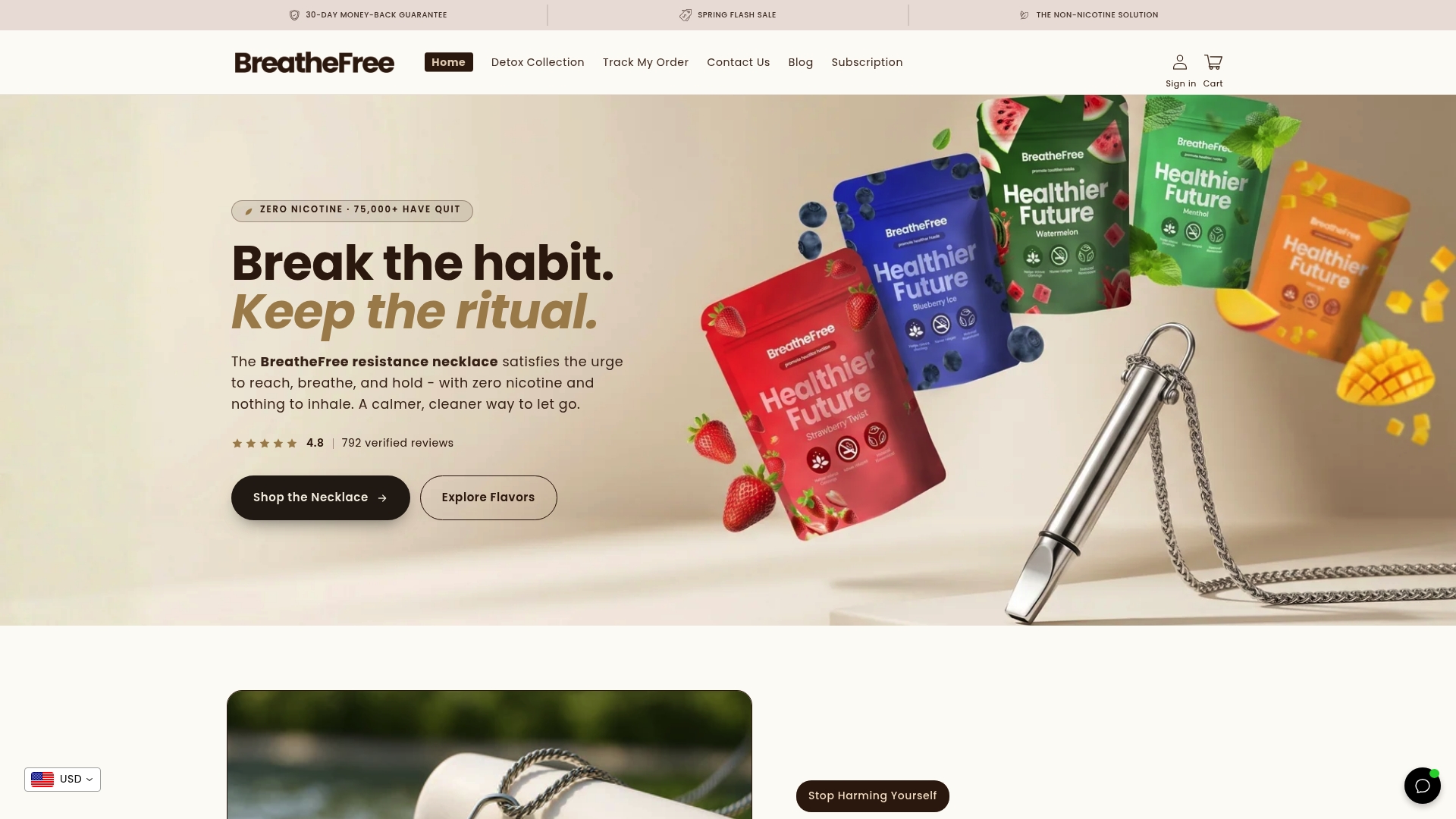
Breathefree’s resistance necklace is designed specifically for this. It is nicotine-free, gives your hands and mouth something to do during a craving, and pairs naturally with the if-then craving plans described in this article. Over 75,000 people have used Breathefree tools as part of their quit. The necklace comes with flavor refills, and Breathefree also offers a Nicotine Detox eBook and Habit Tracker that helps you log meals, track cravings, and build the repeatable habits this plan is built around.
What the product bundle covers:
- Resistance necklace — for non-food oral fixation during cravings
- Habit tracker — to log meals, snacks, and craving responses
These tools support habit substitution — they are not a replacement for clinical care when that is what you need. But for the day-to-day oral fixation challenge that derails so many people’s nutrition plans, they fill a real gap. Browse the full range at breathefree.shop and find the combination that fits where you are in your quit.
This article provides general nutrition information and is not a substitute for personalized medical or dietary advice. Confirm any significant dietary changes or supplement use with your primary care provider or a registered dietitian.
Useful sources and further reading
- Smokefree.gov — Nutrition and Appetite While Quitting — The U.S. government’s primary resource on managing appetite and food choices during cessation; practical and evidence-based.
- MedlinePlus — Weight Gain After Quitting Smoking — A clear, clinician-reviewed overview of why weight gain happens and what to do about it; good starting point for anyone new to the topic.
- NCI — Healthy Lifestyle and Risk of Death Among Former Smokers — Research summary showing that dietary and lifestyle improvements after quitting meaningfully reduce long-term mortality risk.
- NHANES HEI-2020 Diet Quality Study — Peer-reviewed analysis showing former smokers’ diet quality scores approach never-smokers’ levels; useful for understanding long-term dietary improvement trajectories.
- BBC Food — How to Quit Without Turning to Unhealthy Snacks — Accessible article covering the 20–30 g protein target and if-then craving strategies; good for readers who want practical, non-clinical guidance.