

Post-smoking recovery is the body’s natural healing process that begins within minutes of your last cigarette and continues for years. Clinically, this process is part of smoking cessation healing, where your cardiovascular system, lungs, and immune function progressively restore themselves. The changes are measurable, fast, and often surprising. Understanding what happens after quitting smoking gives you a realistic roadmap and removes the fear from symptoms that are actually signs of progress.
What is post-smoking recovery, and when does it start?
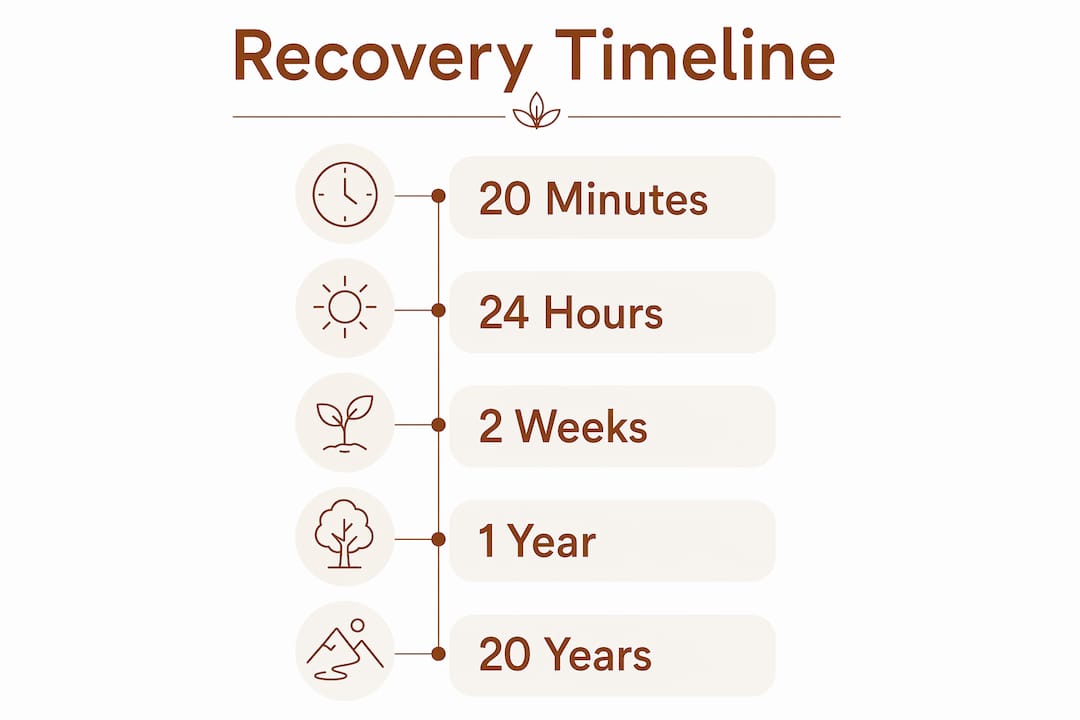
Post-smoking recovery starts faster than most people expect. Within 20 minutes of your last cigarette, your heart rate and blood pressure begin to normalize. That is not a slow, gradual shift. It is your cardiovascular system actively correcting itself within the time it takes to watch a TV episode.
By the 24-hour mark, your risk of heart attack drops as carbon monoxide clears from your blood and oxygen levels rise. This is the body’s healing capacity at work, and it is faster than most people give it credit for. Circulation improves, and many people notice a small but real boost in energy within the first day.
The smoking cessation healing process has two distinct layers: physical and psychological. The physical side follows a predictable timeline. The psychological side, including cravings tied to habits and social situations, can persist long after the physical withdrawal fades. Both layers need attention for recovery to stick.
What physical changes occur in the body after quitting smoking?
The body follows a clear recovery timeline after quitting. Each stage brings measurable improvements.
- Minutes 20–60: Heart rate and blood pressure normalize. Blood vessels begin to relax.
- Hours 8–24: Carbon monoxide levels fall. Oxygen delivery to tissues improves. Heart attack risk drops.
- Days 2–3: Nicotine leaves the bloodstream entirely. Taste and smell begin to sharpen.
- Weeks 2–12: Circulation improves noticeably. Physical activity becomes easier.
- Months 1–3: Lung function increases by up to 30% as airway cilia regenerate and begin clearing accumulated debris.
That 30% lung function improvement is significant. It means breathing during exercise, climbing stairs, or simply walking briskly becomes easier within weeks, not years.
| Time after quitting | Key physical change |
|---|---|
| 20 minutes | Heart rate and blood pressure normalize |
| 24 hours | Heart attack risk begins to drop |
| 1–3 months | Lung function improves up to 30% |
| 1 year | Risk of coronary heart disease halves |
| 20 years | Risk of several cancers approaches that of a non-smoker |

One post-smoking symptom that confuses many people is increased coughing. This is not a sign that something is wrong. Coughing after quitting signals that lung cilia are regenerating and actively clearing out mucus and toxins that built up during years of smoking. It is the lungs doing their job again.
Pro Tip: If increased coughing bothers you in the first few weeks, stay well hydrated. Water thins mucus and makes the clearing process faster and less uncomfortable.
What are common post-smoking symptoms and how can you manage them?
Withdrawal symptoms are the body and brain adjusting to the absence of nicotine. They are temporary, but they are real. Knowing what to expect makes them easier to handle.
Common post-nicotine recovery symptoms include:
- Irritability and mood swings: Nicotine affected dopamine release. Without it, mood regulation takes time to stabilize.
- Intense cravings: These typically peak in the first week and fade significantly after two to four weeks.
- Sleep disruption: Nicotine was a stimulant. Its absence can temporarily affect sleep patterns.
- Anxiety: The brain’s reward pathways are recalibrating. This settles with time.
- Increased appetite: Nicotine suppressed appetite. Expect hunger to increase, especially in the first month.
Nicotine withdrawal symptoms peak early, typically in the first one to two weeks. The psychological dimension, including cravings triggered by specific places, people, or routines, can last much longer. This is why coping with smoking withdrawal requires more than just waiting it out.
Practical strategies that work include deep breathing exercises during cravings, drinking water to occupy the hands and mouth, physical movement to shift focus, and calling a supportive friend. Understanding what happens to your brain without nicotine helps you recognize these symptoms as neurological adjustment, not weakness.
Pro Tip: Cravings typically last 3–5 minutes. Set a timer when one hits. Knowing it will pass in under five minutes makes it far easier to ride out.
Nicotine replacement therapies (NRTs) such as patches, gum, and lozenges reduce the severity of physical withdrawal by delivering controlled, declining doses of nicotine without the toxins in cigarette smoke. They do not eliminate cravings entirely, but they lower the intensity enough to make behavioral strategies more effective.
What recovery strategies and support systems improve post-smoking success?
The most effective approach to quit smoking recovery combines medical support with behavioral change. No single strategy works for everyone, but the evidence points clearly to combination approaches.
-
Use FDA-approved cessation aids. Combining counseling with NRTs is the most effective cessation strategy available. NRTs reduce physical withdrawal; counseling addresses the psychological triggers that cause relapse.
-
Build a written action plan. A quitting action plan identifies your personal triggers, sets a quit date, and maps out responses to high-risk situations before they happen. People who plan their quit are more likely to succeed than those who rely on willpower alone.
-
Replace the ritual, not just the substance. Smoking is a physical habit as much as a chemical addiction. Replacing the smoking ritual with a healthy alternative, such as a breathing exercise, a walk, or a fidget tool, addresses the behavioral loop that cigarettes occupied.
-
Lean on peer support. Behavioral support networks and telephone quit lines provide accountability and reduce isolation during difficult moments. Talking to someone who has been through the same process is more effective than most people realize.
-
Practice self-compassion during setbacks. Relapse is common and part of the normal quit cycle. Many people succeed after multiple attempts. Each attempt builds knowledge about your specific triggers and what adjustments to make next time.
Addressing psychological triggers such as stress, social cues, and routine habits is critical for long-term abstinence. Physical withdrawal fades within weeks. Behavioral triggers can persist for months and require active management strategies.
How does post-smoking recovery improve your health and quality of life long term?
The long-term effects after quitting smoking are substantial and well-documented. The body does not just stop getting worse. It actively repairs itself over years.
Cardiovascular risk drops sharply in the first year. After one year smoke-free, the risk of coronary heart disease falls to roughly half that of a current smoker. After five years, stroke risk approaches that of a non-smoker. These are not minor statistical shifts. They represent real, life-altering reductions in the chance of a serious medical event.
Cancer risk reduction follows a longer timeline. By 20 years post-quitting, the risk of mouth, throat, and several other cancers approaches that of someone who never smoked. Cervical cancer risk drops by 50% at that same milestone. These numbers show that the body’s repair capacity extends far beyond what most people assume.
Quality of life improvements are just as meaningful as clinical risk reductions. Energy levels rise as lung capacity improves. Immune function strengthens, meaning fewer colds and faster recovery from illness. The social benefits of smoke-free living include better relationships, reduced social stigma, and improved mental wellbeing tied to the confidence of having quit. People who quit smoking consistently report feeling more in control of their health and their daily choices.
Key takeaways
Post-smoking recovery is a measurable, progressive process that begins within minutes of quitting and delivers compounding health benefits across every major body system over months and years.
| Point | Details |
|---|---|
| Recovery starts immediately | Heart rate and blood pressure normalize within 20 minutes of the last cigarette. |
| Lung function rebounds fast | Lung capacity can improve by up to 30% within 1–3 months as cilia regenerate. |
| Coughing is a good sign | Increased coughing after quitting signals lung detoxification, not illness. |
| Combination strategies work best | Pairing FDA-approved NRTs with counseling gives the highest quit success rate. |
| Long-term gains are major | Cancer and heart disease risks drop significantly over 5–20 years of staying smoke-free. |
What I’ve learned watching people go through this process
The thing that strikes me most about post-smoking recovery is how quickly the body responds. People expect healing to take years. They are genuinely surprised when they feel a difference within days. That early momentum is one of the most powerful motivators available, and too many people miss it because they are focused on the discomfort of withdrawal instead of the progress happening underneath it.
The harder truth is that the physical part is almost never what derails people. It is the psychological side. A specific song, a coffee shop, a stressful phone call, and suddenly the craving is back months after the physical withdrawal ended. This is not weakness. It is how the brain works. The neural pathways built around smoking are deep, and they do not disappear on a fixed schedule. What changes is your ability to recognize them and respond differently.
I have also seen people give up after a relapse as if it cancels out their progress. It does not. Every day smoke-free counts. Every attempt teaches you something specific about your triggers. The people who eventually succeed are rarely the ones who quit perfectly on the first try. They are the ones who kept adjusting and kept going.
Seek professional guidance if you are struggling. Use the tools available. And give yourself credit for every smoke-free hour, not just the milestones.
— Tommy
Tools to support your recovery from day one
Recovery is easier with structure. Breathefree’s Nicotine Detox eBook & Habit Tracker gives you a practical, day-by-day framework for navigating the quit smoking recovery process, from managing early withdrawal to building lasting smoke-free habits.

The eBook covers the key stages of post-nicotine recovery and pairs them with a habit tracker that keeps you accountable without adding pressure. Over 75,000 people have used Breathefree’s approach to break free from nicotine. The tracker makes your progress visible, which matters most on the days when progress feels invisible. If you want a clear, structured path through recovery, this is a practical place to start.
FAQ
What is post-smoking recovery?
Post-smoking recovery is the body’s healing process after quitting smoking, beginning within 20 minutes of the last cigarette. It covers both physical repair, including cardiovascular and lung function, and psychological adjustment to life without nicotine.
How long does quit smoking recovery take?
Physical withdrawal symptoms typically peak in the first one to two weeks and fade within a month. Full health benefits, including reduced cancer risk, continue accumulating for up to 20 years after quitting.
Why do I cough more after quitting smoking?
Increased coughing after quitting is a normal and positive sign. It means lung cilia are regenerating and clearing out accumulated mucus and toxins, which is a key part of the smoking cessation healing process.
What helps with coping with smoking withdrawal?
The most effective approach combines FDA-approved nicotine replacement therapies with behavioral counseling. Practical strategies like deep breathing, hydration, physical movement, and peer support also reduce withdrawal intensity.
Can you fully recover from years of smoking?
Yes. The body repairs itself significantly after quitting, regardless of how long you smoked. By 20 years smoke-free, the risk of several cancers approaches that of a non-smoker, and cardiovascular risk drops substantially within the first year.