

Smoking cessation support is defined as the combination of behavioral counseling and pharmacotherapy that helps people quit tobacco successfully. The clinical term for this field is “tobacco cessation,” and it covers everything from brief physician advice to structured group programs and FDA-approved medications. Research shows that combined support raises quit rates by 10–20% compared to quitting with no help at all. That gap matters. Most people who try to quit on willpower alone relapse within days. Structured support changes those odds in a measurable, documented way.
What is smoking cessation support, and why does it work?
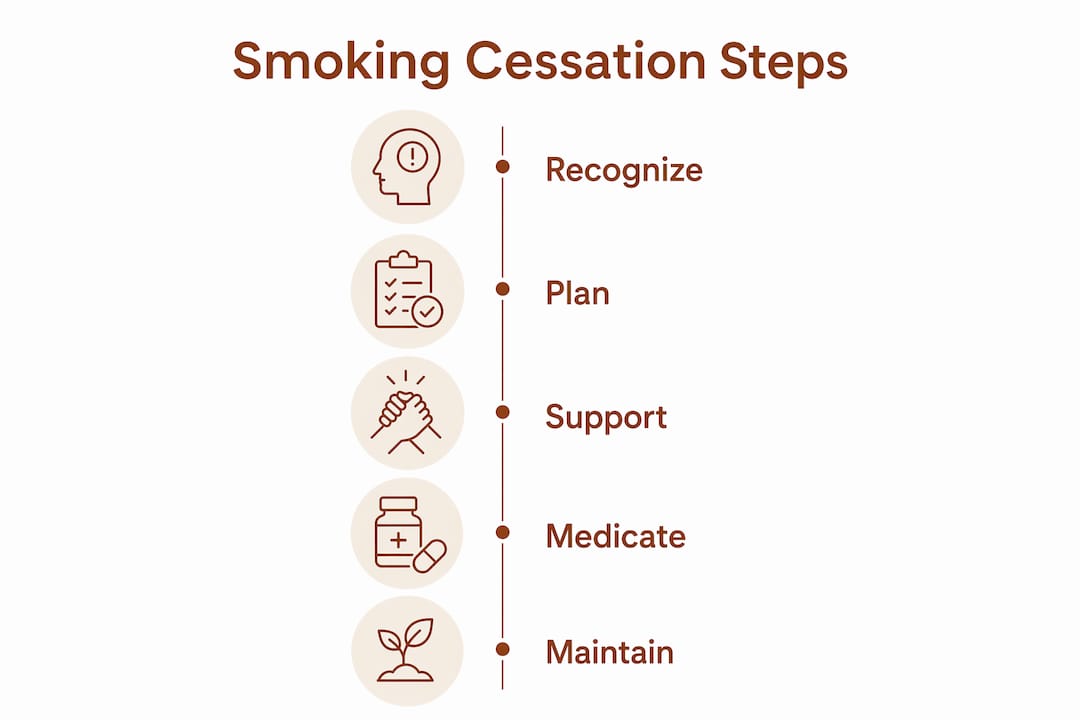
Smoking cessation support is any structured intervention that helps a person stop using tobacco. The most widely used clinical model is the “5 A’s” framework: ASK, ADVISE, ASSESS, ASSIST, ARRANGE. Healthcare providers apply this gold-standard clinical model at every patient visit to identify smokers, advise them to quit, assess their readiness, assist with a quit plan, and arrange follow-up. The structure matters because quitting is not a single decision. It is a process that requires repeated contact and adjustment.
The reason support works is neurological, not motivational. Nicotine rewires the brain’s reward system. When you stop smoking, the brain signals distress through anxiety, irritability, and intense cravings. Behavioral counseling teaches you to recognize and interrupt those signals. Pharmacotherapy reduces their intensity. Together, they address both the physical addiction and the learned behavior that keeps people reaching for a cigarette.

Willpower alone is not a strategy. Nicotine withdrawal management through combined behavioral and pharmacologic support is the critical factor in quitting success. That is the core insight every person trying to quit needs to understand before they choose a method.
What are the common types of smoking cessation support?
Support for quitting smoking falls into three broad categories: behavioral, pharmacological, and digital. Most people succeed by combining at least two of these.
Behavioral approaches
- Individual counseling: A trained counselor works one-on-one to identify triggers, set a quit date, and build coping strategies. Sessions typically run 30–60 minutes and are most effective when repeated over several weeks.
- Group counseling: Participants share experiences and strategies in a facilitated setting. The social accountability factor makes group formats particularly effective for people who feel isolated in their quit attempt.
- Telephone quitlines: Free, state-funded phone services connect callers with trained cessation counselors. They are accessible without an appointment and work well as a starting point or supplement to other support.
- Quitting cold turkey: Stopping abruptly without any aid. This method has the lowest success rate of any approach because it provides no buffer against withdrawal symptoms.
Pharmacological options
Nicotine replacement therapies (NRT) include patches, gum, and lozenges. Each delivers a controlled dose of nicotine to reduce withdrawal intensity without the toxins in cigarette smoke. Prescription medications like bupropion and varenicline work differently. They act on brain receptors to reduce cravings and the reward sensation from smoking. Combination approaches consistently outperform any single treatment used alone.
Pro Tip: If one NRT form isn’t working, try combining a long-acting patch with a short-acting form like gum or a lozenge. This mimics the way nicotine naturally fluctuates in a smoker’s body and reduces breakthrough cravings more effectively.
How does smoking cessation support address cravings and withdrawal?
Cravings and withdrawal are the two biggest reasons people relapse in the first week. Understanding what causes them makes them easier to manage.
Nicotine withdrawal symptoms like anxiety, irritability, and depression are the main barriers to successful quitting. These symptoms peak within the first 72 hours and typically ease within two to four weeks. Pharmacotherapy shortens and softens this window. Behavioral support gives you tools to get through it without reaching for a cigarette.
The behavioral side of craving management follows a clear sequence:
- Identify your triggers. Common triggers include stress, alcohol, coffee, social situations, and specific times of day. Mapping triggers and substitution actions is one of the most evidence-backed craving management strategies available.
- Create a written action plan. For each trigger, write down a specific substitute behavior. If coffee triggers a craving, switch to tea for the first month. If stress is the trigger, schedule a two-minute breathing exercise instead.
- Use the delay technique. Cravings typically peak and pass within three to five minutes. Delaying your response by five minutes, then ten, trains the brain to tolerate the urge without acting on it.
- Replace the ritual, not just the nicotine. Smoking is a physical habit involving the hands and mouth. Replacing the smoking ritual with a physical substitute addresses the behavioral loop that NRT alone cannot break.
Pro Tip: Keep a craving log for the first two weeks. Note the time, your emotional state, and what you were doing when the urge hit. Patterns emerge quickly, and that data makes your action plan far more specific and effective.
Understanding what happens to your brain without nicotine also helps. Knowing that the discomfort is temporary and that the brain is actively healing makes the early days more manageable.
What does an effective smoking cessation program look like?
Effective tobacco cessation programs share several structural features that distinguish them from brief, one-time advice. Intensive counseling sessions result in better quit success than brief advice alone, especially during the one to three month post-quit phase. The number of sessions matters. More contact equals higher abstinence rates.
| Program feature | Brief intervention | Intensive program |
|---|---|---|
| Session length | Under 10 minutes | 30–60 minutes |
| Number of sessions | 1–2 | 4 or more |
| Counseling type | Advice only | CBT, motivational interviewing, ACT |
| Follow-up | None or minimal | Scheduled check-ins at 1, 4, and 12 weeks |
| Relapse support | Not included | Built into program structure |
Effective programs also use shared decision-making. This means the counselor and the person quitting build the plan together based on individual preferences, past quit attempts, and specific triggers. A plan built around your life is more likely to survive contact with real-world stress than a generic protocol.
Brief physician advice raises 6-month abstinence rates with a relative risk of around 1.66 compared to no advice. That number shows that even a short conversation with a doctor at a routine visit produces a meaningful result. Healthcare providers who ask about smoking at every visit and connect patients to quit smoking resources are a critical part of the support system.
Effective programs also use motivational interviewing, cognitive behavioral therapy, and acceptance and commitment therapy to address psychological dependence. These are not interchangeable. Motivational interviewing works best for people who are ambivalent about quitting. CBT works best for people who have identified specific behavioral triggers. ACT helps people tolerate discomfort without acting on it.
How can you combine different cessation supports effectively?
The most effective quit plans layer multiple supports rather than relying on a single method. A menu of support options tailored to individual preferences yields the best outcomes. Here is how to build that menu deliberately.
- Start with a pharmacological base. Choose an NRT form or a prescription medication in consultation with your doctor. This handles the physical withdrawal so your mental energy can focus on behavioral change.
- Add structured counseling. Even four sessions with a trained counselor significantly improve your odds. Telephone quitlines are a free and accessible option if in-person counseling is not available.
- Use digital tools as daily support. Apps for craving tracking and mindfulness can augment counseling and pharmacotherapy for more complete quit plans. They provide real-time support between sessions.
- Build a social accountability structure. Tell at least one person your quit date. Research on peer support for quitting shows that social accountability reduces relapse rates, particularly in the first month.
- Plan for relapse before it happens. Medical experts emphasize that relapse is common and should be treated as a learning step rather than a failure. Build a relapse response into your plan. Decide in advance what you will do if you slip, and who you will call.
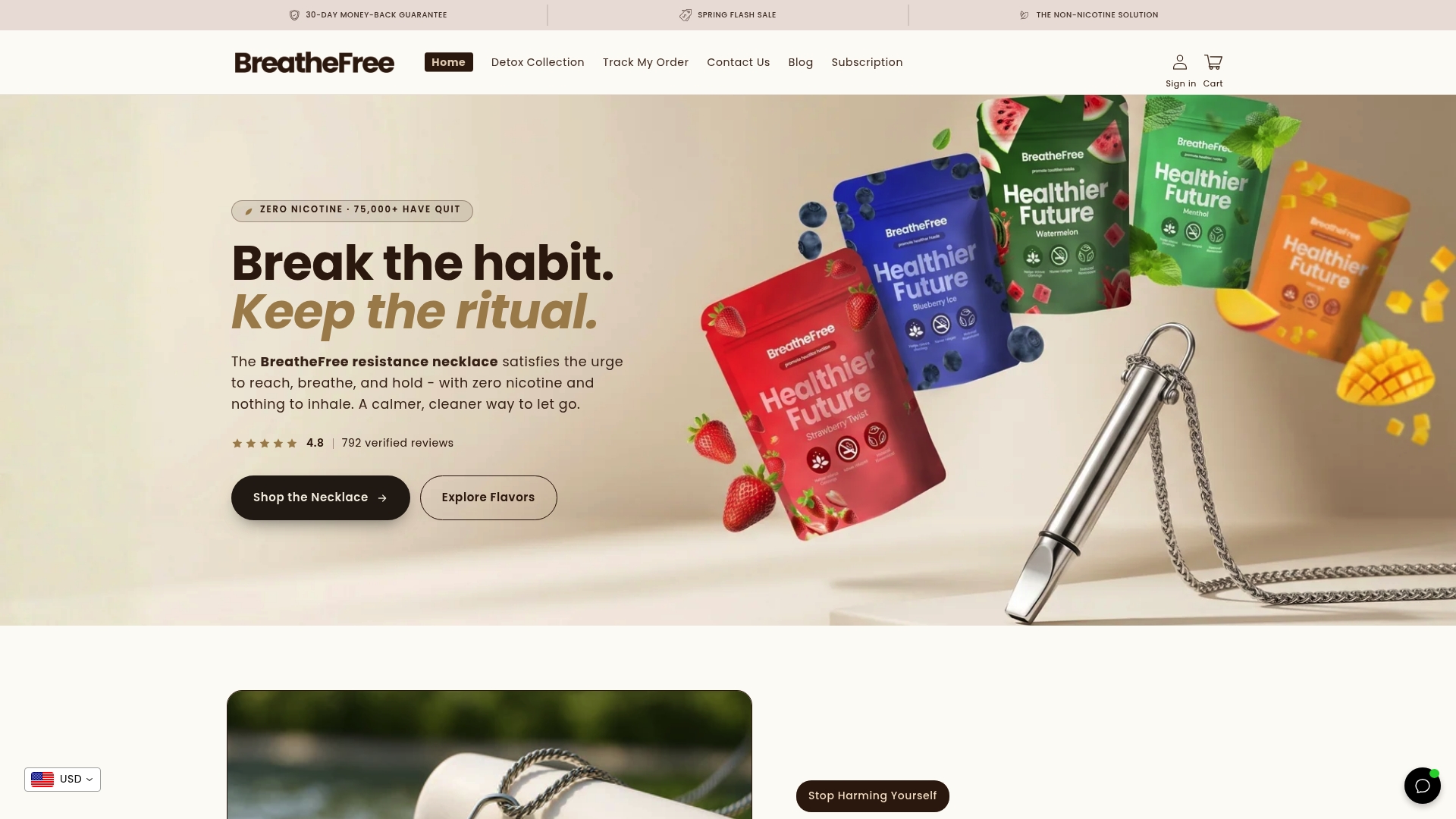
For people who struggle with the physical ritual of smoking, addressing oral fixation is a separate but equally important layer. Habit loops involving oral fixation make quitting especially difficult. Replacing the physical act with a non-nicotine alternative can close the gap that NRT and counseling alone leave open. Breathefree’s resistance necklace is designed specifically for this purpose, giving people a physical object to engage with during cravings without introducing any nicotine or harmful substances. The brand reports over 75,000 people have used this approach successfully.
Connecting with addiction recovery support at a clinical level is also worth considering for people with a long smoking history or co-occurring substance use. Professional clinical support addresses the neurological dimensions of addiction that behavioral tools alone cannot fully reach.
Key Takeaways
Effective smoking cessation support combines behavioral counseling, pharmacotherapy, and social accountability into a personalized plan that addresses both physical addiction and learned behavioral triggers.
| Point | Details |
|---|---|
| Combined support works best | Behavioral counseling plus pharmacotherapy raises quit rates by 10–20% over no intervention. |
| Withdrawal is manageable | Symptoms peak within 72 hours and ease within weeks; pharmacotherapy reduces their intensity. |
| Program intensity matters | Four or more counseling sessions outperform brief advice, especially in the first three months. |
| Relapse is part of the process | Treat slips as data, not failure; adjust your plan and continue rather than starting over. |
| Personalization drives success | No single method works for everyone; tailor your plan to your triggers, history, and preferences. |
What I’ve learned about quitting that most guides won’t tell you
The biggest mistake people make when quitting is treating it as a test of character. It is not. Nicotine is a physically addictive substance, and the brain changes it causes are real and documented. Framing a relapse as a personal failure is both inaccurate and counterproductive.
What I have seen work consistently is specificity. Generic quit plans fail because they do not account for the particular moment when a craving hits hardest. The person who always smokes after dinner needs a different strategy than the person who smokes under deadline pressure at work. Personalized plans addressing both addiction and behavioral cues yield the highest success rates. That is not a soft claim. It is the conclusion of decades of cessation research.
The other thing most guides understate is the role of physical ritual. Counseling and medication address the chemical and cognitive dimensions of smoking. They do not address the fact that your hands and mouth have been trained to expect something to do. That gap is real, and it explains why so many people who successfully manage withdrawal still relapse weeks later. Addressing the physical habit loop directly, whether through a substitute object, a breathing practice, or a mindfulness-based approach, is not optional. It is the piece most people skip.
Seek professional support. Use the tools available. And give yourself permission to learn from every attempt rather than judging yourself for making them.
— Tommy
Breathefree’s tools for building your quit plan
Quitting smoking is easier when you have the right structure in place from day one. Breathefree offers a Nicotine Detox eBook and Habit Tracker designed to work alongside the behavioral and pharmacological support covered in this guide.
The eBook walks you through the science of nicotine dependence in plain language and helps you build a quit plan tailored to your specific triggers and patterns. The habit tracker gives you a daily tool to log cravings, monitor progress, and spot the behavioral patterns that most people miss until they relapse. Together, they function as a structured self-guided program you can use at your own pace, alongside counseling or medication, or as a starting point before you connect with a healthcare provider.
FAQ
What is the most effective smoking cessation support?
The most effective approach combines behavioral counseling with pharmacotherapy such as nicotine replacement therapy or prescription medication. Research shows this combination raises 6-month quit rates by 10–20% compared to quitting with no support.
How long does smoking cessation support typically last?
Structured programs run for a minimum of four sessions, with the most effective support continuing through the first three months after quitting. The one to three month post-quit phase carries the highest relapse risk and benefits most from active follow-up.
Can I quit smoking without professional help?
Quitting cold turkey is possible but carries the lowest success rate of any method. Brief physician advice alone raises abstinence rates meaningfully, so even a single conversation with a healthcare provider improves your odds over going it alone.
What are the main benefits of smoking cessation programs?
Smoking cessation programs reduce withdrawal intensity, teach craving management strategies, and provide accountability structures that make sustained abstinence more likely. They also address relapse as part of the process rather than treating it as a reason to stop trying.
How do I manage cravings during the quitting process?
Map your specific triggers, create a written action plan with substitute behaviors for each trigger, and use the delay technique to ride out cravings that typically pass within three to five minutes. Pharmacotherapy reduces baseline craving intensity while behavioral tools handle the moment-to-moment urges.