

The most effective emotional support tools for quitters combine three things: fast nervous-system resets like breathing and grounding, nicotine-free oral-fixation substitutes, and structured behavioral support such as quitlines or apps. None of the three works as well alone as it does stacked with the other two.
Try this in the next 60 seconds: take one physiological sigh (a double inhale through the nose, then a long slow exhale through the mouth), and pick up something to chew or hold, whether that’s sugar-free gum or a resistance necklace.
- Breathe: two inhales, one long exhale
- Grip or chew: give your hands and mouth a job
Behavioral support isn’t a nice extra. A meta-analysis of 83 studies found it raises quit rates by roughly 20 percent, and it’s the piece most people skip.
Key Takeaways
Combining nervous-system resets, nicotine-free oral substitutes, and structured behavioral support outperforms any single tool used on its own.
| Point | Details |
|---|---|
| Use the physiological sigh | Two quick inhales, one long exhale calms your nervous system faster than normal breathing. |
| Ride the craving, don’t fight it | Cravings peak and fade within three to five minutes if you wait them out. |
| Lean on free behavioral support | Quitlines and text programs raise quit rates by roughly 20 to 40 percent depending on the study. |
| Build a written plan | Match each trigger to an emergency tool and a follow-up tactic before cravings hit. |
| Add a nicotine-free substitute | The BreatheFree resistance necklace gives your hands and mouth a task during the hardest minutes. |
Table of Contents
- In-the-Moment Techniques to Calm a Craving Fast
- What Physical Substitutes Actually Help With Oral Fixation
- How Do Quitlines, Apps, and Counseling Compare?
- Build a Three-Step Personal Quit Plan
- What the Research Actually Shows About Quitting Support
- Where BreatheFree Fits Into Your Toolbox
- Frequently Asked Questions
- Sources
In-the-Moment Techniques to Calm a Craving Fast
A craving peaks and fades in about three to five minutes. Your job during that window isn’t to win a fight against nicotine. It’s to survive it without lighting up, and the fastest lever you have is your breath.
The physiological sigh works faster than almost anything else because it directly slows your heart rate: two quick inhales through the nose (the second one shorter), followed by one long, slow exhale through the mouth, as detailed in these easy and effective breathing exercises. Stanford researchers have shown this pattern calms the nervous system quicker than a normal deep breath.
Box breathing (inhale 4 seconds, hold 4, exhale 4, hold 4) works well at a desk or in a meeting where you can’t be obvious about it. 4-7-8 breathing (inhale 4, hold 7, exhale 8) tends to work better at home or before bed, when you have room to exhale audibly.
When the urge itself is more than physical, the DBT STOP skill gives you a mental sequence instead of a breathing pattern:
- Stop. Freeze before you act on the craving.
- Take a step back. Physically move, even just standing up.
- Observe. Notice what you’re actually feeling. Boredom, anger, and loneliness all masquerade as “I need a cigarette.”
- Proceed mindfully. Choose your next move on purpose, not on autopilot.
Urge surfing treats the craving like a wave you ride instead of a threat you fight. You watch it build, peak, and pass, usually within that same three-to-five-minute window, rather than believing it will climb forever.
Pro Tip: Stack a breathing pattern with a grounding exercise. Do one physiological sigh, then name five things you can see and three sounds you can hear. The combination interrupts both the physical craving and the mental spiral feeding it.
What Physical Substitutes Actually Help With Oral Fixation
Nicotine cravings are chemical, but the hand-to-mouth habit is behavioral, and that part responds well to substitution. Giving your mouth and hands something to do closes the gap between “I want a cigarette” and “I have nothing else to do with my hands.”
A few categories cover most of what people reach for:
- Chew options: sugar-free gum, hard candy, or crunchy vegetables like carrot sticks
- Flavor and scent tools: flavored toothpicks or essential oil nasal sticks that mimic the sensory hit of a drag
- Fidget and stress objects: fidget spinner rings, worry stones, stress balls
- Resistance-holding items: a necklace or pendant designed to be gripped, squeezed, or chewed on a cord
The trick is ritualizing the substitute instead of grabbing it randomly. Pair it with a breathing pattern every time, so your brain starts to associate the object with calm rather than with quitting-as-deprivation. Set a simple check for yourself: if you’re reaching for the substitute more than once every 15 minutes for hours on end, that’s a sign to lean harder on the breathing and grounding skills instead of the object alone.
These tools work best as bridges, not permanent crutches. The BreatheFree resistance necklace was built specifically around this idea: it’s nicotine-free, gives your hands and mouth something concrete to do, and pairs naturally with a breathing script during the first few weeks when cravings hit hardest.

Pro Tip: Keep your substitute somewhere you’ll actually see it, your pocket, your car console, your desk drawer, not somewhere you have to remember to go get. Friction kills good habits fast.
How Do Quitlines, Apps, and Counseling Compare?
Willpower alone underperforms structured support, and the data backs that up clearly. Behavioral support layered on top of quitting efforts increases success rates by roughly 20 percent across dozens of studies, and one trial of 2,588 young adult vapers found text-based support alone increased quit rates substantially.
Each channel fits a different need:
- Quitlines (1-800-QUIT-NOW): free, confidential coaching from a real human, plus mailed materials and referrals. Best if you want someone to talk you through a bad week.
- Text programs and apps: SOS craving buttons, mood tracking, and gamified distractions. Best for daily structure and the 2 a.m. cravings a quitline can’t catch.
- Peer groups and counseling: best if you’re managing anxiety, depression, or a history of relapse alongside the nicotine habit.
The app data has a nuance worth knowing. A randomized trial found that iCanQuit, an app built around acceptance-based skills, outperformed a standard education-only app, demonstrating higher quit rates at 12 months compared to a standard education-only app. The difference came down to accepting difficult emotions rather than fighting them, and how engaged people stayed with the app itself.
The strongest setup pairs a daily-use app with a quitline number saved in your phone for the weeks that get genuinely hard. For more on building that layered structure, this guide to quit smoking support resources breaks down specific programs by type.
Build a Three-Step Personal Quit Plan
A plan beats improvising every time, because it removes decision-making from the exact moment you’re least equipped to make good decisions.
- Name your top three triggers. Be specific: “coffee at 7 a.m.,” “driving alone,” “after an argument with my partner.” Time, place, and mood together are your trigger signature.
- Assign two tools per trigger. One emergency tool for the first 0 to 3 minutes (a physiological sigh plus your chew or resistance object), and one follow-up tactic for the next 5 to 15 minutes (a short walk, a text to a support line, cold water on your face).
- Lock in ongoing support. Pick one: a quitline number, a text program, or a counselor’s number saved where you’ll actually see it.
A basic quit kit covers the necklace or chew substitute, a written breathing script taped inside a cabinet, and the quitline number saved as a phone contact. Run this exact plan for one week before adjusting it. Full templates live in this quitting smoking action plan guide.
| Point | Details |
|---|---|
| Emergency tool | Physiological sigh plus a chew or grip object for the first 3 minutes of a craving. |
| Follow-up tactic | Short walk or grounding exercise for minutes 5 through 15. |
| Ongoing support | Save 1-800-QUIT-NOW or a text program number before you need it. |
What the Research Actually Shows About Quitting Support
The evidence here isn’t thin. A meta-analysis of 83 studies found behavioral support raises quit rates by roughly 20 percent, and a separate study of young vapers found text-based support alone pushed quit rates up nearly 40 percent. Those numbers hold up because behavioral support addresses the psychological half of addiction that patches and gum never touch.
Acceptance of difficult emotions, not just information about quitting, is what separated higher-performing quit apps from lower-performing ones in controlled trials. Willpower and facts matter less than how you relate to the craving itself.
BreatheFree’s role in this toolbox is narrow and specific: a nicotine-free object for the oral-fixation piece, paired with a habit tracker and ebook for the structure piece. Neither replaces counseling or a quitline. Both work well alongside them.
- Behavioral support: roughly 20 percent higher quit rates in meta-analysis
- Text-based support: nearly 40 percent higher quit rates in a study of vapers
- Acceptance-based app content: outperformed education-only content at 12 months
If cravings come with anxiety or low mood that feels bigger than the cigarette itself, that’s a signal to bring in a counselor or your doctor, not a sign the tools above have failed you.
A Note From Tommy on Sticking With It
Most people who quit for good didn’t quit on the first attempt, and that’s not a personal failing. It’s how this works. Give yourself permission to adjust your plan instead of scrapping it. What matters is that you keep showing up with a tool in hand.
Where BreatheFree Fits Into Your Toolbox
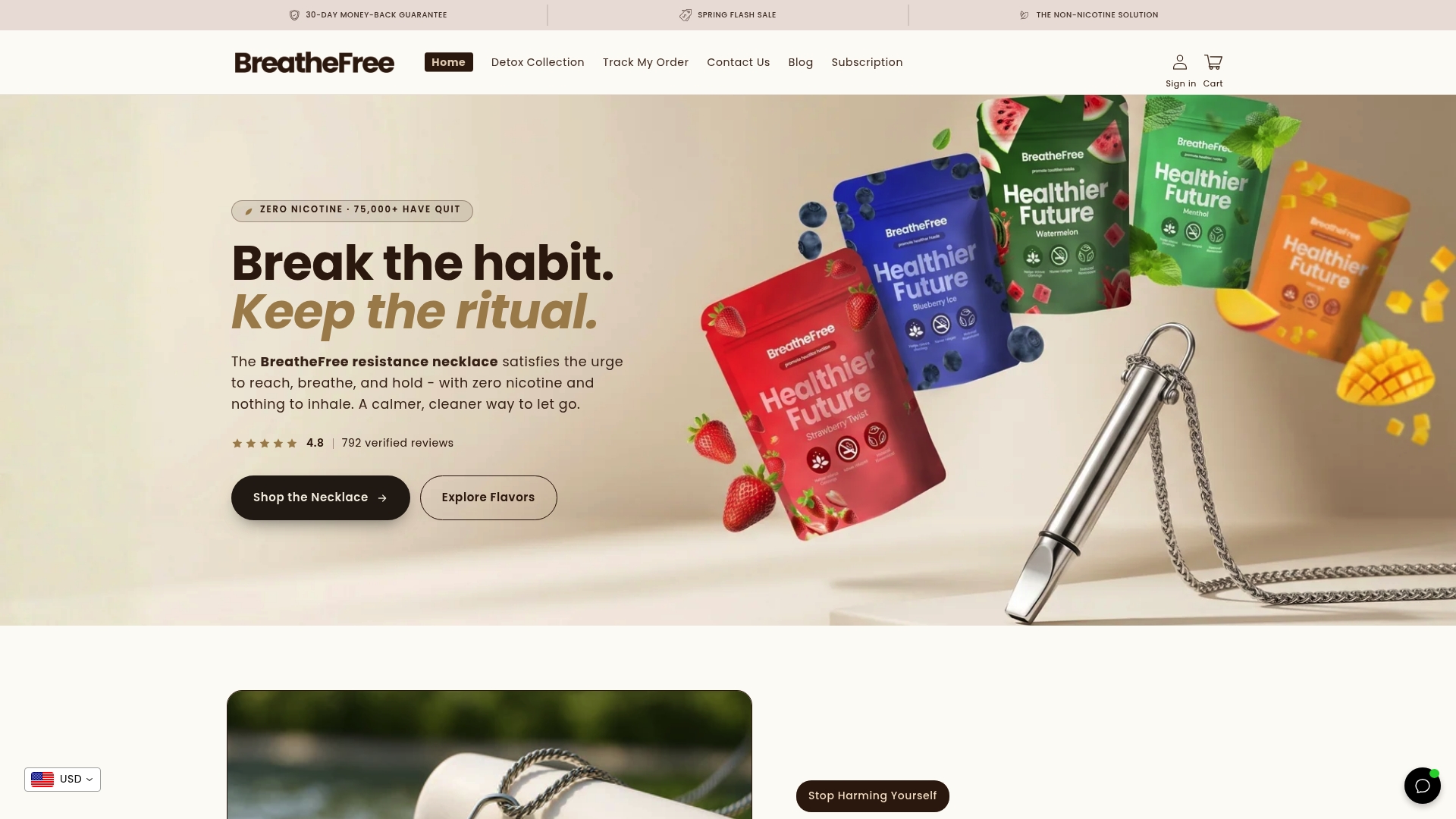
Breathing resets and quitlines handle the moment-to-moment fight, but your hands still need something to do at 3 p.m. when the old ritual of stepping outside for a cigarette used to fill that gap. That’s the specific problem the BreatheFree resistance necklace was built to solve: something nicotine-free to grip, chew, or hold during the exact minutes a craving is loudest.
Pair it with a breathing pattern the moment you feel the urge rise, then log the win in the nicotine detox ebook and habit tracker so you can see your own pattern of triggers building over a week instead of guessing at it. The tracker turns your quit attempt into data you can actually use, not just willpower you’re hoping holds.
If you’re putting together your own quit kit this week, start with the necklace collection and add the habit tracker once you’ve identified your top three triggers.
Frequently Asked Questions
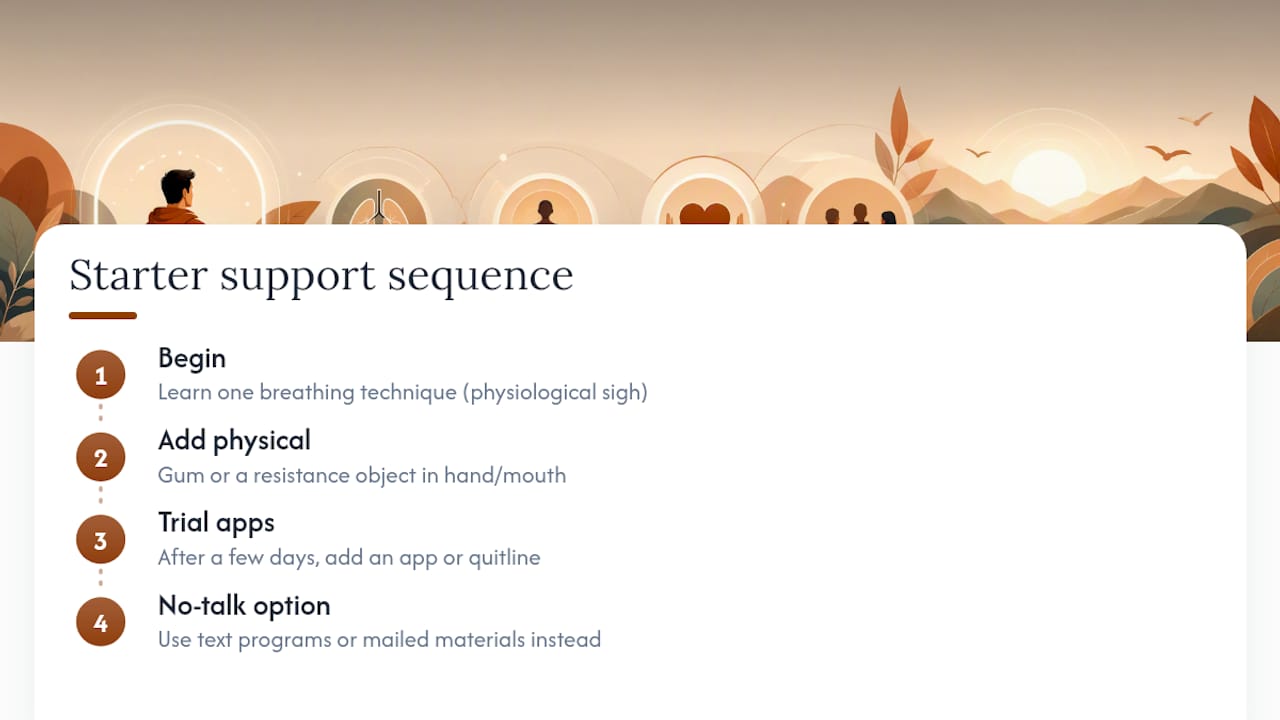
What are the best emotional support tools for quitters to start with? Start with one breathing technique (the physiological sigh is fastest to learn) and one physical substitute like gum or a resistance object. Add a quitline or app once you’ve tested those for a few days.
How do I find emotional support while quitting if I don’t want to talk to a stranger? Text programs and apps let you get support without a phone call. SmokefreeTXT and similar programs deliver coping tips by text, and quitlines let you request materials by mail instead of talking live.
Do quit-smoking apps actually work better than willpower alone? Trial data on the iCanQuit app found meaningfully higher 12-month quit rates than an information-only app, largely because it teaches people to accept cravings rather than suppress them.
What should go in a physical quit kit? A chew or resistance object, a written breathing script, and a saved quitline number cover the basics. Some people add a stress ball or fidget ring for restlessness between cravings.
How long do nicotine cravings usually last each time? Most individual craving spikes peak and fade within three to five minutes, which is why urge surfing and quick breathing resets are disproportionately effective compared to longer coping strategies.
This article is general information, not a substitute for advice from a qualified doctor. Consult a qualified healthcare professional about your own circumstances before acting on anything here.
Sources
- Evidence NIHR — adding behavioural support to drug treatment helps more people quit smoking
- CDC — Quitlines and other resources
- iCanQuit RCT (ACT-based app) — PMC article