

Quitting smoking cold turkey means stopping all nicotine use abruptly on a set quit date, with no tapering, no gradual reduction, and no negotiation. This direct approach is the most common method people choose when they decide to stop smoking without tapering. The unaided success rate sits at roughly 3–5% per attempt over a year, but that number climbs 3–7 times when you pair the cold turkey method with professional support or nicotine replacement therapy. This guide covers exactly how to do it right.
Why cold turkey beats gradual reduction
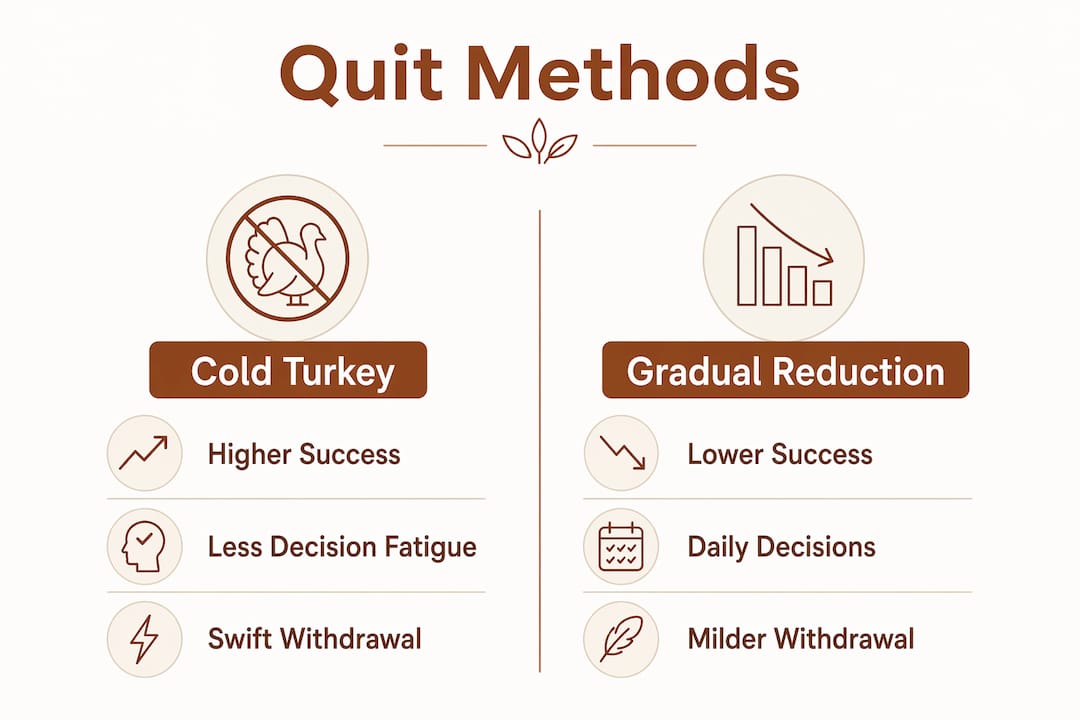
The evidence favors abrupt cessation over tapering. A 2016 Oxford study found that abrupt quitters reached 22% smoke-free at four weeks, compared to 15.5% for those who cut down gradually. That gap is not small. It reflects a real structural advantage that cold turkey quitting holds over every gradual method.
The core advantage is psychological. Gradual reduction forces you to make a decision about smoking every single day. Cold turkey eliminates negotiation fatigue by creating one firm, non-negotiable quit date and a clean break. Once the date passes, the question is settled. You are not deciding whether to have one cigarette today. That decision is already made.

Withdrawal intensity is also worth addressing directly. Many people assume gradual reduction produces a gentler withdrawal. Research shows the opposite. Physical nicotine withdrawal peaks 24–72 hours after quitting and eases significantly within 14 days regardless of method. Tapering prolongs the period of low-level craving without meaningfully reducing peak withdrawal intensity. You end up suffering longer for no measurable benefit.
| Factor | Cold turkey | Gradual reduction |
|---|---|---|
| 4-week quit rate | 22% | 15.5% |
| Decision fatigue | Eliminated after quit date | Ongoing daily decisions |
| Withdrawal duration | Peaks at 24–72 hours, eases by day 14 | Extended low-level craving |
| Psychological clarity | High | Low |
| Recommended with support | Yes | Yes |
Pro Tip: Choose the method you can realistically sustain. Cold turkey works best for people who find daily negotiation exhausting. If you know you will bargain with yourself, a clean break removes that option entirely.
How to prepare before your quit date
Preparation is the single biggest predictor of cold turkey success. Inadequate preparation is the most common reason cold turkey attempts fail. Removing triggers before your quit date is not optional. It is the foundation of the whole plan.
Start by choosing a firm quit date within the next two weeks. A date too far away loses urgency. A date too close leaves no time to prepare. Write it down and tell at least one person who will hold you accountable.
Before that date, take these steps:
- Remove all smoking paraphernalia. Throw away cigarettes, lighters, ashtrays, and anything else tied to the ritual. Do not leave a “just in case” pack anywhere.
- Identify your personal triggers. Common triggers include morning coffee, driving, stress at work, and alcohol. Map them out and plan a specific substitute for each one.
- Prepare your environment. Clean your car, wash clothes that smell like smoke, and rearrange spaces where you typically smoked. Physical change reinforces mental change.
- Build your support network. Tell friends, family, or coworkers your quit date. Ask one person to be your check-in contact for the first two weeks.
- Write your reasons down. A physical list of why you are quitting gives you something concrete to read when cravings hit. Keep it on your phone or posted somewhere visible.
- Avoid quitting during high-stress periods. A job change, a move, or a major family event stacks the odds against you. Choose a relatively stable two-week window.
Pro Tip: Stock your environment with craving substitutes before your quit date. Carrot sticks, sugar-free gum, and cold water are not glamorous, but they address the oral fixation that makes the first week so difficult.
How to manage cravings and withdrawal symptoms
Withdrawal follows a predictable timeline. Symptoms peak around day 3 when nicotinic receptors are maximally unoccupied. After that, the physiological drive eases. Psychological cravings can persist at lower intensity for months, especially when triggered by familiar situations. Knowing this timeline removes the fear that things will keep getting worse.
The most practical craving management tool is the delay tactic. Mayo Clinic recommends waiting 10 minutes when a craving hits, because nicotine cravings fluctuate and do not last. Most nicotine cravings last only 3–5 minutes. If you can delay acting on a craving for 10 minutes, it will almost always pass on its own.
Urge surfing is a second technique worth learning. Instead of fighting a craving, you acknowledge it, observe it without judgment, and wait for the peak to pass. This mental approach reduces relapse risk more effectively than white-knuckling through the discomfort.
Common withdrawal symptoms and how to handle them:
- Irritability and anxiety: Short walks, deep breathing, and the 5 reasons why framework for staying motivated all help redirect nervous energy.
- Difficulty concentrating: Expect this for the first 7–10 days. Break tasks into smaller chunks and avoid high-stakes decisions in the first week if possible.
- Insomnia: Avoid caffeine after noon during the first two weeks. Physical exercise earlier in the day improves sleep quality.
- Increased appetite: Drink water before reaching for food. Cravings and hunger signals overlap in the brain, and hydration reduces both.
- Headaches: These typically resolve within the first week. Over-the-counter pain relief is appropriate.
Combining cold turkey with NRT roughly doubles success rates compared to willpower alone. Nicotine patches, gum, and lozenges manage the physical withdrawal while you focus on breaking the behavioral habit. Using NRT does not disqualify you from quitting cold turkey. Cold turkey refers to abrupt cessation, not to the absence of support. The national helpline 1-800-QUIT-NOW offers free, confidential counseling and is available around the clock.
Common pitfalls and how to push through them
The most damaging belief in cold turkey quitting is that a single slip means total failure. It does not. Viewing slip-ups as learning opportunities to identify triggers rather than as proof of failure is one of the strongest predictors of eventual success. A slip tells you which trigger you have not yet addressed. That is useful information.
Here is a practical troubleshooting sequence when things go wrong:
- Identify the trigger. What happened in the 30 minutes before the slip? Stress, alcohol, a social situation, boredom? Name it specifically.
- Adjust your plan. If the trigger is alcohol, consider avoiding it for the first 30 days. If it is a specific social setting, plan an exit strategy before you go.
- Reset your quit date immediately. Do not wait until Monday or the first of the month. Reset within 24 hours. Delay compounds the problem.
- Add one layer of support. If you slipped without NRT, add a nicotine patch. If you had no accountability partner, recruit one. Each attempt should be better resourced than the last.
- Review your reasons list. Read the list you wrote before your quit date. Reconnect with the original motivation that made you choose to stop.
Replacing the smoking ritual matters as much as stopping the chemical habit. Smoking is a structured behavior: you reach for a cigarette at specific times, in specific places, with specific emotional states. That structure does not disappear when you quit. You need to fill it with something else. Physical activity, a short walk, a breathing exercise, or even a cold turkey vs gradual transition comparison to reinforce your choice all serve that purpose. The ritual needs a replacement, not just a removal.
Key Takeaways
Breaking the smoking habit cold turkey works best when you combine a firm quit date, thorough environmental preparation, and active craving management tools rather than relying on willpower alone.
| Point | Details |
|---|---|
| Cold turkey outperforms tapering | Abrupt quitters reached 22% smoke-free at four weeks vs. 15.5% for gradual reduction. |
| Preparation determines success | Remove all smoking paraphernalia and map personal triggers before your quit date. |
| Cravings are short and manageable | Most nicotine cravings last only 3–5 minutes; the 10-minute delay tactic reliably outlasts them. |
| NRT doubles your odds | Pairing cold turkey with nicotine patches or gum roughly doubles success rates without undermining the method. |
| Slips are data, not defeat | Treat each slip as a trigger map and reset your quit date within 24 hours. |
What I’ve learned from watching people quit cold turkey
People who succeed at quitting cold turkey share one trait that has nothing to do with willpower. They treat the quit attempt as a system to refine, not a test of character to pass or fail. The ones who struggle are usually the ones who believe that needing help means they are doing it wrong.
The clinical distinction matters here. Cold turkey means abrupt cessation. It does not mean suffering alone. I have seen people pair cold turkey with NRT, counseling, and community support and achieve lasting results. I have also seen people refuse every available tool out of pride and relapse within a week. There is no virtue in making this harder than it needs to be.
The first three days are genuinely difficult. Day 3 is the physiological peak, and it feels like it will never end. It does end. By day 14, the physical withdrawal is largely resolved. What remains after that is behavioral and psychological, and that is actually the more manageable part because you can plan for it.
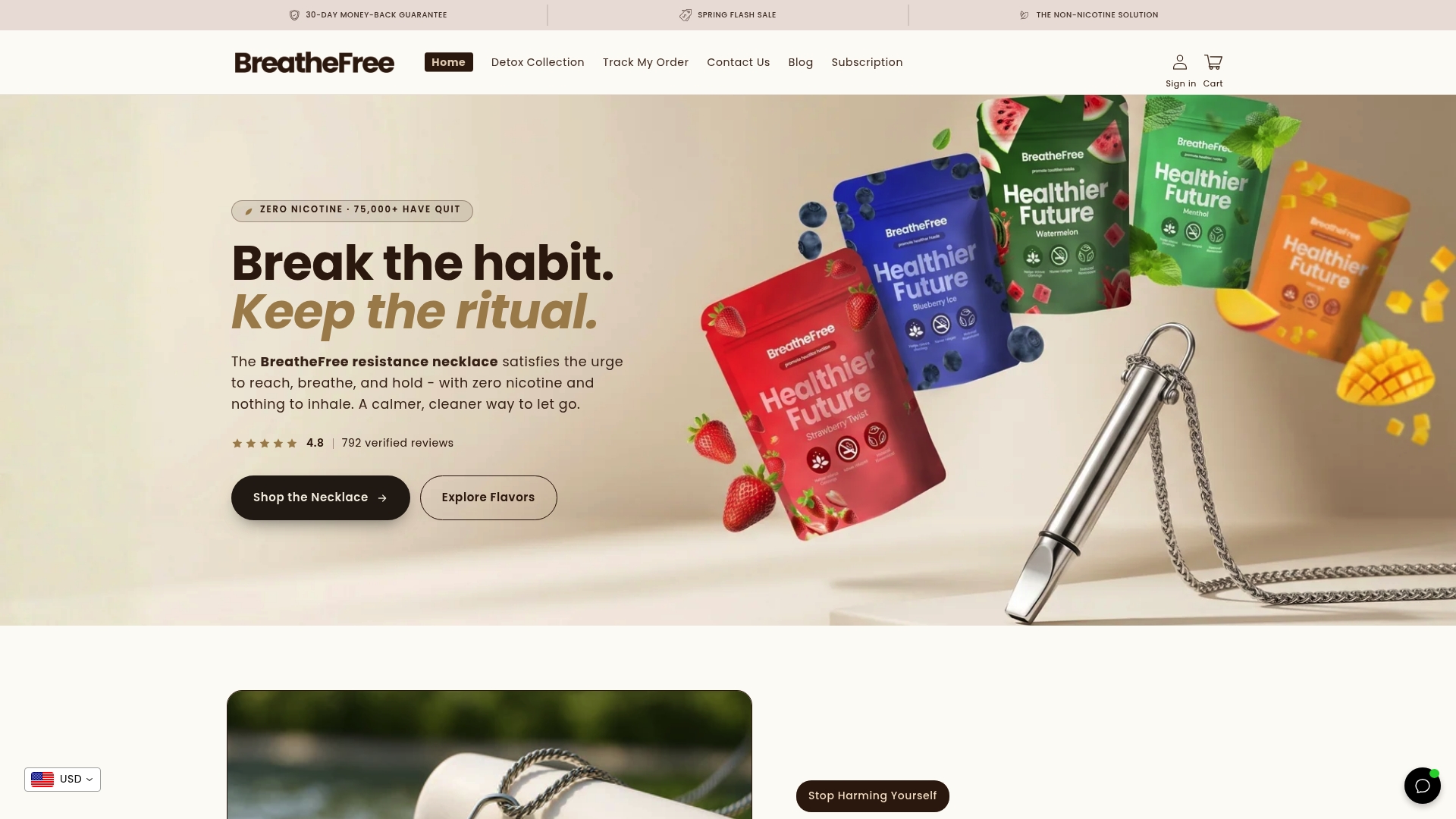
My honest recommendation is this: use every tool available to you. The Breathefree resistance necklace addresses oral fixation, which is one of the most underestimated drivers of relapse in the first two weeks. Over 75,000 people have used it as part of their quit plan. Pair it with NRT if the physical withdrawal is severe. Call 1-800-QUIT-NOW if you need a real person to talk to. The goal is to stop smoking. How you get there is secondary.
— Tommy
Your next step with Breathefree
Quitting cold turkey is a decision. Staying quit is a system. The Breathefree Nicotine Detox eBook & Habit Tracker gives you the structure that most cold turkey attempts are missing: a day-by-day habit tracker, trigger identification worksheets, and motivational frameworks built specifically for abrupt quitters.
The tracker keeps your progress visible, which matters most in weeks two and three when the initial motivation fades. The eBook walks you through craving management, relapse prevention, and the mental strategies covered in this article in a format you can return to daily. If you are serious about stopping smoking abruptly and staying stopped, this is the practical companion that makes the difference.
FAQ
What is the cold turkey method for quitting smoking?
Cold turkey means stopping all nicotine use abruptly on a single quit date with no gradual reduction. It is the most commonly chosen quit method and produces higher four-week quit rates than tapering when combined with preparation and support.
How long do cold turkey withdrawal symptoms last?
Physical withdrawal peaks at 24–72 hours after quitting and eases significantly within 14 days. Psychological cravings can persist at lower intensity for months, particularly when triggered by familiar situations like stress or alcohol.
Does cold turkey work better than nicotine patches alone?
Cold turkey paired with NRT roughly doubles success rates compared to willpower alone. Nicotine patches, gum, and lozenges manage physical withdrawal while you focus on breaking the behavioral habit.
What should I do if I slip up during a cold turkey quit attempt?
Identify the specific trigger, adjust your plan to address it, and reset your quit date within 24 hours. Treating a slip as a data point rather than a failure significantly increases the likelihood of long-term success.
Is there free support available for quitting smoking cold turkey?
Yes. The national helpline 1-800-QUIT-NOW provides free, confidential counseling and is available around the clock. Combining this support with your cold turkey quit plan meaningfully improves your odds.