

Delay your first cigarette by a short period, typically several minutes, and use that window to replace the hand-to-mouth ritual instead of white-knuckling through it. Reach for water, sugar-free gum, or a nicotine-free oral tool while you wait out the craving. That combination, a short delay plus a physical substitute, does more than willpower alone. If you’re smoking within minutes of waking every day, that’s a sign of stronger dependence, and it’s worth asking a clinician about nicotine replacement therapy rather than going it alone.
TL;DR:
- Delaying the first cigarette by a few minutes and using physical substitutes during that time significantly reduces morning craving triggers.
- Replacing the hand-to-mouth ritual with water, gum, or mint mouthwash can weaken the automatic cigarette routine over time.
- The 2-minute reset involving movement or sensory cues teaches the brain that the morning cue can lead to non-smoking behaviors.
- Nicotine replacement therapy is recommended for those with strong dependence, especially if cravings interfere with focus or mood.
- Building a consistent morning routine with set steps and tracking progress accelerates habit retraining and minimizes relapse risk.
Table of Contents
- Quick Morning Cigarette Replacement Swaps to Try Tomorrow
- Why the Morning Cigarette Feels Automatic
- When Should You Consider Nicotine Replacement Therapy?
- A Simple Morning Routine to Replace Cigarettes
- What Breathefree Has Learned From Building Nicotine-Free Tools
- Morning Triggers That Have Nothing to Do With Coffee
- Staying Motivated Without Relapsing in the Morning
- What Happens After a Slip, and Why It’s Not the End
- Try a Nicotine-Free Way to Break the Morning Ritual
- Sources
- FAQ
Quick Morning Cigarette Replacement Swaps to Try Tomorrow
You don’t need a master plan for tomorrow morning. You need one swap, ready before your alarm goes off. Here’s what actually interrupts the urge in the first ten minutes after waking, when the craving for a morning cigarette replacement hits hardest.
- Hydrate first. A full glass of water or sparkling water gives your mouth something to do and takes the edge off the first craving spike.
- Pick an oral substitute. Sugar-free gum, mints, a flavored straw, or toothpicks satisfy the same hand-to-mouth motion a cigarette does, without the smoke.
- Move for 60 to 120 seconds. A stretch, a short walk to the mailbox, or a lap up and down the stairs burns off the restlessness that often masquerades as a nicotine urge.
- Reset your senses. Brush your teeth or rinse with mint mouthwash. Minty flavor makes a cigarette taste worse immediately afterward, which quietly weakens the appeal.
- Set a timer. Start with 5 to 15 minutes. When the urge hits hard, run a 2-minute reset (one swap from this list) and reassess once the timer ends.
Test one swap for three mornings before adding another. Stacking all five at once usually backfires, because it turns a simple habit change into a chore you’ll quit before the cigarette does.
Why the Morning Cigarette Feels Automatic
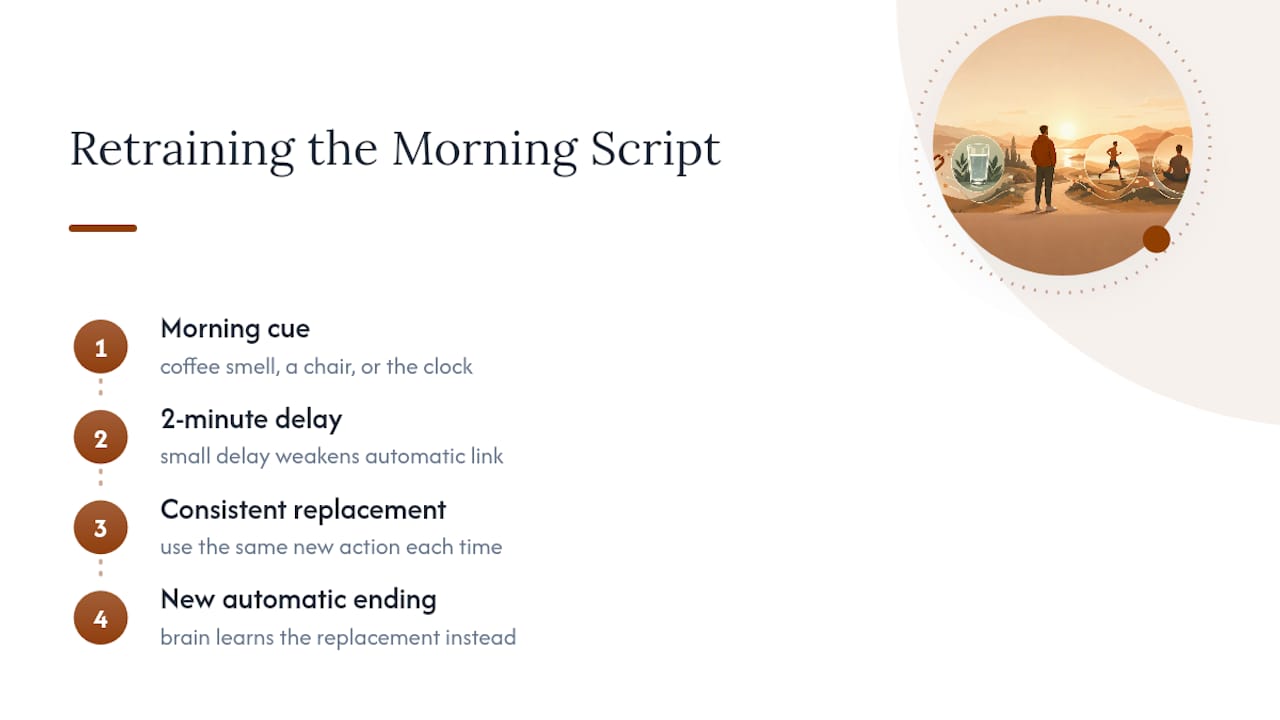
Smoking on autopilot isn’t a willpower failure. It’s a learned sequence, cue, routine, reward, running on a loop your brain built over months or years of repetition. The American Cancer Society explains that the morning cigarette is often triggered by a specific cue: the coffee smell, a particular chair, or simply the time on the clock. Your brain doesn’t ask permission. It just runs the script.
That’s actually good news, because scripts can be rewritten. Small delays weaken the automatic link between cue and cigarette, and consistent replacements give your brain a new ending to reach for instead. One environmental tweak that works surprisingly well: switch your mug, sit somewhere else, or move your cigarettes out of arm’s reach the night before. Novelty breaks the auto-pilot response because the cue no longer matches the memorized pattern exactly.
The 2-minute reset is the basic unit of this retraining. Every time you run it instead of lighting up, you’re not just avoiding one cigarette. You’re teaching your brain that the coffee cue can end a different way. Repeat that enough mornings in a row, and the new ending starts to feel like the automatic one.
When Should You Consider Nicotine Replacement Therapy?
Behavioral swaps handle a lot of the morning cigarette habit, but not all of it. If cravings are intense enough to disrupt your focus or mood, nicotine replacement therapy is worth a conversation with a pharmacist or doctor. The patch handles background cravings across the day; gum or lozenges tackle the acute spike you feel right after waking.
The CDC’s guidance on quit medications points out that combining medication with counseling or behavioral support consistently beats either approach alone. Smokefree offers free text programs and apps built specifically to pair with NRT, tracking your triggers alongside your medication schedule.
A few groups need to loop in a clinician before starting NRT: anyone pregnant, anyone with existing heart symptoms, and anyone already managing other prescriptions that could interact. This isn’t a reason to avoid NRT. It’s a reason to get a five-minute answer from someone qualified before you start.
A Simple Morning Routine to Replace Cigarettes
Consistency beats intensity here. Running the same five steps every morning, even imperfectly, retrains the habit faster than an inconsistent all-or-nothing effort.
- The night before, set tomorrow’s delay goal and put your replacement items where you’ll actually see them, gum on the nightstand, water bottle by the bed, not in a drawer.
- Wake up and drink water before you check your phone or start coffee. This breaks the reflex to reach for a cigarette first thing.
- Start your timer and run your chosen replacement activity: a walk, a stretch, or an oral substitute held in hand.
- Close the ritual with a sensory ending, brushing your teeth or rinsing with mouthwash, so your brain registers the sequence as finished.
- Log the outcome. Note your wake time, urge strength, and how long you delayed. This single habit, tracking your morning cravings, makes patterns visible that you’d otherwise miss.
Once 5 minutes feels manageable for a week, push to 15, then 30. If cravings spike hard on a given morning, don’t force the full delay. Run a 2-minute reset, breathe, and log what triggered it so tomorrow’s plan can account for it.
What Breathefree Has Learned From Building Nicotine-Free Tools
Breathefree built its approach around one observation: the hand-to-mouth motion is often harder to give up than the nicotine itself. That’s the reasoning behind the BreatheFree resistance necklace, a nicotine-free tool designed to occupy that same physical habit. Over 75,000 people have used it as part of their quit process, according to Breathefree’s own user data, which suggests the oral fixation piece matters more than most quit guides admit.
If you’re pairing an oral substitute with the morning routine above, timing matters. Hold it during your delay window, not just when the craving peaks, and rotate BreatheFree flavor refills so the sensory experience doesn’t go flat after a few weeks. Repetition without variety tends to lose its grip fast.
Pro Tip: Pair your oral substitute with the 2-minute reset every single time, same order, same duration. The predictability is what makes the new habit stick faster than reaching for it randomly.
Morning Triggers That Have Nothing to Do With Coffee
Coffee gets blamed for most morning cravings, but it’s rarely acting alone. Stress is the trigger hiding underneath a lot of “coffee and cigarette” cases. Waking up already thinking about a deadline, a difficult conversation, or a financial worry primes your nervous system for a quick relief valve, and a cigarette has filled that role for years.
Habit cues beyond coffee matter just as much. The specific chair you sit in, the route you walk to check the mail, even the particular playlist or podcast you start each morning can trigger the urge independent of caffeine. If you’ve ever noticed a craving hit before you’ve even poured your coffee, that’s usually one of these secondary cues firing on schedule.
Weekday versus weekend mornings often reveal different trigger patterns. A slower, unstructured weekend morning removes the time pressure but adds idle moments, another common cue. Pay attention to which mornings feel hardest, and you’ll often find it’s not the coffee at all. It’s the fifteen minutes of unstructured time right after waking, when your hands and your attention have nothing assigned to them yet.
Staying Motivated Without Relapsing in the Morning
Motivation dips are normal, and they tend to hit hardest in the first two weeks, right when the novelty of a new routine wears off but the habit hasn’t fully replaced the old one yet. Expect that dip instead of being surprised by it.
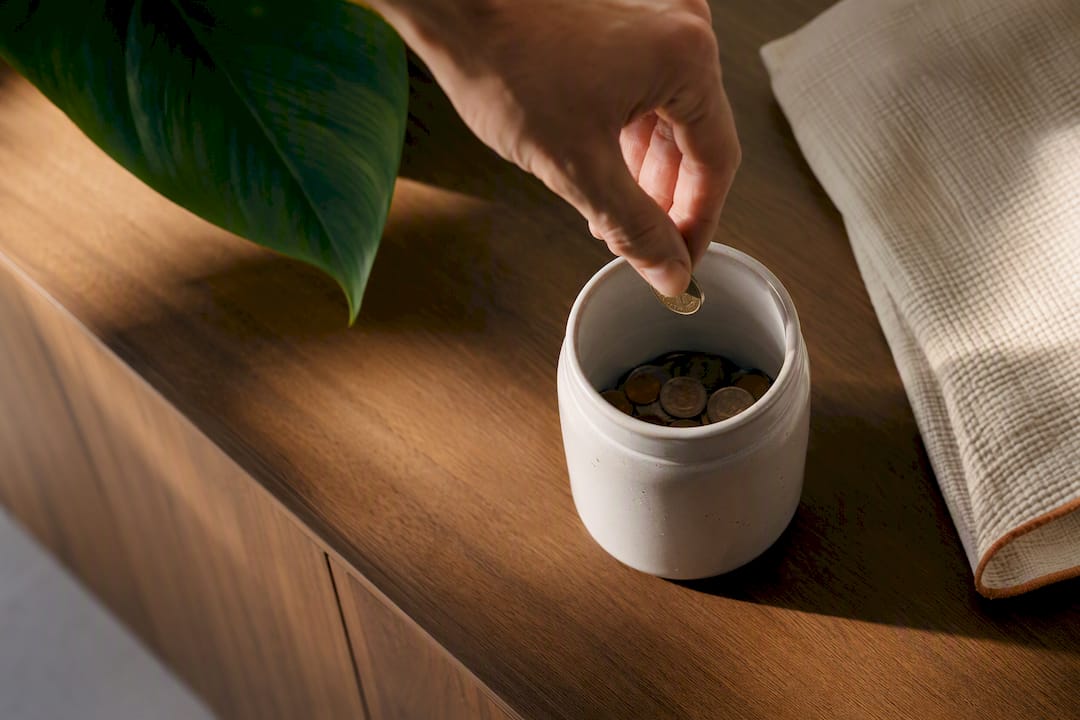
Set a visible marker of progress, a tally on your phone, a jar with a coin dropped in for every smoke-free morning, something you see before the craving even starts. Abstract progress (“I’m doing better”) is easy to dismiss during a rough morning. A physical count is harder to argue with.
Avoid all-or-nothing thinking about your delay goals; developing strong habits is key, and you can learn more about how to build daily mental wellness habits that stick here. If you only managed 5 minutes instead of your target 15, that’s still 5 minutes your brain didn’t get its usual script. Treat it as partial progress, not failure. The mornings where you barely manage the swap are often the ones where the retraining matters most, because you’re proving the new routine works even under pressure.
What Happens After a Slip, and Why It’s Not the End
A slip doesn’t erase your progress. Cravings are time-limited. They typically peak and fade within minutes, and most people see real change in the habit within one to three weeks of consistent practice.
If you slip, run a quick three-step reset: stop the ritual immediately rather than finishing the cigarette out of habit, rinse your mouth or use mouthwash, then breathe and re-plan tomorrow’s delay goal. One slip is data, not a verdict on whether you can quit.
— Tommy
Try a Nicotine-Free Way to Break the Morning Ritual
If the hand-to-mouth habit is the piece you keep underestimating, that’s exactly what the BreatheFree resistance necklace is built to address. It gives your hands and mouth something to do during the delay window from Step 3 of the morning routine above, without introducing any nicotine at all. Use it during the timer, during a 2-minute reset, or whenever the urge to reach for a cigarette shows up before you’ve built new muscle memory.

It’s not a standalone fix. Pair it with the delay-and-replace steps, not instead of them, and it works better alongside a plan than on its own. Additional products are available to support recovery beyond the ritual itself. If oral fixation has been your hardest piece to crack, check out the resistance necklace and see if it fits into tomorrow morning’s routine.
This article is general information, not a substitute for advice from a qualified doctor. Consult a qualified healthcare professional about your own circumstances before acting on anything here.
Sources
- Mayo Clinic — Nicotine craving
- CDC — Five new ways to quit with medicines
- Smokefree
- MeQuit — Quit smoking morning routine
FAQ
What Is the Best Substitute for a Cigarette?
There’s no single best substitute for everyone, but sugar-free gum, water, and nicotine-free oral tools like the BreatheFree resistance necklace consistently address the hand-to-mouth habit that makes quitting hard.
What Kills the Urge to Smoke Fastest?
A 60 to 120 second reset, combining movement, water, and a strong mint flavor, interrupts most cravings quickly because cravings typically peak and fade within minutes on their own.
What Should You Do Instead of Having a Cigarette?
Delay 5 to 15 minutes, then run a replacement action: drink water, chew gum, take a short walk, or hold an oral substitute until the urge passes.
How Long Does It Take to Break the Morning Cigarette Habit?
Most people notice measurable change within 1 to 3 weeks of consistently practicing a delay-and-replace routine, though full habit change can take longer depending on how automatic the cigarette cue had become.
Should I Use Nicotine Replacement Therapy for Morning Cravings?
If you smoke within minutes of waking every day, that’s a sign of stronger dependence, and NRT combined with behavioral support tends to outperform either approach used alone.