

Quit smoking using physical objects is a proven, nicotine-free method that works by keeping your mouth and hands occupied during the minutes a craving peaks and fades. Smoking cessation researchers call this approach behavioral substitution. The core idea is simple: replace the physical ritual of smoking with a deliberate object-based action. Cravings peak and fade within about 10 minutes, which means the right object, used at the right moment, can carry you through the hardest part. Tools like sugarless gum, fidget cubes, spinner rings, and stress balls each target a specific part of the smoking habit, whether that is the oral fixation, the hand sensation, or the idle restlessness that triggers a reach for a cigarette.
Which physical objects best replace the oral component of smoking?
Oral substitution is the most direct form of behavioral replacement for smokers. Smoking is a mouth-centered ritual, and the craving for that sensation does not disappear when the cigarette does. The good news is that several everyday objects satisfy it effectively.
Sugarless gum, raw carrots, nuts, sunflower seeds, mints, and water are all clinically recommended oral substitutes. Each one occupies the mouth with a different texture and sensation, giving you options for different moods and settings. A clinical trial in Hong Kong found that 75% of participants used gum during their quit attempt, and 57% reported meaningful craving relief. That is not a small effect for something you can buy at any convenience store.
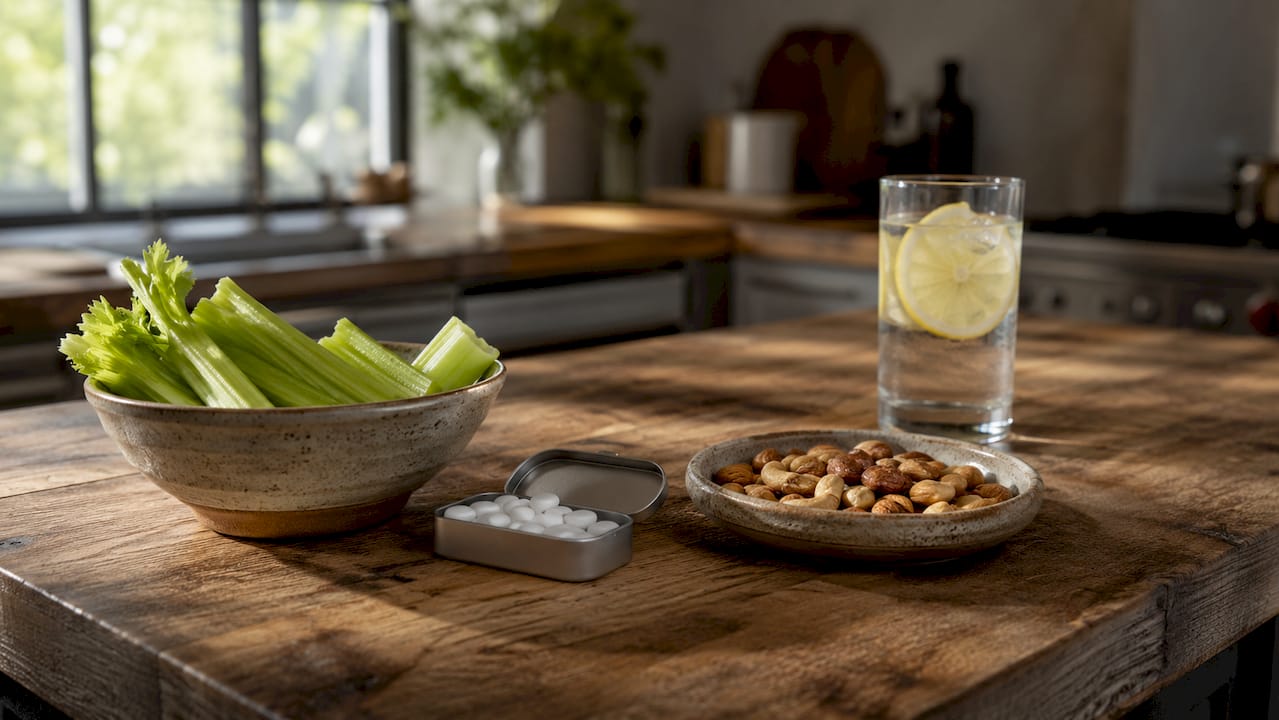
The reason chewing works goes deeper than distraction. The chewing mechanism occupies oral nerves and redirects attention away from the craving signal, fulfilling a need that is entirely separate from nicotine chemistry. This makes gum and crunchy snacks especially useful for people trying to quit without any nicotine replacement at all.
The best oral substitutes for quitting smoking include:
- Sugarless gum: Provides immediate chewing action and is portable enough to carry everywhere.
- Raw carrots or celery sticks: Add a satisfying crunch and take longer to consume, extending the distraction window.
- Sunflower seeds: Require repetitive hand-to-mouth action, which mirrors the smoking ritual closely.
- Mints or hard candy: Dissolve slowly and keep the mouth engaged without requiring chewing.
- Cold water: Drinking a full glass slowly resets the breath and gives the hands something to hold.
If you want to protect your teeth while managing oral cravings, custom-fit mouth guards are worth considering, especially if you find yourself clenching during stressful craving moments.
Pro Tip: Deploy your oral substitute the moment you feel a craving start, not after it builds. The first 60 seconds are when the urge is easiest to redirect.
How to use hand-focused physical objects to manage the urge of holding a cigarette
The hand is the other half of the smoking ritual. Most people underestimate how much of their craving is about having something to hold, turn, and bring to their mouth. Fidgeting with small objects like paperclips, pencils, or stress balls directly replicates the hand sensation of holding a cigarette.
Fidget tools vary by weight, texture, and motion, which means you can match the tool to your specific smoking trigger. Someone who smokes out of boredom needs a different tool than someone who lights up under deadline pressure. The best sensory tools for resisting cigarette cravings address the exact physical memory your hands are trying to recreate.
Popular hand-focused options include:
- Metal sliders: Heavy, satisfying to click, and quiet enough for office or public use.
- Spinner rings: Worn on the finger, so they are always available and require no extra pocket space.
- Fidget cubes: Offer multiple tactile actions on one object, including clicking, spinning, and sliding.
- Worry stones: Smooth, palm-sized stones that respond to thumb pressure, ideal for stress-triggered cravings.
- Stress balls: Soft, squeezable, and effective for releasing physical tension during a craving spike.
Choosing fidget tools with weight and form similar to a cigarette can more effectively satisfy the hand-to-mouth sensory memory. A thin, lightweight object that you can roll between two fingers will feel more familiar than a bulky cube. That familiarity is what makes the substitution stick.
Breathefree’s spinner rings for irritability are designed specifically with this principle in mind, offering a wearable, always-on fidget option for people managing stress-driven cravings.
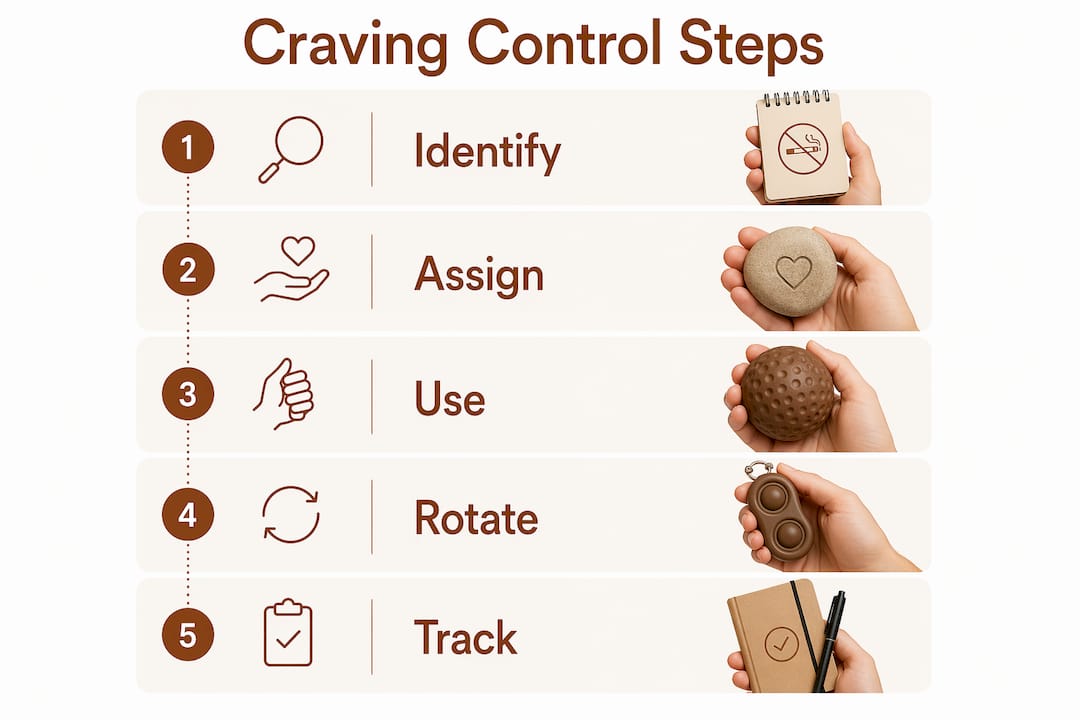
Pro Tip: Assign one specific hand object to your highest-risk craving moment, whether that is after meals, during a commute, or at your desk. Pre-assigning removes the decision under pressure.
How does timing your physical objects maximize craving control?
Timing is the variable most people get wrong. They wait until a craving is overwhelming before reaching for a substitute, and by then the urge has already won the first round. Setting a 10-minute timer the moment a craving starts is one of the most effective distraction strategies in smoking cessation.
The table below shows how to match objects to craving stages for maximum effect.
| Craving stage | Best object type | Why it works |
|---|---|---|
| First 60 seconds | Sugarless gum or mint | Immediate oral engagement stops the craving from building |
| Minutes 1–5 | Fidget cube or stress ball | Occupies hands and redirects physical restlessness |
| Minutes 5–10 | Walking or cold water | Physical activity and hydration ease mood and reduce intensity |
| After 10 minutes | Any preferred object | Craving has peaked and is fading; object reinforces the win |
Physical activity is an underused tool in this window. A short walk, even two or three minutes around the block, changes your environment and releases tension that would otherwise feed the craving. Pair the walk with a hand object and you are addressing two craving drivers at once.
Building a personalized craving kit is the most practical step you can take before your quit date. Pre-assigning dedicated objects to specific triggers removes the need to improvise when stress is high. A kit might include gum for post-meal cravings, a spinner ring for work stress, and a stress ball for evening restlessness.
Physical substitutes work best as part of a broader plan. Mayo Clinic emphasizes that behavioral replacement tools produce the strongest outcomes when combined with counseling, education, and social support. Objects handle the physical ritual. Support handles the motivation.
What are the common mistakes in physical object substitution?
The biggest mistake is treating physical objects as a passive backup rather than an active strategy. People who keep gum in a drawer and only think of it after a craving has peaked get far less benefit than those who use it at the first sign of an urge.
Three other common pitfalls undermine results:
- Addressing only one part of the habit. Someone who chews gum but ignores the hand sensation will still feel the pull to hold something. Matching the object to the specific part of the ritual you miss most is what makes substitution effective.
- Choosing inconvenient tools. A fidget cube left at home does nothing during a craving at work. Every tool in your kit needs to be physically present at your highest-risk locations.
- Letting tools lose novelty without replacing them. A stress ball you have used for three weeks may no longer hold your attention. Rotating objects every few weeks keeps the substitution feeling deliberate rather than automatic.
Consistency matters more than perfection. Missing one craving window does not erase progress. The goal is to use your objects more often than not, and to make the habit of reaching for a substitute stronger than the habit of reaching for a cigarette. If a particular tool stops working, replace it without guilt. Matching the tactile or oral object to the specific part of the smoking ritual you miss most is an ongoing process, not a one-time decision.
Breathefree’s 5 reasons why people succeed with physical substitution tools offers a useful framework for understanding which habit patterns respond best to which objects.
Key takeaways
Physical objects are most effective when deployed immediately at the first sign of a craving, matched to the specific ritual they replace, and combined with behavioral support for lasting results.
| Point | Details |
|---|---|
| Timing is critical | Use your substitute within the first 60 seconds of a craving, before it builds intensity. |
| Match object to ritual | Oral cravings need gum or snacks; hand cravings need fidget tools or stress balls. |
| Build a craving kit | Pre-assign objects to your highest-risk triggers before your quit date. |
| Rotate tools regularly | Replace objects that lose novelty to keep the substitution feeling active and deliberate. |
| Add behavioral support | Physical objects work best alongside counseling, education, or a structured quit plan. |
What I have learned from watching people quit with physical tools
The people who succeed with physical substitution tools share one trait: they treat the objects seriously. They do not grab whatever is nearby. They choose a specific tool, keep it on their person, and use it with intention. That level of deliberateness is what separates someone who chews gum occasionally from someone who uses gum as a real quitting strategy.
The second thing I have noticed is that most people underestimate the hand. They focus entirely on nicotine patches or gum and then wonder why they still feel the pull to light up. The hand-to-mouth ritual is deeply wired. A spinner ring or a metal slider is not a toy. It is a direct answer to a physical memory your nervous system is replaying dozens of times a day.
My honest advice: do not wait until your quit date to test your tools. Use them now, during your normal smoking moments, so your hands and mouth learn the substitution before the pressure is real. The craving kit you build in advance is worth more than any willpower you try to summon in the moment.
— Tommy
A structured way to track your progress with Breathefree
Physical objects handle the craving in the moment. What they do not do is help you see the bigger picture of your quit attempt over days and weeks.
Breathefree’s Nicotine Detox eBook and Habit Tracker is built to fill that gap. It gives you a structured way to log cravings, track which objects worked, and identify the triggers you still need to address. Over 75,000 people have used Breathefree’s approach to quit without nicotine, and the tracker is the tool that keeps the strategy visible. Pair it with the physical objects in your craving kit and you have both the in-the-moment response and the long-term record that keeps you accountable.
FAQ
What physical objects help most with cigarette cravings?
Sugarless gum, raw carrots, stress balls, fidget cubes, and spinner rings are the most effective options. The best choice depends on whether your craving is primarily oral or hand-focused.
How quickly do cravings pass if I use a substitute?
Cravings typically peak and fade within about 10 minutes. Using a physical substitute immediately at the onset makes it much easier to get through that window without smoking.
Can I quit smoking without nicotine replacement using only physical objects?
Yes. Physical substitutes address the behavioral and sensory components of smoking, which are separate from nicotine dependence. Combining them with counseling or a structured plan improves results significantly.
How do I choose between oral and hand-focused fidget tools?
Identify which part of smoking you miss most. If it is the mouth sensation, start with gum or mints. If it is holding and handling a cigarette, start with a fidget cube, spinner ring, or stress ball.
How often should I replace or rotate my physical quit-smoking tools?
Rotate tools every two to three weeks, or sooner if a particular object stops holding your attention. Keeping the substitution feeling deliberate prevents it from fading into background habit.