

A starter kit for a non-nicotine oral-fixation aid, things like resistance necklaces or flavor sticks, typically runs $20 to $45, with ongoing refills adding roughly $10 to $30 a month depending on how often you replace parts. The smartest first move is a low-cost trial before committing to ongoing purchases. The CDC recommends practicing with behavioral substitutes before your quit date, and the free quitline at 1-800-QUIT-NOW can support that process at no cost.
TL;DR:
- The initial cost of resistance necklaces ranges from $20 to $45, with ongoing flavor refills costing $10 to $25 per pack, making long-term expenses vary based on usage frequency.
- Using household substitutes such as gum or toothpicks for initial testing can minimize risks before investing in a device or subscription.
- Durable devices with a reusable core, like necklaces and fidget rings, tend to have higher upfront costs but lower long-term spending than consumable products.
- Checking for guaranteed return policies and understanding additional shipping or replacement costs can prevent unexpected expenses when choosing a non-nicotine quit aid.
Table of Contents
- Price breakdown by product category
- How the cost adds up over three months
- What actually drives the price differences
- How to choose a cost-effective option
- Why nicotine-free tools earn their place in a quit plan
- Where BreatheFree fits into your budget
- Sources
- FAQ
Price breakdown by product category
Non-nicotine oral-fixation aids fall into a handful of categories, and each one has a different cost pattern. Some ask for more money upfront and less overtime, others do the opposite.
- Resistance necklaces: a one-time device typically costs $20 to $45, with the main ongoing expense being flavor refill packs rather than the necklace itself.
- Flavor refills: usually sold in multi-packs, these run $10 to $25 per pack and are the main recurring cost once you own a necklace or similar device.
- Lung-support gummies: priced more like a supplement, often $15 to $30 for a monthly supply, making them a recurring cost from day one.
- Essential oil nasal sticks: generally the cheapest entry point at $8 to $20 each, though they wear out faster and need replacing every few weeks.
- Fidget rings and spinners: a one-time purchase in the $10 to $25 range with no refill cost at all, since there is nothing to replace.
The pattern that matters most for budgeting: devices with a reusable core (necklaces, fidget rings) tend to have higher upfront cost but lower long-term spend, while consumables (gummies, nasal sticks, flavor refills) cost less to start but add up faster over months of use. Subscription models are common for flavor refills and gummies, since those need regular restocking, while fidget aids rarely come with a subscription option because there is nothing to resupply.
How the cost adds up over three months

The real cost of any nicotine-free aid depends on three pieces: the initial device, starter refills, and how often you restock after that. A necklace with a slow refill cadence costs far less over three months than a gummy habit you restock every 30 days.
Here are three realistic three-month budgets:
- DIY low-cost approach: household substitutes like toothpicks, straws, or sugar-free gum cost close to nothing, with maybe $10 to $15 total spent over three months on replacements.
- Mid-range single purchase: one resistance necklace ($20 to $45) plus two refill packs over three months ($20 to $50) lands the total around $40 to $95.
- Subscription-heavy approach: a device plus a recurring monthly subscription for refills or gummies can run $90 to $180 over three months, depending on the product mix and restock frequency.
Cost is not just a budgeting detail, it affects whether people stick with a quit method at all. Research on nicotine replacement pricing has found that lower out-of-pocket cost increases uptake and continued use of quit aids, which in turn supports more quit attempts. That logic holds for non-nicotine tools too: the cheaper and easier it is to try something, the more likely you are to actually use it long enough to know if it helps.
What actually drives the price differences
Two products that look similar can be priced $20 apart, and the reason usually comes down to a handful of factors rather than brand markup alone.
- Materials: solid, durable cores (metal, dense plastic fiber) cost more to produce than basic plastic and tend to last longer.
- Refill type and frequency: products needing frequent restocking (nasal sticks, gummies) generally cost more per month than ones you refill occasionally.
- Flavor variety: a wider range of flavor options sometimes carries a small premium over single-flavor packs.
- Guarantee and support: a money-back guarantee or included community access can justify a higher sticker price if it lowers your risk of wasting money on something that doesn’t work for you.
Pro Tip: Before buying, check the product page for the return window, whether refills are sold separately or only in a subscription, and what shipping actually costs, since that last one quietly inflates a lot of small orders.
How to choose a cost-effective option
The goal is not to find the cheapest product, it’s to avoid spending money on something before you know it works for you. A short, structured trial process does that better than guessing.
- Start with free or nearly free substitutes (toothpicks, straws, sugar-free gum) for the first few days to identify what kind of sensory replacement you respond to.
- Buy one low-cost device or a single refill pack and run a two-week trial before considering a subscription.
- Calculate what a full month of refills would actually cost before signing up for recurring billing.
- Pair whatever tool you choose with free support, community groups or the quitline, since CDC guidance on quitting treats counseling and quitlines as evidence-based and generally cost-effective.
A subscription makes sense once you already know a product works for you and you are regularly restocking anyway. Buying one-time is the smarter choice while you are still testing what actually curbs your cravings.
A few ways to trim spend further:
- Look for starter bundles that combine a device with a few refills at a lower combined price than buying separately.
- Watch for seasonal or promotional discounts, especially around New Year’s, when quit-smoking demand rises.
- Favor products with a money-back guarantee so a bad fit doesn’t become a sunk cost.
- Use free resources like immediate oral substitutes before paying for anything.
Why nicotine-free tools earn their place in a quit plan
Public-health guidance has long pointed to behavioral substitutes, oral or hand-to-mouth objects, as a legitimate part of quitting, and a large overview of behavioral interventions found that counseling and similar supports increase quit rates, though cost-effectiveness varies across options. BreatheFree’s resistance necklace fits that behavioral category: it is nicotine-free, built around oral fixation, and paired with community support, with the brand reporting more than 75,000 users. The most sensible path is still to trial cheaply first and treat a bigger purchase as a second step, not the first.
— Tommy
Where BreatheFree fits into your budget
If a low-cost trial confirms that holding or chewing something helps you resist cravings, BreatheFree’s resistance necklace gives you a reusable, nicotine-free device instead of a disposable habit. It is built entirely without nicotine or inhalation, so you get the ritual and the oral fixation without reintroducing the substance you are trying to quit.
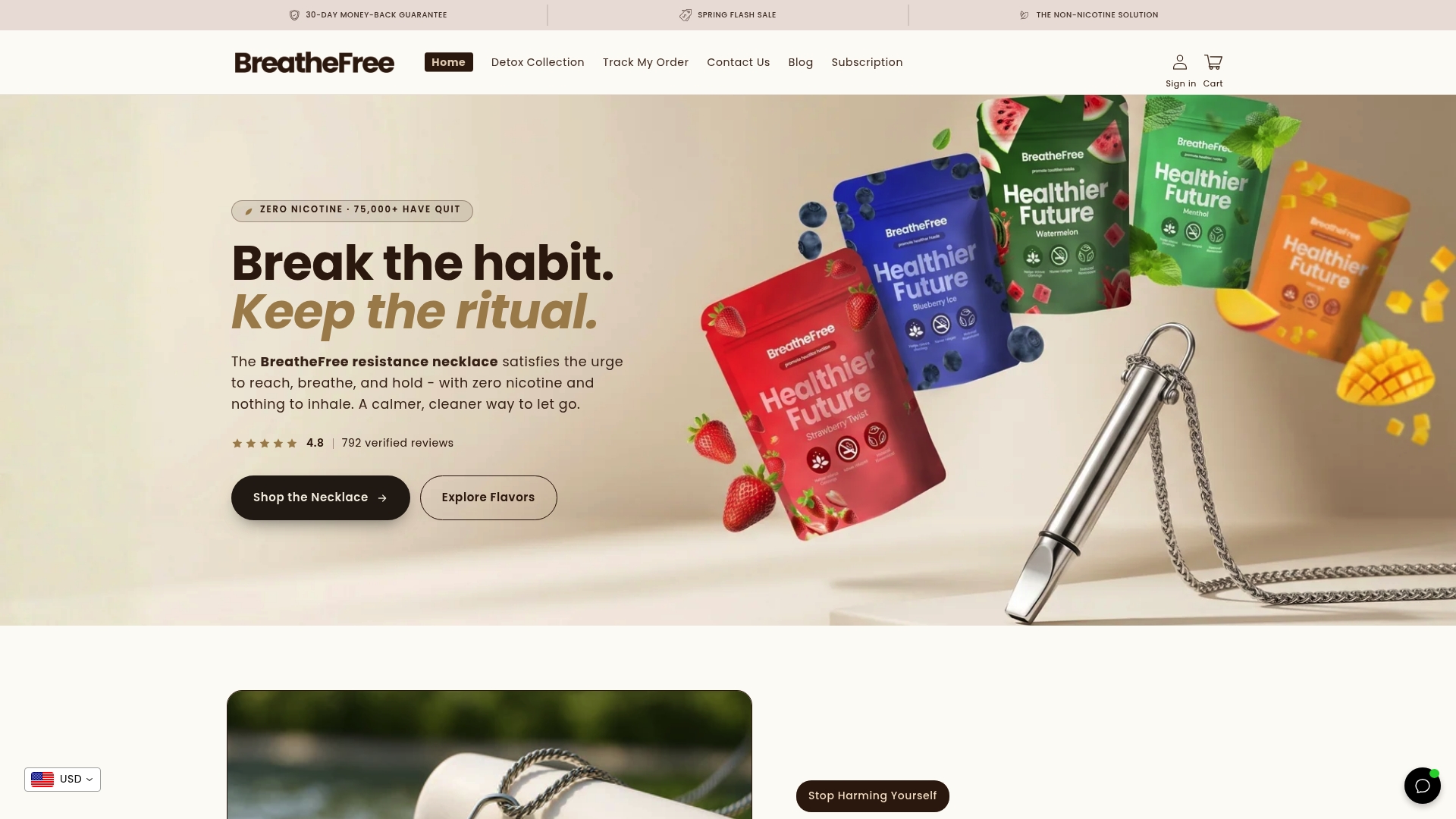
- The necklace and flavor refills are available as one-time purchases for anyone who wants to test the product before committing further.
- A subscription option is available for people who already know they’ll need regular flavor refills.
- Every order carries BreatheFree’s own 30-day money-back guarantee, so a poor fit doesn’t have to be a wasted purchase.
- Community support is included, giving buyers a place to stay accountable beyond the product itself.
Check current pricing and bundle options on the BreatheFree collection page before you decide what to try first.
Sources
Free support: 1-800-QUIT-NOW. See CDC quitting tips and the behavioral interventions review.
- Tips for quitting | Quit smoking | Tips from former smokers | CDC
- Behavioural interventions for smoking cessation: an overview and network meta-analysis
FAQ
How much does a nicotine-free quit aid typically cost?
A starter device like a resistance necklace usually costs $20 to $45 as a one-time purchase, with flavor refill packs adding $10 to $25 per restock. Monthly recurring costs for refills or subscriptions generally land between $10 and $30.
Are non-nicotine oral aids cheaper than a subscription plan long term?
A one-time purchase is usually cheaper in the short term, especially during a trial period, while a subscription can work out more economical per unit once you know you’ll restock regularly. The CDC’s quitting guidance treats free counseling and quitlines as a cost-effective complement either way.
What’s the cheapest way to try oral-fixation quitting methods?
Household substitutes like toothpicks, straws, or sugar-free gum cost almost nothing and let you test whether oral fixation helps before buying anything. The CDC recommends practicing with substitutes before your quit date for exactly this reason.
Does BreatheFree offer a money-back guarantee?
Yes, BreatheFree includes a 30-day money-back guarantee on its resistance necklace and flavor refill purchases. Current pricing and guarantee details are listed on the BreatheFree collection page.
Are hidden costs common with these products?
Shipping fees on refill packs and the eventual need to replace worn parts, like a necklace chain or core, are the most common extra costs to plan for. Checking a product’s refill compatibility and return policy before buying helps avoid surprise expenses.