

Yes, breathwork helps. Consistent practice reduces cravings and can measurably improve breathing within weeks, according to structured trials. Start now: the next time a craving hits, try pursed-lip breathing for 1 to 2 minutes. Stop and sit down if you feel chest pain or dizziness.
TL;DR:
- Practicing pursed-lip breathing during cravings can reduce urge frequency by about 38% and craving intensity by nearly 39% within four weeks.
- Daily short sessions of diaphragmatic and three-part breathing improve lung function and muscle strength, with measurable benefits achievable in a month.
- Breathwork is safest when learned at calm moments and may cause mild lightheadedness, but higher-intensity techniques require caution, especially for those with health conditions.
- Combining breathwork with other cessation tools and replacing hand-to-mouth rituals enhances the probability of long-term abstinence and habit formation.
- Structured, consistent practice over weeks accelerates lung recovery and craving management, but irregular use limits long-term benefits.
Table of Contents
- How Does Breathwork Help Smokers Who Just Quit?
- How Often Should Ex-Smokers Practice Breathwork?
- What Does the Research Say About Breathwork and Cravings?
- When Should Ex-Smokers Consider Pulmonary Rehabilitation?
- Is Breathwork Safe for Everyone Trying to Quit Smoking?
- How Do You Replace the Smoking Ritual With Breathwork?
- How Does Breathwork Fit With Other Quit-Smoking Methods?
- What Are the Long-Term Lung Benefits of Quitting and Breathwork?
- What Makes Breathwork Hard to Stick With, and How Do You Fix It?
- What I’ve Learned Watching Ex-Smokers Use Breathwork
- A Simple Tool to Pair With Your Breathing Practice
- Sources
How Does Breathwork Help Smokers Who Just Quit?
Three techniques cover most of what you need, and none of them require a class or an app. They work because they target the two things that make quitting miserable: the physical tightness left behind by years of smoke exposure, and the mental spike that hits during a craving.
Pursed-lip breathing is the fastest fix for that trapped, can’t-get-a-full-breath feeling many ex-smokers report in the first few months. Smoking damages the small airways, and those airways can collapse early during exhalation, trapping stale air in the lungs. Pursed-lip breathing keeps them open longer by adding resistance on the way out.
Here’s the exact pattern:
- Sit or stand with relaxed shoulders, not hunched forward.
- Inhale through your nose for a count of two.
- Purse your lips like you’re about to whistle, then exhale slowly for a count of four.
- Repeat for 1 to 2 minutes, keeping the exhale roughly twice as long as the inhale.
Diaphragmatic (belly) breathing rebuilds the muscle that most smokers stopped using properly years ago. Place one hand on your chest and one on your belly. Breathe in through your nose and try to make the bottom hand rise while the top hand stays still. That’s the diaphragm doing the work instead of the shoulders and neck. Cleveland Clinic’s technique guide walks through the hand placement and pacing in more detail if you want a clinical reference point. Start with five minutes lying down, then progress to sitting and standing versions as it starts to feel automatic.
Simple mindful yogic breaths round out the toolkit for craving spikes specifically. Ujjayi, or ocean breath, involves a gentle constriction at the back of the throat on both inhale and exhale, producing a soft, audible hiss. It sounds strange the first time you try it, but the sound itself gives your mind something to focus on besides the craving. Three-part breathing is simpler: fill the belly, then the ribs, then the upper chest, in one continuous inhale, and let it all go in reverse order.
For quick reference, two session lengths cover almost every situation:
- 2-minute craving-buster: pursed-lip breathing, repeated until the urge passes.
- 10-minute calm session: five minutes of diaphragmatic breathing followed by five minutes of three-part breathing, done somewhere quiet.
Pro Tip: Learn these techniques when you’re calm, not when you’re mid-craving. Muscle memory built during a relaxed practice session is what shows up automatically when stress hits.
How Often Should Ex-Smokers Practice Breathwork?
Consistency beats intensity here. You don’t need an hour a day. You need a schedule you’ll actually keep.
- Daily micro-practice, 5 to 10 minutes. The American Lung Association recommends this exact range for pursed-lip and diaphragmatic breathing, whether you’re maintaining lung function or working through an acute craving.
- A structured 30-minute session, several times a week. This mirrors the format used in Volitional Yoga Breathing (VYB) research, which breaks practice into nine short blocks mixing paced breathing, breath holds, and recovery breathing. Four weeks of daily practice at this length produced meaningful changes in a feasibility study, detailed further below.
- Stack the short and long sessions. Use 1 to 2 minute pursed-lip bursts whenever a craving hits during the day, and reserve the longer 30-minute module for a set time, like right after work or before bed.
- Set a timer or phone reminder. Breathwork fails as a habit for the same reason gym memberships fail: nobody schedules it. Treat it like a pill you take twice a day.
- Track two numbers. Note how many cravings you had that day and rate your breathlessness on a simple 1 to 10 scale each morning. Patterns show up within a week or two.
You don’t need special equipment to start. A habit tracker or a notes app works fine for logging cravings and breathlessness scores.
What Does the Research Say About Breathwork and Cravings?
The strongest data point comes from a feasibility study on the 30-minute VYB module: daily practice over four weeks produced significant reductions in urge frequency and urge intensity, along with a meaningful improvement in FEV₁ (a standard measure of lung airflow), according to the published trial.
By the numbers: A structured daily breathing practice cut craving frequency by roughly 38%, craving intensity by roughly 39%, and boosted a key lung-function measure by nearly 18% in just four weeks.
A separate trial looked at shorter mindfulness-based yogic breathing sessions during acute abstinence. Participants who did a 20-minute session saw smoking risk drop by more than half compared with a control group, along with lower craving and reduced negative mood, per the published findings.
Two caveats matter before you treat these numbers as a guarantee:
- Both studies used relatively small samples in supervised or lab settings, which tends to produce cleaner results than unsupervised home practice.
- Researchers behind the mindfulness-yogic-breathing trial themselves note the evidence is promising but needs larger, longer follow-up studies before anyone calls it definitive.
What this means practically: expect real, short-term craving relief and a plausible small-to-moderate bump in lung function if you stick with a structured routine. Expect less if you practice sporadically, and don’t expect breathwork to reverse structural lung damage on its own.
When Should Ex-Smokers Consider Pulmonary Rehabilitation?
If breathlessness is limiting your daily activity, not just annoying you, that’s the signal to ask a doctor about pulmonary rehabilitation rather than relying on home practice alone.
Pulmonary rehab programs combine several pieces most home routines can’t replicate:
- Supervised exercise training to rebuild cardiovascular tolerance.
- Structured education on lung disease and medication management.
- Formal breathing retraining, including pursed-lip and diaphragmatic techniques taught by a respiratory therapist.
- Airway clearance techniques for people with excess mucus production.
Referral usually makes sense when someone has persistent shortness of breath during routine tasks, noticeably reduced exercise tolerance, or abnormal spirometry results on a lung function test. A first assessment typically includes a walk test, a breathing questionnaire, and a review of your medical history, and pulmonary rehab programs report that this combination of exercise and breathing retraining reduces shortness of breath during daily tasks for former smokers. Home breathwork won’t replace that supervised structure, but it’s a reasonable way to build the same muscle memory before a program starts, or to keep the gains going after you finish one.
Is Breathwork Safe for Everyone Trying to Quit Smoking?
Breathwork is low risk for most people, but it isn’t risk-free. Mild lightheadedness during deep breathing is common and usually means you’re breathing too fast or too deeply for your current fitness level. Slow down, or stop and sit until it passes.
Higher-intensity pranayama techniques, the ones involving forceful breath holds or rapid cycles, deserve more caution. If you feel dizzy, notice chest tightness, or feel your heart racing, stop immediately and return to slow, normal breathing.
Certain symptoms need urgent medical attention, not a breathing exercise: chest pain, fainting, or breathlessness that feels severe rather than mild. If you have an existing heart condition, COPD, or another lung disease, check with a clinician before starting a daily structured breathing program, even one that looks as gentle as pursed-lip breathing.
How Do You Replace the Smoking Ritual With Breathwork?
Smoking wasn’t just nicotine. It was a hand-to-mouth motion, a break in the day, a small ritual attached to coffee, phone scrolling, or stress. Breathwork works best when it replaces that ritual, not just the chemical.
Pair a short breath sequence with the exact moments you used to smoke:
- Morning coffee: three-part breathing for 60 seconds before the first sip.
- After a phone call or work break: pursed-lip breathing for 30 seconds, standing up.
- End-of-day wind-down: a full 20-minute mindful session instead of the last cigarette of the day.
Combining a tactile object, something to hold or fidget with, alongside the breath sequence often makes the substitution stick better than breathwork alone. This is exactly why overcoming emotional dependence on smoking usually requires a physical replacement for the hand motion, not just a mental strategy.
Pro Tip: Log small wins. A craving that lasted three minutes instead of ten is a win worth writing down. Rewarding those small shifts is what turns a breathing exercise into an actual habit.
How Does Breathwork Fit With Other Quit-Smoking Methods?
Breathwork isn’t a replacement for nicotine replacement therapy, prescription medication, or counseling. It’s a layer that works alongside them, and for most people, the combination outperforms any single method alone.
If you’re using a nicotine patch or gum, breathwork addresses the piece those tools don’t: the behavioral ritual and the acute stress spike. Medication manages the chemical withdrawal curve; a 2-minute pursed-lip session manages the moment your hands feel restless at your desk. If you’re working with a counselor or a structured cessation program, mention that you’re adding breathing exercises. Most programs welcome it, since it reinforces the same craving-management skills they’re already teaching.
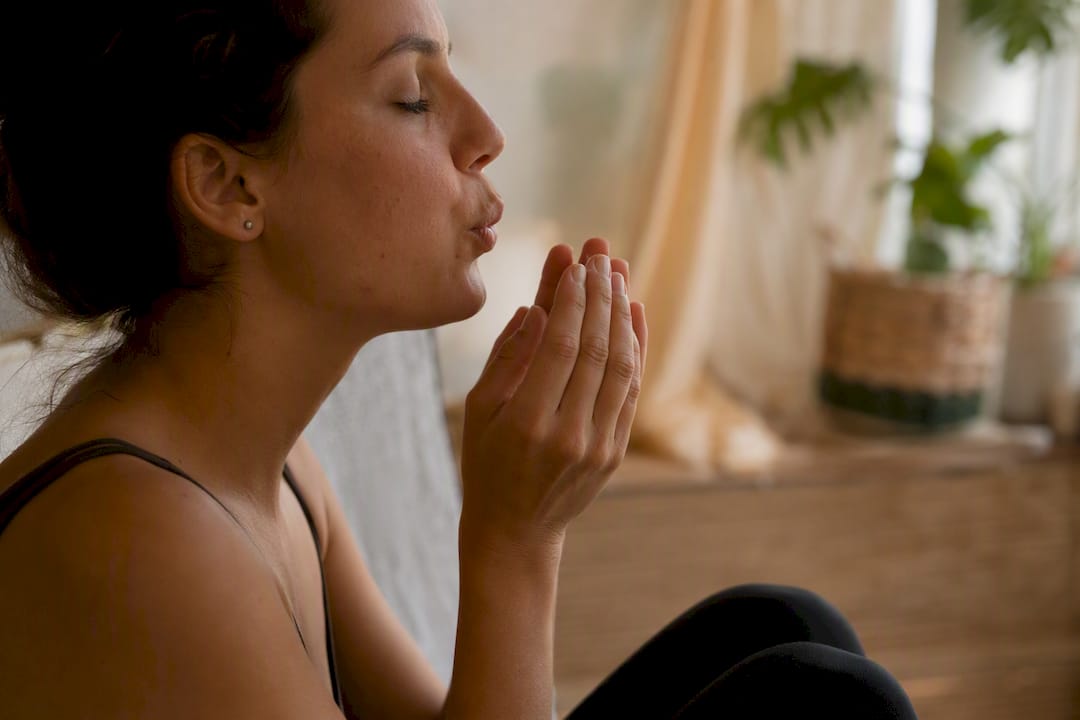
For people managing quitting largely on their own, breathwork pairs naturally with habit-tracking and behavioral substitution tools. Emotional triggers tend to resurface in patterns, the same time of day, the same stressors, and mindfulness-based approaches help you notice those patterns before they turn into a relapse. The goal isn’t to pick breathwork instead of a patch or a support group. It’s to stack tools so no single craving has to be fought with willpower alone.
What Are the Long-Term Lung Benefits of Quitting and Breathwork?
Your lungs start recovering the moment you stop smoking, and breathing exercises can accelerate part of that process, though they won’t undo scar tissue or structural damage that’s already there.
What actually improves over time: respiratory muscle strength, diaphragm efficiency, and your ability to clear air fully on each exhale, as explained in detail in Enhancing your lung capacity and improving your vocal performance. The American Lung Association notes that these gains come from regular practice, not damage reversal, which is an important distinction. Breathwork strengthens the muscles doing the work; it doesn’t regenerate damaged airway tissue.
The practical upshot for someone six months or a year out from quitting: less breathlessness climbing stairs, better exercise tolerance, and a lower resting respiratory rate if you’ve kept up a regular practice. Research on why breathing patterns change after quitting shows this recovery isn’t instant. It builds over months, and it builds faster with structured practice than with quitting alone. Supervision and consistency matter here too. Programs that keep people practicing regularly tend to show stronger, faster spirometric change than sporadic home attempts, which is part of why pairing home practice with occasional professional check-ins pays off for anyone with pre-existing lung concerns.
What Makes Breathwork Hard to Stick With, and How Do You Fix It?
The biggest challenge isn’t learning the techniques. It’s remembering to use them during the fifteen seconds when a craving actually hits.
Cravings arrive fast and feel urgent, and reaching for a breathing technique in that moment requires practice you haven’t built yet if you only try it when you’re already desperate. The fix is boring but effective: practice pursed-lip breathing when you’re calm, at least twice a day, so it becomes automatic rather than something you have to consciously recall.
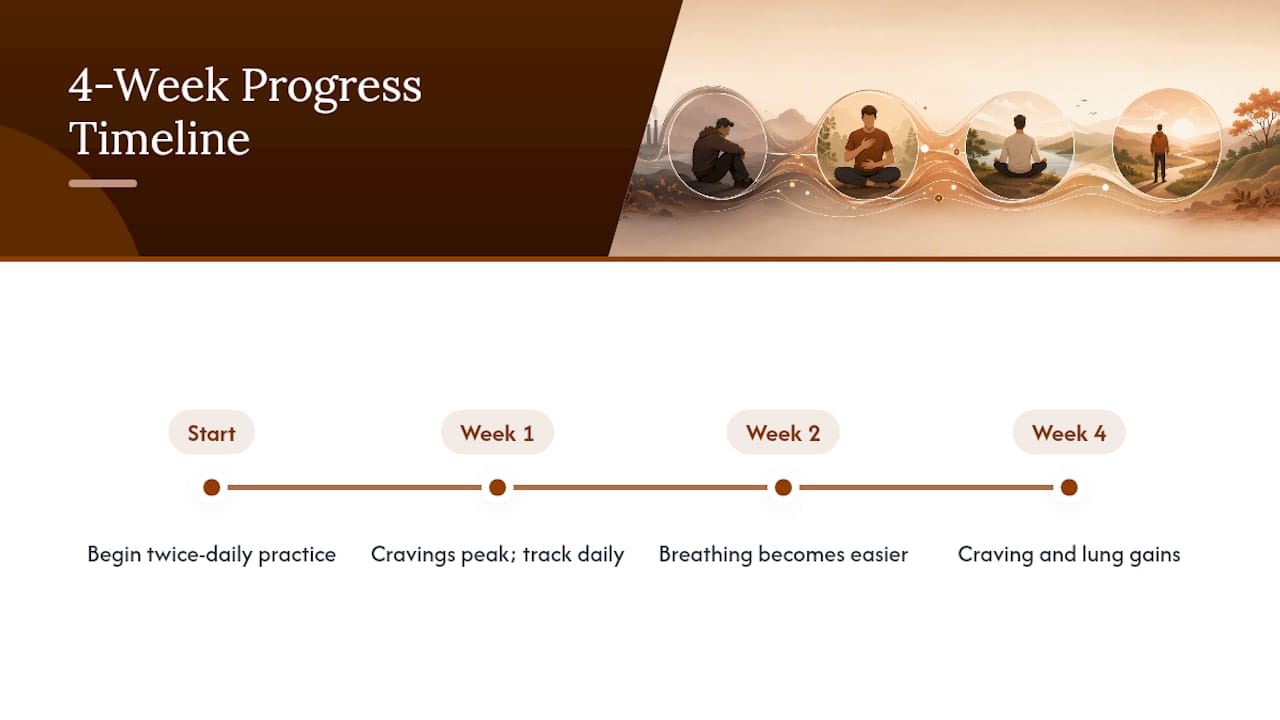
A second common problem is impatience with results. Four weeks is the timeline in the VYB feasibility research for measurable craving and lung-function change. That’s a long stretch when you’re white-knuckling through week one. Tracking craving frequency daily, even roughly, gives you evidence of progress before it’s obvious physically.
The third issue is dizziness or lightheadedness scaring people off entirely. That’s usually a sign of breathing too deeply too fast, not a sign that breathwork isn’t for you. Slow the pace, shorten the session, and build back up. Quitting the breathing practice because of mild dizziness is like quitting a workout because of first-day soreness. It’s uncomfortable feedback, not a stop sign, unless it’s accompanied by chest pain or fainting.
What I’ve Learned Watching Ex-Smokers Use Breathwork
It’s how often people describe the physical ritual, the counting, the pursing of lips, the hand on the belly, as the thing that actually gets them through a craving, more than the biology behind it.
That’s also where a tool like BreatheFree’s resistance necklace earns its place. Breathwork gives your lungs something productive to do during a craving. A hand-to-mouth substitute gives your hands something to do at the same time. Neither replaces medical treatment when nicotine dependence is severe enough to need it, and neither claims to. But together they cover more of the habit than either does alone.
— Tommy
A Simple Tool to Pair With Your Breathing Practice
Breathwork handles the lungs and the mind. It doesn’t do much for the hands, and for a lot of ex-smokers, the hand-to-mouth motion is half the battle. That’s the gap the BreatheFree resistance necklace was built to close.
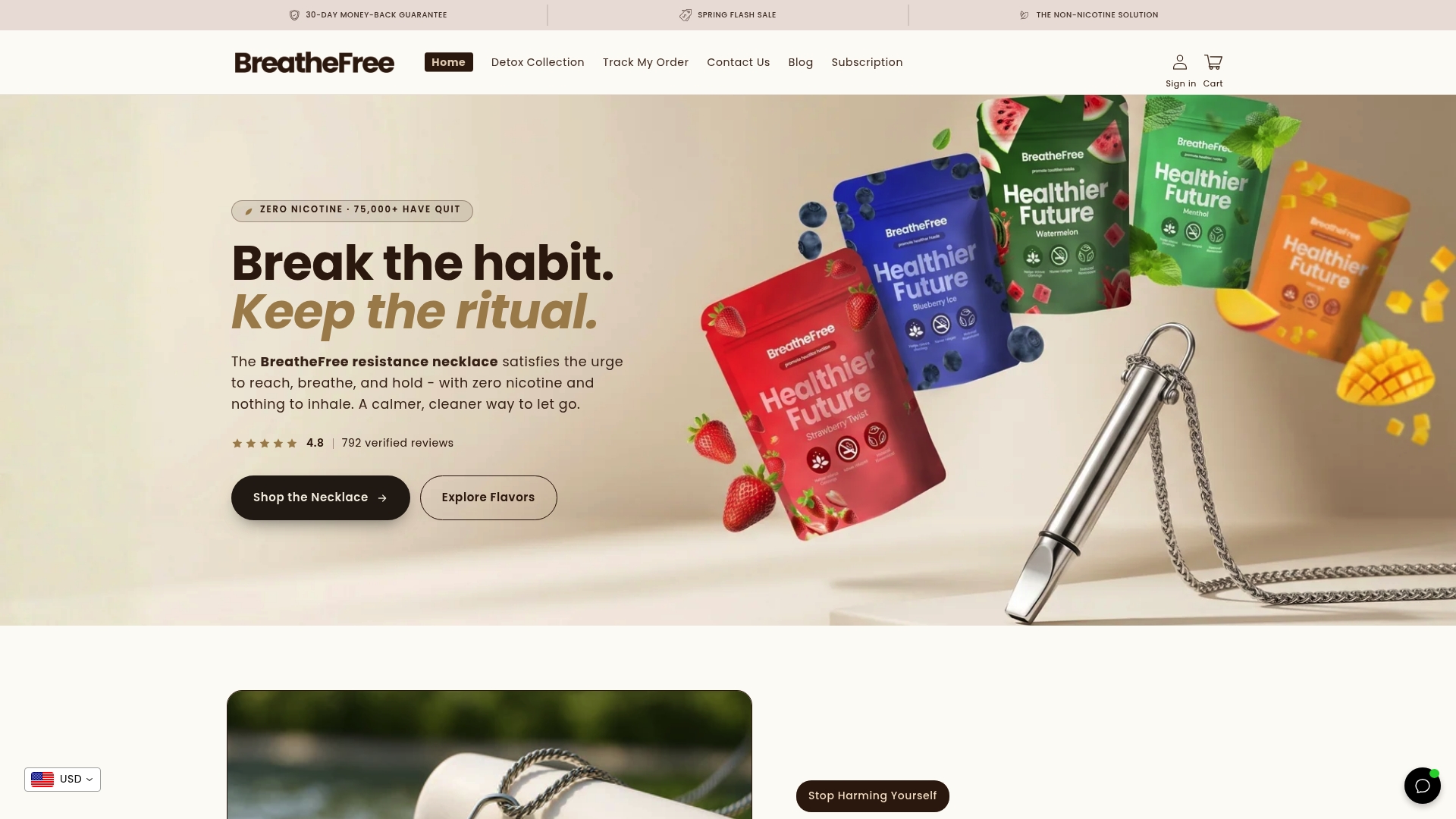
It’s a nicotine-free necklace designed to give you something physical to hold and draw on during a craving, right alongside a 2-minute pursed-lip breathing session. Pair the breath with the object: inhale as you lift it, exhale slowly as you set it down. If you’re someone who misses the ritual of smoking as much as the nicotine itself, this kind of oral-fixation adjunct fills that gap in a way breathing alone can’t. It’s not a substitute for medical cessation support if you need it. It’s a companion tool, and it’s worth trying alongside the techniques in this guide. Check out the BreatheFree resistance necklace and see how it fits into your own craving-management routine.
Sources
- Volitional Yoga Breathing for Smokers: Development, Validation, and Feasibility of a 30-Minute Breathing-Only Intervention for Smoking Cessation and Pulmonary Rehabilitation
- Breathing Exercises | American Lung Association
- The Effects of Mindfulness-Based Yogic Breathing on Craving, Affect, and Smoking Behavior
- The Effects of Mindfulness-Based Yogic Breathing on Craving, Affect, and Smoking Behavior - PMC