

Small clinical trials and one peer-reviewed case report show that inhaling vaporized black pepper essential oil for about two minutes can reduce nicotine cravings in the short term. It works as an adjunct, not a cure. No black pepper product carries FDA approval for smoking cessation, and the biggest safety rule is simple: never burn pepper or apply the undiluted oil to skin.
TL;DR:
- Most studies on black pepper oil involve small sample sizes and short follow-up periods, limiting confidence in long-term quitting effectiveness.
- Vaporized black pepper reduces craving intensity temporarily by stimulating the respiratory tract and mimicking the sensation of smoking.
- The safest method is controlled inhalation using a personal inhaler or diffuser, avoiding combustion or undiluted ingestion that pose health risks.
- Black pepper oil is not approved by the FDA for smoking cessation, and claims about its long-term success are unsupported by current evidence.
- Combining sensory tools like black pepper inhalation with behavioral and medical support improves chances of sustained quitting.
Table of Contents
- Black Pepper Essential Oil Cravings: What the Studies Actually Found
- How Black Pepper Oil Reduces Cravings, According to the Mechanisms Researchers Propose
- Using Black Pepper Oil Safely: Methods, Doses, and Who Should Skip It
- A Simple 2-Minute Protocol Based on the Trial Method
- Where the Evidence Falls Short and When to Get Real Support
- What I Make of the Black Pepper Oil Evidence
- How BreatheFree’s Tools Fit Alongside Aromatherapy
- Primary Sources Worth Reading
- Sources
Black Pepper Essential Oil Cravings: What the Studies Actually Found
The research on black pepper essential oil cravings is thin compared to something like nicotine gum, but it’s real, and it dates back further than most people expect.
The foundational study ran in 1994, when researchers gave 48 smokers who’d been deprived of cigarettes a three-hour session testing three conditions: vaporized black pepper extract, menthol vapor, and unflavored air. The black pepper condition reduced self-reported cravings and withdrawal symptoms more than either comparison, and participants also reported stronger chest sensations, the kind of tightness or “hit” you feel from a drag on a cigarette. That single trial became the anchor point for almost everything written about black pepper oil quitting smoking since.
Later work refined the protocol into something more practical: a brief, controlled inhalation lasting around two minutes, used right when a craving hits rather than on a fixed schedule. Randomized pilot studies using this approach, with samples ranging from about 20 to 58 participants, reported measurable short-term drops in craving intensity. One smaller comparison found black pepper oil outperformed angelica oil for craving reduction in a controlled setting, suggesting the effect isn’t just “any strong-smelling oil will do.”
Then there’s the outlier that gets cited constantly because it’s so unusual: a 2022 case report published in a peer-reviewed journal describing a person in a correctional facility who combusted black pepper to self-treat nicotine withdrawal, since no other nicotine products were available. The authors noted the behavior likely provided some relief but were explicit that burning pepper and inhaling the resulting smoke carry real respiratory risk. They suggested vaporized (not combusted) black pepper deserved more formal study, not that anyone should replicate the smoking method.
Here’s the honest scorecard on what this evidence can and can’t support:
- Sample sizes are small. Most trials involve fewer than 60 people, which limits how confidently the results generalize.
- Follow-up windows are short. Studies measure craving reduction over hours, not weeks or months of quit success.
- No trial measured long-term quit rates. Reduced craving in a lab session doesn’t equal someone staying smoke-free for a year.
- The case report is a single patient. It’s suggestive, not proof of anything at population scale.
- Nothing here has FDA approval. Black pepper oil is sold as a fragrance and aromatherapy product, not a regulated cessation aid.
The takeaway isn’t that black pepper oil doesn’t work. It’s that “works” here means “reduces craving intensity for a short window under controlled conditions,” which is a genuinely useful tool, just not a substitute for a structured quit plan.
How Black Pepper Oil Reduces Cravings, According to the Mechanisms Researchers Propose
Nobody has fully mapped the biology here, but three plausible mechanisms show up again and again in the literature, and each one lines up with something smokers already recognize from their own habit.
Respiratory tract stimulation is the leading theory. Black pepper vapor irritates the airway just enough to produce a sensation in the throat and chest that mimics the “hit” of cigarette smoke. Researchers behind the original 1994 trial pointed to this directly, noting that participants in the pepper condition reported stronger chest sensations than those breathing menthol or plain air. That physical sensation may interrupt the automatic urge to smoke before it fully takes hold.
Sensorimotor replacement matters just as much as the chemistry. A cigarette isn’t only nicotine. It’s a hand moving to the mouth, a specific depth of inhale, a ritual repeated dozens of times a day. Swapping that ritual for something else that occupies the same motion and senses, without the smoke, addresses part of the habit that nicotine patches never touch. This is the same logic behind oral-fixation tools generally: the hand and mouth need something to do.
Possible mood effects round out the theory. Piperine, the compound responsible for black pepper’s bite, has shown anxiolytic-like effects in animal studies. Nobody has confirmed this translates directly to humans reaching for a vape pen at 3 p.m., but it’s a plausible piece of why some people report feeling calmer, not just less “itchy” for a cigarette.
- Throat and chest stimulation may blunt the automatic urge to smoke.
- Hand-to-mouth ritual and inhalation depth substitute for smoking mechanics.
- Piperine’s mood effects in animal models are suggestive, not proven in people.
Pro Tip: If the “throat hit” is what you miss most about smoking, pay attention to how strong a inhale you take with the oil. Trials used a deliberate, sustained breath, not a quick sniff, and that depth seems to matter for the sensory payoff.
Using Black Pepper Oil Safely: Methods, Doses, and Who Should Skip It
The method that shows up across every serious study is controlled inhalation, not smoking, not swallowing, and not rubbing the oil directly on skin.
Two approaches align with the actual research on black pepper essential oil cravings. The first is a personal inhaler stick: a few drops of therapeutic-grade black pepper oil on a cotton wick inside a small tube, held near the nose for the inhalation window. The second is brief diffusion in a well-ventilated room, useful at home but harder to control precisely. Combustion, meaning burning dried pepper or pepper-infused material and inhaling the smoke, is what the 2022 case report described, and the authors were clear that this route introduces smoke-related respiratory harm even if it happened to blunt cravings for that one patient.
Ingestion is a separate hazard entirely. Undiluted black pepper essential oil is far more concentrated than the spice in your kitchen, and swallowing it can irritate the digestive tract. Applying it undiluted to skin can cause burning or a rash, since piperine is a known skin irritant at concentrated strength. Always dilute per the manufacturer’s instructions and never treat essential oils as interchangeable with culinary pepper.
Certain groups should be more cautious, or skip inhalation aromatherapy altogether without medical guidance:
- People with asthma, COPD, or other reactive airway conditions, since inhaled irritants can trigger bronchospasm.
- Pregnant or breastfeeding people, given limited safety data on concentrated essential oil vapor exposure.
- Children, whose airways are smaller and more sensitive to irritant vapors.
- Anyone with a severe psychiatric condition who is using aromatherapy as a coping strategy without a clinician’s input.
- Anyone with a known allergy to black pepper or related plants in the Piperaceae family.
If you experience severe coughing, wheezing, chest tightness, or any sign of an allergic reaction, such as swelling, hives, or difficulty breathing, stop use immediately and seek medical care. These symptoms are not a normal part of “getting used to” the oil.
Sold as a wellness and aromatherapy product, black pepper essential oil isn’t regulated as a drug, so quality varies between brands. Buying from a company that discloses sourcing and purity testing reduces the odds of contamination or mislabeling.
A Simple 2-Minute Protocol Based on the Trial Method
The trials that showed results didn’t ask people to overhaul their day. They used a short, repeatable routine you can try the next time a craving hits.
- Prepare your inhaler ahead of time. Keep a personal aromatherapy inhaler stick or a small bottle of diluted black pepper oil somewhere accessible, like a pocket or bag, so you’re not scrambling when a craving lands.
- Set a two-minute timer. This matches the duration used in pilot studies and gives the sensory effect enough time to register without turning into overuse.
- Inhale slowly and deliberately. Hold the inhaler near your nose and take deep, steady breaths for the full two minutes, focusing on the chest sensation rather than rushing through it.
- Delay the cigarette or vape by a set interval. Give yourself another five to ten minutes after the inhalation before deciding whether you still want to smoke. Cravings often peak and fade within that window.
- Pair it with a physical anchor. Sugar-free gum, a resistance necklace, or a few slow breathing exercises can extend the oral and ritual substitution the oil starts.
Frequency matters. Trials didn’t test constant, all-day inhalation, so treat this as a targeted response to specific craving spikes rather than a background habit. Track when you use it and what triggered the craving; that log becomes useful data for spotting your actual high-risk moments, whether that’s after meals, during a stressful call, or the drive home.
Pro Tip: Log the time of day next to each craving. Most smokers have two or three predictable windows, often mid-afternoon and right after eating, where a pre-emptive two-minute inhalation session works better than waiting for the urge to peak.
Where the Evidence Falls Short and When to Get Real Support
The research on black pepper oil for cravings is promising but narrow. Every trial worth citing involves a small group of people, tracked for a matter of hours, not months. Nobody has published data on long-term quit rates tied specifically to black pepper inhalation, which means claims about it helping someone stay smoke-free for a year are extrapolation, not evidence.
No regulatory body has approved a black pepper product for smoking cessation. That’s worth repeating because marketing language around essential oils sometimes blurs this line. Aromatherapy can be a genuine adjunct, but it sits alongside proven tools, not in place of them.
- Consider counseling or behavioral support, especially for emotional dependence tied to smoking triggers.
- Nicotine replacement therapy and prescription medications have far larger evidence bases for long-term quit success.
- Structured cessation support programs can combine multiple tools, including aromatherapy, under one plan.
- Get medical attention promptly for heavy dependence, severe withdrawal symptoms, pregnancy, existing lung disease, or a psychiatric condition complicating the quit process.
Tobacco kills more than 8 million people worldwide every year, which is exactly why researchers keep testing small, low-risk adjuncts like this one. It’s a genuine tool. It’s not the whole toolbox.
What I Make of the Black Pepper Oil Evidence
The gap between what gets repeated online and what the research actually shows is wider than most articles admit. People treat the 1994 trial like it proved black pepper oil replaces nicotine. It didn’t. It showed a 48-person sample felt less craving intensity during a three-hour lab session. That’s a real finding, and it’s also a narrow one.
What I find more convincing than the raw numbers is the mechanism. Cravings aren’t purely chemical. They’re ritual, hand movement, throat sensation, timing. A tool that interrupts even one of those pieces, without introducing nicotine or smoke, earns a place in a quit plan. I’d treat black pepper oil the way I’d treat a fidget habit or a piece of gum: useful in the moment, not a fix on its own.
If you’re serious about quitting, layer your tools. Use the two-minute inhalation when a craving spikes, but back it with something that occupies your hands for longer stretches, and don’t skip real behavioral or medical support if the cravings are constant rather than occasional.
— Tommy
How BreatheFree’s Tools Fit Alongside Aromatherapy
Black pepper oil addresses the sensory hit. It doesn’t do much for the hand that keeps reaching for something to hold, which is where a lot of quit attempts quietly fall apart.
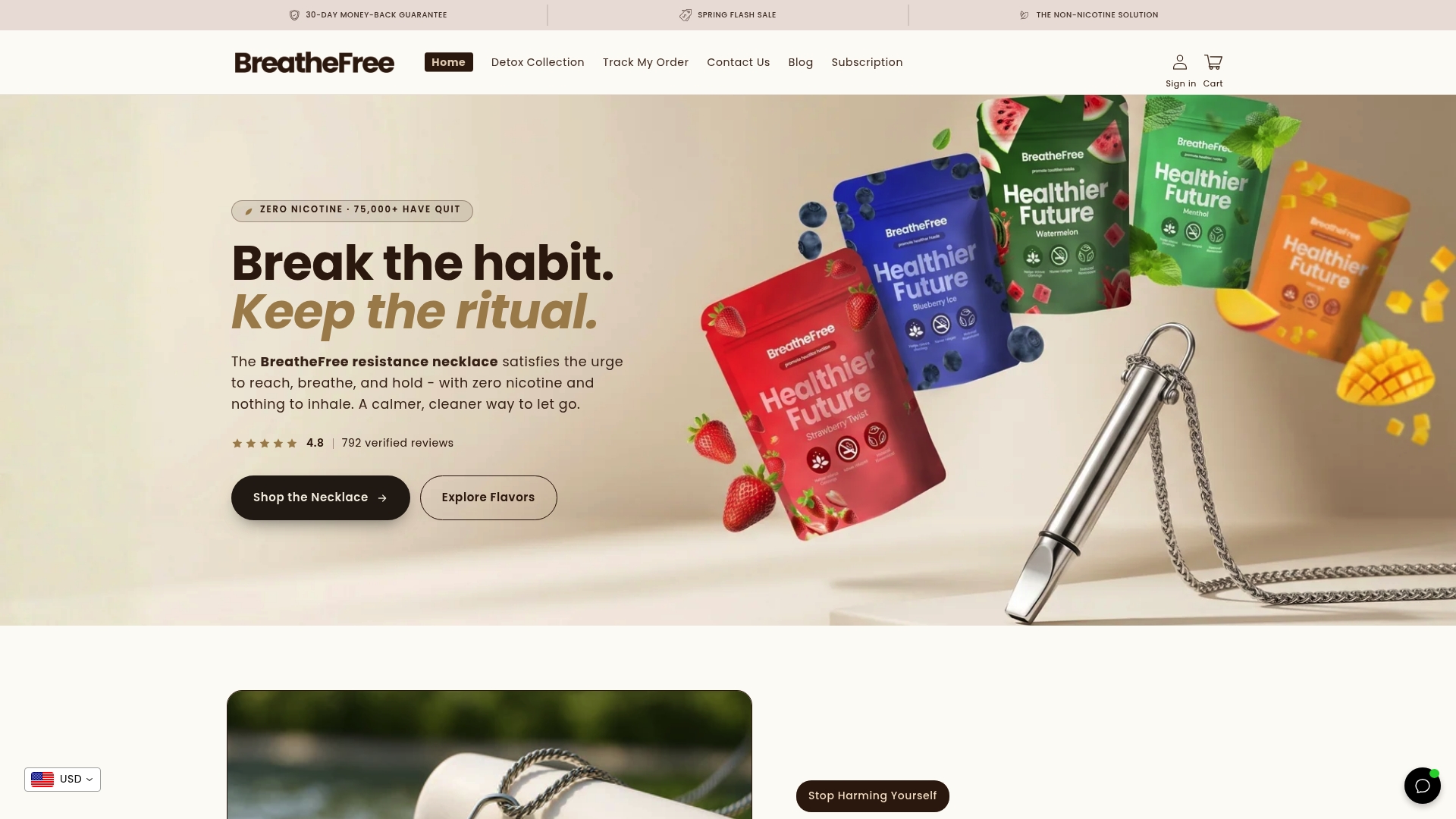
Breathefree built its resistance necklace around exactly that gap: an oral-fixation tool with flavor refills that gives your hands and mouth something to do between craving spikes, all without a trace of nicotine. Pair it with an aromatherapy inhaler for the two-minute technique, and you’re covering both the ritual and the sensory side of a craving at once. There are also essential-oil nasal sticks designed for withdrawal support, so you’re not left improvising a DIY blend. None of this replaces medical care or a structured quit program, and it’s not a cure. It’s a set of physical anchors for the moments a craving hits hardest. If you want a plan to actually structure your attempt around, the Nicotine Detox eBook and Habit Tracker walks through building a routine and logging triggers, which pairs directly with the tracking habit this article already recommends. Start there, or browse an oral-fixation tool collection directly, and build a kit that covers more than just the smell in the room.
Primary Sources Worth Reading
- Drug and Alcohol Dependence (1994): the original 48-person vaporized pepper trial.
- Pilot inhalation trials: the 2-minute protocol, small samples.
- PMC case report (2022): combusted pepper, prison setting, safety caution.
- WHO tobacco fact sheet: global public-health context.
- Aromatherapy student research: further technical reading on methods.
Sources
- Inhalation of vapor from black pepper extract reduces smoking withdrawal symptoms — Drug and Alcohol Dependence (1994)
- Randomized pilot trials reporting reduced nicotine craving after inhalation of black pepper oil
- Black Pepper (Piper nigrum) for Tobacco Withdrawal: A Case Report — PMC (2022)
- WHO: Tobacco — fact sheet