

The most practical way to handle a nicotine craving right now is a nicotine-free oral substitute, like the Breathefree resistance necklace or a similar hand-to-mouth tool. These work because they replace the physical ritual your hands and mouth got used to, without putting any nicotine back into your system.
Here’s the short version of why this matters:
- Smoking and vaping are hand-to-mouth habits as much as chemical ones.
- Oral substitutes satisfy that behavioral loop while you ride out the chemical withdrawal.
- They’re especially useful in the first few minutes of a craving, when the urge is strongest.
Later sections cover the science, the exact products worth buying, and how Breathefree’s own tools fit into a quit plan.
Key Takeaways
Nicotine-free oral substitutes work by replacing the hand-to-mouth ritual behind smoking, giving quitters a purchasable, immediate tool for the first few minutes of a craving.
| Point | Details |
|---|---|
| Oral fixation drives cravings | The hand-to-mouth motion is often as habit-forming as the nicotine itself. |
| Cravings are short-lived | Most urges peak and fade within minutes, so a bridging tool is often enough. |
| Match the tool to the trigger | Chewing suits stress-driven cravings; holding suits boredom-driven ones. |
| Combine tools with breathing | Pairing a substitute with slow breathing lowers craving intensity faster. |
| Breathefree offers a proven starting point | Its resistance necklace and refills, backed by over 75,000 reported quits, pair with an eBook and habit tracker for a structured plan. |
Table of Contents
- Why Do Oral Substitutes Help With Nicotine Withdrawal?
- What Nicotine-Free Products Can You Buy to Manage Cravings?
- How Do You Choose the Right Oral-Fixation Tool?
- What Should You Do in the First 5 Minutes of a Craving?
- What Does the Research Say, and What Has Breathefree Actually Seen?
- How Does Magnesium Relate to Nicotine Withdrawal, and Where Does It Fit In Your Plan?
- What Actually Works Once the First Few Weeks Are Over?
- Where to Start With Breathefree’s Oral-Fixation Tools
- Sources
Why Do Oral Substitutes Help With Nicotine Withdrawal?
Smoking isn’t just a nicotine delivery system. It’s a repeated hand-to-mouth motion, done dozens of times a day, for years. That repetition wires a behavioral habit on top of the chemical one, and it’s the behavioral half that catches people off guard once the nicotine patches or gum stop being the whole story.
A pilot case report published in the Journal of Smoking Cessation documented a smoker who had already failed nicotine replacement therapy. Structured oral-hygiene routines, including interdental cleaning and modified brushing, gave that person’s hands and mouth something else to do. It worked where the standard approach hadn’t.
The urge to smoke is often less about nicotine and more about the motion itself: hand lifting to mouth, something to hold, something to do with restless fingers. Address the motion, and the chemical craving becomes easier to sit through.
Cravings typically peak and fade within a few minutes, according to guidance on resisting tobacco cravings from the Mayo Clinic. An oral substitute doesn’t need to last forever. It just needs to bridge that short, intense window. That’s exactly the gap tools like a resistance necklace, sugar-free gum, or a toothpick are built to fill.
Oral substitutes tend to help most when someone’s dependence is largely ritual and habit-driven rather than purely a matter of blood nicotine levels. If you notice your cravings hit hardest during specific routines (driving, after meals, during a work break) rather than at random, that’s a strong sign the behavioral piece is doing most of the work.

What Nicotine-Free Products Can You Buy to Manage Cravings?
You don’t need to guess your way through this. There’s a small set of purchasable tools that consistently show up in cessation research and real-world quit plans.
- Resistance necklaces. The Breathefree resistance necklace gives your hand something to hold and your mouth something to draw on, mimicking the motion of a cigarette without any nicotine, smoke, or vapor. It clips onto a keychain or bag, so it’s with you the moment a craving starts.
- Flavor refills. Breathefree’s refill system lets you swap flavors on the same necklace, which matters more than it sounds. Sensory variety keeps the tool from feeling stale after week two, when a lot of quitters lose interest in whatever substitute they started with.
- Sugar-free gum and mints. Cheap, portable, and backed by a randomized controlled trial on chewing-based adjuvants that found gum and liquorice root both reduced tobacco dependence in some participants. Downside: gum wears out your jaw fast if it’s your only tool, and mints don’t give your hands anything to do.
- Oral-hygiene substitutes. Interdental picks and a deliberate tooth-cleaning ritual, the same approach used in the case report on oral hygiene therapy, give you a repeatable habit that also protects your teeth. Worth noting given how much smoking already damages oral health.
- Simple food substitutes. Carrot sticks and raw vegetables are the classic Mayo Clinic recommendation, cited in their guide to quit-smoking products, for keeping your mouth busy without added sugar or calories creeping in over a months-long quit attempt.
For readers who want more structure than a single product, Breathefree’s Nicotine Detox eBook and Habit Tracker bundle pairs the physical tool with a day-by-day plan, which matters if you tend to abandon habits without a way to track progress.
Pro Tip: Keep two different textures on hand, one to chew (gum) and one to hold (the necklace). Cravings driven by boredom respond to holding something; cravings driven by stress respond better to chewing.
How Do You Choose the Right Oral-Fixation Tool?
Not every substitute fits every quit attempt. Start by asking whether your cravings are mostly behavioral (triggered by routine, boredom, or stress) or mostly chemical (a steady pull regardless of what you’re doing). Most people are dealing with both, just in different proportions.
Then run through a short checklist before buying anything:
- Is it portable enough for your actual day, including work, driving, and social settings?
- Does the texture or flavor match what you’re replacing, since a hard plastic object won’t satisfy a craving built around chewing?
- Are you allergic to anything in the material or flavoring, especially with reusable mouthpieces?
- How long does it last, and what does replacing it cost over a full quit attempt?
- Does the product page make any claim about nicotine content? A tool marketed for cessation should be explicitly nicotine-free. If a listing is vague about ingredients, treat that as a red flag and look elsewhere.
If your dependence leans heavily chemical, behavioral tools alone may not be enough. Mayo Clinic’s guidance on resisting cravings recommends pairing behavioral strategies with medical support, like counseling or nicotine replacement therapy, rather than treating them as either/or.
What Should You Do in the First 5 Minutes of a Craving?
A craving is a short event, not a permanent state. Treat it like one and you’ll get through most of them without smoking.
- Reach for your oral substitute immediately. Don’t wait to see if the urge passes on its own; have the necklace, gum, or pick already within reach before the craving hits.
- Breathe in a slow 3 to 5 count pattern. In for three, hold for two, out for five. This alone lowers the physical intensity of the urge within a minute or two.
- Sip water. It gives your mouth another sensation to register and helps reset the urge to put something between your lips.
- Distract for 5 to 10 minutes. Walk to another room, check a message, step outside. The 5 Ds framework from RWJBarnabas Health recommends exactly this kind of short delay, since most cravings fade well before the ten-minute mark.
This sequence works whether the trigger is a post-meal habit, a stressful call, or standing around at a party where everyone else is smoking. The tool changes the physical urge; the breathing and delay change the mental one.
Pro Tip: Set a phone timer for five minutes the second a craving hits. Watching the countdown gives your brain a concrete endpoint, which makes the wait feel shorter than it actually is.
What Does the Research Say, and What Has Breathefree Actually Seen?
The clinical evidence lines up with the practical advice. Mayo Clinic’s quit-smoking product guidance points specifically to oral alternatives like sugarless gum and raw vegetables for managing the physical side of cravings. The pilot case report on oral-hygiene therapy showed a real patient succeeding with behavioral substitution after nicotine replacement therapy alone hadn’t worked.
Breathefree’s own numbers echo that pattern at scale:
- Over 75,000 users report quitting using the resistance necklace method.
- The product lineup covers the necklace itself, flavor refills, and a companion eBook and habit tracker.
- Blog resources cover related ground, including nicotine withdrawal symptoms and replacing your smoking ritual.
None of this replaces medical care for people with a strong chemical dependence. It does show that a physical, nicotine-free habit swap is a documented path, not just a marketing claim.
How Does Magnesium Relate to Nicotine Withdrawal, and Where Does It Fit In Your Plan?
Magnesium comes up often in quit-smoking discussions because nicotine withdrawal puts real strain on the nervous system, and magnesium is one of several minerals tied to nerve and muscle function. That said, the tools that actually change your day-to-day craving experience are the ones you can hold, chew, or reach for in the moment. Diet and general wellness matter for recovery, but they work alongside behavioral tools, not instead of them.
If you’re focused on getting through the next craving rather than optimizing long-term nutrition, the oral substitutes covered above are the more direct lever. A resistance necklace or a piece of sugar-free gum does something in the next 30 seconds. Dietary changes work on a slower timeline.
That distinction matters for how you spend your energy in week one of a quit attempt. Behavioral substitution addresses the habit loop firing right now; general wellness support addresses the body’s longer recovery. Both have a place, but if you only have time or money for one category of tool at the start, the purchasable oral substitutes are what get you through the specific minute a craving hits.
For readers building a full quit plan, that’s exactly why Breathefree pairs a physical tool with a structured habit tracker: the necklace handles the immediate urge, the tracker handles the pattern underneath it.

What Actually Works Once the First Few Weeks Are Over?
Most quit-smoking advice front-loads the first 72 hours and then goes quiet, as if the hardest part is behind you once the acute chemical withdrawal fades. It isn’t. The behavioral habit, the hand reaching for something, the mouth wanting something to do, often outlasts the chemical craving by weeks or months. That’s the part conventional advice underrates.
What the evidence in this article actually supports is narrower and more useful than most quit guides admit: behavioral substitution works best for behaviorally driven cravings, and it works less predictably for someone whose dependence is mostly chemical. Readers should figure out which camp they’re in before picking a tool, rather than assuming one product solves both problems.
If there’s one thing to prioritize first, it’s having a physical substitute on hand before the craving hits, not after. Most people wait until they’re already uncomfortable to look for a solution, and by then the decision-making part of the brain is working against them. Buy the tool, keep it visible, and use it on a schedule for the first two weeks even when you don’t feel an urge. That’s what turns a substitute into a real replacement habit.
— Tommy
Where to Start With Breathefree’s Oral-Fixation Tools
Breathefree built its resistance necklace specifically for the moment described throughout this piece: your hand needs something to hold, your mouth needs something to draw on, and you need it within reach before the craving builds. Unlike gum or mints, the necklace doesn’t run out mid-conversation, and it doesn’t require you to keep buying a fresh pack every few days.
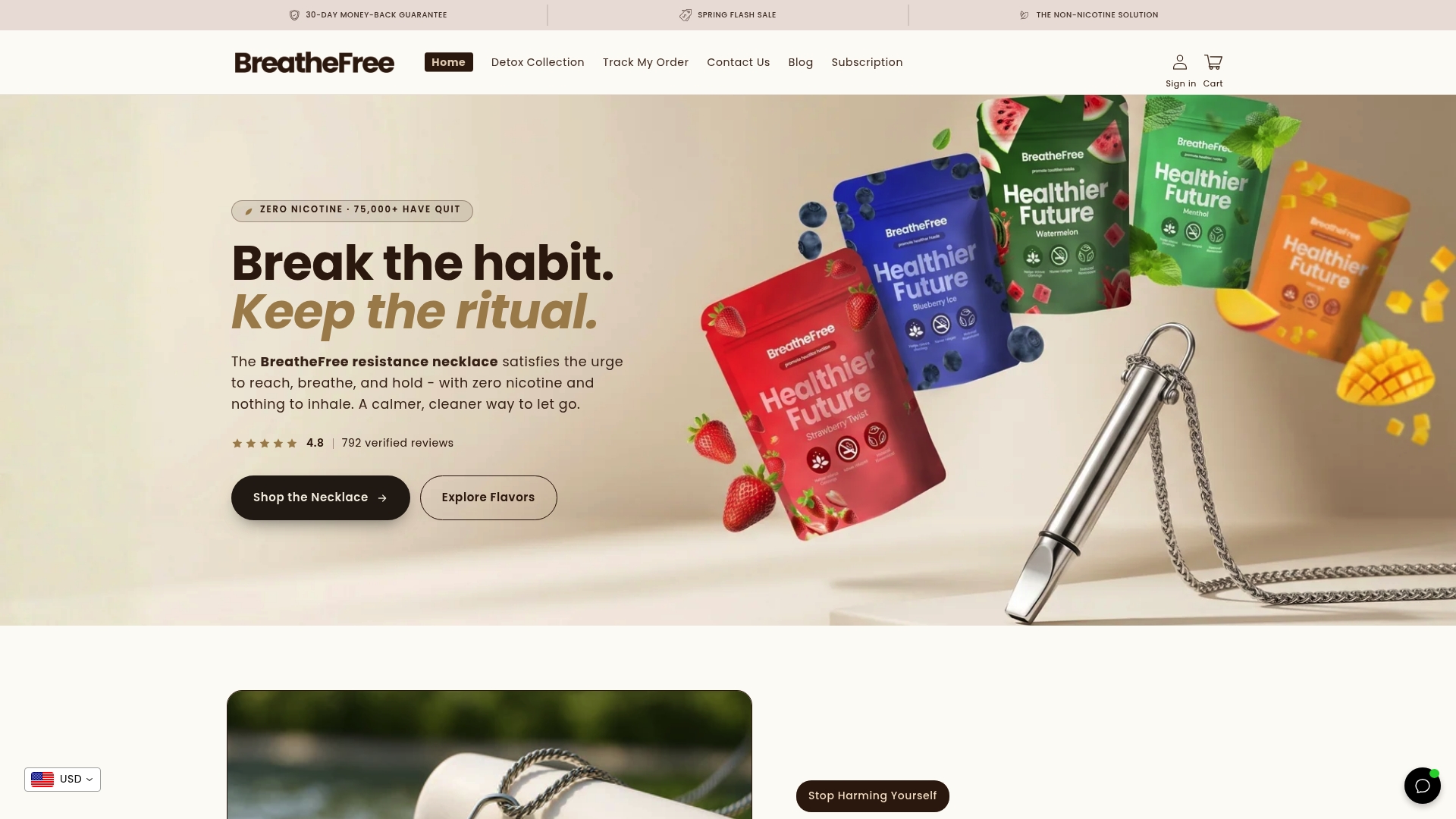
The Breathefree Resistance Necklace comes with flavor refill options, so you can rotate sensory experience instead of getting bored with a single flavor by week three. Pair it with the Nicotine Detox eBook and Habit Tracker if you want a structured day-by-day plan alongside the physical tool rather than relying on willpower alone.
If you’re ready to try the approach that’s already worked for over 75,000 people, start with the necklace collection and pick a flavor that matches what you’re replacing, whether that’s the taste of menthol, mint, or something closer to your usual cigarette.
Sources
- Quit-smoking products: Stop using tobacco
- Quitting smoking: 10 ways to resist tobacco cravings - Mayo Clinic
- Oral hygiene therapy assists in behavioural intervention for smoking cessation: A pilot approach
- Efficacy of liquorice root and sugarless chewing gum as an adjuvant to smoking cessation: A randomized controlled trial