

Replace smoke breaks with four things that do the same job the cigarette did: a quick physical activity, an oral substitute, a social ritual, and a small planned reward. Each targets a different piece of the habit, which is why cutting the cigarette alone rarely sticks. Mayo Clinic’s guidance on cravings backs this combined approach, and tools like the Breathefree resistance necklace exist specifically to cover the oral and hand-to-mouth piece nicotine gum can’t fully replace.
TL;DR:
- Replacing smoking involves combining physical activity, oral substitutes, social rituals, and small rewards to address different aspects of the habit.
- Movement like brisk walks or breathing exercises can reduce cravings by burning off energy and calming the heart rate within the first 10 minutes.
- Oral substitutes such as sugarless gum, carrots, or the Breathefree necklace effectively satisfy hand-to-mouth routines that reinforce cravings.
- Maintaining social connections through designed group activities or pre-planned responses helps prevent relapse caused by losing the social aspect of breaks.
- Redesigning break routines with specific triggers, tracked wins, and physical tools like the Breathefree necklace improves long-term quitting success more than cold-turkey approaches.
Table of Contents
- What can you do instead of smoking during a break?
- Why do oral substitutes work so well?
- How do you keep the social side of the break?
- Build a cue, routine, and reward loop that actually sticks
- How does Breathefree fit into a replacement routine?
- Why redesigning your break matters more than quitting cold
- Ready-made support for building your new routine
- Sources
What can you do instead of smoking during a break?
A cigarette break packs in four functions at once: it forces a physical pause, gives your hands and mouth something to do, hands you a built-in excuse to step away with coworkers, and delivers a nicotine hit your brain reads as a reward. Swap the nicotine for something else in each of those four slots and the break still works. Here’s what actually holds up in the first 1 to 10 minutes.
A brisk walk or one loop up and down a stairwell raises your heart rate just enough to burn off restlessness, which is often what a craving really is: pent-up energy with nowhere to go. The American Psychological Association notes that movement-based breaks measurably reduce stress and restore focus, which is the exact effect smokers credit to the cigarette.
Breathing works faster than most people expect. Try a 4 count inhale, 4 count hold, 6 count exhale, repeated for 90 seconds. It slows your heart rate and gives your hands something rhythmic to do, similar to the hand motion of smoking itself.
- A three-move desk stretch: neck rolls, shoulder shrugs, and a standing forward fold, done in under two minutes
- One song or a five-minute podcast clip as a fixed ritual, something you look forward to instead of dread giving up
- A water bottle or unsweetened tea instead of a sugary drink, which avoids a second crash an hour later
- A small kit kept at your desk or in your bag: sugarless gum, mints, and a stress ball, so you’re never caught without an option
Pro Tip: Pick one activity and one oral substitute before your next break, not during it. Decision fatigue is what sends people back to the pack.
Why do oral substitutes work so well?
Nicotine dependence is only part of what drives a craving. A lot of it is routine, the sensory habit of having something in your hand and mouth at a specific point in your day. Mayo Clinic’s guidance on resisting tobacco cravings points out that quick-acting oral substitutes address that physical need directly, independent of nicotine levels.
Good options to keep on hand:
- Sugarless gum, chewed slowly to make it last the length of a normal break
- Raw carrots or celery sticks, which give real chewing resistance
- Sunflower seeds in the shell, since the shelling motion itself occupies your hands
- Mints or a cinnamon stick, useful when you want flavor without calories
For stronger cravings, nicotine replacement therapy in the form of gum, lozenges, or patches remains a well-studied option, and a doctor or pharmacist can help match the dose to your habit. Relapse in the first six months after quitting is common, and combining a cessation tool with counseling produces better long-term outcomes than either alone. That combination, medicine plus behavioral support, is the approach with the strongest evidence behind it.
How do you keep the social side of the break?
The hardest part to replace isn’t the nicotine. It’s standing outside with the same three coworkers every day. Losing that daily check-in is often what pulls people back to smoking even after cravings fade.
- Suggest the swap directly: “I’m doing a walk loop instead of a smoke break, want to come?” Most smokers say yes more often than you’d expect.
- If someone offers you a cigarette, a simple “I’m good, but I’ll walk with you” keeps you in the group without putting you on the spot.
- Build a group ritual that doesn’t require smoking: a communal tea station, a fixed walking loop around the block, or a standing 3pm stretch break.
- Ask a manager to model it. When leadership takes a walking break instead of a smoke break, it removes the stigma of being the one person doing something different.
Workplace programs that create smoke-free social spaces measurably increase quit attempts, which tells you this isn’t just a personal willpower problem, it’s a design problem your whole team can help solve. Employers looking to build this out formally can find structure in guidance on managing staff wellbeing.
Pro Tip: If old smoking buddies reappear at a party or after a stressful meeting, decide in advance what you’ll say. A rehearsed line beats an improvised one every time.
Build a cue, routine, and reward loop that actually sticks
Every smoking habit runs on a loop: a trigger, the cigarette, then a payoff. Break that loop by keeping the trigger and reward but swapping the middle step.
- Write down your top three triggers (stress, coffee, finishing a task) and assign each one a specific replacement, not a vague “I’ll do something healthy”
- Track wins with a habit tracker or a note on your phone. Seeing five smoke-free stress triggers in a row is its own small reward
- Keep your substitute kit visible, not buried in a drawer. A designated spot for your break, away from where you used to smoke, helps break the location cue too
- Have two or three fallback options ready for the worst days: gum, a 90 second breathing sequence, and a two minute walk, so a bad moment doesn’t turn into a lost week
Simple cue to routine to reward mapping is one of the more consistently effective frameworks in behavior change research, mainly because it doesn’t ask you to fight the trigger. It just changes what happens next.
How does Breathefree fit into a replacement routine?
The Breathefree resistance necklace is built for the one thing most quitting advice skips: the hand-to-mouth motion itself. It gives your hands and mouth a physical action to repeat during a break, which matters because that motor habit often outlasts the nicotine craving by weeks.
- Wear it during your walk, breathing sequence, or stretch break so the oral fixation piece is covered automatically
- Pair it with flavor refills to keep the sensory experience varied instead of stale
- Use the accompanying habit tracker to log which triggers you replaced and which ones still need work
- Combine it with nicotine gum or a patch if your cravings are still nicotine-driven, not just habitual, and check with a healthcare provider on dosing
One user described quitting after fifteen years of stepping outside to calm down, realizing the calm never came from the cigarette itself.
Why redesigning your break matters more than quitting cold
The mistake most people make isn’t choosing the wrong substitute. It’s trying to remove the break entirely instead of redesigning it. You built years of neural wiring around stepping away every few hours, and that instinct to pause doesn’t need to disappear, it just needs a new job.
Small wins compound here faster than people expect. A walk loop that replaces one break a day for two weeks does more for long-term success than a single white-knuckle attempt to quit everything at once. Combine tools like a physical substitute with real social support, and the odds tilt further in your favor.
— Tommy
Ready-made support for building your new routine
You don’t have to design this system from scratch. The Nicotine Detox eBook & Habit Tracker walks you through mapping your own triggers and tracking replacement wins day by day, built for anyone who wants a structured plan instead of guessing.
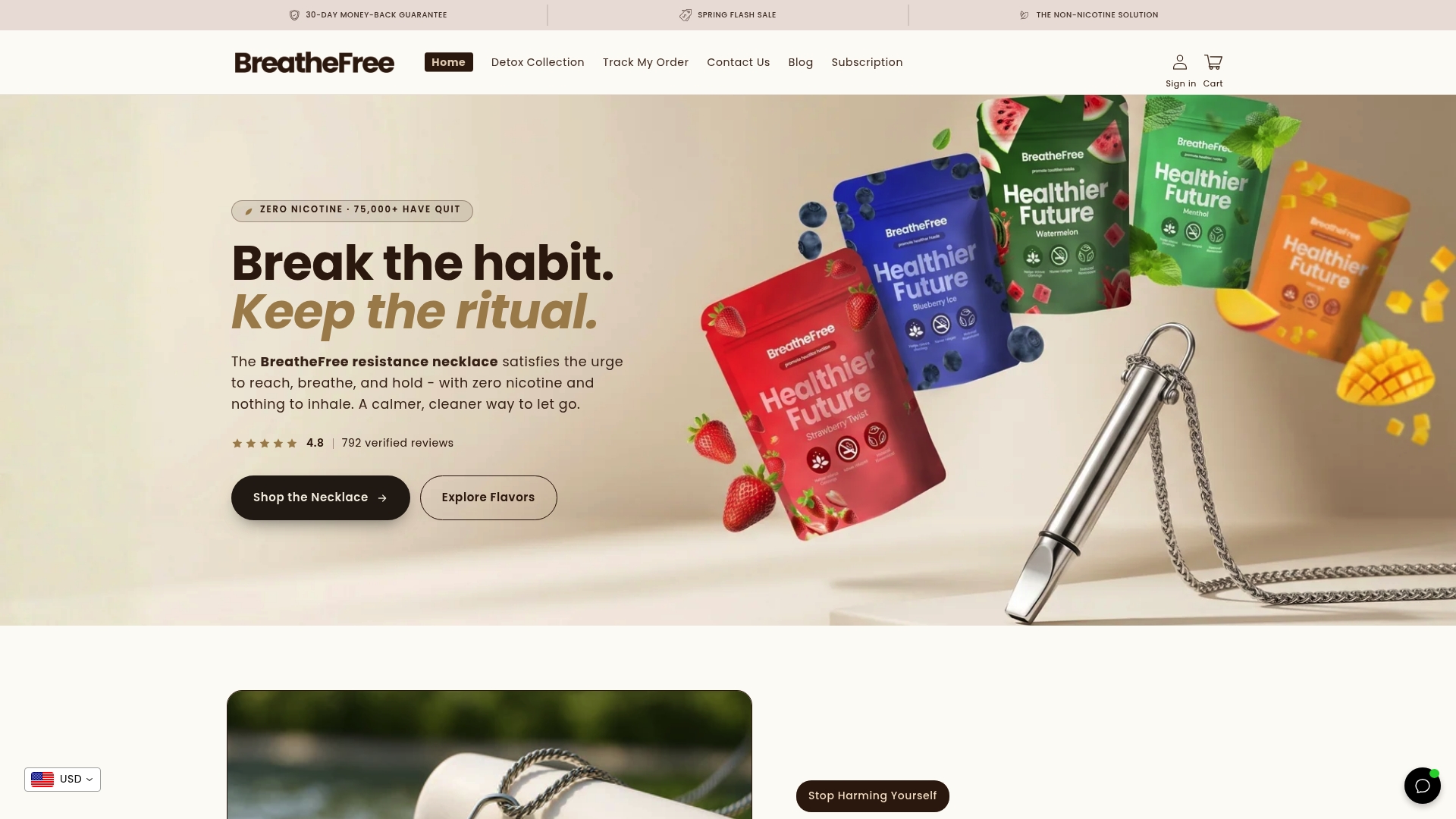
For the oral fixation piece specifically, the Breathing Resistance Necklace gives your hands and mouth something real to do during a break, with flavor refills so it doesn’t get stale after week two. Readers report using it alongside gum or a patch during the toughest cravings, then leaning on it alone once the physical dependence fades. If you’re ready to build a break routine that doesn’t rely on willpower alone, start with the habit tracker and pick up the necklace for your next break.
Sources
For more on cravings and combination therapy, see Mayo Clinic. For snack and energy guidance, see Harvard Health. For craving-interruption research, see PMC.
This article is general information, not a substitute for advice from a qualified doctor. Consult a qualified healthcare professional about your own circumstances before acting on anything here.
- Quitting smoking: 10 ways to resist tobacco cravings - Mayo Clinic
- Workplace interventions for smoking cessation - Cochrane