

For many smokers, caffeine sharpens the urge to light up, and quitting only makes coffee hit harder because your body clears it more slowly. The fix isn’t cutting caffeine cold. It’s moving it earlier in the day, changing the ritual around it, and tapering the amount so withdrawal from two habits doesn’t collide. The sections below cover why the link exists and exactly how to manage it.
TL;DR:
- Cutting caffeine too quickly can worsen withdrawal symptoms because caffeine clears the body more slowly after quitting nicotine, leading to jitteriness and sleep issues.
- Limiting caffeine intake to early afternoon and tapering gradually over days or weeks helps manage symptoms and prevents relapse.
- Replacing the morning coffee ritual with a different mug, location, or distraction reduces conditioned cues that trigger cigarette cravings.
- Using a non-nicotine tool like a resistance necklace can help satisfy oral fixation during peak craving moments, especially at the coffee switch point.
- Severe headaches, persistent insomnia, or worsening anxiety after quitting may indicate problematic caffeine withdrawal, requiring medical consultation.
Table of Contents
- Why Caffeine and Cigarettes Feel Like a Package Deal
- How to Manage Caffeine During a Quit Attempt
- Breaking the Coffee-Cigarette Ritual
- When Caffeine Withdrawal Signals a Bigger Problem
- Tommy’s Take on Coffee Triggers
- A Nicotine-Free Way to Handle the Coffee Trigger
- Sources
- FAQ
Why Caffeine and Cigarettes Feel Like a Package Deal
Coffee and cigarettes travel together for reasons that go deeper than habit. Caffeine blocks adenosine, the brain chemical that makes you feel sleepy and slow, which produces a mild lift. Nicotine produces its own version of alertness through different receptors, and the two effects layer on top of each other in a way smokers learn to expect. Some coffee compounds beyond caffeine itself appear to interact with the same nicotinic receptors nicotine targets, which may explain why coffee specifically, not soda or energy drinks, gets so tightly paired with a cigarette.
Then there’s the ritual. If you’ve had coffee and a cigarette together every morning for ten years, your brain doesn’t need caffeine’s chemistry to generate an urge, as explained in the hidden psychology behind why some cigarettes feel “stronger” at different times of day. The cup itself is the trigger. That’s why switching to decaf alone rarely solves the problem: the hand-to-mouth motion, the smell, the fifteen-minute break, all of it fires the same craving circuit regardless of what’s in the mug.
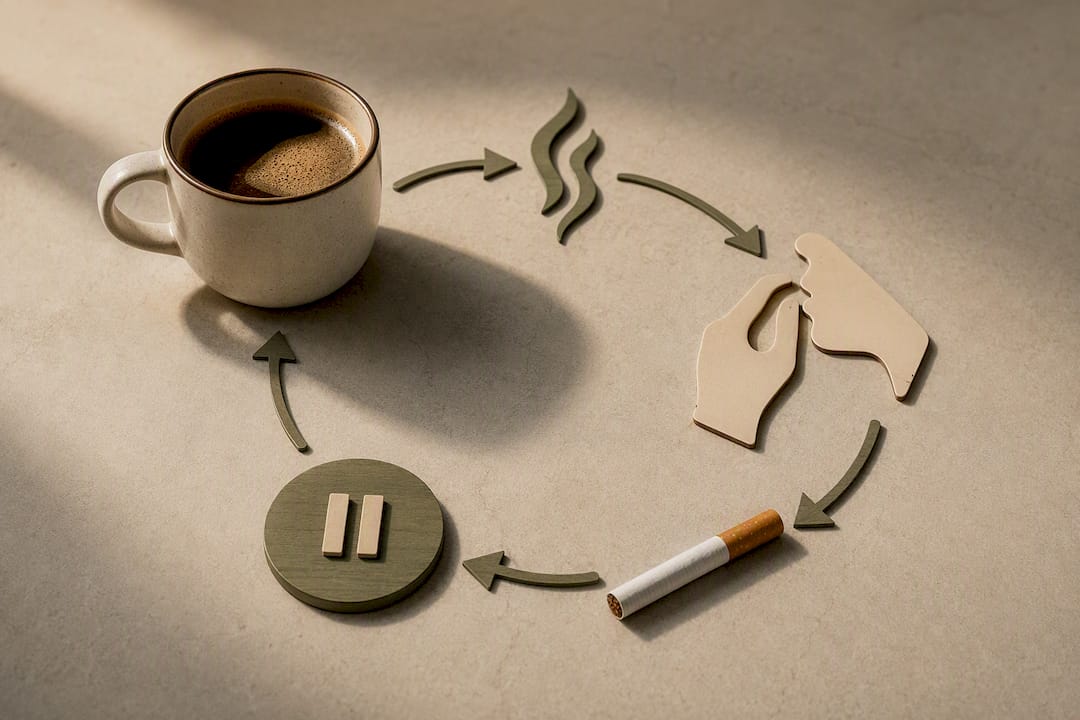
Quitting smoking complicates things further. Nicotine speeds up how fast your liver processes caffeine, so once nicotine is out of your system, that same afternoon coffee lingers far longer than it used to. A cup that felt normal a week ago can suddenly leave you wired, jittery, or unable to sleep.
Diary studies back this up directly: smokers who drink coffee report stronger urges and more satisfaction from the cigarettes they smoke afterward compared to smokers who skip caffeine that day. A few things worth knowing about the connection:
- Caffeine doesn’t create nicotine cravings from nothing, but it reliably intensifies existing ones.
- The CDC lists anxiety and insomnia among the most common withdrawal symptoms, and both get worse with excess caffeine.
- Roughly 8% of U.S. adults meet proposed criteria for caffeine use disorder, and that group reports worse sleep and higher smoking rates than everyone else.
That last figure matters if you’ve ever wondered why quitting feels harder on days you’re also running on four cups of coffee. It’s not just in your head. Slower caffeine clearance plus a fresh nicotine deficit is a rough combination for sleep and mood alike.
How to Manage Caffeine During a Quit Attempt
You don’t need to quit caffeine and nicotine on the same day. Trying to do both cold turkey usually backfires, stacking two withdrawal syndromes on top of each other. A staged approach works better for most people.
- Set a hard cutoff time. Stop caffeine 6 to 8 hours before bed, ideally by early afternoon. The Merck Manual’s cessation guidance specifically flags limiting caffeine as a way to protect sleep during withdrawal, and poor sleep is one of the fastest routes back to a cigarette.
- Taper instead of stopping outright. Clinical guidance on caffeine-related disorders recommends cutting intake by 25 to 50 percent over several days to weeks rather than dropping it all at once. Watch for headache, fatigue, or irritability as signs you’re cutting too fast.
- Add up your real total. Coffee, tea, soda, energy drinks, and even some pain relievers all count. Cleveland Clinic puts the general safe ceiling at 400 mg a day for most healthy adults, which is a useful number to work down from, not up to.
- Swap, don’t just subtract. Replace one or two cups with decaf, black tea, or a low-caffeine alternative like mushroom coffee. You keep the ritual and lose most of the chemical load.
- Know when a small dose is fine. A 50 to 100 mg “rescue” cup on a rough morning generally isn’t a problem once you’ve already tapered down. Avoid it in the late afternoon or if you’re already feeling anxious or wired.
Pro Tip: Track caffeine the same way you’d track calories for a week, just once. Most people are shocked at how much sneaks in from tea, chocolate, and soda on top of their coffee habit.
Breaking the Coffee-Cigarette Ritual
The chemistry is only half the battle. The other half is the routine your body expects at 7:15 every morning. Public health quitting resources consistently point to behavioral substitution as the more durable fix, more effective long term than trying to white-knuckle your way past caffeine alone. A few changes that actually shift the pattern:
- Use a different mug, a different chair, or a different room for your morning coffee than the one you associate with smoking.
- When the urge hits mid-sip, give yourself a 3 to 5 minute distraction instead of fighting it head on: a short walk, five slow breaths, or texting someone.
- Keep something in your hand and mouth that isn’t a cigarette: gum, a toothpick, or a non-nicotine tool designed for that specific ritual.
- Build a “craving kit” the night before quit day so you’re not scrambling when the first trigger hits.
| Situation | What to try |
|---|---|
| Morning coffee trigger | New mug, new location, 5 slow breaths before the first sip |
| Afternoon slump craving | Short walk instead of a second coffee |
| Hand-to-mouth urge | Gum, toothpick, or a resistance necklace |
| Sudden strong craving | Wait it out; most peak and fade within 3 to 5 minutes |
None of these need to be perfect on day one. The goal is breaking the automatic link between “coffee cup in hand” and “cigarette follows,” and that takes repetition more than willpower.
When Caffeine Withdrawal Signals a Bigger Problem
Most caffeine cutbacks produce mild, short-lived symptoms. Occasionally they don’t, and it helps to know the difference before you assume it’s “just” nicotine withdrawal.
- Watch for a severe headache that doesn’t respond to over-the-counter pain relievers, insomnia that lasts more than a few nights, or anxiety that interferes with work or relationships.
- Nicotine cravings typically peak in the first two to three days, per CDC guidance, while caffeine withdrawal can run its own course for several days longer if you cut intake sharply.
- If anxiety or insomnia spikes suddenly after quitting, slower caffeine clearance is worth considering as a cause before assuming nicotine alone is to blame.
- Ask a clinician about nicotine replacement therapy or prescription options if cravings feel unmanageable; both the CDC and Merck Manual outline these as standard parts of a quit plan.
- Pregnant people, anyone with heart disease, and people with a history of severe anxiety should talk to a doctor before changing caffeine or nicotine intake at the same time.
Tommy’s Take on Coffee Triggers
The coffee moment is where most quit attempts actually get tested, not the big dramatic cravings people expect. What tends to work isn’t willpower, it’s swapping the ritual itself: a different cup, something to hold, somewhere else to sit. Breathefree has seen this play out with over 75,000 users who leaned on a physical substitute during exactly that trigger window. For more on the mechanics, the nicotine craving breakdown is worth a read.
— Tommy
A Nicotine-Free Way to Handle the Coffee Trigger
A resistance necklace was built specifically for the moment caffeine and cigarette cravings collide: coffee in one hand, nothing to do with the other. It gives you something to hold and breathe through, satisfying oral fixation without a trace of nicotine, so you can keep the coffee ritual without it dragging you back to smoking.

It’s not a miracle fix, and it won’t erase caffeine withdrawal on its own. But paired with the tapering and timing tactics above, it gives your hands and mouth something to do during the exact minutes cravings peak. If you’re prepping a craving kit for quit day, start with the breathing resistance necklace collection and add the nicotine detox eBook and habit tracker if you want a structured plan to follow alongside it. Order today and have both in hand before your next trigger moment hits.
This article is general information, not a substitute for advice from a qualified doctor. Consult a qualified healthcare professional about your own circumstances before acting on anything here.
Sources
- 7 Common Withdrawal Symptoms | Quit Smoking | Tips From Former Smokers | CDC
- Caffeine-related disorders (NCBI Bookshelf review / DSM-5 related text)
FAQ
Does caffeine make cigarette cravings worse?
For many smokers, yes. Diary research links caffeine consumption to stronger urges and more satisfaction from cigarettes smoked afterward, likely through both brain chemistry and ritual conditioning.
Why does coffee feel stronger after quitting smoking?
Nicotine speeds up caffeine clearance, so once you stop smoking, caffeine stays in your system longer and can feel more intense, sometimes worsening the anxiety and insomnia already common during withdrawal.
Should I quit caffeine and cigarettes at the same time?
Most guidance recommends against dropping both abruptly. Taper caffeine by 25 to 50 percent over several days to weeks instead, so you’re not managing two withdrawal syndromes at once.
What can replace the coffee-and-cigarette ritual?
Changing your mug, location, or routine helps break the association, and holding a non-nicotine tool like a resistance necklace fills the hand-to-mouth habit coffee usually triggers.
When should I see a doctor about caffeine or nicotine withdrawal?
Talk to a clinician if headaches, insomnia, or anxiety become severe or interfere with daily life, and always check with a doctor before adjusting stimulants during pregnancy, heart disease, or significant anxiety.