

Yes, more mucus and coughing after you quit smoking is usually normal. It’s a sign your lungs are clearing themselves out, not a warning sign. Expect it to peak within the first few weeks and gradually taper off over months; the cough may last several months for some people. In the meantime, drink more water, run a humidifier, and call a clinician if you notice blood, severe pain, or symptoms that just won’t quit.
TL;DR:
- Cilia reactivation can cause increased coughing and mucus production, peaking within the first few weeks but potentially lasting up to a year depending on smoking history.
- A productive cough helps clear trapped debris and reduces long-term respiratory risks, even if it feels worse during the initial recovery phase.
- Hydration, humidifiers, and over-the-counter expectorants significantly ease mucus clearance and alleviate discomfort during lung healing.
- Symptoms such as blood in sputum or persistent severe pain require prompt medical attention, as they can indicate complications beyond normal recovery.
- Behavioral tools like nicotine-free resistance necklaces can help manage cravings during coughing and mucus episodes but do not influence lung healing directly.
Table of Contents
- Why Does Mucus After Quitting Smoking Increase?
- What’s the Recovery Timeline From Day 1 to 12 Months?
- How Do You Ease Coughing and Loosen Mucus After Quitting?
- What Do Mucus Color and Blood Mean, and When Should You Worry?
- Where Do Nicotine-Free Tools Fit Into This Recovery?
- A Quick Word of Encouragement
- An Optional Way to Manage Cravings While Your Lungs Heal
- Sources
- FAQ
Why Does Mucus After Quitting Smoking Increase?
Cigarette smoke coats the tiny hairlike structures in your airway, called cilia, and effectively shuts them down. These cilia normally sweep mucus, dust, and debris up and out of your lungs in a constant, quiet motion. Smoke paralyzes that motion. Over years of smoking, mucus and irritants just sit there instead of getting cleared.
Once you stop smoking, cilia start waking back up, often within one to two days. That reactivation is the direct cause of the extra coughing and mucus production people notice almost immediately after quitting. Your lungs aren’t getting worse. They’re finally doing the job smoke had been blocking for years.
This is also why the cough feels different from a smoker’s cough. It’s more productive, meaning it actually brings mucus up rather than just rattling around unproductively.
- Cilia regrowth restarts within days but can take months to fully mature
- The restored cough reflex pushes out years of trapped particles and residue
- A productive cough, while unpleasant, clears debris that could otherwise breed infection
- Full ciliary recovery timelines vary by how long and how heavily someone smoked
Clinicians actually describe this as a paradox: the cough feels worse, but it’s protective, lowering your risk of respiratory infection down the road.
What’s the Recovery Timeline From Day 1 to 12 Months?
Healing doesn’t happen on a single fixed schedule, but there’s a general pattern most former smokers experience. Knowing what’s coming helps you tell the difference between expected discomfort and something that needs attention.
- 0 to 48 hours: Carbon monoxide levels drop and oxygen circulation improves almost immediately. Some people notice tightness in the chest as airways start to relax.
- 1 to 7 days: Cilia begin reactivating. Coughing often increases during this window as the lungs start moving mucus that had been sitting still for years.
- Weeks 2 through 12: For many people, the productive cough peaks somewhere in this stretch, then gradually declines. One small study found cough symptoms in abstinent smokers dropped steadily over six weeks compared with people who kept smoking, and fewer than 10% of quitters in that group said cough changes affected their ability to stay smoke free.
- 3 to 12 months: Mucus clearance keeps normalizing. Most people notice a real difference by month three, though full ciliary recovery can take up to a year for some.
Recovery speed isn’t identical for everyone, especially depending on factors like daily smoking cigarettes and their health risks. A longer smoking history, heavier daily use, or an underlying condition like COPD or asthma can all stretch out the timeline. If you smoked for two decades, expect the process to take longer than someone who quit after two years. That’s not a setback. It’s just biology catching up.
How Do You Ease Coughing and Loosen Mucus After Quitting?
The goal isn’t to stop the cough. It’s to help your lungs finish the job with less discomfort.
Hydration matters more than most people realize. Thin mucus moves; thick mucus sits and irritates. Aim for roughly 64 ounces of fluids a day as a general target, adjusting for your body size and activity level.

Humidifiers and steam help too, especially in dry, climate-controlled indoor air, which thickens mucus and makes it harder to clear. Keeping indoor humidity in a comfortable and moderate range, or simply taking a hot shower and breathing the steam for a few minutes, can loosen things up fast.
Beyond that:
- Guaifenesin, an over-the-counter expectorant, thins mucus so it’s easier to cough up
- Honey or throat lozenges before bed calm throat irritation and ease nighttime coughing
- Light exercise supports lung function and circulation without overtaxing your recovering airways
- Avoiding secondhand smoke and other indoor irritants prevents re-injuring cilia that just started healing
- Elevating your head slightly while sleeping can reduce nighttime coughing episodes
Pro Tip: Don’t reach for a cough suppressant just because the coughing is annoying. If it’s productive, meaning it’s bringing up mucus, suppressing it can trap debris your lungs are actively trying to clear. Talk to a pharmacist or doctor before using antitussives during this recovery window.
A look at how breathing changes after quitting can help you track whether what you’re feeling lines up with typical recovery patterns.
What Do Mucus Color and Blood Mean, and When Should You Worry?
Color alone doesn’t diagnose anything, but it’s a useful clue. Clear or white mucus is typical during healing. Yellow or green can mean your body is fighting inflammation or infection, though it doesn’t automatically mean you need antibiotics. Brown or black mucus, especially in the first weeks, often reflects old tar and debris finally working its way out.
Certain symptoms cross the line from “normal quitting cough” into “call a doctor” territory:
- Blood in your sputum, even a small streak
- Severe or localized chest pain
- A fever that won’t break
- New or worsening shortness of breath
- A cough that persists or worsens beyond four to six weeks
If you notice these symptoms, see a clinician who may perform tests such as chest X-ray or lung function assessments to check for infection or other conditions. That workup isn’t overkill. It’s the standard way to separate ordinary healing from something that needs treatment.
Where Do Nicotine-Free Tools Fit Into This Recovery?
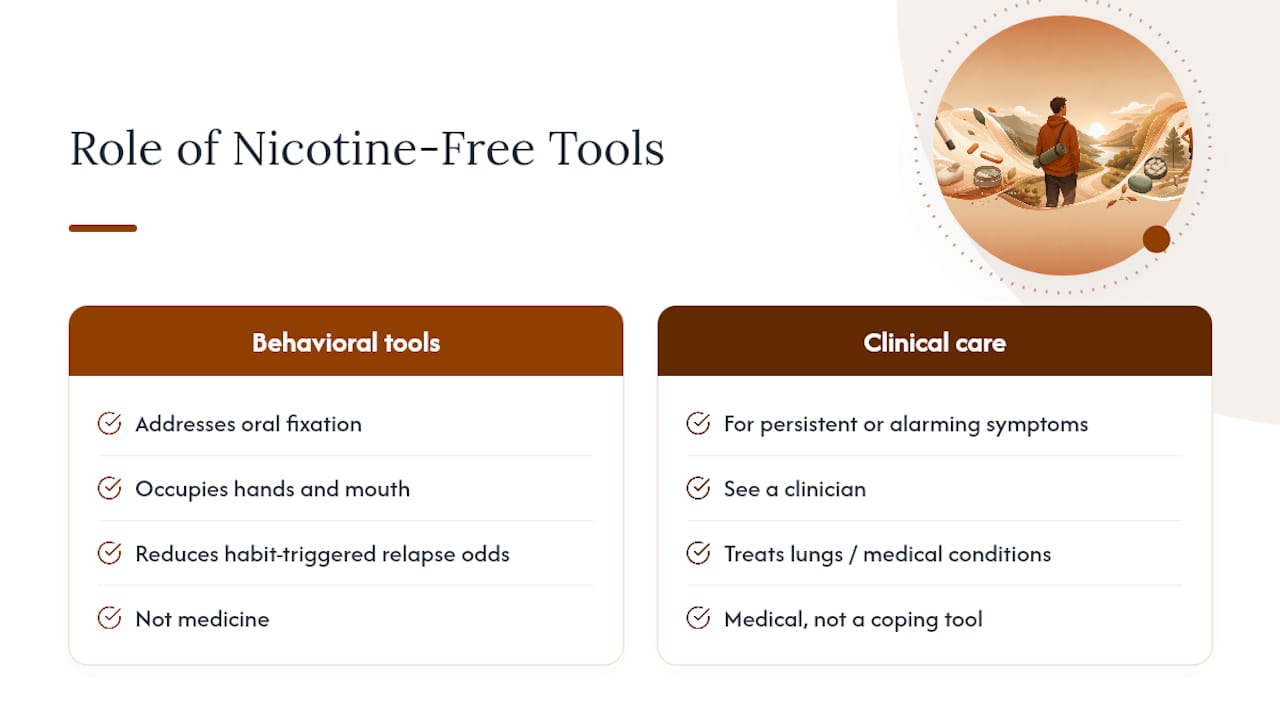
Coughing fits and mucus episodes can trigger a craving reflex, especially if your hands and mouth are used to holding a cigarette during stress. That’s where behavioral tools, not medical ones, come in. Non-nicotine oral fixation tools can give your hands and mouth something to do during those rough moments, addressing the oral fixation that drives a lot of relapse temptation.
These products don’t treat your lungs or speed up cilia regrowth. They’re not medicine. What they do is reduce the odds you reach for a cigarette out of habit while your body works through the coughing and mucus phase described above. Persistent or alarming symptoms still call for a clinician, not a coping tool.
A Quick Word of Encouragement
Coughing up mucus for weeks after quitting is frustrating, no question. But that cough is your lungs doing the work smoke used to prevent. Stick with it. If something feels off or the worry outweighs the reassurance, check in with a clinician instead of guessing.
— Tommy
An Optional Way to Manage Cravings While Your Lungs Heal
Breathefree isn’t a treatment for coughing or mucus. It’s a tool for the other half of quitting: the habit of having something in your hand and mouth, which nicotine patches and gum don’t address the same way.

The Breathefree Resistance Necklace is completely nicotine and chemical free, built from solid plant fiber, and designed to satisfy the oral fixation that makes cravings so hard to ignore, especially during a rough coughing spell when your hands want something familiar to do. Pair it with flavor refills in a variety of natural flavors to keep the ritual satisfying over time. Every order comes backed by a 30-day money-back guarantee, and you’ll find a full collection of resistance necklaces and refills to browse. If cravings are undermining your progress while your lungs do their own repair work, this is a straightforward next step to check out.
This article is general information, not a substitute for advice from a qualified doctor. Consult a qualified healthcare professional about your own circumstances before acting on anything here.
Sources
- Cough after quitting smoking - Harvard Health
- Coughing more after quitting smoking: What’s the deal? - Mayo Clinic
- PubMed study (2007) on cough after cessation
FAQ
How long do you cough up mucus after quitting vaping or smoking?
For most people, the productive cough peaks within the first few weeks and gradually eases over the following months, though full recovery can take up to 12 months in some cases.
Is it normal for my lungs to feel worse right after I quit smoking?
Yes, a temporary increase in coughing and chest tightness is common as cilia reactivate and begin clearing out years of trapped mucus and debris.
Is it normal to cough up green mucus after quitting smoking?
Green or yellow mucus can indicate inflammation or a minor infection rather than danger on its own, but if it persists alongside fever or worsening symptoms, see a clinician.
Is it normal to cough blood after quitting smoking?
No. Blood in your sputum is a red flag that warrants prompt medical evaluation, not something to wait out on your own.
Can nicotine-free tools like Breathefree help with the coughing phase?
Breathefree’s necklace and flavor refills don’t treat mucus or coughing directly, but they can reduce craving-driven relapse risk during uncomfortable recovery moments by giving your hands and mouth something familiar to do.