

Yes, nausea can be a real symptom of nicotine withdrawal, and it’s most intense in the first three days. The fastest relief comes from three moves: sip fluids slowly instead of gulping, eat small bland snacks like crackers or toast, and try ginger in tea or chew form. If vomiting won’t stop or you can’t keep fluids down, call your doctor, especially if you started a prescription quit medication recently.
TL;DR:
- Nausea peaks within the first three days of quitting and usually diminishes significantly within a month, especially if hydration and bland diets are maintained.
- Slow sipping of fluids, eating bland snacks, and consuming ginger can provide quick relief, while dehydration or pre-existing GI issues may prolong nausea.
- Nicotine replacement therapies typically reduce withdrawal symptoms, including nausea, but prescription medications like varenicline and bupropion often cause nausea as a side effect.
- Signs of serious complications include persistent vomiting, blood in vomit, severe pain, or worsening symptoms after starting medication, requiring immediate medical attention.
- Oral substitutes like ginger and hydration address nausea and oral habits, but tools such as the BreatheFree Resistance Necklace support hand-to-mouth habits during withdrawal’s early days.
Table of Contents
- Why Does Quitting Smoking Cause Nausea?
- What Are the Fastest Home Remedies for Nausea?
- Can Lifestyle Changes Reduce Nausea Over Time?
- Do Quit-Smoking Medications Help or Hurt Nausea?
- When Does Nausea Signal an Emergency?
- Where Do Nicotine-Free Oral Tools Fit Into a Quit Plan?
- A Nicotine-Free Way to Handle the Oral Habit
- Sources
- FAQ
Why Does Quitting Smoking Cause Nausea?
Nicotine speeds up digestion and dulls certain gut signals. Pull it out suddenly and your stomach has to relearn its normal rhythm, which is why queasiness shows up alongside cravings and irritability in the first few days.
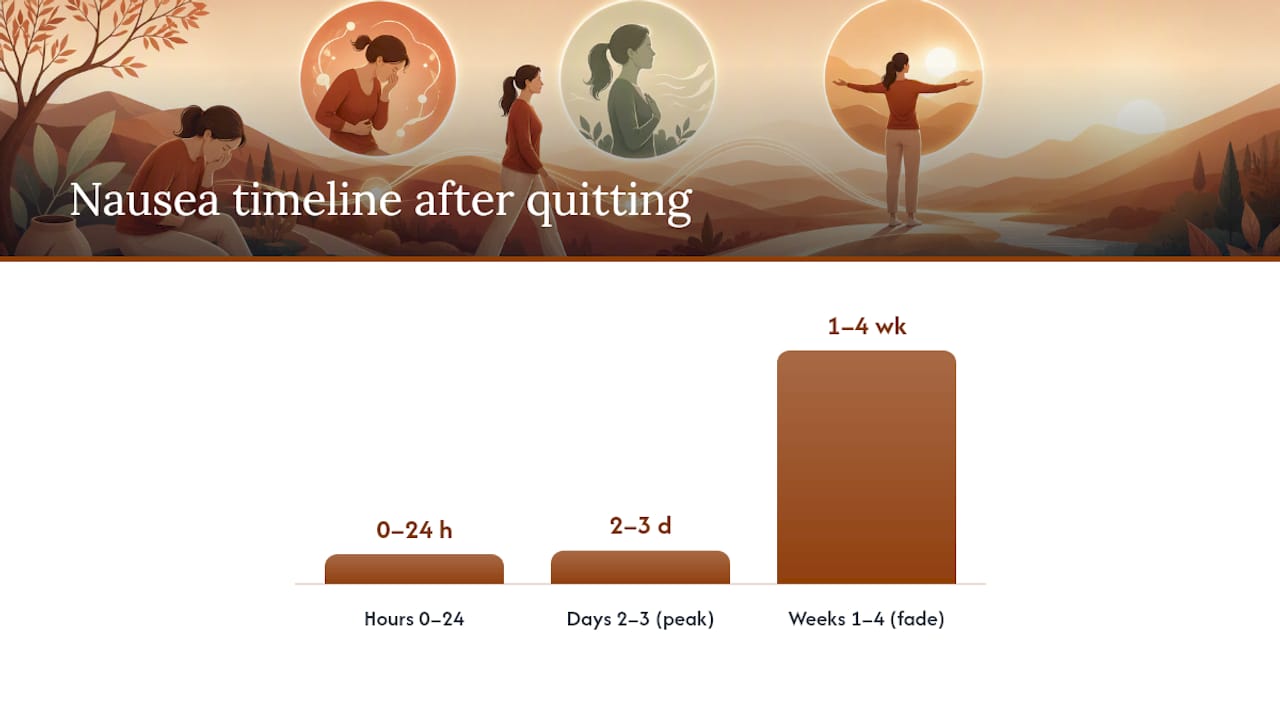
The National Cancer Institute lists nausea as a recognized, though less common, withdrawal symptom. It typically peaks within the first 3 days and eases substantially within a month. That timeline matters because it tells you what’s normal and what isn’t.
Here’s the general pattern most quitters experience:
- Hours 0 to 24: Mild queasiness starts, often mistaken for a stomach bug.
- Days 2 to 3: Nausea usually peaks, sometimes paired with headaches and fatigue.
- Weeks 1 to 4: Symptoms fade steadily for most people who stay off nicotine.
One wrinkle worth knowing: if you started varenicline or bupropion around the same time you quit, the nausea might be the medication, not withdrawal. Cleveland Clinic recommends tracking when symptoms started relative to your first dose. If nausea kicked in the same day you began the pill, that’s a clue worth mentioning to your prescriber. Heavy prior smoking, dehydration, and existing GI issues like acid reflux can all stretch out how long nausea lingers.
What Are the Fastest Home Remedies for Nausea?
When your stomach is turning and you just want relief, start with what’s proven simple and low-risk. Work through these in order:
- Hydrate slowly. Take small sips of water or an electrolyte drink every few minutes instead of chugging a full glass, which can trigger more nausea.
- Eat bland, not empty. Crackers, dry toast, rice, or a banana settle the stomach better than skipping food entirely. Skip anything fried, spicy, or loaded with sugar and caffeine, all of which can aggravate an already irritated gut.
- Try ginger. Ginger tea, ginger chews, or even flat ginger ale have long-standing use as a natural antiemetic. A cup of ginger tea or one or two ginger chews a few times a day is a reasonable starting point for most adults.
- Consider an OTC option carefully. Meclizine or bismuth subsalicylate can help some people, but check with a pharmacist first, particularly if you’re also taking a prescription cessation aid, since interactions are possible.
- Change your position and environment. Sit upright, get fresh air, apply a cool compress to your neck, and try slow diaphragmatic breathing. Nausea often eases when your nervous system calms down.
Pro Tip: Keep a small stash of ginger chews and plain crackers in your bag or car during the first week. Nausea tends to hit without warning, and having something on hand beats scrambling for relief when you’re already queasy.
Herbal options have some scientific backing too. A meta-analysis of herbal treatments for smoking cessation found mixed but occasionally promising results for herbs like lavender and black pepper reducing cravings, though the evidence remains inconsistent enough that these should stay adjuncts, not primary treatment.
Can Lifestyle Changes Reduce Nausea Over Time?
Immediate remedies handle the moment. Lifestyle shifts handle the week. Small, steady adjustments to how you eat, move, and sleep can lower how often nausea shows up in the first place.
- Give your mouth something to do. Sugar-free gum, a straw, or toothpicks satisfy the oral habit that cigarettes used to fill, without adding sugar or caffeine that can upset your stomach.
- Move gently, breathe deliberately. Light walking and slow breathing exercises calm the stress response tied to cravings. Research on withdrawal from other substances, including a Harvard-covered study on yoga during opioid withdrawal, points to breath-based practice as a legitimate way to reduce physical distress during withdrawal.
- Protect your sleep. Poor sleep amplifies nausea and irritability together. Cut caffeine and sugary snacks in the evening, since both can trigger stomach upset on top of restlessness.
- Eat on a schedule. Five small meals beat three large ones when your gut is sensitive. Pair that with a simple hydration routine, water every hour or two, rather than waiting until you’re thirsty.
Do Quit-Smoking Medications Help or Hurt Nausea?
This is where things get nuanced, because the medications that reduce overall withdrawal severity can sometimes cause the exact symptom you’re trying to avoid.
Nicotine replacement therapy, patches, gum, or lozenges, delivers a controlled dose of nicotine that blunts withdrawal symptoms across the board, nausea included, by avoiding the sharp drop your body would otherwise feel. For many people, NRT is the most direct way to soften the whole withdrawal experience rather than treating nausea in isolation.
Prescription options work differently. According to the American Cancer Society, varenicline and bupropion are both effective quit aids, but nausea is a commonly reported side effect for people taking them, particularly early on.
A few practical notes if you’re on one of these:
- Take the pill with food, which often reduces stomach upset.
- Ask your prescriber about dose adjustments or a slower titration schedule if nausea is significant.
- Don’t stop the medication abruptly without talking to your doctor first, since that can undercut your quit attempt.
Clinical guidance treats prescription and NRT options as the strongest levers for reducing overall withdrawal severity, with natural and behavioral remedies working best alongside them, not instead of them. If you’re struggling to sort out what’s normal, a quitline or a structured cessation program can walk you through options.
When Does Nausea Signal an Emergency?
Most nausea during a quit attempt is uncomfortable, not dangerous. A short list of warning signs tells you when it’s time to stop toughing it out:
- Vomiting that won’t stop, or you can’t keep any fluids down for more than a few hours.
- Blood in vomit, severe abdominal pain, a high fever, or signs of dehydration like dark urine or dizziness when standing.
- Nausea that starts or worsens right after beginning a prescription cessation medication. Call the prescriber rather than waiting it out.
Bring a list of your current medications and a rough timeline of when symptoms started to any appointment. It saves time and helps your clinician tell withdrawal apart from a medication reaction or something unrelated entirely.
Where Do Nicotine-Free Oral Tools Fit Into a Quit Plan?
Quitters who lean on oral substitutes often say their stress drops first, and calmer stress tends to settle a jumpy stomach too, as discussed in Tips for adult smokers search before switching products — Cigarette Nearby. That’s not a cure for nausea, it’s a stabilizer. The tools that work best are the ones you actually reach for during the rough first week, paired with real medical guidance when symptoms call for it.
— Tommy
A Nicotine-Free Way to Handle the Oral Habit
Ginger and hydration handle the nausea itself, but the hand-to-mouth habit that cigarettes built doesn’t disappear just because the nicotine does. That’s the gap the BreatheFree Resistance Necklace is built for.

It gives your hands and mouth something to do, without nicotine, smoke, or vapor involved. Pair it with the basics you just read about, small sips of water, ginger chews, bland snacks, and a check-in with your doctor if a prescription medication is part of your plan. For a more structured approach, the Nicotine Detox eBook and Habit Tracker helps you log symptoms day by day so you know what’s withdrawal, what’s medication, and what’s just a rough Tuesday. Consider using an oral substitute to help manage the first week of quitting.
This article is general information, not a substitute for advice from a qualified doctor. Consult a qualified healthcare professional about your own circumstances before acting on anything here.
Sources
- Handling Nicotine Withdrawal and Triggers When You Decide To Quit Tobacco — National Cancer Institute
- Nicotine Withdrawal: Symptoms, Treatment & Side Effects — Cleveland Clinic
- Prescription drugs to help you quit smoking — American Cancer Society
- Meta-analysis of herbal treatments for smoking cessation — PMC
FAQ
How Long Does Nicotine Withdrawal Nausea Last?
Nausea typically peaks within the first 3 days after quitting and improves substantially within about a month for most people.
How Do I Stop Nicotine Nausea Fast?
Sip fluids slowly, eat bland snacks like crackers or toast, and try ginger tea or ginger chews. Sitting upright and getting fresh air can help within minutes.
How Long Does It Take for Withdrawal Symptoms to Start After Quitting?
Symptoms, including nausea, often begin within 24 hours of your last cigarette and can peak within the first three days.
What Happens to My Body Two Weeks After Quitting Smoking?
By two weeks, most people notice nausea and other acute withdrawal symptoms fading, along with improved circulation and easier breathing as the body continues adjusting to life without nicotine.
Can Quit-Smoking Medication Cause Nausea Instead of Helping It?
Yes. Varenicline and bupropion are effective for quitting, but both commonly list nausea as a side effect, so it’s worth tracking symptom timing against your dosing schedule and discussing it with your prescriber.