

The vaping habit loop is a cue, routine, reward cycle: something triggers you, you vape, and your brain gets a hit of relief or stimulation that makes the pattern stick. It can be rewired. Withdrawal’s worst days pass quickly, so start now: write down your last three vaping triggers, then pick one substitute action, like chewing gum, to try the next time one hits.
TL;DR:
- Recognizing common triggers like boredom, stress, and social cues is essential for targeting specific habits and reducing vaping frequency.
- Tracking detailed vaping habits over several days helps identify high-risk situations to avoid or modify with alternative routines.
- Nicotine cravings are driven by dopamine release and tend to decrease within a few weeks, but physical routines can persist long after dependence fades.
- Replacing the hand-to-mouth ritual with non-nicotine tools, such as resistance necklaces or gum, can ease the transition and reinforce new habits.
- Setbacks are opportunities for learning; adjusting plans after each slip improves chances of long-term success without relying solely on willpower.
Table of Contents
- How the vaping habit loop works in your brain and hands
- Finding your personal triggers with a simple trigger journal
- Nicotine, dopamine, and what withdrawal actually feels like
- Replacing the routine without replacing the drug
- Your step-by-step quit plan for the first days
- What experience with oral-fixation tools has taught me
- Setbacks are data, not defeat
- A nicotine-free way to handle the routine step
- Where to find more support and official guidance
- Sources
- FAQ
How the vaping habit loop works in your brain and hands
Every habit runs on the same circuit: a cue sets it off, a routine follows automatically, and a reward locks the pattern in. With vaping, the cue might be your morning coffee, a stressful email, or a friend stepping outside for a break. The routine is reaching for the device. The reward is a mix of nicotine’s effect and something less obvious: the physical ritual itself.
That hand-to-mouth motion is its own reinforcement channel, separate from the drug. Research on tobacco use has found that the physical ritual of using a device creates a strong conditioned response on its own, which explains why some people crave the action of vaping even when they are not craving nicotine specifically.
Vapes also make the loop harder to break because they are always within reach. Unlike a cigarette, which requires stepping outside and lighting up, a vape can be used at a desk, in a car, or under a blanket. That constant availability means more repetitions of the loop per day, and every repetition strengthens it.
A few patterns show up again and again:
- Boredom or downtime triggers automatic reaching for the device.
- Stress or anxiety creates a routine of vaping as quick relief.
- Social settings, like being around other people who vape, cue the behavior through habit and peer pressure.
Recognizing which of these apply to you is the first real step toward interrupting the cycle.
Finding your personal triggers with a simple trigger journal
You cannot change what you have not identified. A trigger journal turns vague “I vape a lot” into specific, actionable patterns. Tracking exact usage, including when and where, tends to reveal high-frequency habits that people underestimate until they see them written down.
For three to five days, log each time you vape using these six fields:
- Time: What hour was it?
- Place: Where were you standing or sitting?
- Mood: What were you feeling right before?
- Activity: What were you doing (driving, scrolling, working)?
- Company: Were you alone or with others?
- Preceding event: What just happened (a text, a deadline, a lull)?
After a few days, patterns jump out. Maybe every vape follows a specific coworker’s smoke break, or every one happens during the first ten minutes of driving. Test a suspected trigger by changing one variable, like taking a different route, and see if the urge shows up anyway. For the highest-risk triggers, avoid them outright for the first week or two while you build replacement routines, rather than trying to white-knuckle through them.
Nicotine, dopamine, and what withdrawal actually feels like
Nicotine hijacks the brain’s normal reward learning system. Each puff triggers a dopamine release that teaches your brain to associate the cue (stress, boredom, coffee) with relief, which is why cravings feel less like a choice and more like a reflex. Over time, tolerance and craving intensity are tied to how often someone vapes and how hard quitting becomes, according to research on dependence motives in regular users.
Withdrawal symptoms such as irritability, anxiety, and cravings tend to be most intense initially and usually decrease significantly after some time, according to Smokefree. Understanding that the hardest part is relatively time-limited can help with motivation to continue quitting.
Animal studies on nicotine vapor exposure have shown that repeated use produces withdrawal signs and relapse-like responses to old cues even after a period of abstinence, which is part of why a familiar place or person can trigger a craving weeks after quitting.
If cravings feel unmanageable, or you have tried quitting before and relapsed quickly, counseling, quitlines, or a clinician-prescribed medication are worth exploring alongside behavioral changes. The CDC recommends combining behavioral support with other strategies rather than relying on willpower alone.

Replacing the routine without replacing the drug
The routine part of the loop, that hand-to-mouth motion and the small ritual of “doing something,” is often what’s hardest to give up, separate from the chemical dependence. The goal is to give your hands and mouth something else to do the moment a cue fires.
Useful oral substitutes include:
- Sugar-free gum or mints, which occupy the mouth without calories or nicotine.
- Crunchy snacks like carrots or sunflower seeds, which mimic the sensory feedback of a puff.
- Non-nicotine oral fixation tools designed specifically to replace the hand-to-mouth motion.
Pair the substitute with a behavior technique. Delay and distract means waiting ten minutes before acting on a craving, since most urges peak and pass in that window. Mindful observation means noticing the craving as a physical sensation, like tightness in the chest, without judging it or acting on it immediately. Cognitive reframing means replacing “I need this” with “this is my brain’s old habit talking.” Environmental modification, like removing devices from your car and bag, removes the cue entirely in high-risk spots.
Pro Tip: Keep your replacement tool in the exact spot where your vape used to live, so your hand finds something new without thinking.
When cravings feel physically overwhelming despite these techniques, that’s the point to layer in clinical support such as counseling or a quitline, rather than abandoning the attempt.
Your step-by-step quit plan for the first days
A written plan beats a vague intention. Before your quit date, work through this checklist:
- Pick a specific date, ideally within the next week, not “someday.”
- Remove every device from your home, car, and bag.
- Choose two replacement routines in advance, one oral and one behavioral.
- Line up support, whether that’s a friend, a quitline, or an online support resource.
On the first day, Smokefree.gov recommends staying hydrated, avoiding caffeine if it triggers cravings, and steering clear of places where you usually vape. Keep a short distraction list handy: a walk, a phone call, a puzzle game, anything that occupies your hands and attention for a few minutes.
If you slip, the plan is not to start over from zero. Identify what triggered the lapse, adjust that specific part of your plan, and keep going.
| Stage | Main focus | Key action |
|---|---|---|
| Pre-quit | Preparation | Set date, remove devices, choose substitutes |
| First day | Craving management | Stay hydrated, avoid triggers, use distractions |
| Early weeks | Habit rebuilding | Track slips, adjust plan, reinforce new routines |
A more detailed quit plan template can help you fill in the specifics for your own schedule.
What experience with oral-fixation tools has taught me
Understanding the habit loop only helps if you have something concrete to put in the routine’s place. Research on the physical ritual of vaping backs this up: the hand-to-mouth motion is a distinct reinforcement mechanism from nicotine itself, which is why swapping in a nicotine-free object that mimics that motion can ease the transition for some people.
Behavioral conditioning often drives vaping as much as chemical dependence does, which is why physical rituals matter in a quit plan.
A resistance necklace was built around that idea: something to hold and use with your hands, with no nicotine or chemicals involved. It fits into the routine step of your quit plan, not as a replacement for medical care. Anyone with severe dependence or a history of failed quit attempts should still talk with a healthcare provider about counseling or medication options.
Setbacks are data, not defeat
A slip doesn’t erase your progress. Every setback shows you exactly which trigger needs a better plan, so treat it as information, not failure. Focus on small daily wins, keep your support system close, and let the pattern, not the perfection, guide you forward.
— Tommy
A nicotine-free way to handle the routine step
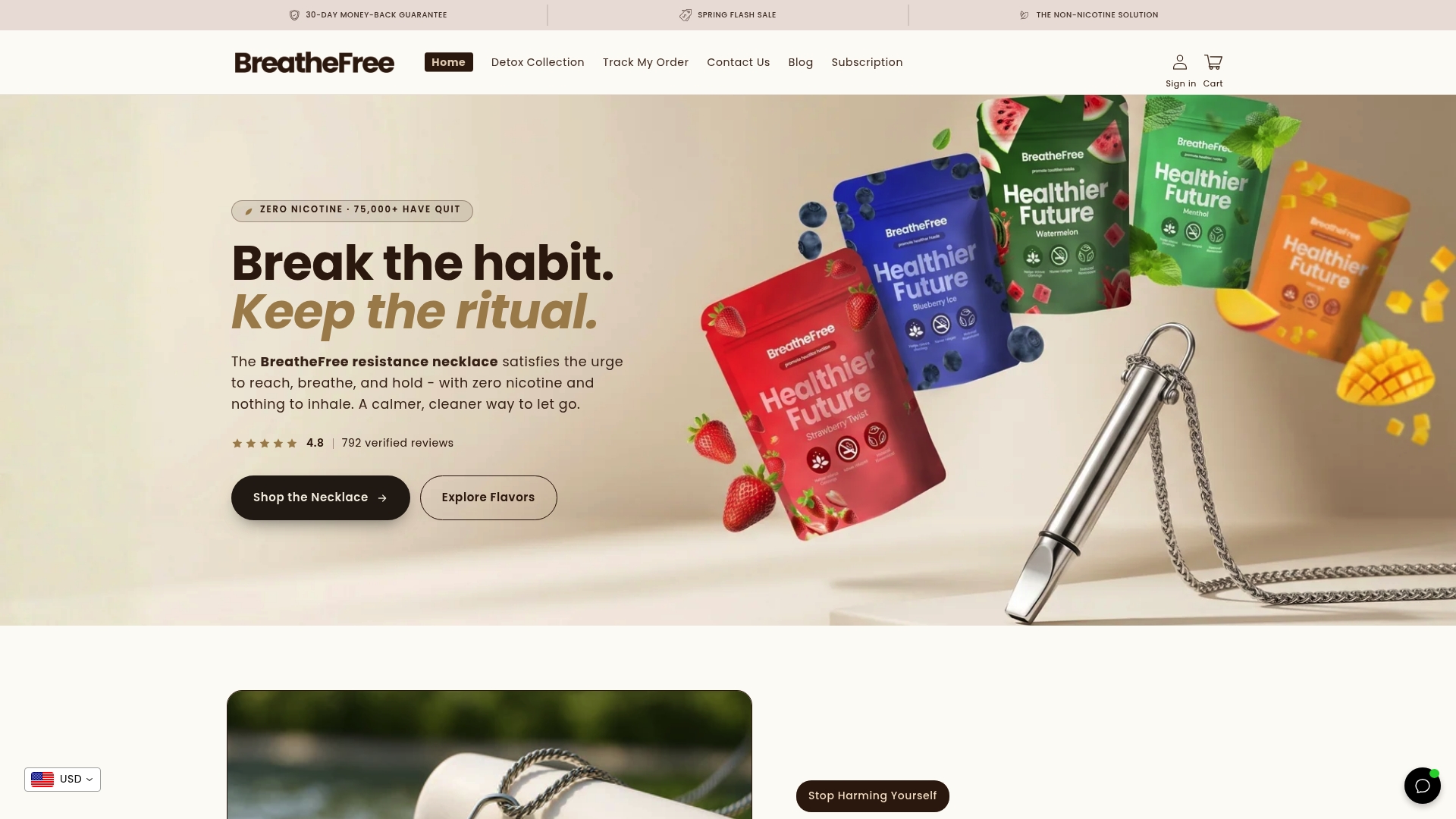
Most quit plans focus on avoiding triggers and managing cravings, but the physical habit of holding something and bringing it to your mouth often outlasts the nicotine urge itself. BreatheFree makes a resistance necklace built for exactly that gap: a solid, plant-fiber object with flavor options, completely free of nicotine and chemicals, designed to be held and used anywhere, including flights and offices.
It fits naturally into high-risk moments your trigger journal will surface:
- Long meetings or calls where your hands would normally reach for a vape.
- Travel days, since it’s solid and carries no inhalation component.
- Evening wind-down routines where boredom used to cue a puff.
You can start with the BreatheFree Resistance Necklace and add flavor refills as needed, or choose the ongoing subscription option for continued refills and support. Every order carries a 30-day money-back guarantee, so trying it costs you nothing if it isn’t the right fit for your routine.
Where to find more support and official guidance
For further reading, Smokefree.gov and the CDC’s quitting resources offer free, official guidance. Quitlines provide free coaching. For dependence concerns, a clinician can advise on medication.
This article is general information, not a substitute for advice from a qualified doctor. Consult a qualified healthcare professional about your own circumstances before acting on anything here.
Sources
FAQ
Is 20 puffs of vape a day a lot?
Frequency alone doesn’t tell the whole story since puff volume and nicotine strength vary widely between devices. What matters more is whether the behavior follows a predictable cue, like stress or boredom, which signals a habit loop worth mapping in a trigger journal.
How long does it take to break a habit of vaping?
There’s no fixed timeline, but the worst withdrawal symptoms typically fade within a few weeks according to Smokefree.gov. Rebuilding the routine and reward parts of the loop, through consistent replacement habits, usually takes longer than the physical withdrawal itself.
Can lungs heal after 7 years of vaping?
The long-term respiratory effects of vaping are still being studied, and recovery varies by individual health history. Quitting remains the most reliable step toward improving lung function, and a doctor can advise on your specific case.
What are the signs you are addicted to vaping?
Common signs include vaping within minutes of waking, feeling anxious or irritable without it, and continuing despite wanting to stop. Tolerance and a sense of losing control over use are associated with higher vaping frequency and lower quit success in regular users.
What should I do if I slip while trying to quit?
Identify the specific trigger that led to the slip and adjust that part of your plan rather than treating it as a full relapse. Quit resources frame setbacks as learning opportunities that make the next attempt stronger.