

What actually works when a smoking urge hits
The most effective ways to distract from smoking urges combine physical movement, oral substitutes, and a mental redirect, all deployed within the first two minutes of a craving. That window matters because craving waves last only minutes; setting a 10-minute timer and committing to one distraction is often all it takes for the urge to dissolve on its own.
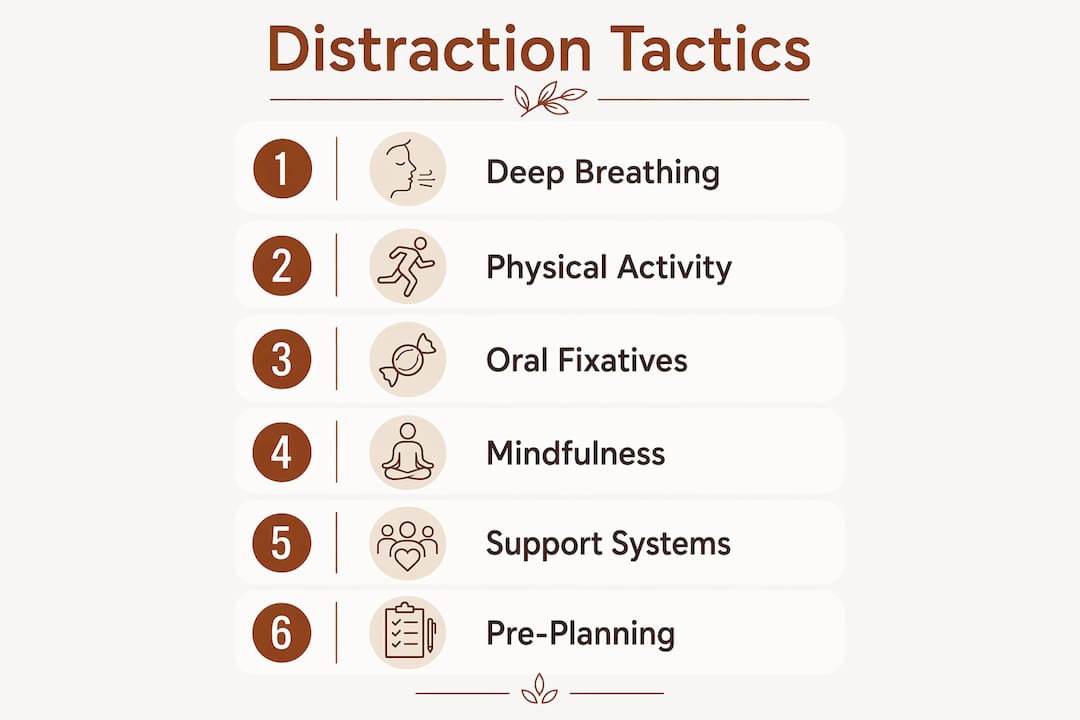
Here are the fastest tactics to reach for right now:
- Take a brisk 5-minute walk or climb a flight of stairs
- Chew nicotine gum using the “chew and park” method (more on that below)
- Pop a sugar-free lozenge or hard candy
- Hold a toothpick or cinnamon stick to satisfy the hand-to-mouth pull
- Take 10 slow, deep breaths: inhale through your nose, exhale through your mouth
- Call or text someone you trust
- Play a quick game, solve a puzzle, or watch something funny
Acknowledging the urge out loud, rather than fighting it, actually reduces its grip. The CDC recommends a technique called “talking back” to cravings: identify the thought driving the urge, then challenge it directly. Pair that with a physical distraction and the craving rarely survives.
Pro Tip: Practice your distraction list before your quit date. Run through two or three tactics while you still smoke so they feel automatic when the real cravings hit.
How cravings work and why planning ahead changes everything
Cravings are not random. They spike in response to specific triggers, including stress, certain foods, routines, and social settings. Blood sugar also plays a role: eating multiple small, balanced meals stabilizes glucose levels and reduces craving intensity. Dairy products like milk can make cigarettes taste unpleasant, which is a surprisingly useful deterrent.
A pre-quit distraction list practiced in advance automates habit replacement. You stop relying on willpower in the moment and instead execute a plan you already know works.
| Strategy | How it helps |
|---|---|
| Small, frequent meals | Stabilizes blood sugar, lowers craving intensity |
| Dairy products (milk) | Makes cigarettes taste bitter, reduces appeal |
| Nicotine patch (long-acting) | Provides steady baseline nicotine throughout the day |
| Gum or lozenge (short-acting) | Delivers fast relief when a craving spikes |
| Pre-written distraction list | Removes decision-making during high-urge moments |
Practical planning steps that make a real difference:
- Remove all cigarettes, lighters, and ashtrays from your home and car
- Stock healthy snacks like carrots, celery, and sugar-free gum where cigarettes used to be
- Schedule activities during your highest-risk times of day
- Using both NRT forms together (patch plus gum or lozenge) is more effective than either alone
Stress management techniques that actually stop relapse
Stress is the leading trigger for smoking relapse, and distraction alone does not address it. You need to lower the physiological arousal that makes a craving feel urgent. Deep breathing and progressive muscle relaxation are two of the most clinically supported methods for doing exactly that.

Inhaling black pepper essential oil for about two minutes mimics the sensation of inhalation and reduces withdrawal symptoms by engaging the same sensory pathways. It is one of the more overlooked non-nicotine craving solutions, and it works fast. You can find black pepper essential oil options alongside other oral sprays for smokers designed for this purpose.
Quick stress-relief techniques to use during a craving:
- Box breathing: inhale 4 counts, hold 4, exhale 4, hold 4
- Progressive muscle relaxation: tense and release each muscle group from feet to shoulders
- Five-minute mindfulness: focus entirely on what you can see, hear, and feel right now
- Aromatherapy with black pepper essential oil
- Mindfulness for ex-smokers practiced daily builds long-term craving resistance
How support systems and motivation keep you on track
Social connection is one of the most underused tools for handling cigarette cravings without nicotine. Calling a friend the moment a craving hits shifts your focus outward and shortens the urge’s duration. Going somewhere smoke-free, like a movie theater or a store, removes the option entirely.
Motivational reminders work best when they are specific. Calculate exactly how much money you save each week by not buying cigarettes, then decide what you will do with it. Reviewing your personal reasons for quitting, written down in your own words, carries more weight than any generic reminder.
- Post your reasons for quitting somewhere visible
- Track your savings and set a reward milestone
- Ask one trusted person to be your go-to contact during cravings
- Join a quit group or online community for accountability
- Remove smoking-related items from every room and your car
Cognitive-behavioral therapy offers structured techniques for reframing the thoughts that drive cravings, and many people find it a strong complement to physical distraction methods.
Research-backed approaches that give you an edge
The “chew and park” method for nicotine gum is worth learning correctly. Proper technique means chewing a few times until you taste the nicotine, then parking the gum between your cheek and gum to absorb it slowly. Chewing continuously causes side effects and wastes the dose.

Oral fixatives like toothpicks and cinnamon sticks address the hand-to-mouth habit that nicotine patches and gum do not touch. That tactile ritual is a genuine component of the addiction, not just a quirk.
Combining a long-acting patch with a short-acting gum or lozenge gives you steady baseline coverage plus on-demand relief, which is why the CDC identifies this as the most common and effective NRT combination.
Pro Tip: Build a sensory distraction toolkit before your quit date: black pepper essential oil, cinnamon sticks, sugar-free gum, and a printed copy of your talking-back responses. Having it ready means you reach for the kit instead of a cigarette.
Breathefree gives you a nicotine-free way to beat the hand-to-mouth habit
Most distraction methods address the mental side of cravings. The physical ritual of holding something, bringing it to your mouth, and breathing through it is harder to replace. That is exactly what the Breathefree resistance necklace is built for.
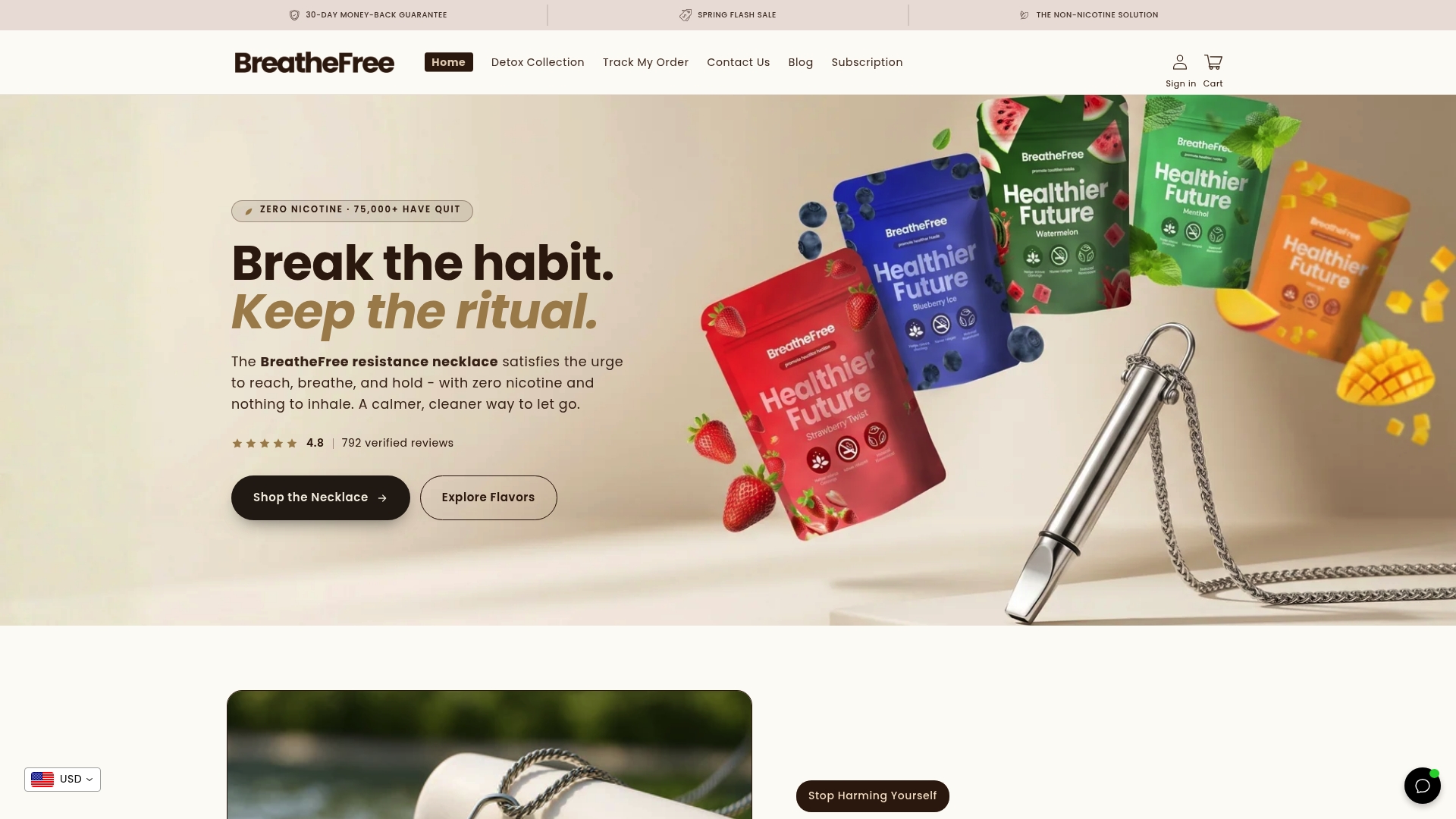
The necklace is completely nicotine-free and works by satisfying the oral fixation and breathing ritual that cigarettes create, without any harmful substances. Many people have used it as part of their quit plan, according to Breathefree. Pair it with the Nicotine Detox eBook and Habit Tracker to get a structured daily plan, craving logs, and replacement habit guides built around the same approach. If you are ready to replace the ritual, not just resist it, that is where to start.
Key Takeaways
Distraction works best when it is planned before cravings hit, paired with stress management, and supported by the right physical substitutes.
| Point | Details |
|---|---|
| Cravings are short | A 10-minute timer is often enough for a craving wave to pass on its own. |
| Plan before you quit | Practicing your distraction list in advance makes habit replacement automatic. |
| Combine NRT types | A long-acting patch plus short-acting gum or lozenge outperforms either product alone. |
| Address the physical ritual | Oral fixatives and breathing tools target the hand-to-mouth habit that patches miss. |
| Breathefree resistance necklace | A nicotine-free tool that replicates the breathing and oral ritual of smoking to reduce urges. |