

Nicotine withdrawal is defined as a neurochemical disruption that begins the moment nicotine stops reaching the brain’s receptors. When you quit, your brain’s nicotinic acetylcholine receptors lose their primary stimulant, triggering cravings, irritability, anxiety, and difficulty concentrating. Understanding what happens to the brain without nicotine is not just reassuring. It is the first step toward getting through withdrawal with your sanity intact.
What are the cognitive and emotional effects during nicotine withdrawal?
The brain changes after nicotine removal are immediate and measurable. Nicotinic acetylcholine receptors drive attention, working memory, and mood regulation. When nicotine disappears, those receptors go quiet, and the neurochemical systems that depend on them fall out of balance.
The cognitive effects of nicotine withdrawal typically include:
- Attention gaps. You may struggle to focus on tasks you normally handle with ease. This reflects real changes in acetylcholine signaling, not laziness.
- Working memory problems. Short-term recall suffers during early abstinence because dopamine and acetylcholine circuits are recalibrating.
- Mood swings and anxiety. Neuroinflammation and microglial activation contribute directly to withdrawal-related mood symptoms. These are not imagined effects.
- Irritability and restlessness. The brain’s arousal system, which nicotine kept artificially elevated, now has to find its own equilibrium.
- Intense cravings. These are wave-like signals that peak and subside within minutes if you do not act on them.
Withdrawal symptoms peak within 3–7 days of quitting. Physical symptoms resolve within 2–4 weeks, though psychological cravings can linger far longer. That gap between physical and mental recovery is where most people relapse.
Pro Tip: Track your cravings by time of day for the first week. Most people find they cluster around specific triggers, like morning coffee or after meals, which makes them far easier to anticipate and interrupt.

How does the brain’s neurobiology change long term after quitting nicotine?
Long-term brain recovery follows a predictable but individual path. The brain does not simply return to its pre-nicotine state overnight. It goes through a structured reset.
- Receptor normalization. Regular nicotine use causes nicotinic receptors to up-regulate in number and sensitivity. After quitting, those receptors gradually down-regulate back toward baseline over weeks to months.
- Dopamine system rebalancing. Chronic nicotine suppresses the brain’s natural dopamine reward response. As nicotine clears, the reward pathway slowly regains its normal sensitivity.
- Neuroimmune recalibration. The multiple neurotransmitter systems affected by nicotine, including dopamine and norepinephrine, stabilize as abstinence continues. Neuroinflammatory markers decrease over time.
- Stress pathway reset. The brain’s stress response, which nicotine hijacked to create an illusion of calm, relearns how to regulate itself without chemical assistance.
- Mental clarity returns. As receptor resetting completes, most people report noticeably sharper thinking and more stable moods. This is not a placebo effect. It reflects real circuit-level change.
Genetic factors also shape how quickly this recovery happens. Genetic variance affects individual nicotine sensitivity and cessation success, which means a slower recovery is not a personal failure. It is biology. If one quit attempt does not work, trying a different method is the rational response.
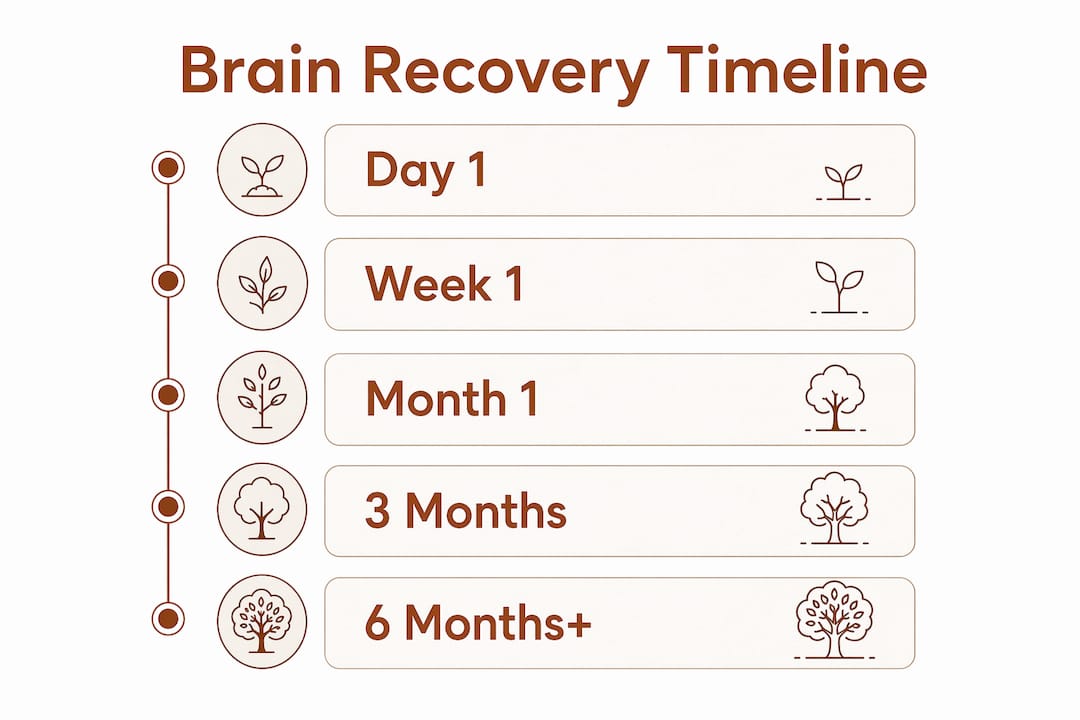
| Recovery stage | Timeline | What changes |
|---|---|---|
| Early withdrawal | Days 1–7 | Cravings peak, attention and mood drop sharply |
| Physical stabilization | Weeks 2–4 | Physical symptoms resolve, receptors begin normalizing |
| Neurochemical reset | Weeks 4–12 | Dopamine and acetylcholine systems rebalance |
| Full receptor normalization | Months 3–6 | Nicotinic receptors return to baseline sensitivity |
| Long-term brain health | 6+ months | Mental clarity, stable mood, and reduced craving frequency |
How does brain function without nicotine compare to under nicotine’s influence?
The contrast between a nicotine-influenced brain and a nicotine-free brain is sharper than most people expect. Nicotine does not simply relax you. It triggers a specific chain of neurochemical events that the brain eventually cannot function without.
| Brain function | With nicotine | Without nicotine |
|---|---|---|
| Dopamine release | Artificially elevated | Returns to natural baseline over time |
| Nicotinic receptor activity | Overstimulated and up-regulated | Gradually normalizes |
| Stress response | Masked by nicotine’s arousal effect | Temporarily dysregulated, then recalibrates |
| Working memory | Short-term boost from acetylcholine | Temporarily impaired, then recovers |
| Mood stability | Dependent on regular dosing | Unstable during withdrawal, stable long term |
| Reward sensitivity | Blunted by chronic use | Gradually restored |
Nicotine dependence reflects neurobiological adaptation driven by missing learned drug-reward signals and adapted receptor states. This is the key insight most people miss. The brain craves nicotine not because nicotine feels good in isolation, but because it has learned to expect it. Two overlapping loops drive quitting discomfort: pharmacologic withdrawal and learned cue-reward habits. Overcoming cravings requires addressing both.
The good news is that the brain’s reward sensitivity actually improves after quitting. Everyday pleasures, food, exercise, social connection, register more strongly once the dopamine system is no longer suppressed by chronic nicotine use.
What practical steps can help manage brain changes and withdrawal symptoms?
Managing the effects of quitting nicotine requires a two-track approach: addressing the pharmacologic withdrawal and dismantling the habit loops. Neither track alone is enough.
Behavioral strategies that work:
- Urge surfing. Repeated craving delay trains the brain to weaken its addiction response. Each time you ride out a craving without acting on it, the craving response weakens. This technique is especially effective for vapers and intermittent nicotine users.
- Distraction and delay. Cravings are wave-like and last only minutes. A five-minute walk, a glass of water, or a brief task is often enough to let a craving pass.
- Routine replacement. Mental cravings can outlast physical withdrawal by months, driven by routine triggers. Replacing the ritual, not just the substance, is what breaks the habit loop. Breathefree’s resistance necklace addresses this directly by giving your hands and mouth something to do during the moments that used to trigger nicotine use.
- Relapse prevention planning. Identify your three highest-risk situations before they happen. Write down a specific response for each one.
Medical support options include nicotine replacement therapy (NRT), bupropion, and varenicline. All three are clinically supported for reducing withdrawal severity. Counseling alongside medication produces better outcomes than either approach alone.
Immediate physical health improvements begin within 20 minutes of quitting, with heart rate and blood pressure dropping quickly. Knowing that your body is already healing while your brain catches up is a powerful motivator for getting through the hardest days.
Pro Tip: Build a “craving kit” before your quit date. Include a physical item to hold, a short playlist, a two-minute breathing exercise, and a list of three people you can text. Having a ready response removes the decision-making burden when a craving hits.
You can also explore evidence-based quitting strategies that address both the physical and behavioral sides of nicotine dependence, which is where most quit attempts fall short.
Key Takeaways
The brain without nicotine goes through a structured withdrawal and recovery process, with the hardest symptoms peaking in the first week and receptor normalization completing over months.
| Point | Details |
|---|---|
| Symptoms peak early | Cognitive and emotional withdrawal symptoms are worst in days 3–7, then steadily improve. |
| Receptor reset takes months | Nicotinic receptors normalize over weeks to months, with mental clarity returning as they do. |
| Cravings are temporary signals | Each craving lasts only minutes and weakens every time you delay acting on it. |
| Two loops drive addiction | Pharmacologic withdrawal and learned habit triggers both need addressing for lasting success. |
| Genetics affect recovery pace | Individual differences in nicotine sensitivity mean slower recovery is biology, not failure. |
What I’ve learned about treating withdrawal as a brain event, not a willpower test
The framing most people bring to quitting is completely wrong. They treat withdrawal as a character test. They think struggling means they are weak. What I have seen, and what the neuroscience confirms, is that every symptom you feel during the first two weeks is your brain physically restructuring itself. The irritability, the fog, the restlessness. Those are not signs of failure. They are signs of healing.
The people who get through it are not the ones with the most willpower. They are the ones who prepared for what their brain was going to do and had a specific plan for each symptom. They knew cravings would peak around day five. They knew their mood would dip before it improved. They treated it like a predictable process, not a personal battle.
The other thing worth saying plainly: if you have tried before and relapsed, that is not a reason to stop trying. Genetic variance in nicotine sensitivity is real. Some people’s brains are neurobiologically harder to rewire. That calls for a different tool or a different combination of tools, not self-blame. The cold turkey versus gradual transition debate matters here too. The right method is the one that fits your brain’s specific pattern of dependence.
What actually works is replacing the ritual, not just removing the substance. The physical act of reaching for something, the pause, the breath. Those behaviors are deeply wired. Give your brain a substitute for the ritual and you cut the craving loop at its root.
— Tommy
A structured tool for getting through the brain recovery phase
Knowing what your brain is going through is one thing. Having a daily structure to manage it is another.

Breathefree’s Nicotine Detox eBook & Habit Tracker is built specifically for the brain recovery phase of quitting. The eBook walks you through the neurochemical timeline of withdrawal so you know what to expect each week. The habit tracker helps you replace nicotine rituals with new routines, which is the piece most quit programs skip entirely. Over 75,000 people have used Breathefree’s approach to quit without substituting one harmful substance for another. If you want a structured, day-by-day plan that accounts for both the physical and psychological sides of withdrawal, this is where to start.
FAQ
How long does brain fog last after quitting nicotine?
Brain fog from nicotine withdrawal typically peaks within the first 3–7 days and clears significantly within 2–4 weeks as dopamine and acetylcholine systems rebalance.
Does the brain fully recover after quitting nicotine?
Yes. Nicotinic receptors normalize over weeks to months, and the brain’s reward and stress systems return to baseline function, with most people reporting improved mental clarity after 3–6 months.
Why do cravings feel so intense in the first week?
Cravings are most intense early because nicotinic receptors are up-regulated from chronic use and are suddenly receiving no stimulation. Each craving lasts only minutes and weakens with every delay.
Can quitting nicotine cause depression?
Mood disruption during withdrawal is a real neurobiological effect driven by dopamine and norepinephrine imbalances, not a psychological weakness. Symptoms typically stabilize within a few weeks, though anyone experiencing persistent low mood should speak with a doctor.
Does genetics affect how hard nicotine withdrawal is?
Genetic variance directly affects individual nicotine sensitivity and how quickly the brain resets after quitting. A harder withdrawal experience is a biological reality for some people, not a sign that quitting is impossible.