

Stress is the single most commonly cited reason people return to smoking after quitting. Acute and chronic stress both increase nicotine craving, reduce self-control, and make relapse significantly more likely. The good news: specific pharmacological and behavioral interventions reliably cut that risk, and understanding the mechanism is the first step toward using them effectively.
Here is the bottom line before anything else:
- Stress reduces your ability to resist smoking. Human laboratory studies show that stress imagery causes people to smoke sooner, smoke more intensely, and report greater reward from each cigarette.
- Stress-triggered lapses escalate faster. Ecological momentary assessment (EMA) data show that stress-induced lapses progress to full relapse more quickly than lapses triggered by other factors.
- The “relief” is mostly an illusion. Smoking temporarily reverses nicotine withdrawal rather than resolving external stress. Smokers who quit report lower overall stress over time.
- Combined treatment works best. Pairing pharmacotherapy (varenicline, bupropion, or nicotine replacement therapy) with behavioral support produces the strongest outcomes, especially for high-stress individuals.
When a stress-triggered craving hits right now: pause, take five slow breaths, move to a different room or step outside, put something in your hand or mouth that is not a cigarette (a resistance necklace, a piece of gum, cold water), and set a 10-minute delay before you decide anything. Most cravings peak and pass within that window.
Statistic to know: Chronic psychosocial stressors such as financial strain and relationship conflict are associated with roughly double the odds of failing to quit in prospective cohort studies spanning 9–10 years.
Table of Contents
- What does the human research actually show about stress and relapse?
- How stress rewires your brain and body toward nicotine-seeking
- Why psychological pathways from stress to relapse are just as important as biology
- When and for whom is stress most likely to cause relapse?
- Which interventions actually reduce stress-induced relapse risk?
- A step-by-step response to stress-triggered cravings
- How clinicians should address stress in quit plans
- Translating the research into practice: acute stress reactivity as a target
- What the research still needs to answer
- Key Takeaways
- What the evidence tells me about stress and quitting
- Breathefree resistance necklace: a non-nicotine adjunct for stress-triggered cravings
- Useful sources and further reading
What does the human research actually show about stress and relapse?
The evidence connecting stress to smoking relapse is not just self-report. It comes from controlled laboratory paradigms, real-world EMA tracking, and large prospective cohorts, and the findings converge on the same conclusion.
Laboratory experiments
In controlled human lab studies, participants exposed to personalized stress imagery initiated smoking sooner, smoked more cigarettes, and reported greater reward from each one. Critically, their cortisol and ACTH levels rose during stress exposure, and those hormonal increases correlated directly with reduced delay to smoke and stronger craving. This is not a self-report artifact. It is a measurable biological cascade.
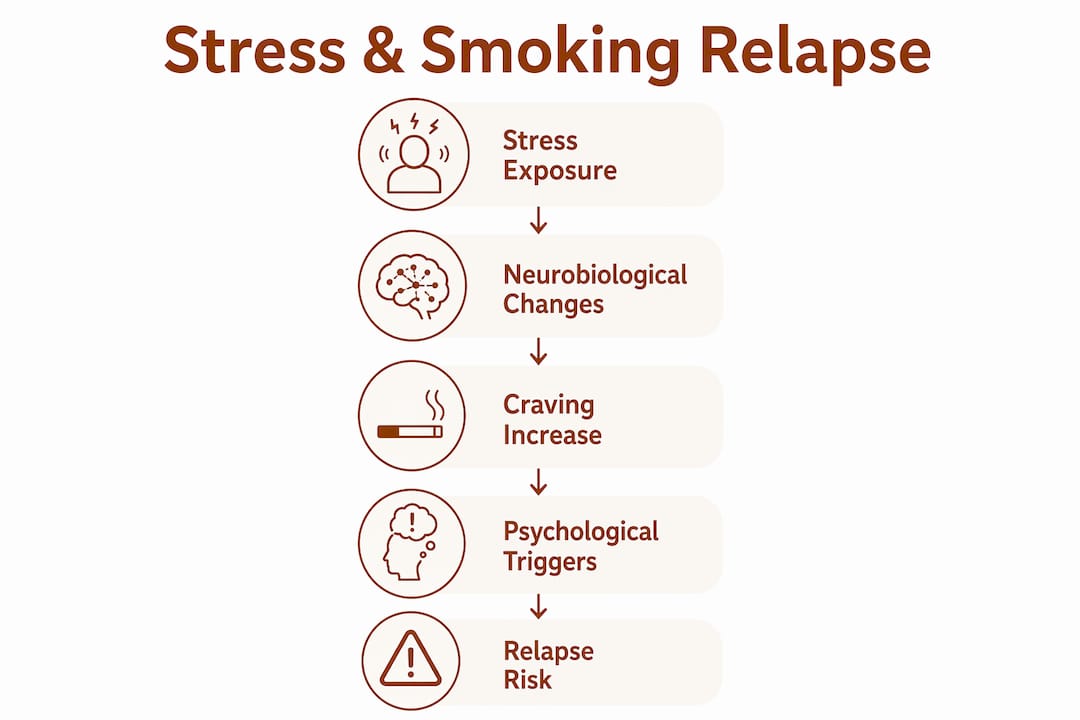
A separate line of research found that acute stress reactivity measured in the lab before a quit attempt predicted how much a person smoked during the first two weeks of abstinence. Higher lab-measured reactivity meant more stress-induced smoking in the real world, even after controlling for baseline psychological distress.
EMA and ecological studies
EMA studies track people’s mood and behavior in real time using smartphones or pagers. The pattern they reveal is consistent: rapid increases in negative affect predict lapse within hours, and stress-triggered lapses cascade into full relapse faster than lapses caused by alcohol, social pressure, or boredom. That speed matters clinically because it narrows the window for intervention.
Prospective cohort data
| Study | Design | Key Finding | Relevance |
|---|---|---|---|
| Slopen et al. (2013) | 9–10 year prospective cohort | Chronic psychosocial stress (financial, relationship, work) roughly doubled odds of persistent smoking | Chronic stress, not just acute episodes, predicts long-term failure |
| McKee et al. (2011) | Human lab + naturalistic follow-up | Stress imagery reduced resistance; cortisol/ACTH correlated with craving | Biological mechanism confirmed in humans |
| Weinstein et al. | Lab + 2-week quit follow-up | Lab stress reactivity predicted stress-induced smoking post-quit | Reactivity is a measurable, targetable risk factor |
| Perkins & Scott | Cross-sectional + withdrawal study | Perceived stress correlated with withdrawal severity; stronger in women | Sex differences in stress–withdrawal link |
What the cohort data add: Acute stress is dangerous in the first days after quitting. Chronic stress is dangerous for months and years. Both need to be addressed, but through different strategies.
How stress rewires your brain and body toward nicotine-seeking
The neurobiology here is specific enough to be clinically useful. Stress does not just make you feel like smoking. It physically changes how your brain values nicotine and how well your prefrontal cortex can override that valuation.
The HPA axis and cortisol
When you encounter a stressor, your hypothalamic-pituitary-adrenal (HPA) axis activates, releasing corticotropin-releasing factor (CRF) from the hypothalamus, which triggers ACTH from the pituitary, which drives cortisol from the adrenal glands. In smokers, this cortisol surge correlates with reduced resistance to smoking and increased perceived reward from each cigarette. The lab data confirm this: cortisol and ACTH increases during stress exposure directly predict how quickly someone reaches for a cigarette.
CRF and noradrenergic signaling
CRF does more than trigger cortisol. It acts directly in the brain, particularly in the amygdala and bed nucleus of the stria terminalis, driving anxiety and negative affect. Noradrenergic systems amplify this signal, increasing arousal and narrowing attention toward threat-relevant cues, including smoking-related ones. In animal models, CRF antagonists block stress-induced reinstatement of nicotine-seeking. In humans, the noradrenergic component is one reason bupropion (which inhibits norepinephrine reuptake) reduces stress-triggered craving.
Reward circuit sensitization and prefrontal shutdown
- Stress increases the incentive salience of nicotine-related cues. Your brain’s dopamine system, already sensitized by prior nicotine exposure, responds more strongly to cigarette-related stimuli under stress than at baseline.
- Simultaneously, the prefrontal cortex, which is responsible for delay of gratification and impulse control, shows reduced activity under acute stress. The result is a double hit: craving goes up, self-regulation goes down.
- This prefrontal suppression is why willpower-only strategies fail under high stress. The neural substrate for willpower is literally less available.
Simplified circuit: Stressor → HPA activation → CRF release → noradrenergic arousal → reward circuit sensitization → prefrontal suppression → behavioral output: smoking.
Clinical implication: Varenicline partially blocks nicotinic receptors, reducing the reward signal even if someone smokes. Bupropion targets the noradrenergic arm. NRT reduces the withdrawal-driven component of the stress response. None of these is a complete solution alone, but each targets a different node in this circuit.
Key figure: Resilience moderates the stress-to-smoking pathway. Behavioral interventions that build resilience reduce the impact of negative emotions on relapse risk, which means the circuit is not fixed.
Why psychological pathways from stress to relapse are just as important as biology
The neurobiology explains the mechanism. The behavioral pathways explain what you actually experience, and they are where most interventions land.
Negative affect narrows your world
Acute stress does not just increase craving in the abstract. It narrows attention toward smoking cues specifically. A person who is anxious or angry after a difficult phone call is more likely to notice a cigarette pack on a counter, more likely to recall the sensory details of smoking, and less likely to generate alternative responses. This attentional narrowing is well-documented in cue-reactivity research and is one reason environmental cue management matters so much in the first weeks after quitting.
The withdrawal misattribution trap
This is one of the most clinically underappreciated mechanisms. Nicotine withdrawal produces symptoms that are nearly identical to stress: irritability, anxiety, difficulty concentrating, restlessness. When a recently quit smoker encounters an external stressor, they often cannot distinguish between withdrawal-driven discomfort and stress-driven discomfort. The result is a belief that smoking will relieve the external stress, when in fact it would only temporarily reverse the withdrawal. Smoking does not relieve stress in any lasting sense. Smokers report momentary relief but carry higher baseline stress than nonsmokers overall.
Pro Tip: Teach yourself the phrase “this is withdrawal, not stress” and say it out loud when you feel the urge during a stressful moment. Naming the source of discomfort accurately disrupts the automatic association between stress and smoking.
Cue and ritual pathways
The hand-to-mouth ritual of smoking is deeply conditioned. For many people, the physical act of holding something, bringing it to the mouth, and exhaling is as reinforcing as the nicotine itself. Environmental cues (a coffee cup, a work break, a specific chair) trigger conditioned craving that compounds stress-driven urges. Understanding why smokers rely on hand-to-mouth action helps explain why purely pharmacological approaches leave a behavioral gap.
Coping deficits under stress
Stress reduces executive control and delay tolerance. A person who, on a calm day, could easily distract themselves for 10 minutes until a craving passed may find that same strategy completely inaccessible during an argument or a financial crisis. This is not a character flaw. It is a predictable consequence of prefrontal suppression under acute stress.
A brief illustration: someone three weeks into a quit attempt gets an unexpected bill they cannot pay. The anxiety is immediate and physical. They feel irritable, cannot concentrate, and notice their hands feel empty. They tell themselves they will just have one cigarette to calm down. That “calm down” is withdrawal reversal, not stress relief. But in the moment, the distinction feels academic. This is exactly the window where a behavioral replacement and a 10-minute delay can change the outcome.

When and for whom is stress most likely to cause relapse?
Not all quit attempts face equal stress-related risk. The timing and the individual both matter.
The relapse timeline
| Window | What happens | Primary risk |
|---|---|---|
| First week | Withdrawal peaks; HPA axis is hyperreactive | Any acute stressor can trigger immediate relapse |
| Week 1 | Negative affect remains high; cue reactivity is strong | Stress-triggered lapses most likely to cascade |
| Weeks 2–4 | Withdrawal symptoms ease; craving frequency drops | Acute stressors still dangerous; chronic stress sustains risk |
| Months post-quit | Baseline stress progressively decreases with continued abstinence | Major life stressors remain a risk; resilience becomes protective |
The first week is the highest-risk window by a significant margin. Acute stressors during this period hit a nervous system that is already dysregulated from withdrawal, and the prefrontal resources needed to resist are at their lowest.
Who faces the highest risk
Several factors amplify the stress-to-relapse pathway:
- Psychiatric comorbidity. Depression and anxiety disorders both increase baseline negative affect and reduce resilience. Smokers with these conditions have higher relapse rates and need more intensive support.
- High perceived stress at baseline. Perceived stress correlates with withdrawal severity and predicts poorer cessation outcomes. Screening for perceived stress before a quit attempt identifies who needs more support.
- Sex differences. Several studies report stronger associations between perceived stress and withdrawal symptoms in women, suggesting that stress-management components of cessation programs may need to be weighted differently by sex.
- Low socioeconomic resources. Financial stress is one of the strongest chronic psychosocial predictors of persistent smoking in cohort data. People with fewer economic resources face more chronic stressors and have less access to cessation support.
- Low resilience. Resilience functions as a buffer between stress and smoking. Negative emotions fully mediate the link between stress and smoking intensity, and resilience moderates that mediation. Building resilience is not a soft goal; it is a measurable intervention target.
Which interventions actually reduce stress-induced relapse risk?
The U.S. Public Health Service Clinical Practice Guideline recommends combining pharmacotherapy with behavioral counseling as the standard of care for smoking cessation. For high-stress individuals, that combination is not optional; it is where the evidence is strongest.
Comparison of evidence-based approaches
| Intervention | Mechanism targeting stress/withdrawal | Evidence strength | Typical US cost | Key safety notes |
|---|---|---|---|---|
| Varenicline (Chantix) | Partial nicotinic agonist; reduces reward from smoking and withdrawal-driven craving | Strongest single-agent evidence; meta-analyses show superior quit rates vs. placebo and NRT | — | Monitor for mood changes; use with caution in severe psychiatric illness |
| Bupropion (Zyban) | Norepinephrine/dopamine reuptake inhibitor; targets noradrenergic stress arm | Strong RCT evidence; roughly doubles quit rates vs. placebo | — | Contraindicated with seizure disorders or eating disorders; avoid with MAOIs |
| NRT (patch, gum, lozenge) | Replaces nicotine to reduce withdrawal-driven stress reactivity | Well-established; combination NRT (patch + fast-acting form) outperforms single-product | Patch ~$30–50/2-week supply OTC; gum/lozenge similar; covered by many insurers | Generally safe; avoid patch on broken skin; gum/lozenge not for denture wearers |
| CBT-based relapse prevention | Builds coping skills, addresses cue reactivity and negative affect | Strong evidence; most effective when combined with pharmacotherapy | Quitlines free; individual CBT varies; telehealth options available | No contraindications; access varies by location |
| Mindfulness-based relapse prevention | Reduces reactivity to stress and craving; builds metacognitive awareness | Growing evidence base; mindfulness practice reduces stress-triggered urges | Apps free to ~$15/month; group programs $200–500 | No contraindications |
| Exercise | Reduces negative affect; blunts cortisol response; provides behavioral replacement | Moderate evidence; acute exercise reduces craving in lab studies | Free to gym membership cost | Consult clinician if cardiovascular concerns |
| Digital apps / biofeedback | Provide real-time stress monitoring and coping prompts | Emerging; limited long-term RCT data | Free to ~$30/month | No significant contraindications |
What the guidelines say: The USPHS Clinical Practice Guideline identifies combination pharmacotherapy plus behavioral counseling as the most effective cessation strategy. For individuals with high stress or psychiatric comorbidity, this combination is the recommended starting point, not a fallback.
Varenicline produces the highest quit rates of any single agent in head-to-head trials. Bupropion is a strong second option, particularly for smokers with depression or high anxiety, given its antidepressant properties. NRT is the most accessible and the safest for most populations, and combination NRT (a long-acting patch plus a short-acting form like gum or lozenge) outperforms single-product use.
Behavioral interventions work through different mechanisms than medications. CBT-based relapse prevention teaches people to identify high-risk situations, challenge automatic thoughts about smoking, and build alternative coping responses. Mindfulness-based approaches train people to observe craving without acting on it. Both reduce the behavioral component of stress-induced relapse that medications alone cannot address. Behavioral support is not a supplement to medication; it is a co-equal component of effective treatment.
A step-by-step response to stress-triggered cravings
When stress hits and the urge to smoke spikes, you need a sequence that is simple enough to execute under cognitive load. Here it is:
- Pause. Stop what you are doing for five seconds. Do not act on the urge yet.
- Name it. Say to yourself: “This is a craving triggered by stress. It will peak and pass.”
- Breathe. Take five slow, paced breaths: inhale for four counts, exhale for six. This activates the parasympathetic nervous system and partially blunts the cortisol spike.
- Orient. Look around and name five things you can see. This grounding technique interrupts the attentional narrowing that stress produces.
- Replace. Put something in your hand or mouth. A resistance necklace, a piece of sugarless gum, a glass of cold water, or a fidget ring gives your hands and mouth something to do that is not smoking. The oral fixation component of smoking is a real behavioral driver, and replacing it matters.
- Delay. Set a 10-minute timer. Tell yourself you will decide about smoking after the timer goes off. Most cravings peak within 3–5 minutes and begin to fade before 10 minutes are up.
- Re-evaluate. When the timer ends, ask: “Do I still want to smoke, or did the craving pass?” Most of the time, it passed.
Evidence-backed momentary tactics
Paced breathing (step 3) has direct physiological support: slow exhalation activates the vagus nerve and reduces sympathetic arousal. Cold water, either drunk or splashed on the face, triggers the mammalian dive reflex and rapidly reduces heart rate. Progressive muscle relaxation, done in as little as two minutes, reduces perceived stress and craving intensity in lab studies.

Non-nicotine oral-fixation tools deserve specific mention. Resistance necklaces, fidget rings, and nicotine-free lozenges address the behavioral and sensory components of craving without introducing more nicotine. They are not a replacement for medication or counseling, but they fill a gap that medications leave open: the physical ritual. Use them during the first 10-minute delay window, during known high-risk moments (work breaks, after meals, during phone calls), and whenever the hand-to-mouth urge is strong. They are safe for most adults; anyone with a respiratory condition should confirm with their clinician before using any inhalation-based product.
Pro Tip: Pair a sensory replacement (resistance necklace or gum) with a three-sentence script you say to yourself: “This is withdrawal. I have handled this before. I will wait 10 minutes.” The combination of a physical object and a verbal script creates two competing responses to the craving, which is more effective than either alone.
How clinicians should address stress in quit plans
Stress is consistently underscreened in clinical cessation encounters. A brief stress assessment at the start of a quit attempt changes the treatment plan in meaningful ways.
What clinicians should ask
| Question | What it reveals |
|---|---|
| “How stressed have you felt in the past month, on a scale of 1–10?” | Baseline perceived stress; flags high-risk patients |
| “Have you had any major life stressors recently (financial, relationship, work)?” | Chronic psychosocial load; predicts long-term relapse risk |
| “Do you notice you smoke more when you are stressed or anxious?” | Stress-induced smoking pattern; indicates need for stress-management component |
| “Have you ever been diagnosed with depression or anxiety?” | Psychiatric comorbidity; affects medication choice and intensity of support |
| “What do you usually do when you feel stressed, besides smoke?” | Current coping repertoire; identifies gaps to address in behavioral counseling |
| “When have you come closest to relapsing in past quit attempts?” | Prior high-risk moments; informs personalized relapse-prevention planning |
Brief interventions that work
Brief clinician advice alone increases quit rates. Adding a referral to a quitline (1-800-QUIT-NOW, free in all 50 states) or a telehealth behavioral counseling session substantially improves outcomes. For high-stress patients, a single-session stress-management training, which can be delivered by a nurse or health educator in 20–30 minutes, reduces stress-induced smoking during the first weeks after quitting.
Perceived stress education is a high-impact, low-cost intervention. Explaining to a patient that withdrawal symptoms mimic stress, and that smoking “relief” is withdrawal reversal rather than genuine stress reduction, changes the cognitive frame in a way that reduces misattribution-driven relapse.
Statistic: Brief clinician advice is associated with higher quit rates even without additional pharmacotherapy, making it one of the most cost-effective interventions available in primary care.
US resources for patients
- 1-800-QUIT-NOW: Free quitline connecting callers to state-based cessation counseling. Available in all 50 states, with Spanish-language support.
- Smokefree.gov: Free text and web-based support programs from the National Cancer Institute.
- SAMHSA National Helpline (1-800-662-4357): For patients with co-occurring mental health or substance use concerns.
- Community health centers: Federally qualified health centers (FQHCs) offer sliding-scale cessation counseling for uninsured or underinsured patients.
Checking your emotional wellness checklist before and during a quit attempt can help identify stress patterns that need clinical attention before they become relapse triggers.
Translating the research into practice: acute stress reactivity as a target
The most underused insight from the cessation literature is this: acute stress reactivity is not a fixed trait. It is a measurable, modifiable risk factor. Lab-measured reactivity predicts real-world stress-induced smoking, which means reducing reactivity before or during a quit attempt should reduce relapse risk.
Evidence-based approaches to reducing reactivity
- Brief stress-management training: Even a single session teaching paced breathing, cognitive reappraisal, and grounding techniques reduces acute cortisol responses in lab studies. Delivered before a quit date, it gives people a practiced toolkit for the highest-risk window.
- CBT techniques: Cognitive restructuring (challenging the belief that smoking relieves stress) and behavioral activation (scheduling rewarding activities to reduce baseline negative affect) both reduce reactivity over time.
- Resilience training: Resilience buffers the link between stress and negative emotions, and negative emotions fully mediate the stress-to-smoking pathway. Resilience-building is therefore a mechanistically grounded intervention target, not a soft skill.
How non-nicotine oral-fixation tools map onto the evidence
The stress-to-smoke pathway has multiple nodes: neurobiological (HPA, CRF, reward circuit), behavioral (cue reactivity, ritual), and cognitive (misattribution, coping deficit). Pharmacotherapies target the neurobiological nodes. Behavioral counseling targets the cognitive and coping nodes. Non-nicotine oral-fixation tools, such as the Breathefree resistance necklace, target the behavioral and sensory nodes.
Specifically, they interrupt the hand-to-mouth ritual that is conditioned to stress-related cues, provide a sensory replacement during the 10-minute delay window, and reduce the perceived emptiness in the hands and mouth that many quitters describe as a distinct trigger. They are not a clinical treatment. They are an adjunct that fills the behavioral gap medications leave open. Breathefree’s resistance necklace is designed for exactly this use: a non-nicotine, non-pharmacological tool that gives the hands and mouth something to do during acute stress and craving.
Pairing a resistance necklace with a habit tracker adds a second mechanism: tracking abstinence progress is associated with progressive stress reduction over time, and seeing measurable gains strengthens motivation during high-risk periods.
Pro Tip: For clinicians integrating sensory replacement into quit plans: recommend the tool for specific high-risk windows (work breaks, post-meal, during phone calls) rather than all-day use. Targeted use during predictable stress windows is more effective than carrying it as a general comfort object, because it builds a specific conditioned response to replace the smoking ritual.
What the research still needs to answer
The evidence base for stress-targeted cessation is strong in some areas and thin in others. Knowing the gaps helps clinicians and patients calibrate their expectations.
The most important gap: There are currently no validated, clinically deployable biomarkers for acute stress reactivity that could be used to stratify patients before a quit attempt. Lab paradigms exist, but they are not practical in primary care. A brief, validated screening tool for stress reactivity would change how cessation programs are designed.
Specific gaps and research priorities
- Personalized prediction: Current tools cannot reliably identify which individual will relapse under which type of stress. Genetic markers (e.g., variants in CRF receptor genes, COMT) show promise but are not ready for clinical use.
- Long-term RCT evidence for complementary interventions: Exercise, biofeedback, and specific sensory-replacement devices have plausible mechanisms and short-term lab support, but large, long-term RCTs are sparse. The evidence is promising, not definitive.
- Combined pharmacological and resilience-training trials: Most RCTs test medications or behavioral interventions separately. Trials that combine pharmacotherapy with stress-reactivity-stratified resilience training and measure both quit rates and stress outcomes would directly address the mechanism.
- Cost-effectiveness in US care settings: Implementation research in federally qualified health centers, community health centers, and telehealth platforms is needed to understand which stress-targeted interventions are scalable and affordable for underserved populations.
Study types that would change practice if positive: large pragmatic RCTs of combined pharmacotherapy plus stress-management training stratified by baseline reactivity; mechanistic trials linking HPA/CRF changes to 12-month quit outcomes; implementation trials of digital stress-monitoring tools in primary care cessation programs.
Key Takeaways
Stress is the leading driver of smoking relapse, and the pathway from stress to cigarette is neurobiological, behavioral, and cognitive simultaneously. Addressing all three levels, with medication, behavioral support, and sensory replacement tools, produces the best outcomes.
| Point | Details |
|---|---|
| Stress doubles relapse risk | Chronic psychosocial stressors are associated with roughly double the odds of failing to quit over 9–10 years. |
| Stress-triggered lapses escalate faster | EMA data show stress-induced lapses progress to full relapse more quickly than lapses from other causes. |
| Combined treatment is the standard | USPHS guidelines recommend pharmacotherapy plus behavioral counseling; for high-stress patients, this combination is the starting point. |
| Resilience is a modifiable target | Resilience buffers the stress-to-smoking pathway; brief stress-management training and CBT reduce acute reactivity before and during quit attempts. |
| Breathefree resistance necklace as adjunct | The Breathefree resistance necklace targets the behavioral and sensory nodes of the stress-to-smoke pathway, filling the gap that medications leave open. |
What the evidence tells me about stress and quitting
The piece of this research that most clinicians underuse is the withdrawal misattribution finding. People who relapse under stress are not failing because they lack willpower. They are failing because their nervous system is producing stress-identical symptoms from withdrawal, and they have no framework to tell the difference. That cognitive reframe, delivered clearly and early in a quit attempt, is one of the highest-leverage interventions available, and it costs nothing.
The other thing worth saying plainly: the evidence for combining pharmacotherapy with behavioral support is not ambiguous. Varenicline, bupropion, and NRT each work. Behavioral counseling works. Together, they work better than either alone, particularly for people with high stress, psychiatric comorbidity, or a history of stress-triggered lapses. If you are working with a clinician on a quit attempt, the conversation about which combination fits your situation is worth having before your quit date, not after your first lapse.
Non-nicotine tools like resistance necklaces and fidget rings are not magic. But they address something real: the physical ritual of smoking is a conditioned behavior that medications do not touch. Having something in your hands during a stressful moment is not a placebo. It is a behavioral replacement for a deeply ingrained response. Used alongside medication and counseling, it closes a gap that otherwise stays open.
Breathefree resistance necklace: a non-nicotine adjunct for stress-triggered cravings
Quitting smoking under stress means managing three things at once: the neurobiological craving, the psychological urge, and the physical habit of reaching for something. Medications handle the first. Counseling handles the second. The Breathefree resistance necklace handles the third.
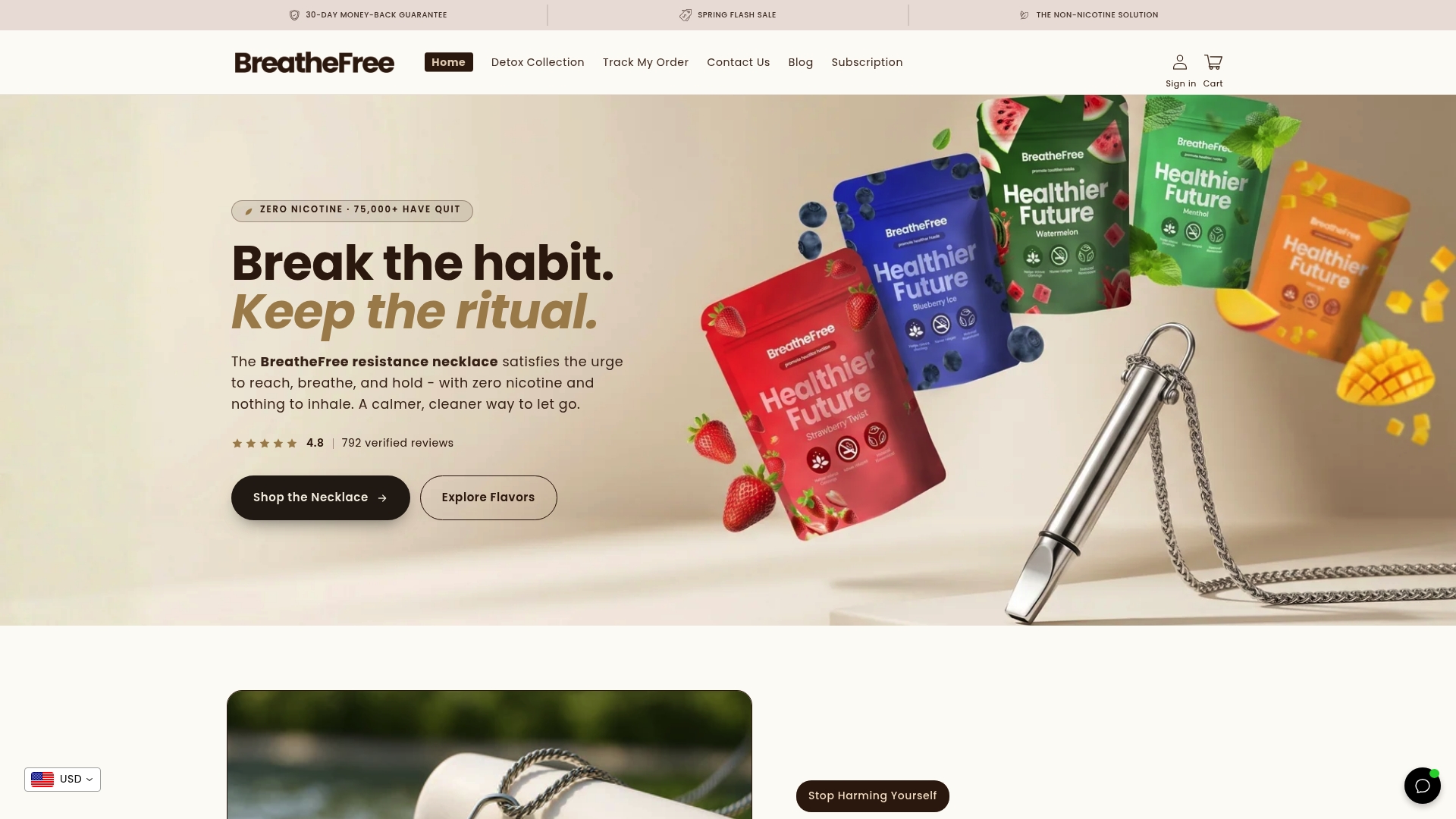
The necklace is completely nicotine-free and designed to satisfy the hand-to-mouth ritual that stress reliably activates. Use it during the 10-minute delay window after a craving hits, during known high-risk moments like work breaks or after meals, or any time your hands feel empty and the urge to smoke is strong. Pair it with the Nicotine Detox eBook and Habit Tracker to track your abstinence progress, which research links to progressive stress reduction over time. Most adults can use the necklace safely without clinical supervision. If you have a respiratory condition or are pregnant, confirm with your clinician first.
A substantial number of people have used Breathefree tools as part of their quit journey. If you are ready to add a sensory replacement to your quit plan, the resistance necklace is a practical, evidence-aligned place to start.
Useful sources and further reading
The studies below form the core evidence base for this article. Clinicians will find the lab and cohort studies most useful for understanding mechanisms and risk stratification. Patients will find the guideline sources and the stress-misattribution paper most directly applicable to their own quit attempt.
| Source | Type | What it supports in this article |
|---|---|---|
| McKee et al. (2011), PMC3637660 | Human laboratory RCT | Stress imagery reduces resistance to smoking; cortisol/ACTH correlate with craving and reward |
| Slopen et al. (2013), PMC3776130 | 9–10 year prospective cohort | Chronic psychosocial stress roughly doubles odds of persistent smoking and failed quit attempts |
| Weinstein et al., PMC5668998 | Lab + naturalistic follow-up | Acute stress reactivity predicts stress-induced smoking during first 2 weeks post-quit |
| Perkins & Scott, PMC4558262 | Cross-sectional + withdrawal study | Perceived stress correlates with withdrawal severity; sex differences in stress–withdrawal link |
| Parrott (1999), PubMed 10540594 | Epidemiological review | Smoking does not relieve stress long-term; cessation associated with lower stress |
| Liao et al. (2016), PMC4855524 | Cross-sectional moderated mediation | Negative emotions fully mediate stress-to-smoking link; resilience moderates that mediation |
| Shiffman et al., doi:10.1037//0278-6133.9.4.466 | Longitudinal | Abstinence duration predicts progressive stress reduction; tracking supports relapse prevention |
| USPHS Clinical Practice Guideline | Clinical guideline | Combination pharmacotherapy + behavioral counseling is the standard of care |
For clinicians: Start with McKee et al. (2011) for the mechanistic foundation, Slopen et al. (2013) for chronic stress risk stratification, and the USPHS guideline for treatment recommendations. For patients: The Parrott (1999) review on stress misattribution and the Liao et al. (2016) paper on resilience offer the clearest explanation of why quitting is hard and what actually helps. For a broader look at withdrawal symptoms and recovery, Connected Recovery Inc. provides a clinically grounded overview that complements the research above.