

A nicotine craving is defined as the intense, compulsive urge to consume nicotine, driven by neurobiological changes in the brain’s reward system caused by prolonged use. When your brain adapts to regular nicotine exposure, it increases the density of nicotine receptors. The moment nicotine is withheld, those receptors signal distress, producing the physical and psychological pull you recognize as a craving. Understanding what a nicotine craving actually is, why it happens, and how long it lasts gives you a real advantage when quitting. The science is clear, and so are the strategies that work.
What causes nicotine cravings and why do they occur?
Nicotine cravings originate in the brain’s dopamine system. Nicotine triggers dopamine release within seconds of inhalation, creating a fast, powerful reward signal. Over time, the brain compensates by growing more nicotine receptors. When nicotine is absent, those extra receptors go unsatisfied, and the craving begins.

What makes nicotine dependency particularly stubborn is that it operates on two levels at once. The first is chemical: your brain physically needs nicotine to feel normal. The second is behavioral: addiction experts emphasize that mental habits are just as powerful as chemical withdrawal. The two reinforce each other constantly.
Behavioral triggers are often the sneakier problem. Common situations that spark cravings include:
- Drinking your morning coffee
- Taking a work break
- Finishing a meal
- Feeling stressed or bored
- Seeing someone else smoke or vape
- Driving a familiar route
These situations become linked to oral fixation and habitual rituals over years of use. The craving fires not because your body needs nicotine right now, but because your brain has learned to expect it in that context.
Nicotine also creates a false stress relief cycle. Withdrawal causes anxiety that feels identical to everyday stress. Smoking relieves withdrawal, which the brain then misreads as stress relief. This loop makes quitting feel harder than it is, because you are fighting both chemistry and a deeply ingrained misperception.
Pro Tip: When a craving hits, ask yourself whether you are actually stressed or just in withdrawal. Naming the difference breaks the automatic response.
How long do nicotine cravings last?
Acute cravings peak during the first 2–4 weeks after quitting, with withdrawal symptoms hitting hardest in the first few days. Each individual craving episode typically lasts about 10 minutes before it subsides on its own. That window is short, but it can feel much longer when you are in the middle of it.
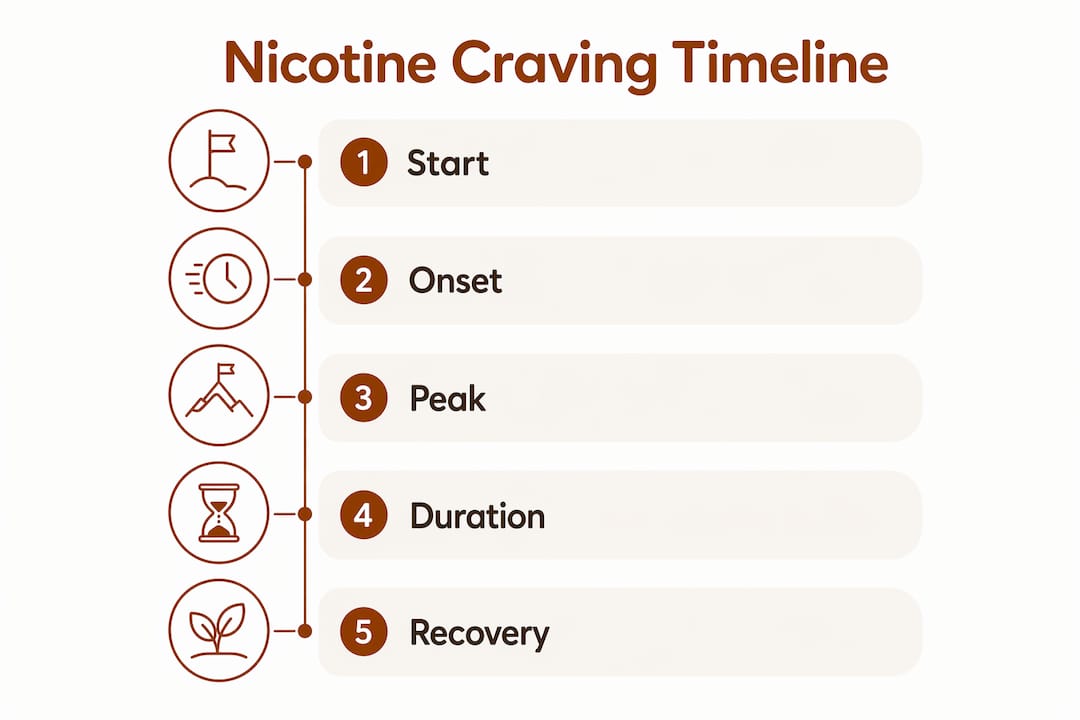
Common withdrawal symptoms beyond the craving itself include irritability, anxiety, restlessness, difficulty concentrating, and increased appetite. These symptoms usually peak within the first few days and improve steadily over 2–4 weeks. People who smoked heavily or for many years may experience a longer, lower-level craving period that stretches beyond the initial month.
The table below summarizes the typical timeline for withdrawal symptoms and cravings during cessation.
| Symptom | Onset | Peak | Typical duration |
|---|---|---|---|
| Intense cravings | Within hours | Days 2–3 | 2–4 weeks |
| Irritability and anxiety | Within hours | Days 1–3 | 1–2 weeks |
| Restlessness | Day 1 | Days 2–4 | 1–2 weeks |
| Difficulty concentrating | Day 1 | Days 2–5 | Up to 4 weeks |
| Increased appetite | Day 1 | Week 1–2 | Several weeks |
Individual variation matters. Someone who smoked a pack a day for 20 years will face a different intensity and duration than someone who vaped lightly for two years. Habit strength, stress levels, and support systems all affect how the brain recovers without nicotine. The timeline is real, but it is not fixed.
How to manage nicotine cravings effectively
The most reliable framework for managing cravings is the 10-minute rule. Cravings last about 10 minutes and will subside if you resist them. Every craving you outlast builds the neural pattern that makes the next one easier to beat.
The clinically recommended 5 Ds framework gives you five concrete tools to use during that 10-minute window:
- Delay. Do not act on the craving. Tell yourself to wait 10 minutes.
- Distract. Move your body or shift your attention. Walk, do pushups, or call someone.
- Deep breathe. Slow, controlled breathing lowers the physical stress response immediately.
- Drink water. Sipping cold water occupies your mouth and hands, and reduces craving intensity.
- Discuss. Talk to a friend, a support group, or a quit-smoking community about what you are feeling.
Proactive management beats reactive management every time. Engaging distractions before high-risk events prevents cravings from escalating. If you know your 3 p.m. work break always triggers a craving, plan a replacement activity before that moment arrives. Go for a walk, chew gum, or use a physical quit-smoking aid to occupy your hands and mouth.
Practical distractions that work during a craving include:
- Squeezing a stress ball or fidget tool
- Brushing your teeth
- Doing a short breathing exercise
- Texting a friend who knows you are quitting
- Playing a quick game on your phone
One critical mindset shift: avoid the all-or-nothing approach. Treating a single slip as total failure dramatically increases relapse risk. A slip is data, not defeat. Normalize it, analyze the trigger, and adjust your plan.
Pro Tip: Write down your top three craving triggers and your planned response to each one before your quit date. Preparation is the single biggest predictor of success.
How nicotine replacement therapies help with cravings
Nicotine replacement therapy, or NRT, works by delivering a steady, controlled nicotine level that reduces the severity of withdrawal without the harmful chemicals in cigarettes or vapes. This lower baseline means your brain is not in full withdrawal, which makes cravings less intense and easier to manage. NRT does not eliminate cravings entirely. It reduces their power so you can focus on breaking the behavioral triggers.
Common NRT forms and their primary use cases:
- Patches: Deliver a consistent nicotine dose over 16–24 hours. Best for managing baseline withdrawal throughout the day.
- Gum: Fast-acting relief for acute craving spikes. Chewing activates nicotine absorption through the mouth lining.
- Lozenges: Similar to gum but dissolve slowly. Useful when gum is inconvenient or uncomfortable.
- Inhalers: Address oral fixation directly by mimicking the hand-to-mouth ritual of smoking.
Combination NRT uses a long-acting product like a patch alongside a short-acting product like gum or a lozenge. Clinical guidelines support this approach because it addresses both steady withdrawal and acute craving spikes. Single-product NRT handles one problem. Combination therapy handles both.
The table below compares common NRT methods by how they work and when to use them.
| NRT method | Delivery speed | Best use case |
|---|---|---|
| Patch | Slow (all day) | Baseline withdrawal control |
| Gum | Fast (minutes) | Acute craving spikes |
| Lozenge | Moderate | Cravings when gum is not practical |
| Inhaler | Fast | Oral fixation and acute cravings |
Cold turkey quitting often fails because it ignores the brain’s receptor neurobiology entirely. Using cessation aids improves success rates by giving the brain a managed path down from dependence rather than a sudden cliff. NRT is not a crutch. It is a clinically supported tool that addresses the chemical side while you work on the behavioral side.
Key Takeaways
Nicotine cravings are temporary, neurobiologically driven urges that respond to both chemical support and behavioral strategies, making a combined approach the most effective path to quitting.
| Point | Details |
|---|---|
| Cravings are brain-driven | Increased receptor density causes withdrawal urges when nicotine is absent. |
| Each craving lasts about 10 minutes | Resisting the urge for 10 minutes is the core skill that builds long-term success. |
| Behavioral triggers are as powerful as chemistry | Situations like coffee breaks and stress fire cravings independent of physical withdrawal. |
| Combination NRT outperforms single products | Pairing a patch with gum or lozenges addresses both baseline and acute cravings. |
| Proactive planning beats reactive coping | Identifying triggers before they hit and preparing a response reduces craving intensity. |
What I have learned about cravings after years of watching people quit
Most people who struggle to quit are not weak. They are fighting two separate battles at once and only know about one of them. They understand the chemical side because it is visible and physical. What catches them off guard is the behavioral side, the way a specific chair, a specific time of day, or a specific emotion can fire a craving months after the physical withdrawal has passed.
The all-or-nothing mindset is the single most destructive pattern I see. Someone has one cigarette after three weeks of clean quitting and decides the whole effort is ruined. That one slip did not erase three weeks of receptor recovery. Treating it as a learning moment instead of a failure is not just motivational advice. It reflects how the brain actually heals.
The 10-minute rule sounds almost too simple to be useful. It is not. When you know that every craving has a biological ceiling and will pass on its own, you stop fighting it emotionally and start managing it practically. That shift in perspective is where real progress begins.
Behavioral interventions work. Physical substitutes for oral fixation work. Combination NRT works. The people who succeed are not the ones who feel the fewest cravings. They are the ones who have a plan for every craving they feel.
— Tommy
Breathefree tools for managing cravings
Knowing what a nicotine craving is gives you a foundation. Having the right tools turns that knowledge into results.
Breathefree’s Nicotine Detox eBook and Habit Tracker gives you a structured system for logging triggers, tracking craving patterns, and building replacement habits day by day. For those dealing with oral fixation, the Breathefree resistance necklace provides a nicotine-free physical substitute that satisfies the hand-to-mouth ritual without harmful substances. Over 75,000 people have used Breathefree’s method to quit. The tools are built around the same behavioral science covered in this article, and they are available whenever you are ready to put a plan in place.
FAQ
What is a nicotine craving exactly?
A nicotine craving is an intense urge to consume nicotine caused by the brain’s increased receptor density after prolonged use. When nicotine is absent, those receptors signal distress, producing both physical and psychological withdrawal symptoms.
How long does a single nicotine craving last?
Each craving episode typically lasts about 10 minutes before it subsides on its own. Resisting the urge during that window is the core skill that makes quitting possible over time.
What are the most common symptoms of nicotine withdrawal?
Common withdrawal symptoms include irritability, anxiety, restlessness, difficulty concentrating, and increased appetite. These symptoms peak within the first few days and improve steadily over 2–4 weeks.
Does oral fixation play a role in nicotine cravings?
Yes. Many cravings are triggered by the habitual ritual of holding something or the hand-to-mouth motion, not just chemical withdrawal. Physical substitutes that address oral fixation can significantly reduce craving frequency and intensity.
Is combination NRT more effective than using a single product?
Clinical guidelines support combination NRT because it addresses both steady baseline withdrawal and acute craving spikes. Using a long-acting patch alongside a fast-acting product like gum or a lozenge improves quit rates compared to single-product approaches.