

Nicotine-free wellbeing means actively replacing nicotine-driven habits with non-nicotine sensory supports, behavioral tools, and wellness practices that reduce cravings and protect your long-term health. It is not simply the absence of nicotine. It is a deliberate strategy, and Mayo Clinic confirms that addressing the hand-to-mouth ritual is just as critical as breaking the chemical dependency. Your most practical next step: try a non-nicotine oral-fixation tool for 7–14 days and pair it with a daily habit tracker to measure your progress.
What success looks like in real terms:
- Fewer craving spikes throughout the day
- Reduced relapse events, especially in the first six months when risk is highest
- Measurable improvements in lung function, mood, and sleep within weeks of quitting
- A clear behavioral routine that replaces the smoking ritual without introducing new chemicals
Table of Contents
- Why do nicotine-free tools actually work?
- What types of nicotine-free oral-fixation tools are available?
- How do you choose a safe, effective oral-fixation aid?
- How should you use these aids in your quit plan?
- How does Breathefree support nicotine-free wellbeing?
- Key Takeaways
- The part most quit guides skip
- Ready to try a nicotine-free approach that actually fits your day?
- Useful sources and further reading
Why do nicotine-free tools actually work?
The short answer: they target the ritual, not the molecule. Chemical nicotine dependence and the hand-to-mouth behavioral habit are two separate problems, and most quitters underestimate the second one. Mayo Clinic guidance explains that people form deeply ingrained routines around smoking — the reach, the lift, the exhale — and those routines keep triggering cravings long after the physical withdrawal has passed.
“Quitting is rarely a straight line. Relapse often happens early and repeatedly, which is why accessible, non-chemical accountability tools are vital for maintaining motivation.” — Truth Initiative
Withdrawal symptoms peak in the first few days to weeks, but the behavioral habit can persist for months. That gap is where most quit attempts fail. CDC guidance is direct: combining counseling with medication gives the best chance of quitting, and behavioral supports are most effective when layered alongside clinical options like NRT or prescription medication when appropriate.
What types of nicotine-free oral-fixation tools are available?
The market for non-nicotine cessation aids has grown considerably. Here is a practical breakdown of the main categories and what each one actually does for you.

Resistance necklaces simulate the hand-to-mouth motion and provide a tactile, sensory anchor. You hold or mouth the necklace tip, which satisfies the physical ritual without any inhalation or nicotine. Flavor refills extend the sensory experience.
Essential oil nasal sticks deliver a scent-based sensory cue during emotional transitions, like stress or after meals, without any inhalation of combustion byproducts. They are discreet and portable.
Herbal pouches sit between the gum and cheek, mimicking the oral sensation of smokeless tobacco without nicotine. Ingredients vary widely, so label-reading matters.
Chewables and gummies (including lung-support gummies) address the oral fixation through chewing and may include botanical ingredients aimed at respiratory support.
Fidget aids (rings, spinners) address the hand-to-mouth and tactile restlessness that spikes during irritability. They work best alongside an oral tool, not instead of one.
Habit trackers and eBooks are not physical substitutes but are arguably the most underrated category. Tracking daily craving patterns and trigger moments gives you data, and data beats willpower.
| Feature | Resistance necklace | Nasal stick | Herbal pouch | Chewable/gummy | Fidget aid |
|---|---|---|---|---|---|
| Sensory effect | Hand-to-mouth + oral | Scent/breath | Oral | Oral | Tactile/hand |
| Portability | High | High | High | Medium | High |
| Inhalation risk | None | Minimal | None | None | None |
| Safety concerns | Low | Low | Check ingredients | Check ingredients | None |
Safety note: Boulder Community Health flags that botanical inhalers and herbal alternatives often lack long-term safety data. Always check ingredient lists and consult a healthcare provider if you have any respiratory condition before using any inhaled product.
How do you choose a safe, effective oral-fixation aid?
The single most important rule: match the tool to your dominant trigger. If your cravings spike during stress, a scent-based nasal stick or a resistance necklace addresses that moment better than a gummy you eat at home. Here is a practical checklist for smoke-free tools before you buy:
- Identify your trigger type — oral/tactile, sensory/scent, or emotional/stress-driven.
- Read the full ingredient list — avoid products with ambiguous botanical blends and no third-party testing.
- Check whether the product involves inhalation — if it does, look for explicit safety data.
- Verify the return policy and customer support — a credible product stands behind itself.
- Confirm community or accountability support — tools paired with a tracker or support network outperform solo willpower.
- Look for clinical or medical disclaimers — any product claiming to “cure” nicotine addiction without evidence is a red flag.
Red flags to walk away from: vague ingredient lists, inhalables with unproven claims, and anything marketed as a guaranteed quit method without transparent evidence. Pair whichever tool you choose with a habit tracker from day one so you can measure what is actually working.
How should you use these aids in your quit plan?
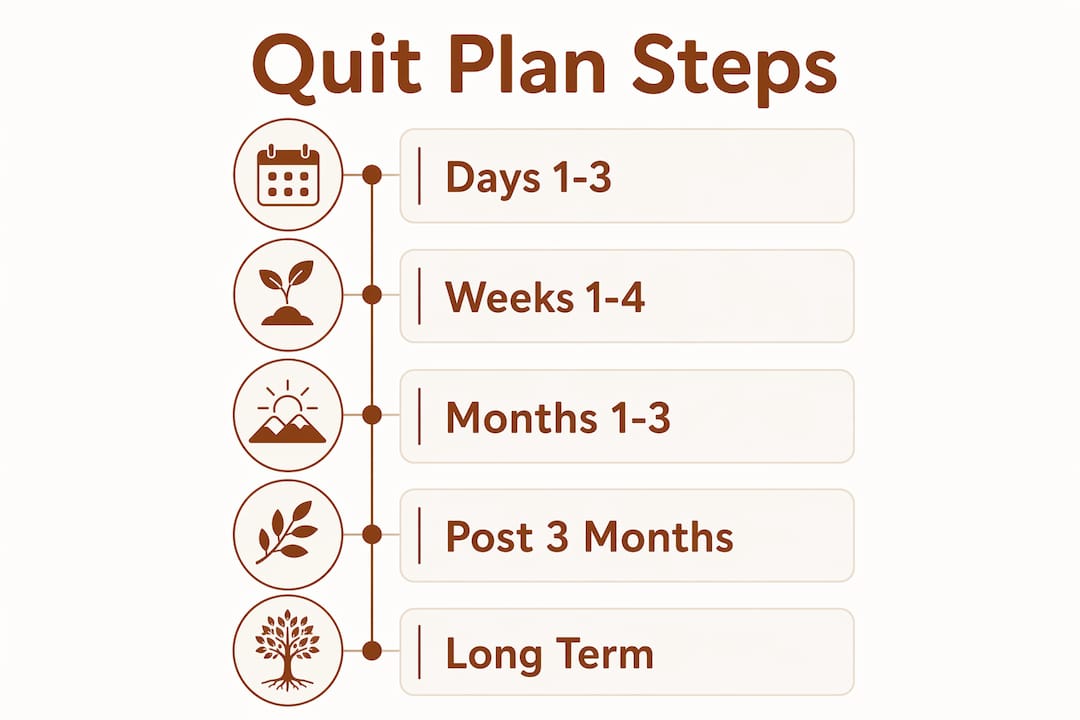
Most of the behavioral work happens in the first 30–90 days. That is when the oral fixation habit is strongest and when relapse risk is highest. Extra vigilance through six months is not paranoia; it is evidence-based planning.
| Timeframe | What you’ll likely feel | Recommended tool use |
|---|---|---|
| Days 1–3 | Intense cravings, irritability, restlessness | Resistance necklace constantly on hand; fidget ring for irritability |
| Days 4–14 | Cravings easing but habit triggers strong | Necklace at trigger moments; nasal stick for emotional transitions |
| Weeks 3–6 | Habit patterns clearer; mood stabilizing | Daily habit tracker; pair with grounding wellness practices |
| Months 2–6 | Risk of relapse at social/stress events | Continue tracking; revisit coping mechanisms guide |
Stack your supports: one physical tool, one tracking method, and one accountability source (a friend, a community, or a quitline). Set micro-goals by the week, not the month. Reviewing a minimal daily routine can help you build the kind of repeatable structure that makes habit replacement stick.
Pro Tip: If you slip, do not treat it as failure. Note the trigger in your habit tracker, contact 1-800-QUIT-NOW or visit Smokefree.gov for immediate support, and return to your behavioral tool the same day. One cigarette does not erase your progress.
How does Breathefree support nicotine-free wellbeing?
Breathefree’s approach centers on three integrated tools: the resistance necklace for immediate oral fixation, the Nicotine Detox eBook and Habit Tracker for structured daily progress, and supporting products (flavor refills, lung detox gummies, essential oil nasal sticks, fidget rings) that address specific trigger moments.
The resistance necklace works by giving you something to hold and mouth during the moments when the hand-to-mouth urge hits hardest. Flavor refills extend the sensory experience. It requires no inhalation, no nicotine, and no prescription.
“Stacking a behavioral tool like a resistance necklace with digital habit tracking produces better adherence than relying on willpower alone.” — Boulder Community Health
Breathefree reports a large community of users who have gone through this process. That scale reflects a real pattern: people who address both the physical ritual and the tracking gap tend to stay on track longer. The Habit Tracker gives you a daily record of craving frequency, trigger types, and tool use so you can see your own progress in writing.
Clinical note: the resistance necklace and supporting products are behavioral aids, not medical treatments. Consult your healthcare provider for decisions about NRT, prescription cessation medications, or if you have any underlying health conditions.
Key Takeaways
Nicotine-free wellbeing works because it targets the behavioral ritual and sensory habit that persist long after chemical withdrawal, and pairing a physical oral-fixation tool with daily tracking is the most practical way to stay on track.
| Point | Details |
|---|---|
| Two problems, not one | Chemical nicotine dependence and the hand-to-mouth habit require separate strategies. |
| First 30–90 days are critical | Behavioral triggers are strongest early; use a physical tool consistently during this window. |
| Match the tool to the trigger | Choose a resistance necklace for oral/tactile urges, a nasal stick for emotional transitions. |
| Track from day one | A habit tracker turns vague progress into visible data, which sustains motivation longer. |
| Breathefree’s integrated approach | The resistance necklace, Habit Tracker, and supporting products address oral fixation and daily accountability together. |
The part most quit guides skip
Quitting is not a willpower problem. Most people who struggle have already proven they can white-knuckle through a few days. What breaks them is the moment at 11 PM, or after a hard conversation, when the hand reaches for something that is not there. That gap, the sensory and ritual gap, is what behavioral tools exist to fill. The clinical evidence from Mayo Clinic and the relapse data from Truth Initiative both point to the same conclusion: you need something to do with your hands and your mouth, and it needs to be immediate and repeatable.
The Breathefree resistance necklace and Habit Tracker are the most direct answer to that specific problem. They do not replace clinical care when you need it, but they cover the moment-to-moment behavioral gap that no prescription addresses.
Ready to try a nicotine-free approach that actually fits your day?
Breathefree gives you a physical tool for the hardest moments, a structured tracker to measure real progress, and a community of over 75,000 people who have been exactly where you are now.
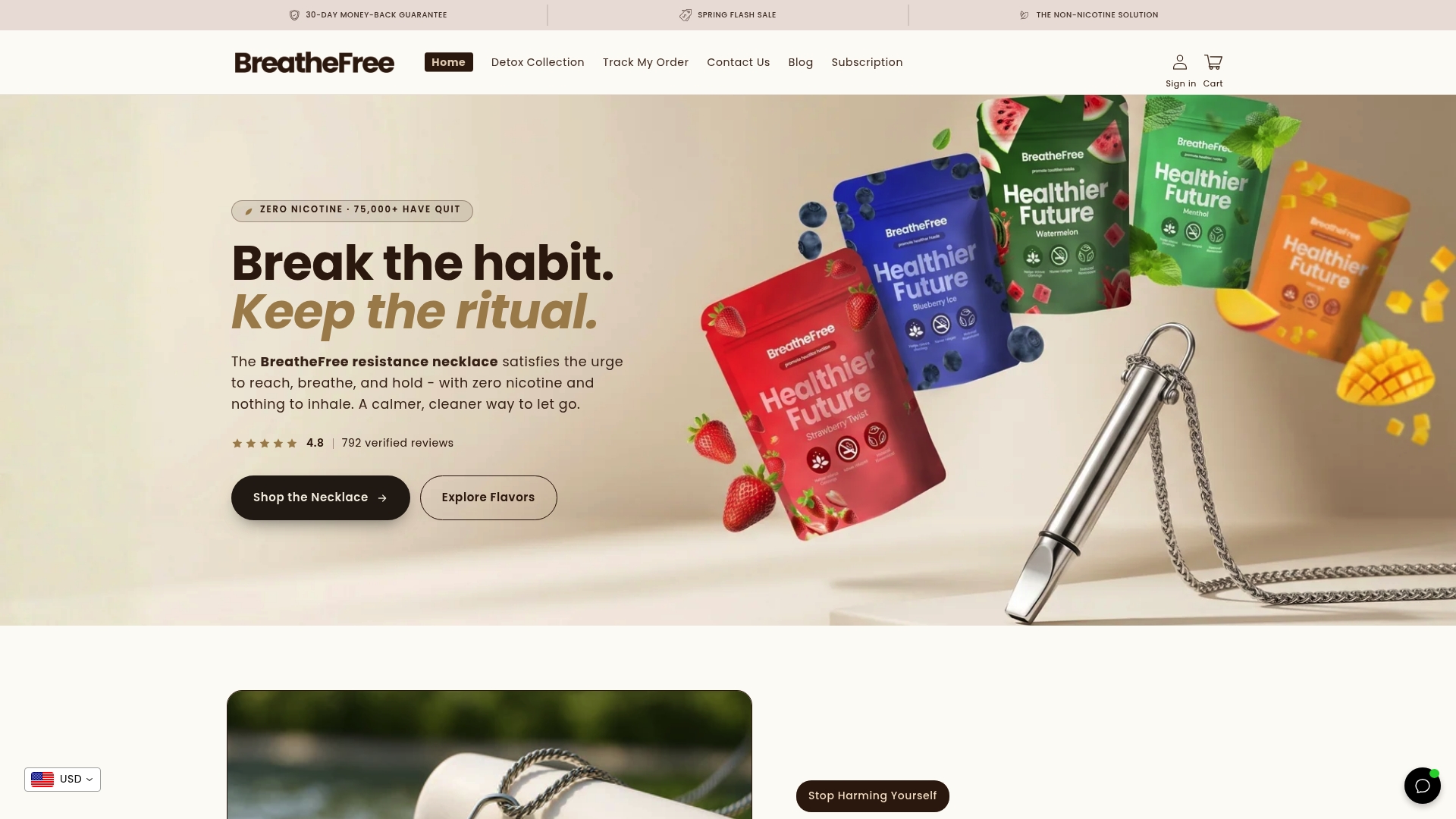
- The resistance necklace satisfies the hand-to-mouth urge without nicotine, inhalation, or chemicals.
- The Habit Tracker keeps your daily craving data visible so you know what is working.
- The community means you are not doing this alone.
Consult your healthcare provider for questions about NRT or prescription cessation medications. Download the Nicotine Detox eBook and Habit Tracker and start your first 7-day tracking window today.
Useful sources and further reading
- Smokefree.gov — Quit preparation guidance, withdrawal timelines, and free quitline access (1-800-QUIT-NOW).
- CDC: How to Quit Smoking — Clinical overview of NRT, prescription options, and counseling combinations.
- Mayo Clinic: Resisting Tobacco Cravings — Expert guidance on craving mechanics and behavioral habit management.
- Truth Initiative — Public-health research on relapse patterns and youth/adult cessation support.
- Mass.gov Quit Now — Free quit coaching by phone or online, including specialized vaping support.
- Boulder Community Health: Nicotine Alternatives — Safety review of botanical inhalers, herbal pouches, and trending alternatives.
- Breathefree Resistance Necklace — Product page for the primary oral-fixation tool.
- Breathefree Nicotine Detox eBook and Habit Tracker — Downloadable structured quit plan and daily tracker.