

CBT reduces smoking cravings by changing the thoughts and habits that drive urges, and the clinical evidence backs it up. Right now, try this: take 10 slow breaths, name what you’re feeling (“this is withdrawal, not an emergency”), and commit to a 3-minute distraction like a short walk. If cravings hit often or feel intense, pair this practice with a quitline call, a short-acting nicotine replacement, or a conversation with your doctor.
TL;DR:
- Most cravings peak within three minutes and gradually weaken, making immediate urge-surfing and distraction techniques effective for quick relief.
- Pairing cognitive reappraisal with physical substitutes like gum or fidget objects enhances the ability to resist cravings long-term.
- Frequent, short practice sessions and tracking triggers improve the durability of CBT skills, especially during the critical first week after quitting.
- Combining CBT with nicotine replacement therapy or medications yields better abstinence rates than using either method alone, particularly for heavy dependents.
- Evidence shows CBT significantly increases short-term smoking abstinence, but it works best as part of an integrated, ongoing quit plan.
Table of Contents
- How CBT Reduces Smoking Cravings: The Mechanisms That Matter
- What CBT Techniques Help in the Moment a Craving Hits?
- How to Build a CBT Practice Plan for Cravings
- Should You Combine CBT With NRT, Medication, or Quitlines?
- What Does the Research Actually Say About CBT for Smoking?
- Your CBT Toolkit: Scripts and Resources to Use Today
- Applying CBT in Real Quitting Journeys
- How BreatheFree Tools Fit Alongside CBT Practice
- Sources
- FAQ
How CBT Reduces Smoking Cravings: The Mechanisms That Matter
Cognitive behavioral therapy doesn’t make cravings disappear. It changes how your brain responds to them, and that shift happens through a few specific mechanisms.
Cognitive reappraisal targets the automatic thoughts that show up right before you reach for a cigarette. “I need this to relax” gets challenged and replaced with something closer to the truth: “My body is asking for nicotine, not solving a problem.” That single swap, done repeatedly, weakens the thought’s grip over time.
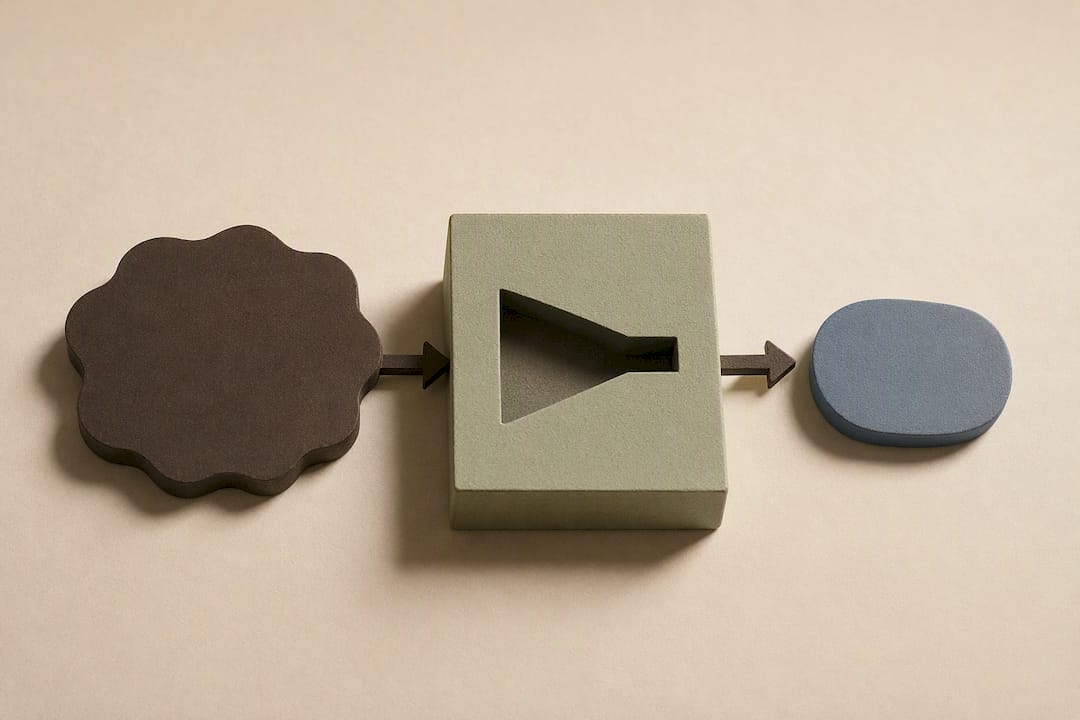
Behavioral substitution interrupts the physical routine. Smoking is a hand-to-mouth ritual wrapped around a chemical habit, so CBT pairs the cognitive work with a replacement action, whether that’s gum, a fidget object, or a specific hand movement.
Urge-surfing, a mindfulness-compatible technique, teaches you to observe a craving without acting on it. A trial comparing CBT and mindfulness-based training found that CBT strengthened reappraisal-based regulation of cravings, while mindfulness training produced more durable reductions in some measures, which suggests the two approaches work well stacked together rather than as competitors.
CBT also isn’t one-size-fits-all:
- Group CBT tends to build accountability and shared problem-solving.
- Individual CBT allows more targeted work on personal triggers.
- Digital or app-based CBT extends practice between sessions.
- Dose matters: more frequent, shorter practice sessions generally beat occasional long ones.
What CBT Techniques Help in the Moment a Craving Hits?
A craving rarely lasts as long as it feels like it will. Most peak and fade within a few minutes, and having a script ready matters more than willpower alone.
Urge-surf it. Name the sensation out loud or in your head (“tight chest, racing thoughts”), breathe slowly, and watch it build and crash like a wave. Most episodes run 3 to 10 minutes if you don’t feed them with more anxious attention.
Here’s a short sequence to run when the urge spikes:
- Pause and label. Say to yourself, “This is a craving, not an emergency.”
- Breathe for 60 seconds. Four counts in, four counts held, four counts out.
- Talk back to the thought. Use one of these three lines: “This is withdrawal, it’s temporary.” “One cigarette restarts the whole cycle.” “I’ve made it through worse than this.”
- Disrupt the pattern. Do something physical, fast, and different, like 15 squats, a brisk walk, or splashing cold water on your face.
- Occupy your mouth. Gum, a cinnamon stick, ice water, or sunflower seeds all interrupt the hand-to-mouth habit.
For cravings that feel unusually strong, Mayo Clinic recommends pairing psychological strategies with habit replacement, and a short-acting nicotine product like gum or a lozenge can take the edge off while you run the cognitive steps.
Pro Tip: Keep your three talk-back lines written on a sticky note in your wallet or as a phone lock screen. Cravings hit fast, and reading a script beats trying to remember one from memory.
How to Build a CBT Practice Plan for Cravings
CBT skills get sharper with repetition, the same way a muscle responds to consistent, small reps rather than one long workout.
Daily (10 to 15 minutes):
- Practice one urge-surfing rep, even without an active craving, to rehearse the sequence.
- Say your reappraisal talk-backs out loud once.
- Log any real triggers you noticed that day: time, place, intensity, what you did.
Weekly:
- Review your trigger log for patterns (after meals, during breaks, with coffee).
- Pick one high-risk situation and role-play your response before it happens again.
- Set an “if/then” plan: “If I finish dinner, then I chew gum for five minutes instead of stepping outside.”
Cravings are typically strongest in the first three days after quitting and generally taper off over the following weeks, which means your first week of practice is doing the heaviest lifting. Track three numbers to see progress: how often cravings hit, how intense they peak, and how many days run slip-free. A systematic review found CBT-based approaches significantly improved abstinence, with an odds ratio of 4.04 by the end of treatment, and that edge held up at three and six months, which is exactly the window this kind of daily and weekly practice is built to cover.
Should You Combine CBT With NRT, Medication, or Quitlines?
CBT works best as one piece of a broader plan, not a solo act. Combining it with medication or pharmacotherapy shows stronger results than either approach alone, particularly for people with heavy dependence or other health conditions complicating the quit attempt, according to a 2025 review on integrating CBT with pharmacological treatment.
A few practical pairings:
- Short-acting NRT (gum, lozenge) for sudden, sharp cravings.
- Long-acting NRT (the patch) for steady, baseline withdrawal symptoms throughout the day.
- Prescription options like bupropion or varenicline, discussed with your doctor if dependence is heavy.
- Free supports, including Smokefree and quitlines, both built to reinforce the same CBT skills between sessions.
If you’re weighing CBT against medication or wondering how to sequence them, a therapy-focused clinic checklist on combining CBT and medication walks through when combined care tends to outperform either alone. Talk to a clinician if you have heavy dependence, another medical condition, or questions about drug interactions before starting anything new.
What Does the Research Actually Say About CBT for Smoking?
The evidence for CBT is solid, but it comes with real limits worth knowing before you set expectations.
A systematic review and meta-analysis of CBT-based interventions found significantly higher abstinence rates among people using CBT compared to control groups, with benefits still visible at three and six months post-treatment. A separate randomized controlled trial comparing group CBT to general health education found CBT produced higher 12-month abstinence, though outcomes varied by socioeconomic status and racial or ethnic group, a reminder that no single technique works identically for everyone.
| Evidence type | Finding | Follow-up window |
|---|---|---|
| Systematic review/meta-analysis | OR 4.04 for abstinence at end of treatment | End of treatment, 3 and 6 months |
| RCT (group CBT vs. health education) | Higher 12-month abstinence with CBT | 12 months |
| ROC-T craving-regulation trial | CBT improved reappraisal-based regulation | Short-term, session-based |
The caveats matter. Many trials rely on limited follow-up windows, smaller samples than a large population study, and abstinence rates that soften without continued support after the study ends. The bottom line: CBT reliably improves short-term abstinence and gives you real tools for managing cravings, but it works best as part of a combined plan, not a one-time fix.
Your CBT Toolkit: Scripts and Resources to Use Today
Urge-surfing script: “I notice a craving. It’s in my chest and hands. I’m going to breathe through this for two minutes and watch it fade.”
Three talk-backs:
- “This is withdrawal, and withdrawal is temporary.”
- “One cigarette restarts the entire cycle.”
- “I’ve survived cravings stronger than this one.”
Trigger log fields: time and date, location, what triggered it, intensity (1 to 10), what action you took, and the result.
Quick distraction checklist: a two-minute walk, 10 pushups, cold water on your wrists, chewing gum, or calling a friend.
For deeper background on why cravings spike and fade the way they do, BreatheFree’s guide to nicotine craving triggers breaks down the pattern further, and a licensed therapist directory or your primary care provider can point you toward CBT specialists in your area.
Applying CBT in Real Quitting Journeys
Early cravings feel bigger than they are, sharp and urgent, but they pass faster than people expect once they have a script ready. Pairing that script with a physical ritual, something to hold or occupy your hands, makes the practice stick. Consistency in week one beats intensity. Small wins compound.
— Tommy
How BreatheFree Tools Fit Alongside CBT Practice
CBT gives you the mental script. What it doesn’t give you is something to hold in your hand during that 3-minute window when your fingers are used to gripping a cigarette. That’s the gap a physical tool fills, and it’s a real gap, not a marketing one.
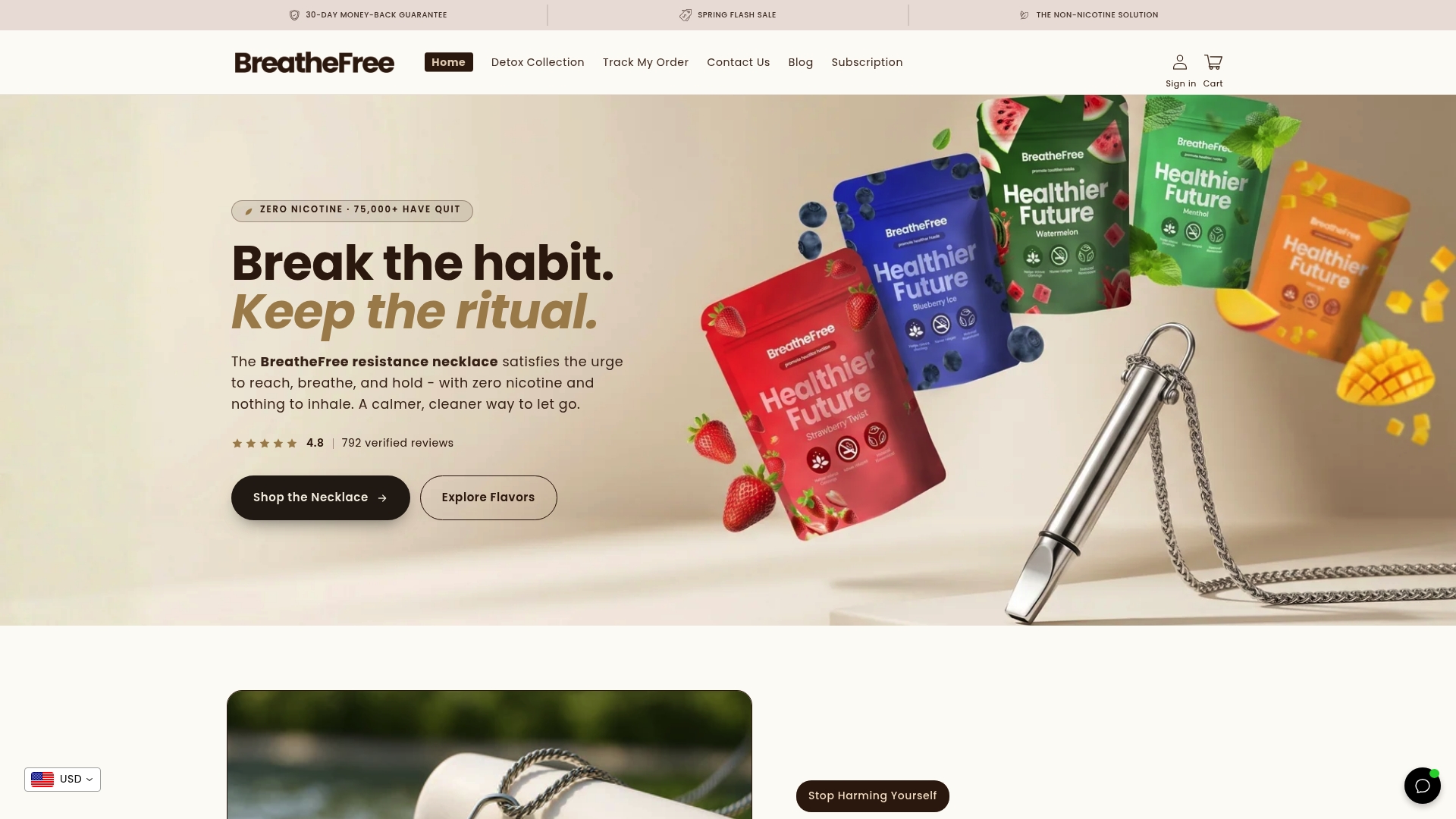
The BreatheFree Resistance Necklace gives your hands and mouth something to do during urge-surfing without introducing nicotine into the equation. It’s a habit-replacement tool, not a substitute for the cognitive work, but it removes friction from the behavioral substitution step described earlier. For readers who want structure around the daily and weekly practice plan, the Nicotine Detox eBook & Habit Tracker gives you templates for trigger logging and progress tracking instead of building your own from scratch. Browse the resistance necklace collection to see flavor and style options, and pick whichever pairs most naturally with the CBT script you’re already practicing.
Sources
- Quitting smoking: 10 ways to resist tobacco cravings - Mayo Clinic
- How to stop smoking: Dealing with cravings: MedlinePlus
- ROC-T trial comparing CBT and MBT for craving regulation
FAQ
Does CBT Actually Work for Smoking Cravings?
Yes. A systematic review and meta-analysis found CBT significantly improved abstinence rates, with an odds ratio of 4.04 at the end of treatment and continued benefits at 3 and 6 months.
How Long Do Smoking Cravings Typically Last?
Individual craving episodes usually peak and fade within 3 to 10 minutes, and overall craving intensity is strongest in the first three days after quitting, tapering over the following weeks.
Can I Use CBT Techniques Without a Therapist?
Yes. Techniques like urge-surfing, reappraisal talk-backs, and trigger logging can be self-taught and practiced daily, though a therapist or quitline can help with heavier dependence or added structure.
Should I Combine CBT With Nicotine Replacement Therapy?
Combining CBT with NRT or prescription medication generally produces stronger outcomes than either approach alone, particularly for people with heavy nicotine dependence.
What’s a Fast CBT Technique for a Craving That Hits Right Now?
Breathe for 60 seconds, say a reappraisal line like “this is withdrawal, it’s temporary,” and follow it with a physical disruptor like a short walk or 15 squats.