

Every craving to smoke or vape falls into one of four buckets: nicotine withdrawal, oral-fixation or habit, an emotional trigger, or a situational cue. The fastest way to identify craving type is a 60-second check: note when the urge started, what happened right before it, what your body feels like, and what your mouth or hands actually want. Match your answer to one action instead of fighting a vague, generic urge.
TL;DR:
- Nicotine withdrawal cravings are cyclical, intense at first but typically easing after the initial week, and may require medication if symptoms persist.
- Habit-driven urges center on oral-fixation or hand movements, lasting long after physical withdrawal subsides, and are best addressed with hands-mouth substitutes like gum or a necklace.
- Emotional triggers occur rapidly after mood changes and require grounding exercises or support calls to manage effectively.
- Situational cues are predictable, tied to specific contexts or routines, and weaken over time with avoidance or routine changes.
- Tracking cravings with simple logs helps identify recurring patterns and triggers, enabling targeted, quick-response strategies for each craving type.
Table of Contents
- What Each Craving Type Actually Feels Like
- The One-Minute Checklist to Label an Urge
- Matching the Coping Action to the Craving Type
- Track Cravings to Spot the Patterns Before They Repeat
- When a Craving Means It’s Time to Call a Clinician
- How I Coach Identification-First Coping
- A Nicotine-Free Way to Handle Habit-Driven Urges
- Sources
- FAQ
What Each Craving Type Actually Feels Like
Learning to identify craving type starts with knowing the four patterns cold, because they show up with different timing and different body signals.
Nicotine withdrawal feels physical and often shows up in waves. It’s usually worst in the initial week, peaks within the first few days, and then eases over the following weeks, according to the step-by-step guide to quitting vaping cold turkey. Expect irritability, restlessness, trouble concentrating, insomnia, or a flat, low mood that seems to come from nowhere.
Oral-fixation or habit cravings are about doing something, not feeling something. You want to hold, chew, or taste, and the urge can linger long after physical withdrawal fades, according to Smokefree. Habit urges tied to specific routines can outlast withdrawal symptoms by weeks, per an evidence-based smoking-urges program, because they’re learned behavior, not chemistry.
Emotional triggers arrive right behind a mood shift. Stress, boredom, sadness, or even a jolt of excitement can trigger the thought “a cigarette would fix this,” per the NCI. The tell is speed: the urge follows the feeling almost instantly.
Situational or cue-driven cravings are the most predictable of the four. They’re tied to a specific person, place, smell, or routine, coffee, a work break, driving, a friend who smokes, and they fade fast once you leave that context.
- Withdrawal: physical, cyclical, tied to time since your last nicotine dose.
- Habit: about the mouth and hands, not your mood or the clock.
- Emotional: fast onset, right after a feeling.
- Situational: predictable, context-bound, and weakens outside that context.
The One-Minute Checklist to Label an Urge
You don’t need a long analysis to identify craving type in the moment. You need four fast questions, answered honestly, before you act on the urge.
- When did it start? Sudden and unprompted often points to withdrawal; tied to a specific moment points elsewhere.
- What happened right before it? A meeting, an argument, a coffee, a familiar street corner. This single answer often does most of the identification work.
- What does your body feel like? Restless, foggy, or irritable leans toward withdrawal. Calm but fidgety leans toward habit.
- What do your mouth or hands want? If the answer is “something to hold or chew,” you’re looking at a habit-driven urge no matter what else is going on.
Interpret the pattern this way: timing plus physical symptoms usually means withdrawal. A pull toward your hands or mouth usually means habit. An urge that followed a mood swing in the last few minutes is emotional. An urge that shows up every time you’re in the same spot, with the same person, or after the same routine is situational, a pattern confirmed by CDC clinical guidance on tobacco cessation.
Cravings often overlap. You can feel withdrawal-driven restlessness while also craving the ritual of holding a cigarette. When that happens, pick the layer driving the immediate urge and act on it first, then address the secondary layer once the sharp edge passes.
Pro Tip: Say the label out loud, even just in your head: “This is a habit urge.” Naming it breaks the automatic reach for a cigarette and buys you the few seconds you need to choose a different action.
Matching the Coping Action to the Craving Type
Once you know which of the four types you’re dealing with, the response takes one to three minutes, not an hour of willpower.
For nicotine withdrawal, slow breathing (four seconds in, six seconds out) and a short burst of activity, stairs, a fast walk, twenty jumping jacks, calm the physical edge. If withdrawal feels intense or constant rather than wave-like, that’s a signal to talk to a clinician about medication rather than white-knuckling it alone.
For oral-fixation and habit cravings, give your mouth and hands a job. Gum, hard candy, water through a straw, or a solid object you can hold and work with your fingers all address the behavior directly, per Smokefree.gov’s trigger guidance. The trick is preparation: carry your tool of choice before the urge hits, not after.
- Withdrawal: paced breathing, brief movement, hydration.
- Habit: gum, a straw, or another hands-mouth substitute you carry daily.
- Emotional: a 3 to 5 minute grounding exercise, a short CBT-based reset, or a call to someone supportive.
- Situational: leave the setting, change the sequence (different seat, different drink), or skip alcohol in the first few weeks since it lowers resistance to cues.
Preparing one to three go-to responses per trigger type in advance, before you’re in the moment, measurably improves the odds you’ll actually use them instead of defaulting to the old habit.
Track Cravings to Spot the Patterns Before They Repeat
A printable craving tracker doesn’t need to be complicated. Five fields per entry are enough to reveal what’s really driving your urges over a week or two, based on Smokefree.gov’s tracking guidance:
- Time the craving hit
- What happened right before it
- Body sensations (restless, tired, tense, calm)
- What your mouth or hands wanted
- What you did, and whether it worked
Review the week’s entries in one ten-minute sitting rather than obsessing daily. Look for repeats: same time of day, same person, same location. If three entries all mention coffee, you’ve found a situational cue worth testing a swap on, tea for two weeks, or drinking your coffee somewhere other than your usual smoking spot. That kind of small, targeted experiment beats generalized willpower every time.
When a Craving Means It’s Time to Call a Clinician
Not every craving resolves with a breathing exercise or a piece of gum. If withdrawal symptoms are severe, constant rather than wave-like, or disrupting your sleep and ability to function, that’s past the point of self-management.
- Frequent, intense cravings that don’t ease with coping tactics
- Mood disturbance serious enough to affect work or relationships
- Insomnia lasting more than a few nights
- A sense that you can’t function without nicotine
Counseling combined with medication gives you the best odds of quitting for good, according to CDC guidance on tobacco cessation. Nicotine replacement therapy, bupropion, and varenicline treat the withdrawal itself; non-nicotine tools handle the habit and ritual side. Call a quitline, book a clinician visit, or ask about short-acting NRT for breakthrough cravings under medical guidance. These options work alongside each other, not instead of one another.
How I Coach Identification-First Coping
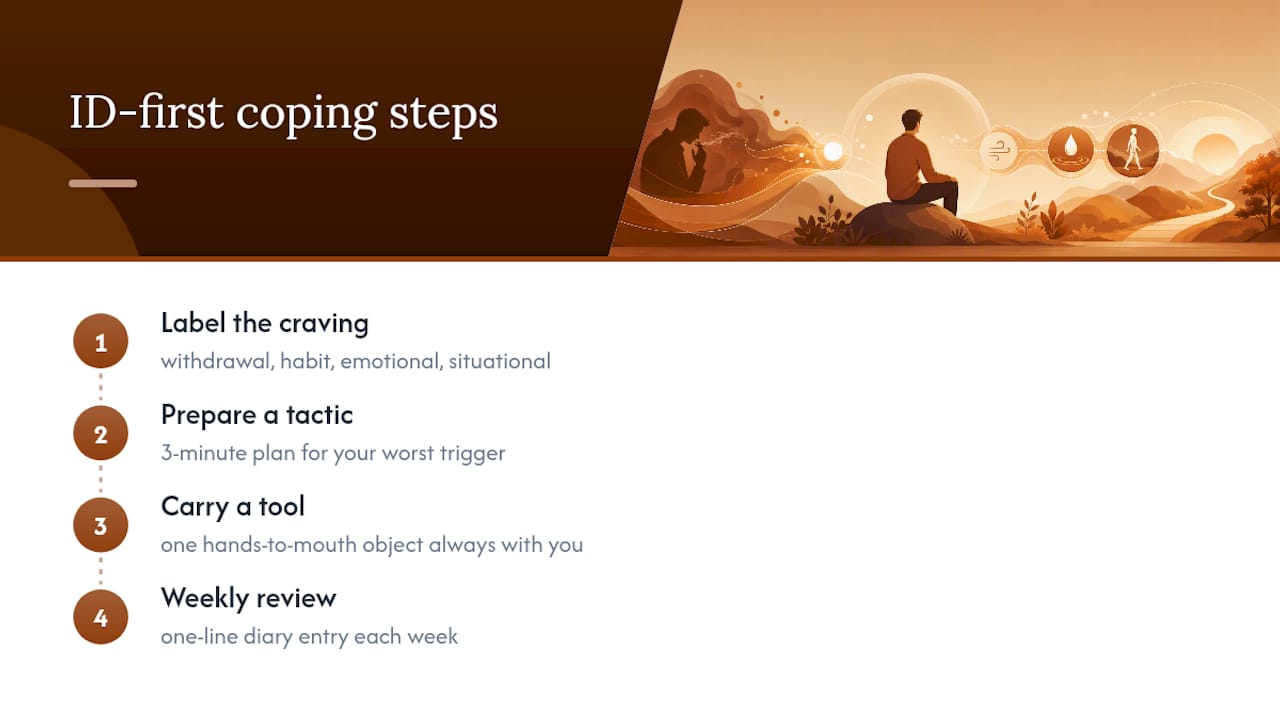
Most people treat every craving as one giant, unbeatable urge. That’s the mistake. Labeling it first, withdrawal, habit, emotional, or situational, turns a vague crisis into a specific, solvable problem, and that shift alone reduces the odds of an automatic relapse.
I tell people to keep it simple: prepare a three-minute tactic for your worst trigger, carry one hands-mouth object everywhere, and review a one-line diary at the end of each week. That’s the whole system. Complexity is what kills quit attempts, not lack of willpower.
— Tommy
A Nicotine-Free Way to Handle Habit-Driven Urges
If your checklist keeps pointing to habit rather than withdrawal, your hands and mouth are asking for a job, not a chemical fix. The Breathefree resistance necklace gives you something solid to hold and work with your fingers, paired with flavor refills that recreate the ritual of tasting something without any nicotine or inhalation involved.
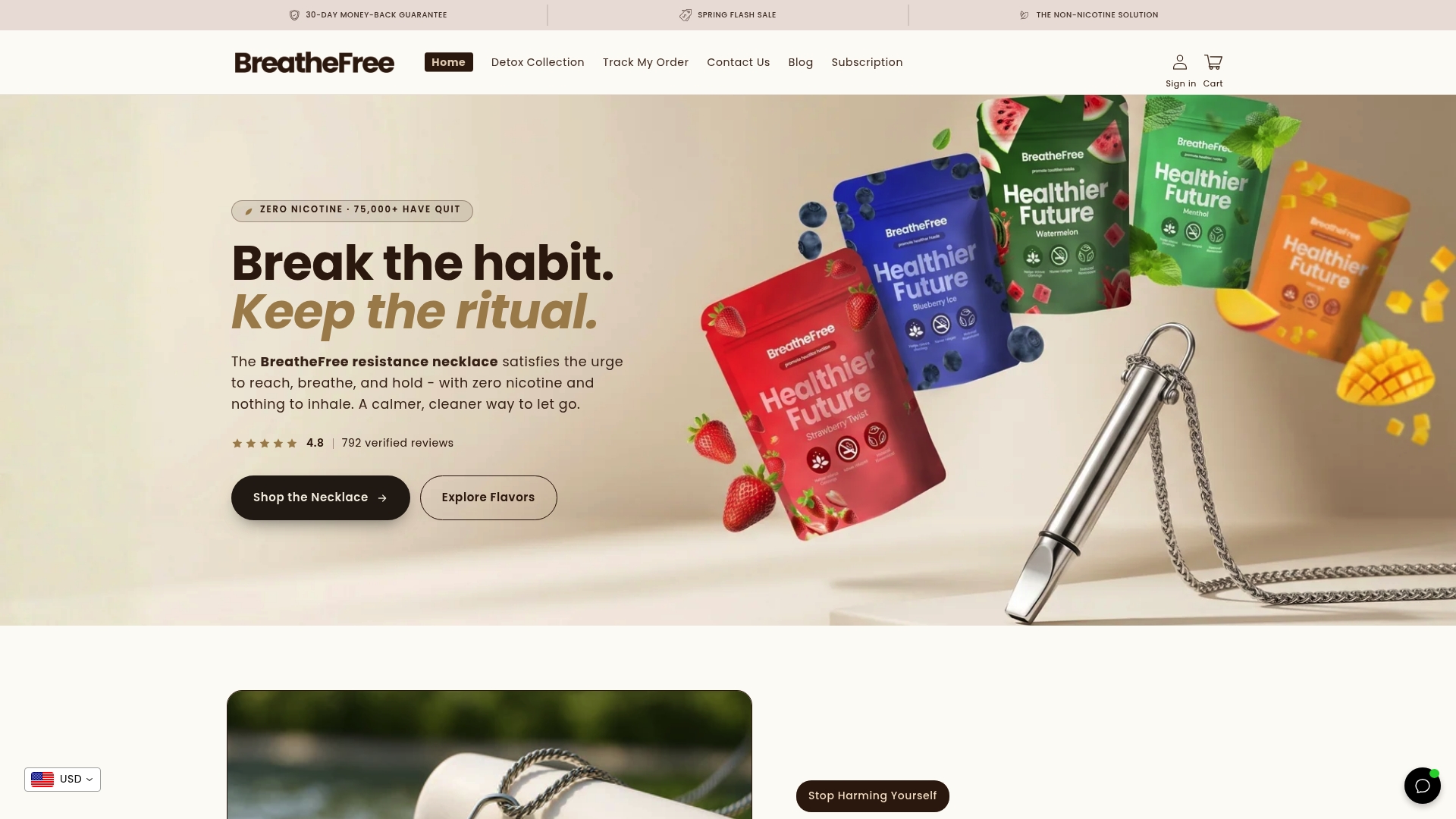
It’s built for the habit and ritual layer of quitting, not for withdrawal itself. If your cravings are severe or constant, that’s a conversation for a clinician about medication, and Breathefree fits alongside that plan rather than replacing it. Browse the full collection or set up the subscription if you want refills to arrive automatically while you work through the first few tough months.
This article is general information, not a substitute for advice from a qualified doctor. Consult a qualified healthcare professional about your own circumstances before acting on anything here.
Sources
FAQ
How long does it take to identify craving type accurately?
Most people can label a craving in under a minute once they know the four questions to ask: timing, preceding event, body sensations, and what the mouth or hands want. It gets faster with practice as you start recognizing your own patterns.
Can a craving be more than one type at once?
Yes, cravings often overlap, especially withdrawal and habit in the first few weeks. Pick the layer driving the immediate urge, act on it, then address the secondary layer once the first one settles.
Do non-nicotine tools like Breathefree replace medication for withdrawal?
No. Tools like the Breathefree resistance necklace address oral-fixation and habit cravings, not the physical chemistry of nicotine withdrawal. Counseling combined with medication remains the more effective route for withdrawal itself.
How long do situational cravings keep coming back?
Situational cues can persist for weeks or months because they’re learned associations, but they consistently weaken with repeated smoke-free exposure to the same context, according to an evidence-based behavior-change program. Each time you get through the cue without smoking, it loses a little more pull.
What’s the fastest way to start tracking my cravings?
Log five things per entry: time, what happened before, body sensations, what your mouth or hands wanted, and what helped. A short weekly review of those entries usually reveals your top one or two triggers within two weeks.