

Holiday smoking triggers are the specific people, places, routines and moods tied to seasonal celebrations that spark an urge to light up, from a cocktail in hand at a party to a stressful family dinner. The single most useful thing you can do right now is name your top two or three triggers and pick one coping tactic you can use the moment a craving hits. Most urges fade within minutes, so a short plan goes a long way.
TL;DR:
- Screen for emotional states, routines, social situations, and withdrawal, then use HALT to check whether hunger, anger, loneliness, or fatigue may heighten risk.
- Alcohol lowers inhibition, while smoking areas, post dinner routines, travel delays, and lost sleep can revive urges; set drink limits and plan for idle time.
- Physical withdrawal often peaks within the first few days to two weeks after quitting, while familiar places and routines may trigger cravings long afterward.
- Cravings often pass within minutes; slow breathing, a brief walk, water, or gum can occupy the short window until the urge fades.
- When physical withdrawal feels unmanageable, a quitline or pharmacist can discuss support and medication options to ease symptoms during a stressful week.
Table of Contents
- Common Trigger Categories and How to Screen Your Own
- Holiday Situations That Raise Your Risk
- Why Cravings Surge: Withdrawal Versus Habit
- A 5-Step Plan for Surviving Holiday Events Smoke-Free
- Quick Tactics and Scripts for the Moment a Craving Hits
- A Few Honest Words About Getting Through the Holidays
- A Discreet, Nicotine-Free Tool for Holiday Cravings
- FAQ
- Sources
Common Trigger Categories and How to Screen Your Own
Smoking urges usually fall into a few recognizable buckets. Emotional triggers are feelings like stress, grief or excitement that spike around family gatherings. Pattern triggers are routines, like a smoke break after a big meal or a cigarette with coffee. Social triggers involve other people smoking, drinking or offering you a cigarette. Withdrawal triggers are the physical pull that shows up regardless of situation, especially in the early weeks of quitting. This four-part framework comes from a categorized trigger model used in cessation planning, and anticipating each type ahead of time lowers risk.

A quick way to screen yourself before any holiday event is the HALT check, a tool that groups triggers by hunger, anger, loneliness and fatigue, four states that commonly precede a craving.
Before your next gathering, run through this self-audit:
- Am I hungry, angry, lonely or tired right now?
- Which two or three situations tonight are most likely to tempt me?
- What triggered my last slip, and will it show up again tonight?
- Who in the room might offer me a cigarette or light one near me?
Holiday Situations That Raise Your Risk
Travel days, packed schedules and lost sleep all strain your usual coping routine, which is exactly when old habits resurface. Add a party with a bar cart, a smoke break by the back door, or a tense conversation with a relative, and the risk compounds fast.
Watch for these predictable moments:
- Toasts and drinks, since alcohol lowers inhibition and is tightly linked to relapse.
- Group smoke breaks or outdoor smoking areas at parties.
- Sensory cues like coffee after dinner or a dessert table that mirrors an old after-meal ritual.
- Long car rides or layovers with nothing to do.
Pick one or two defenses per scenario. At a party, choose your seat away from the smoking area and set a personal drink limit. On travel days, build a short arrival plan so you’re not standing around bored the moment you land.
Pro Tip: Decide your exit line before the party starts, something like “I’m stepping out for air,” so you’re not improvising under pressure.
Why Cravings Surge: Withdrawal Versus Habit
Two different forces drive holiday urges. Physiological withdrawal follows a fairly predictable path, with symptoms typically peaking in the first few days to two weeks after quitting and then easing over the following weeks, according to the National Cancer Institute’s withdrawal fact sheet.
Habit-based triggers work differently. They’re tied to specific memories and environments, like your in-laws’ porch or a particular song, and can resurface long after withdrawal symptoms are gone. The good news is that intense cravings, whatever their source, tend to pass within a few minutes once you distract yourself, according to the CDC’s quit-smoking guidance. Knowing which kind of urge you’re facing helps you choose the right response.
A 5-Step Plan for Surviving Holiday Events Smoke-Free
A little preparation beats willpower alone. Before any major gathering, work through this checklist:
- Identify your top two or three triggers for this specific event.
- Choose two coping tactics you’ll actually use, not just ones that sound good.
- Tell one person, a partner, sibling or friend, that you’re staying smoke-free tonight.
- Set a boundary in advance, like skipping the smoking patio or limiting drinks.
- Pack a support item, whether that’s gum, a water bottle or an oral substitute.
In the moment, a few behavioral tactics do most of the work:
- Slow breathing for sixty seconds to blunt the urge.
- A short walk around the block or the yard.
- A glass of water, which gives your hands and mouth something to do.
- Gum, a hard candy or another oral tool to replace the habit of holding something.
The CDC notes that engaging in a distracting or calming activity often lets a craving pass within minutes, and Smokefree points to the same short list of tools: gum, lozenges, brief exercise, and a plan you’ve rehearsed ahead of time.
A quick fact worth remembering: acute cravings are brief, with relief often arriving within minutes of a distraction, per Smokefree.gov. That’s a short window to get through, not an all-night battle.
If cravings feel unmanageable, pharmacologic aids and quitlines are built for exactly this moment. Calling a quitline or talking with a pharmacist about medication options can make the physical side of withdrawal easier during a high-stress week.
Quick Tactics and Scripts for the Moment a Craving Hits
When an urge shows up at a party or in the car, you need something fast, not a long strategy. Try any of these for under three minutes:
- Step outside for fresh air, away from the smoking area.
- Chew gum or suck on a hard candy.
- Hold something in your hands, like a phone, a drink or a fidget object.
- Take ten slow breaths, in for four counts, out for six.
- Text your accountability person.
- Drink a full glass of water.
- Walk to another room or around the block.
- Snap a rubber band or press a stress ball.
- Reread your reasons for quitting on your phone.
- Remind yourself the urge will pass in a few minutes.
If someone offers you a cigarette, a short script helps: “No thanks, I’m done with those” or “I’m good, just stepping outside for a minute.” For long drives or flights, pack gum, a playlist and a snack so boredom doesn’t become the trigger it used to be.
A Few Honest Words About Getting Through the Holidays
Holidays stack stress, travel and old habits all at once, so a slip doesn’t erase your progress. Pick one trigger, one tactic, and try it at your next event. Small, specific steps beat a perfect plan you never use.
— Tommy
A Discreet, Nicotine-Free Tool for Holiday Cravings
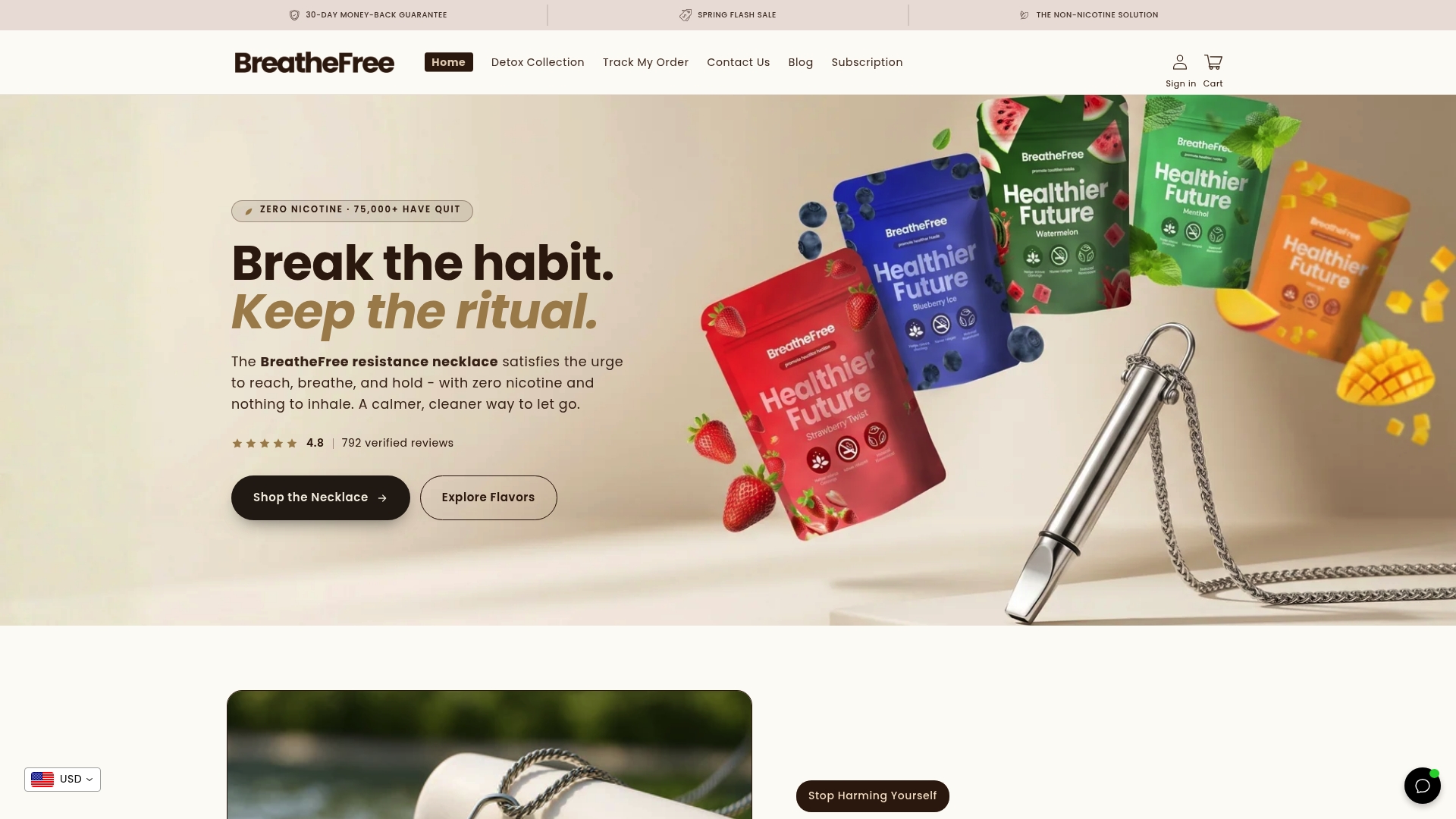
Keeping your hands and mouth occupied is one of the simplest ways to get through a craving, and that’s the idea behind our BreatheFree Resistance Necklace. It’s built around oral fixation, the same instinct that makes gum or a toothpick useful, but as a solid, plant-fiber piece you can wear at a party, on a flight or at the office without anyone noticing.
- It’s completely nicotine and chemical free.
- Natural flavor refills let you customize the ritual.
- A support community backs the product.
- Every order carries a money-back guarantee.
If you want a physical tool for your holiday toolkit, browse the resistance necklace and flavor refills or check out the subscription option for ongoing refills.
This article is general information, not a substitute for advice from a qualified doctor. Consult a qualified healthcare professional about your own circumstances before acting on anything here.
FAQ
What happens three days after quitting smoking?
Around the third day, many people are deep into physical withdrawal, since symptoms often peak within the first few days to two weeks after quitting, according to the National Cancer Institute. Irritability, trouble concentrating and strong cravings are common during this window, and they typically ease as the following weeks pass.
Can nicotine help with anxiety?
Nicotine can create a brief feeling of calm, but that relief is tied to temporarily relieving withdrawal rather than treating anxiety itself. Relying on it tends to reinforce the addiction cycle, so working with a doctor on anxiety and quitting together usually works better than using nicotine as a coping tool.
What are some common triggers for smokers?
Common triggers fall into a few groups: emotional states, routines or patterns, social situations, and physical withdrawal, as outlined in a categorized trigger framework. Hunger, anger, loneliness and tiredness, the HALT checklist, are a fast way to screen for risk in any moment.
How long do smoking cravings usually last?
Most intense cravings pass within a few minutes once you distract yourself with an activity, a point confirmed by Smokefree.gov. Having a short list of go-to tactics, like a walk, water or gum, makes that window easier to get through.