

When a craving hits at your desk, reach for a nicotine-free oral-fixation tool, like gum, a lozenge, or a ritual object, and pair it with one quick micro-action: 10 slow breaths or a two-minute walk. Cravings feel urgent but they are temporary, and the tool addresses the hand-to-mouth ritual driving the urge. Combine it with workplace supports for the best shot at quitting for good.
TL;DR:
- Keeping a discreet oral-fixation tool, such as gum, lozenge, or a ritual object, close at hand helps manage cravings triggered by specific work routines or stress.
- Slow breathing, walking, or task-switching techniques effectively interrupt the craving cycle within minutes, especially when paired with a prepared if-then plan for common triggers.
- Using a nicotine-free ritual object like BreatheFree’s necklace supports breaking the hand-to-mouth habit but should be complemented with counseling or medication for severe dependence.
- Workplace support programs, including counseling and quitlines, increase the likelihood of success when combined with consistent use of craving management strategies.
- Testing your chosen tool during low-pressure moments ensures familiarity and confidence to rely on it during actual cravings in meetings or stressful situations.
Table of Contents
- Quick tactics to stop a craving in the moment
- Discreet nicotine-free oral-fixation options that work at work
- Build a short if-then plan for predictable work triggers
- Use workplace supports and know when to seek extra help
- Why ritual aids help and where BreatheFree fits
- A workday with a discreet tool in hand
- BreatheFree option: what it includes and why it fits a workday quit plan
- Sources
- FAQ
Quick tactics to stop a craving in the moment
Most work cravings peak and fade within a few minutes, so the goal is to interrupt the automatic sequence before it builds, according to Smokefree. Here is a prioritized sequence to run through when an urge strikes at your desk:
- Put something in your mouth: sugar-free gum, a hard candy, or a nicotine-free oral tool.
- Take 10 slow breaths, in through the nose and out through the mouth.
- Sip cold water or a small crunchy snack like carrot sticks.
- Stand up and walk for one to three minutes, even just to the restroom and back.
- Switch tasks or text a supporter to break the mental loop.
Each step works differently. Keeping your mouth busy replaces the physical ritual of smoking or vaping. Slow breathing calms the nervous system’s stress response, which often spikes during a craving. Walking and task-switching give your brain something new to focus on instead of the loop of wanting a cigarette.
A few office-specific swaps help here too. Keep a small tin of hard candy in your desk drawer rather than a bag that rattles during meetings. If you liked the sensation of drawing on a straw, try sipping iced coffee or water through one. Avoid using alcohol as a substitute stress reliever during work hours, and resist the urge to sneak a real cigarette “just this once”: that resets the cue instead of breaking it, according to Smokefree.gov’s guidance on managing cravings.

Pro Tip: Keep your go-to tool in the same spot every day, desk drawer, jacket pocket, or bag pouch, so you never have to think about where it is when a craving hits.
Discreet nicotine-free oral-fixation options that work at work
The right tool depends on your workday. Some people need something they can chew through a stressful call; others just need something to hold. A few categories cover most cases:
- Sugar-free gum or lozenges: cheap, easy to find, and socially unremarkable in almost any office setting.
- Hard candy: slower to consume than gum, useful for long stretches like back-to-back meetings.
- Flavored non-nicotine inhalers or aroma sticks: mimic the hand-to-mouth motion without any chewing.
- Oral ritual objects, like a resistance necklace or a fidget ring, for people whose craving is more about handling something than tasting it.
Each comes with trade-offs. Gum wrappers crinkle in quiet meetings, candy can be a choking hazard on the go, and strong scents from aroma sticks may bother coworkers in shared spaces. Anything you carry should be easy to refill or replace without breaking your routine, since running out mid-shift often triggers exactly the craving you were trying to avoid. For people who prefer a subtler, reusable option, this is where a resistance necklace and flavor refills fit: BreatheFree’s product is a solid, plant-fiber necklace built around the same oral-fixation principle as gum or candy, but without wrappers, sugar, or refill runs to the vending machine. It is nicotine-free, low-scent, and designed to be worn through flights, meetings, and desk work alike.
Pro Tip: Test your discreet tool during a low-stakes moment, like a solo commute, before relying on it during a high-pressure meeting.
Build a short if-then plan for predictable work triggers
Cravings at work rarely come out of nowhere. They cluster around a handful of repeatable moments: the coffee run, the mid-morning break, a stressful phone call, or the walk to your car. Smokefree.gov’s quit-planning guidance recommends identifying your top triggers first, then assigning a specific replacement action to each one before the craving hits.
Start by listing your three to five most predictable work triggers. For each, write a simple if-then pairing:
- If I pour coffee, then I chew gum and walk back to my desk slowly.
- If I take my usual break, then I step outside without my phone and take 10 slow breaths.
- If a call gets stressful, then I hold my ritual object and sip water until it ends.
- If I finish a deadline, then I text a supporter instead of stepping out for a smoke.
To make these automatic, keep the tool itself physically close to where the trigger happens: gum in the same drawer as your coffee mug, a necklace already on before your commute. A few practical habits help lock in the pattern:
- Set a recurring phone reminder for your highest-risk time of day.
- Practice the pairing for at least a week before judging whether it works.
- Adjust the replacement action if the first one feels forced rather than natural.
Repetition matters more than perfection. The same trigger-awareness approach that works for cigarette cravings applies to vaping urges too, though vaping quitters should expect to fine-tune their own trigger list rather than copy someone else’s.
Use workplace supports and know when to seek extra help
A discreet tool handles the moment, but it works best alongside real cessation support. CDC and NIOSH workplace guidance recommends pairing smoke-free policies with counseling, quitlines, digital programs, and medication when appropriate, rather than expecting employees to manage cravings alone.
A few concrete steps make this practical:
- Ask HR whether your health benefits cover cessation counseling or nicotine replacement therapy.
- Call your state quitline or sign up for SmokefreeTXT for ongoing text-based support.
- Talk to a healthcare provider if withdrawal symptoms feel severe or unmanageable, since Smokefree.gov notes that prescription options exist for tougher cases.
- Loop in a trusted coworker as an accountability partner for rough days.
One ethical line matters here: a discreet tool should support your quit attempt, not help you hide continued smoking or vaping from your employer or colleagues. Use it as a replacement for the habit, not a cover for it.
Why ritual aids help and where BreatheFree fits
The hand-to-mouth motion and the act of handling something are often as habit-forming as the nicotine itself, and a nicotine-free ritual object can reduce the intensity of that behavioral cue, even though it does nothing to ease nicotine withdrawal itself. That distinction matters: ritual aids treat the habit, medication treats the dependence.
BreatheFree’s resistance necklace and flavor refills are built around this exact idea, giving your hands and mouth something to do without introducing nicotine or chemicals. The brand also points to a community of support and mentions a sizable base of users who have used the method to quit. Ritual aids like this work best as one piece of a larger plan that includes counseling or medication when withdrawal symptoms are severe.

A workday with a discreet tool in hand
My mornings start with the necklace already on before coffee, since that first cup was always my trigger. Mid-morning, when the itch creeps in during a slow meeting, I hold it under the table rather than reach for my phone. Nobody has ever asked about it in a group setting; it just looks like jewelry. Afternoons are harder, so I keep a flavor refill in my bag for when the scent fades. By evening, I check in with myself: did I make it through without a real cigarette? Most days, yes. For more on the psychology behind these urges, I’ve written separately about urge surfing techniques.
— Tommy
BreatheFree option: what it includes and why it fits a workday quit plan
If you want a single tool that covers the whole workday without wrappers, refills at the vending machine, or awkward looks in meetings, the BreatheFree Resistance Necklace and Flavor Refills are built for exactly that. Here’s what’s included:
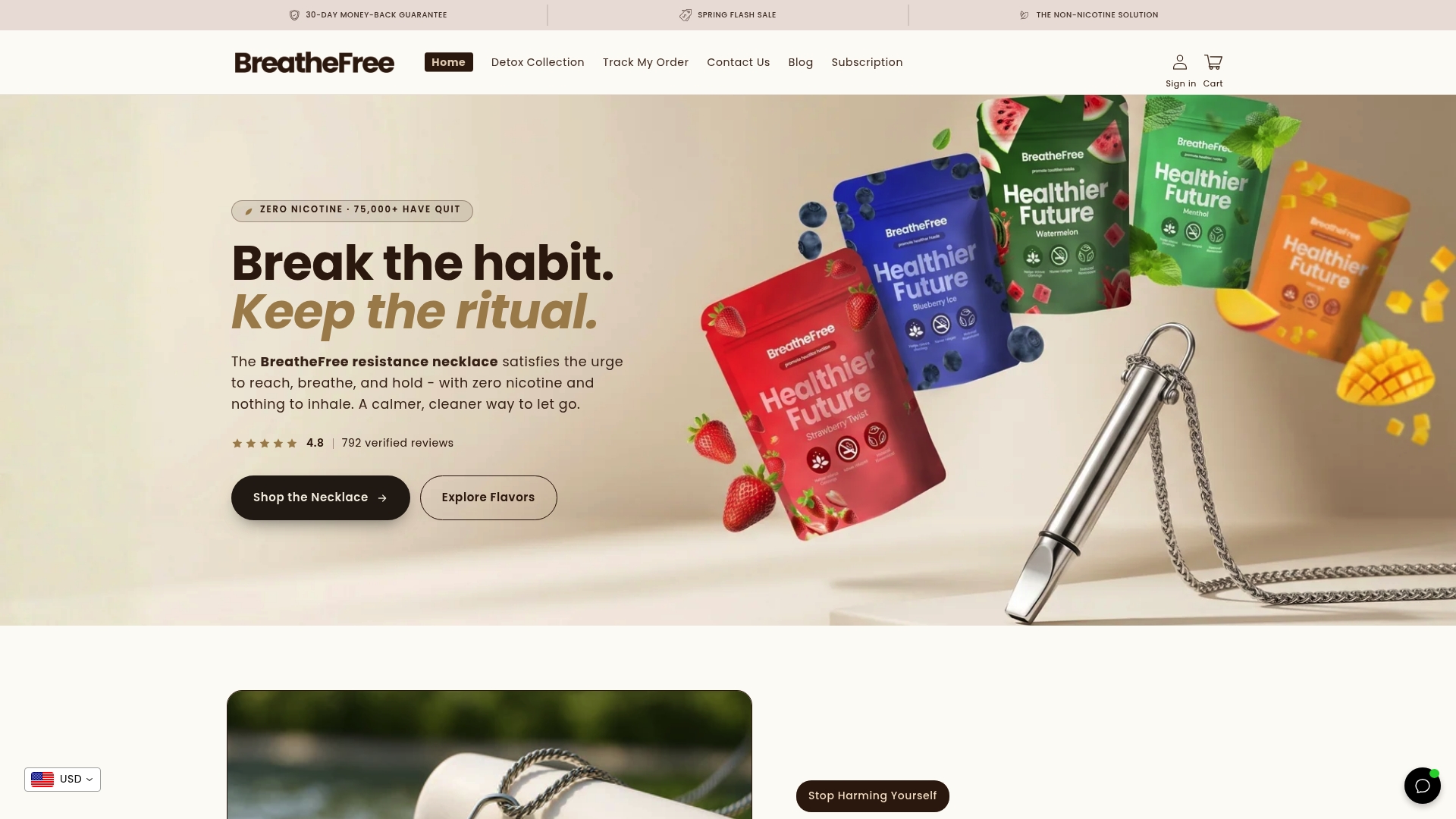
- BreatheFree Resistance Necklace, a solid, plant-fiber design that’s discreet enough for flights, offices, and meetings.
- Flavor Refills, so you can switch scents without buying a new necklace.
- A Subscription option for ongoing refills, plus access to a support community and a money-back guarantee if it isn’t the right fit.
It’s nicotine-free, chemical-free, and made to handle a full workday of coffee breaks, stressful calls, and quiet meetings alike. Pair it with counseling or a quitline for the strongest results, and check out the full collection to get started.
This article is general information, not a substitute for advice from a qualified doctor. Consult a qualified healthcare professional about your own circumstances before acting on anything here.
Sources
FAQ
How long do work cravings typically last?
Cravings usually peak and pass within a few minutes, though the worst withdrawal symptoms generally last a few days to a couple of weeks. Cravings can resurface later when a specific trigger appears, even after the initial withdrawal period ends.
What’s the fastest way to stop a craving at my desk?
Keep your mouth busy with gum, a lozenge, or a nicotine-free oral tool, then take 10 slow breaths or stand and walk for a minute or two, following Smokefree.gov’s recommended tactics. Doing this consistently helps rewire the automatic urge into a shorter, more manageable moment.
Can a nicotine-free tool really replace smoking during work hours?
A nicotine-free ritual object can ease the behavioral cue of hand-to-mouth motion, but it does not treat nicotine dependence itself, so pairing it with counseling or medication works best for tougher cravings. Products like the BreatheFree Resistance Necklace are designed for this supportive role rather than as a standalone treatment.
Should I tell my employer I’m trying to quit?
Many workplaces offer cessation benefits, so it’s worth asking HR about available programs, since CDC and NIOSH guidance recommends employers provide counseling and quitline access. You don’t have to disclose anything you’re uncomfortable sharing, but knowing your benefits can make quitting easier.
What should I do if cravings get worse during a deadline?
High-pressure moments often intensify cravings, so lean harder on your planned if-then response, whether that’s your oral tool, a short walk, or a quick text to a support person. If cravings remain intense despite these steps, a healthcare provider can discuss additional options like medication.