

Quitting is the single most effective lung detox you can give your body. Your lungs start healing within hours of your last cigarette, and no tea, supplement, or vitamin has solid evidence or FDA approval for clearing lung damage faster. What helps instead: avoiding re-exposure to smoke, breathing exercises, regular movement, and staying current with your clinician and vaccines.
TL;DR:
- Carbon monoxide levels fall within 12 to 24 hours; airway cilia begin regenerating within a week, while measurable lung function gains emerge over 1 to 3 months.
- Drink water steadily, avoid secondhand smoke, vaping aerosol, and indoor pollutants, walk briskly most days, and keep recommended vaccines current.
- Pursed lip breathing and controlled huff coughing can help move mucus; chest percussion, postural drainage, and saline nebulization require professional instruction.
- Seek immediate care for chest pain, coughing up blood, or severe shortness of breath; ask about lung function testing if breathlessness persists for months.
- Commercial detox teas, supplements, and inhaled oils lack evidence and regulatory approval for reversing smoking damage, so avoid claims promising rapid lung cleansing.
Table of Contents
- Practical Steps to Support Your Lungs Right Now
- What Happens to Your Lungs, Week by Week
- Airway-Clearance Techniques You Can Do at Home
- Diet, Movement, and Sleep That Back Up Your Recovery
- When to See a Clinician, and What Screening to Ask About
- Commercial “Lung Detox” Products Worth Skipping
- A Note From Someone Who Gets It
- A Non-Nicotine Option for Oral Cravings
- FAQ
- Sources
Practical Steps to Support Your Lungs Right Now
Your body already knows how to repair itself once you stop smoking. The job now is removing obstacles and giving your lungs what they need to do that work.
Staying hydrated thins mucus so your airways can clear it more easily, which matters most in the first weeks when coughing tends to increase. Avoiding secondhand smoke, vaping aerosol, and heavy indoor pollutants (candles, harsh cleaning sprays, wildfire smoke) prevents new irritation while your airways are already working overtime.
- Drink water consistently through the day rather than large amounts at once.
- Walk briskly, swim, or do light cardio most days to expand lung capacity.
- Singing or humming for a few minutes daily exercises your diaphragm and breath control.
- Keep flu, COVID, and pneumonia vaccinations current, since damaged airways are more vulnerable to infection.
Pro Tip: Pair a new habit with one you already have, like drinking a glass of water every time you brush your teeth, so it sticks without extra willpower.
What Happens to Your Lungs, Week by Week
Recovery follows a fairly predictable arc, though your personal timeline depends on how long and how heavily you smoked.
- 12 to 24 hours: Carbon monoxide levels in your blood drop and oxygen delivery improves, according to the CDC’s summary of quitting benefits.
- 1 to 7 days: The tiny hairlike cilia lining your airways start regenerating, which is why coughing often increases as your lungs physically push out trapped mucus, a normal sign of healing noted by the Mayo Clinic.
- 1 to 3 months: Lung function measurably improves and shortness of breath eases, per the same CDC data.
- 6 months to a year and beyond: Mucus clearance keeps improving, heart disease risk continues to fall, and lung cancer risk drops significantly over 10 to 15 years after quitting, according to the CDC.
Someone who smoked two packs a day for twenty years will likely see a slower curve than someone who quit after five years, but the direction is the same for everyone: steady improvement.
Airway-Clearance Techniques You Can Do at Home
Pulmonary hygiene is the clinical term for techniques that help clear mucus and improve breathing, and several of them are safe to practice on your own once you understand the basics, according to the Cleveland Clinic.
- Diaphragmatic breathing: Breathe deeply into your belly rather than your chest, hold briefly, then exhale slowly.
- Pursed-lip breathing: Inhale through your nose, then exhale slowly through pursed lips to keep airways open longer.
- Huff cough: Take a breath, hold it briefly, then use a controlled abdominal push to exhale through an open mouth, a technique that’s often gentler and more effective than forceful coughing for moving lower-airway mucus, per Cleveland Clinic guidance.
- Incentive spirometry: Use a simple handheld device to practice slow, full breaths if your clinician has prescribed one.
Postural drainage, chest percussion, and nebulized saline go further and generally need instruction from a respiratory therapist, who typically times sessions around meals and avoids practice within 60 to 90 minutes of eating.
Pro Tip: Start with five minutes of pursed-lip breathing twice a day and build from there rather than trying every technique at once.

Diet, Movement, and Sleep That Back Up Your Recovery
Food and fitness won’t repair lung tissue directly, but they create conditions where healing happens faster.
- Diets higher in fruit and tomatoes are linked to a slower decline in lung function among ex-smokers in observational research, with modest but consistent effects.
- Regular aerobic activity, even brisk walking most days, builds the capacity your lungs lost and helps mobilize mucus.
- Prioritizing consistent sleep and lowering stress helps keep inflammation in check while your airways recover.
- A realistic daily target: a piece of fruit at breakfast, a 20-minute walk, and a consistent bedtime.
When to See a Clinician, and What Screening to Ask About
Most recovery happens on its own, but certain symptoms deserve prompt attention rather than a wait-and-see approach.
- Seek care immediately for chest pain, coughing up blood, or severe shortness of breath.
- Schedule a routine check-in with your primary care provider to discuss your quit date and any lingering cough.
- Ask about pulmonary function testing if breathlessness persists beyond a few months.
- Discuss low-dose CT lung cancer screening eligibility if you have a significant smoking history, since criteria depend on age and pack-years.
Bring a simple list to your appointment: how long you smoked, when you quit, and what symptoms have changed since.
Commercial “Lung Detox” Products Worth Skipping
Most marketed lung detox teas, supplements, and inhaled oils lack clinical evidence and are not FDA-approved to clear lung damage, according to the American Lung Association. Your lungs are largely self-cleaning once you remove the source of damage, which is exactly what quitting does.
- Grandiose claims like “clear your lungs in 3 days” are a red flag.
- Heavy use of the word “detox” without naming a mechanism usually signals marketing, not medicine.
- No cited clinical studies or safety data means no real evidence behind the claim.
- Zero commercial lung-cleanse products have regulatory approval for reversing smoking-related lung damage, per the American Lung Association.
Safer, evidence-aligned choices: staying smoke free, keeping vaccines current, practicing the breathing techniques above, and following up with your clinician.
A Note From Someone Who Gets It
If your cough feels worse a week after quitting, that’s usually your lungs clearing years of buildup, not a setback. The itch to hold something in your hand or mouth is real too, and it fades slower than people expect. Breathing exercises help with the physical side; patience helps with the rest.
— Tommy
A Non-Nicotine Option for Oral Cravings
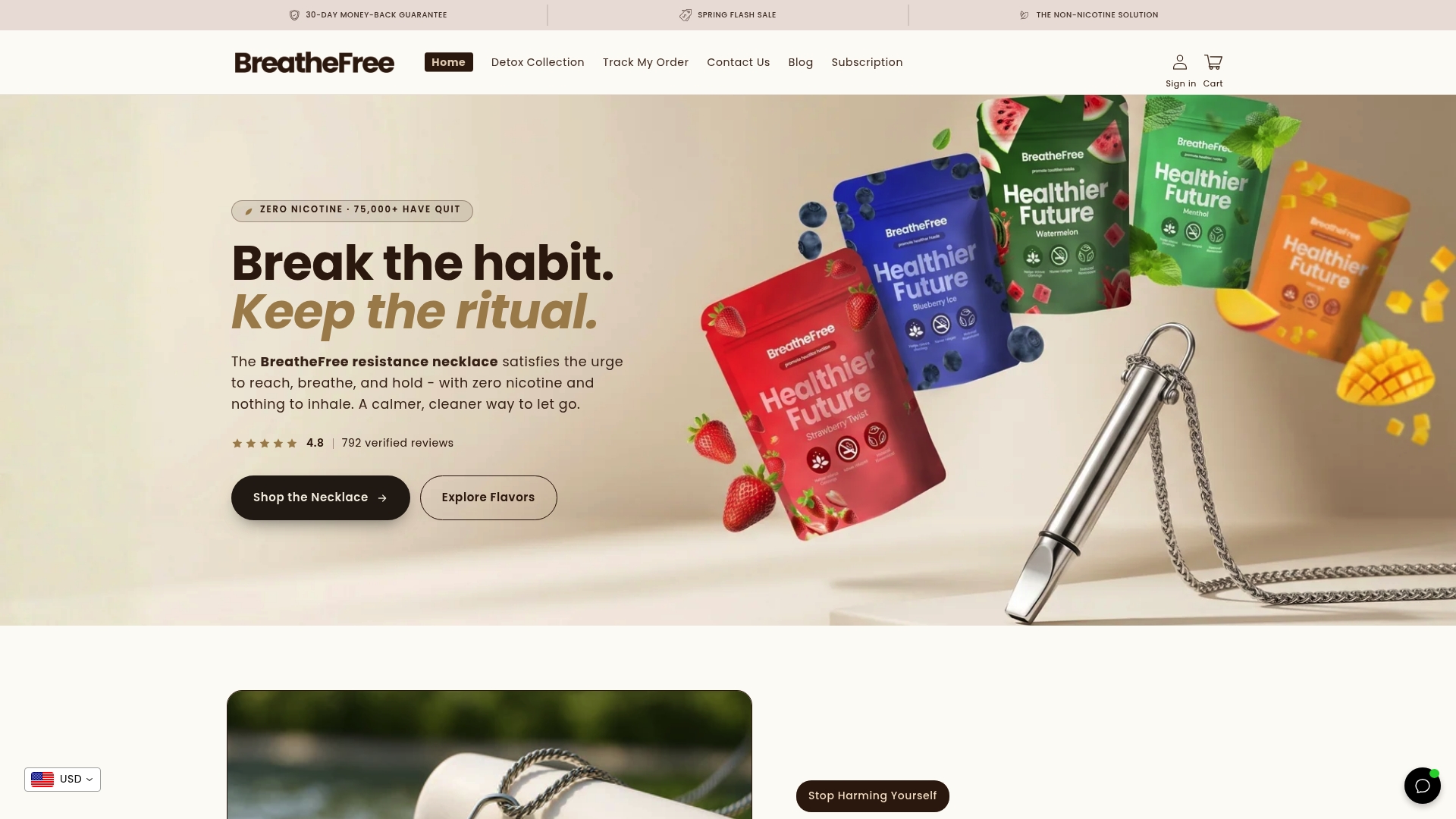
Breathing exercises address your lungs, but the habit of holding something in your hand or mouth is a separate challenge, and it’s one we built a product around. The BreatheFree Resistance Necklace is a solid, nicotine-free piece made from plant fiber that gives your hands and mouth something to do during a craving, paired with flavor refills so the ritual still feels satisfying.
- Fully solid and nicotine- and chemical-free, so it’s safe to use on flights, at work, or anywhere else.
- Available with an option for ongoing flavor refills.
- Backed by a 30-day money-back guarantee if it’s not the right fit.
We have shared that people have used this method to help them quit, noting this as our own claim. If the oral habit is the piece you’re still working through, our resistance necklace collection is a reasonable next step.
This article is general information, not a substitute for advice from a qualified doctor. Consult a qualified healthcare professional about your own circumstances before acting on anything here.
FAQ
Can your lungs fully recover from smoking?
Lungs show substantial healing after quitting, with lung function improving within months and cancer risk dropping significantly over 10 to 15 years, according to the CDC. Some structural changes from long-term heavy smoking may not fully reverse, so the degree of recovery depends on smoking history and overall health.
How long does it take to detox your lungs after quitting?
There’s no fixed “detox” period since your lungs heal gradually: carbon monoxide levels normalize within about 12 hours, cilia start regenerating within a week, and measurable lung function gains typically appear within 1 to 3 months, per CDC data. Noticeable improvement in breathing and mucus clearance often continues for a year or more.
Can a smoker’s lungs turn pink again after quitting?
Healthy, undamaged lung tissue tends to be lighter in color, and some tissue coloration can improve as damaged areas heal and new tissue regenerates after quitting. However, this isn’t a quick or uniform change, and the degree of visible improvement depends on how long and heavily someone smoked.
What is the “7 second lung trick” people mention online?
This isn’t a recognized medical technique, and no clinical source describes a specific “7 second” method for clearing lungs. If you’re looking for something similar, pursed-lip breathing and the huff cough, both described by the Cleveland Clinic, are real, evidence-backed techniques that take about that long to perform.
Sources
- Can You Detox Your Lungs? | American Lung Association
- Benefits of Quitting Smoking (CDC report/summary)
- Pulmonary toilet (pulmonary hygiene) | Cleveland Clinic
- ECRHS dietary antioxidants and lung function (Imperial College repository)